Costa Blanca or Costa del Sol?
Our verdict in twelve categories, each scored against the same fixed benchmark cities, and the climate month by month, so you can choose for your trip.
Choose Costa Blanca for
- beaches
- prices
- nature and the outdoors
Costa Blanca is the better pick when the beach is the whole point. It has more kinds of shore, from Benidorm's long sandy bays to the clear coves near Jávea, the sea is a little warmer in late summer, and the big southern resorts are easier on the wallet. Climbers and walkers also get mountains that drop straight into the sea.
Choose Costa del Sol for
- day trips
- shopping
- culture and sights
Choose the Costa del Sol if you want the beach to be only part of the trip. Málaga gives you a real city with serious museums, flamenco and a night out that lasts all year, and from there trains and roads reach Granada, Córdoba and Seville. You pay a little more for it, and the sand is coarser.
Scoreboard
Twelve categories on one fixed scale from 0 to 100. The shaded stretch is the gap between the two.
Your match
Pick a travel style or drag the sliders, and both match scores follow your weighting.
Wins on beaches and prices with your weighting.
Wins on day trips and shopping with your weighting.
What matters to you?
Category by category
What the scores mean for a trip.
Beaches & swimming
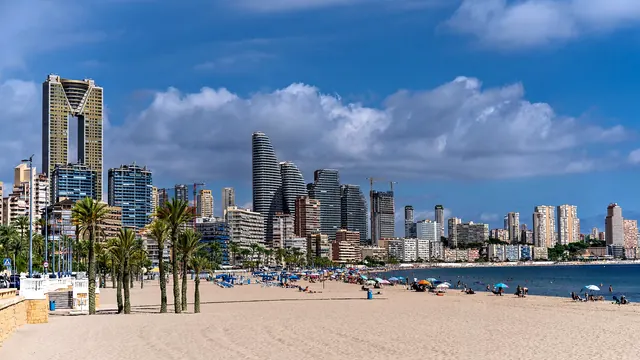
The Costa Blanca has the better beaches and more variety. Benidorm's Levante and Poniente are dependable family sand, San Juan and the dune-backed strands at Guardamar run for kilometres, and in the north the coves at Granadella and Portitxol have clear water for snorkelling. The sea there also warms a few degrees more by August.
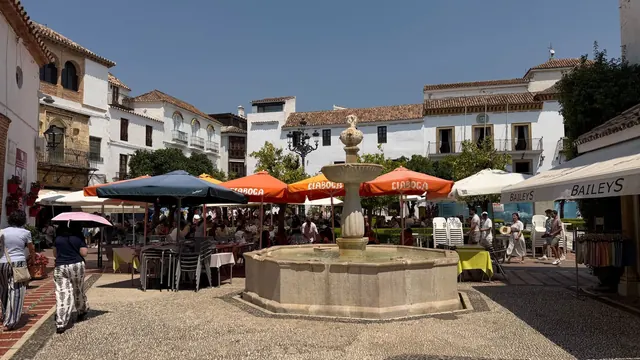
The Costa del Sol offers one long, nearly unbroken line of sunbeds and chiringuitos from Nerja to Estepona. The sand is coarse and grey-gold, and its best water is in the coves around Maro. What it does have is city beaches at La Malagueta and Pedregalejo, within walking distance of Málaga's old town.
Food & drink
Rice against fish is the real choice here. On the Costa Blanca the dishes to order are arroz a banda, black rice and Elche's egg-crusted arroz con costra, best over a long lunch facing the sea, with Dénia's red prawns as the coast's prize catch. Alicante supplies the city end of it, with tapas around the Mercado Central and through the old town.
The Costa del Sol cooks over open fire: sardine espetos grilled on the beach, fried anchovies and clams, and Málaga's sweet wines poured from the barrel in old tiled taverns, with Pedregalejo and El Palo the places locals go for fish by the sea. Marbella and the hills behind it also have a fine-dining tier. On both coasts the big resort seafronts lean to international menus, so the town and street you choose matter more than the coast.
Culture & sights
The Costa del Sol has more to see, and almost all of it is in Málaga. The Alcazaba and Gibralfaro walls rise above a Roman theatre, and the museums include the Picasso, the Carmen Thyssen and the Pompidou on the port, enough for several full days in one city.
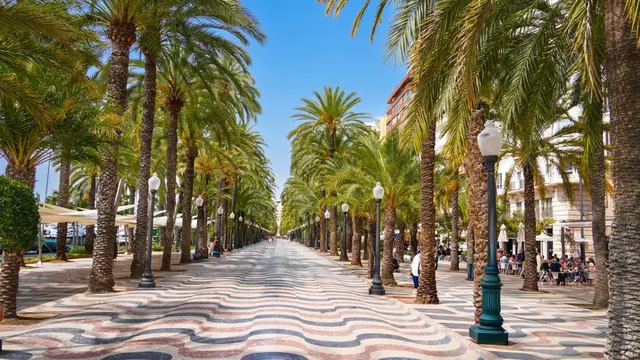
On the Costa Blanca the heritage is spread across several towns. You get Alicante's Santa Barbara castle and the MARQ, Elche's UNESCO-listed palm grove, and the hilltop villages of Altea and Guadalest. Its real cultural high point is the summer festivals, Alicante's Hogueras and the Moors and Christians parades.
Nightlife
There is plenty to do after dark on both coasts, but the style differs. The Costa Blanca's nights centre on Benidorm, a cheerful, loud mix of British and Dutch bars, drag shows and karaoke that keeps going into winter. Alicante's El Barrio is the place for a more Spanish night of terraces under the castle.
The Costa del Sol has more variety. Puerto Banús offers yachts and expensive clubs, Torremolinos has one of Spain's oldest gay scenes, and Fuengirola has the cheap bar strips. Málaga's tapas crawls around Calle Larios keep running when the resorts go quiet out of season.
Nature & outdoors
On the Costa Blanca the mountains run right into the sea. The Peñón de Ifach rises from the water at Calpe, Montgó looms over Jávea, and the Serra Gelada forms sea cliffs between Benidorm and Altea. Inland, the Aitana range and the crags around Sella give real hiking and climbing, and the cape reserves are good for diving and kayaking.
The Costa del Sol keeps its scenery a few kilometres back from the beaches. You can wade up the Río Chíllar gorge above Nerja, walk the Caminito del Rey or climb La Concha behind Marbella, while the shore itself is better known for golf and dolphin trips than for cliffs.
Day trips
This is where the Costa del Sol pulls well ahead. From Málaga, fast trains reach Córdoba's Mezquita in about an hour and Seville in about two, and Granada's Alhambra is a drive of about an hour and a half. Ronda, Gibraltar and white villages such as Frigiliana and Casares fill the shorter days.
The Costa Blanca's main outing is Valencia, which takes close to two hours from Alicante or Benidorm. Beyond that the trips are smaller: Xàtiva's ridge-top castle, the gorge town of Alcoy, the walled island village of Tabarca, and Cartagena's Roman theatre from the southern resorts.
Good for families
Both coasts work very well with children, with gentle sandy beaches, pool hotels and late evenings on the promenade. Near Benidorm, the Costa Blanca adds a full theme park to its water parks and marine park, and the pools and waterfalls of the Fonts de l'Algar make a cool summer outing.
The Costa del Sol has no large theme park. It makes up for it with smaller outings between Torremolinos and Fuengirola: a forest-style zoo, an aquarium, sea lions at Benalmádena, a cable car up Mount Calamorro, and a drive-through safari park above Estepona.
Getting around
Neither coast is much easier to get around than the other, but they work in different ways. On the Costa Blanca, the coastal TRAM runs north from Alicante through Benidorm and Altea towards Dénia, a slow but scenic link between the northern towns, and buses connect the larger resorts. Once you arrive, Alicante and Benidorm are easy to walk around.
The Costa del Sol's commuter train is quicker. It joins the airport, Málaga and the resorts as far as Fuengirola, and Málaga's flat old centre is mostly pedestrian. Past Fuengirola, Marbella, Estepona and Nerja rely on buses that crawl when the coast road jams in summer. On both coasts a car makes the outlying places much easier to reach: the coves near Jávea and the mountain villages on the Costa Blanca, and the white villages and Ronda on the Costa del Sol. Parking in high summer is hard on both.
Shopping & style
The Costa del Sol is the better coast for shopping. Puerto Banús has a harbourfront of luxury fashion houses, Marbella's old town has boutiques, and Málaga's marble-paved Calle Larios carries the main Spanish chains.
On the Costa Blanca shopping is mostly practical: Alicante's high streets, the shoe factory outlets around Elche, and weekly markets in Jávea and Altea. The things worth taking home are edible, turrón from Xixona and the local Fondillón wine.
Affordability
The Costa Blanca is the cheaper coast overall. Benidorm and the resorts around Torrevieja have a huge supply of apartments and package hotels, and Alicante is moderately priced for a Spanish city. Only the northern villa towns of Jávea, Moraira and Altea push costs up.
On the Costa del Sol, the affordable stretch from Torremolinos to Fuengirola sits between expensive Marbella and Málaga, where high-season rooms are far from cheap. Eating out is still fair value on most of the coast. On both coasts, spring and autumn cost noticeably less than July and August.
Live music & performing arts
The Costa del Sol has the stronger stage, almost all of it in Málaga. The Teatro Cervantes stages opera, dance and the city orchestra, and the flamenco peñas give weekend performances for aficionados that feel far more genuine than the resort dinner shows.
The Costa Blanca has less of a regular programme, with touring productions at Alicante's Teatro Principal and concerts at the ADDA. It does have something unique: Elche's Misteri d'Elx, a sung medieval mystery play performed each August in the basilica.
Wellness & relaxation
The Costa del Sol is better set up for a restful stay. Marbella and the hills towards Estepona have large spa hotels and clinics built for week-long detox stays, and Málaga has Arab-style baths near the old town. Nerja and the hill villages are the quietest bases.
On the Costa Blanca, wellness is mostly hotel spas and a few retreats in the hills around Altea. What it offers instead is a slow pace: outside high summer, Altea, Jávea and Moraira are calm places for long lunches and promenade walks.

When should you go?
Pick your month. The climate figures are measured averages, not a forecast.
Costa Blanca in July
Costa del Sol in July
Daytime high, °C
Rainfall in the month, mm
Where the figures come from
Costa Blanca's temperatures are measured 57 km from the centre, at Alicante.
Costa Blanca has no rain gauge within 25 km of the centre, so its rainfall comes from a gridded climate dataset read at the destination rather than from a gauge further away.
Temperature and rainfall are climate normals, averaged over the years shown. Costa Blanca: 1991-2020 normals, Alicante (56.6 km from centre). Costa del Sol: 1991-2020 normals, Malaga / Aeropuerto (5.4 km from centre).
Both coasts are warm enough for the beach from June to October, and both get hot in July and August, at about 31°C, when walking the streets or hiking at midday is hard work. The sea is where they differ. On the Costa Blanca it reaches about 26°C in August, while on the Costa del Sol it peaks nearer 23°C and can cool for a few days when the wind changes. Spring and autumn are the best seasons on both coasts for walking and sightseeing, with plenty of sunshine and milder heat.
Winter separates them more clearly. The Costa Blanca stays fairly dry all year, and even its wettest months bring only modest rain. On the Costa del Sol the rain arrives in October and builds to around 88mm in December, so a winter stay there means more grey days, although daytime temperatures on the two coasts are almost the same.
Which traveller are you?
On a beach and sun trip, the Costa Blanca comes out ahead. It has a wider range of beaches, from Benidorm's gently shelving sand to the snorkelling coves near Jávea, and its sea is warmer through late summer.
For a culture and arts trip, the Costa del Sol is the clear choice. Málaga has the Alcazaba, the Picasso Museum and the Pompidou, plus flamenco in its peñas, and the Alhambra, the Mezquita and Seville are all within easy day-trip range.
On a trip on a tight budget, the Costa Blanca stretches the money further. Benidorm and the resorts around Torrevieja are among the cheapest beach bases in Western Europe, while the Costa del Sol's cheaper stretch still sits close to pricey Marbella and Málaga.
Before you go
| Measure | Costa Blanca | Costa del Sol |
|---|---|---|
| Official language | Spanish | Spanish |
| Currency | Euro (EUR) | Euro (EUR) |
| Sockets | CF230 V, 50 Hz | CF230 V, 50 Hz |
| Driving side | Right | Right |
| Time zone | UTC+1, UTC+2 in summer | UTC+1, UTC+2 in summer |
| Emergency number | 112 | 112 |
| Main airport | Alicante-Elche Miguel Hernández Airport (ALC)126 non-stop destinations | Málaga-Costa del Sol Airport (AGP)165 non-stop destinations |
| Public holidays this year | 13 days | 12 days |
By the numbers
| Measure | Costa Blanca | Costa del Sol |
|---|---|---|
| Population | - | 1,364,837 |
| Swim season, months above 21 °C | 5 months | 3 months |
Where else could you go?
Every comparison below shares a destination with this one, so you can follow Costa Blanca or Costa del Sol somewhere new.
- Formenteravs Costa Blanca
- Ibizavs Costa Blanca
- Mallorcavs Costa Blanca
- Algarvevs Costa del Sol
- Menorcavs Costa Blanca
- Costa Bravavs Costa Blanca