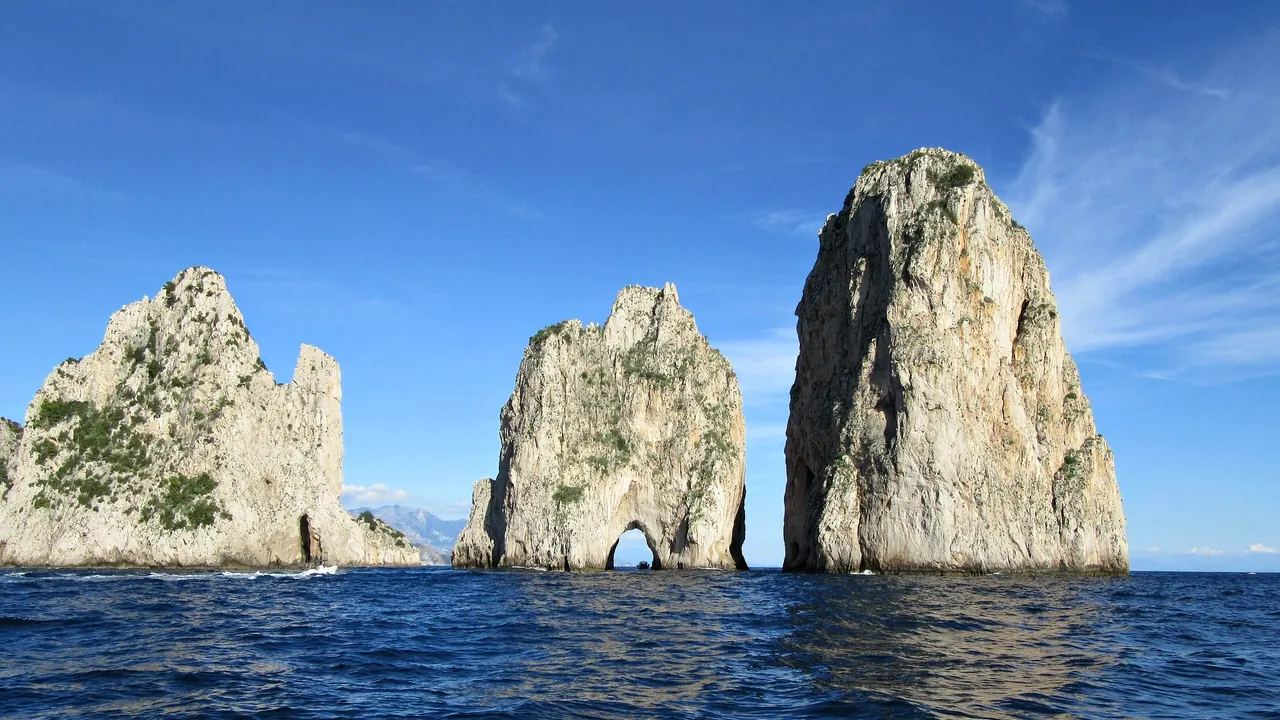
Photos: Capri by Sheeba Samuel, CC BY-SA 4.0, cropped.
Capri or Puglia?
Our verdict in twelve categories, each scored against the same fixed benchmark cities, and the climate month by month, so you can choose for your trip.
Choose Capri for
- shopping
- getting around
- nature and the outdoors
Capri suits a short, polished stay built around the sea and the scenery. You swim off the rocks into very clear water, walk past the Faraglioni, spend the evenings on the Piazzetta and an afternoon among the boutiques of Via Camerelle. It is compact, needs no car and can be covered in a few days. It is also costly, it has little food or culture beyond a handful of sites, and it is hard work with small children.
Choose Puglia for
- prices
- families
- live music and the arts
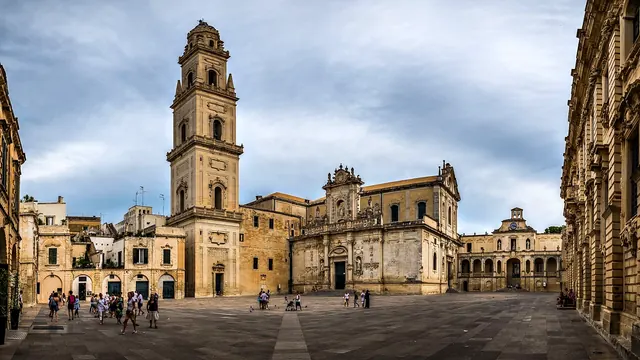
For a longer trip with a car and a wish to move around, Puglia is the better choice. It has sandy beaches as well as rocky ones and deeply regional cooking at kinder prices. There is baroque Lecce, the trulli of Alberobello and a long string of small towns to explore, and it is far easier for families. What it gives up is Capri's dramatic scenery packed into a small space, and the ease of an island where everything is a short bus ride away.
Scoreboard
Twelve categories on one fixed scale from 0 to 100. The shaded stretch is the gap between the two.
Your match
Pick a travel style or drag the sliders, and both match scores follow your weighting.
Wins on shopping and getting around with your weighting.
Wins on prices and families with your weighting.
What matters to you?
Category by category
What the scores mean for a trip.
Beaches & swimming
Capri is a place to swim rather than lie on sand. There are pebble coves at Marina Piccola and Marina Grande and rock platforms with ladders into deep, very clear water. The best swimming is off Punta Carena or from a boat under the Faraglioni. Space is tight in summer.
Puglia has far more coast and far more variety. The Ionian Salento has long pale sands and shallow turquoise water, the Adriatic side has rocky coves at Polignano a Mare and sea stacks at Torre dell'Orso, and the Gargano adds cliffs and coves around Vieste. For a beach vacation as such, Puglia is much the better bet.
Food & drink
Capri's own dishes are few: insalata caprese, ravioli capresi, torta caprese and lemons in every form. The best meals are in the family trattorias of Anacapri rather than the restaurants with a view around the Piazzetta. It is enjoyable for a few days, and then there is nothing new to try.
Puglia gives a food lover much more. There is orecchiette with turnip tops, burrata from around Andria, raw sea urchins on the Bari waterfront, Lecce's pasticciotto and the butcher-grill houses of the Valle d'Itria, with Primitivo and Negroamaro to drink. Neither place is about tasting menus, but Puglia's food is broader, more deeply regional and cheaper.
Culture & sights
Capri has a few strong sites: the ruins of Tiberius's Villa Jovis high on the eastern headland, Villa San Michele in Anacapri and the Certosa di San Giacomo. Two days is enough to see them.
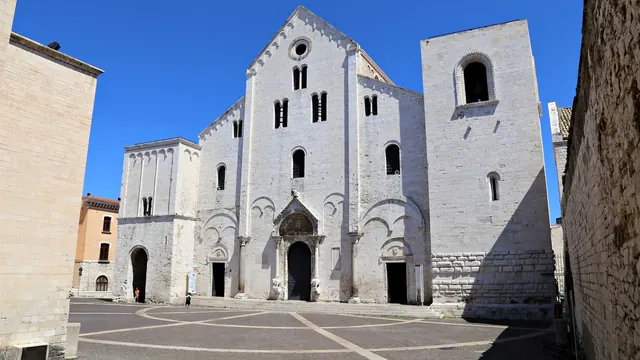
Puglia's heritage is spread out but much richer: the baroque of Lecce, Alberobello's trulli, the octagonal Castel del Monte and Romanesque cathedrals at Trani, Bari and Otranto. Seeing them means driving between towns, and the museums are modest. Even so, Puglia fills a week or more where Capri fills a weekend.
Nightlife
A night out on Capri means the Piazzetta: dressed-up aperitivo once the last ferry has gone, then piano taverns with Neapolitan song. It is glamorous and expensive, and there are no clubs.
Puglia has more choice and more noise. In July and August Gallipoli's beach clubs run into the small hours, beach bars along the Salento coast hold DJ nights and Lecce's lanes fill with people drinking. Bari's bars stay open all year, while the rest of Puglia goes quiet outside summer, just as Capri does.
Nature & outdoors
Both are good for time outdoors, in very different ways. Capri packs its drama into one limestone block: the Faraglioni, the Arco Naturale, cliffs dropping into the sea, the chairlift up Monte Solaro and the Sentiero dei Fortini. You can cover it all in a few days on foot and by boat.
Puglia is mostly gentle olive country, best seen by bicycle in the Valle d'Itria. Its wilder side is the Gargano, with its beech woods and sea caves, plus the cliff paths around Otranto and Leuca. Capri has more spectacle in a small space, while Puglia has far more ground to cover and diving around the Tremiti islands.
Day trips
Every day out from Capri starts with a boat: to Sorrento in half an hour, to Naples, the Amalfi Coast or Ischia, or to Pompeii on a long day. Rough seas cancel sailings, and the boats are crowded in summer.
Puglia has more within reach and needs only a car. Choices include the white towns of the Valle d'Itria, the harbour towns north of Bari, Otranto and the Grecia Salentina from Lecce, and the cave dwellings of Matera about an hour from Bari. You also set your own times rather than following a ferry timetable.
Good for families
Capri is hard going with children. There are no sandy shallows, steps are everywhere, the buses are packed and nothing is built for children. Older children who swim well enjoy the Blue Grotto and the chairlift, but little ones are better off elsewhere.
Puglia is much easier. The shallow Ionian sands of the Salento and the bays of the Gargano suit small children, masserie with pools are common and there is the safari park at Fasano. The catch is the August heat and the need for a car.
Getting around
Capri is the easier place to get around. Everything is close, a funicular climbs from Marina Grande to the town, and small buses and open-topped taxis cover the rest, so nobody needs a car. The drawbacks are steep walking and long queues in summer.
In Puglia you need a car for almost anything off the main rail line between Foggia and Lecce. The region is so long that seeing both the Gargano and the Salento means two bases. Roads are good and the old town centres are easy to walk, but buses to inland towns are slow and infrequent.
Shopping & style
For shopping, Capri is the stronger choice, which is unusual for somewhere so small. Via Camerelle and Via Vittorio Emanuele are lined with luxury boutiques, and handmade sandals and the island's own perfumes give it a character of its own.
Puglia's best buys are crafts and food: ceramics from Grottaglie, papier-mache from Lecce, linen from the Valle d'Itria, olive oil and Primitivo. For fashion there is the grid of streets around Via Sparano in Bari, but nothing to match Capri's luxury lanes.
Affordability
Capri is one of the most expensive places in Italy, from the rooms to the sunbeds to cocktails on the Piazzetta. Buses, walks and the bakeries of Anacapri are the ways to save. Staying in Sorrento is cheaper, but you lose the island's evenings.
Puglia is far easier on the budget. Food and wine cost less than in most of Italy, and although summer rooms near the best beaches and restored masserie are expensive, June, September and inland bases bring costs down. Remember to budget for car hire.
Live music & performing arts
Capri has almost none. There are a few summer concerts at the Certosa or Villa San Michele and Neapolitan song in the piano taverns, and opera means taking the boat to Naples.
Puglia has a real programme. Bari's Teatro Petruzzelli puts on opera, ballet and concerts, and each summer Martina Franca stages rare operas in the courtyard of its ducal palace. The pizzica of the Salento is heard at village festivals all summer and comes together in August at the Notte della Taranta in Melpignano.
Wellness & relaxation
Neither has a real spa culture. On Capri the wellness is in the upmarket hotel spas, and the calm comes early in the morning and in the evening, once the day-trippers have left. For thermal water you take the boat to Ischia.
Puglia is easier to slow down in. Masserie among the olive groves, many with pools and their own spas, keep things quiet all day rather than only in the mornings and evenings. There are also small thermal spas at Santa Cesarea Terme and Torre Canne.
When should you go?
Pick your month. The climate figures are measured averages, not a forecast.
Capri in July
Puglia in July
Daytime high, °C
Rainfall in the month, mm
Where the figures come from
Capri has no rain gauge within 25 km of the centre, so its rainfall comes from a gridded climate dataset read at the destination rather than from a gauge further away.
Capri's sunshine is measured 58 km from the centre, at Grazzanise.
Puglia's temperatures are measured 64 km from the centre, at Brindisi.
Puglia has no rain gauge within 25 km of the centre, so its rainfall comes from a gridded climate dataset read at the destination rather than from a gauge further away.
Temperature and rainfall are climate normals, averaged over the years shown. Capri: 2005-2025 (sunshine 1991-2020, rainfall 1991-2020) normals, Capri (3.6 km from centre). Puglia: 1991-2020 (sunshine 1981-2010) normals, Brindisi (64.4 km from centre).
The two have almost the same temperatures through the year. Both are warm from June to September and reach about 30°C in August, and both seas are warm enough to swim from June into early October. Capri's sea holds its warmth a little better in autumn, at about 22°C in October, so a late-season swim is more pleasant there. Both are very sunny in high summer, which, with the heat, makes July and August better for the water than for climbing Capri's steps or walking Puglia's towns in the afternoon.
The real difference is rain. Both turn wetter in autumn, with October and November the wettest months, but Puglia gets less rain than Capri for most of the year. Capri has about 146mm in November against 83mm in Puglia, and its spring is wetter too. For walking, May and late September are the best months in both places, and from late autumn to spring Puglia is the drier choice.
Which traveller are you?
On a family trip with young children, Puglia is the easier choice. Its piazzas are full of Italian children until late, so families fit in everywhere, and a country stay gives space and a slow pace. Capri means carrying a pushchair through crowded lanes all day.
For a trip on a tight budget, Puglia is the sensible pick. Focaccia, panzerotti and frisa are cheap everyday food, the local wine costs little, and the months either side of August give you the same sea. Capri suits a small budget only as a day visit.
On a shopping trip, Capri wins. Italian and international labels are packed into a few lanes a short walk apart, and resort fashion, linen and ceramics are the island's own style. In Puglia shopping is spread across workshop towns, and most of what you buy is food and crafts to take home.
Before you go
| Measure | Capri | Puglia |
|---|---|---|
| Official language | Italian | Italian |
| Currency | Euro (EUR) | Euro (EUR) |
| Sockets | CFL230 V, 50 Hz | CFL230 V, 50 Hz |
| Driving side | Right | Right |
| Time zone | UTC+1, UTC+2 in summer | UTC+1, UTC+2 in summer |
| Emergency number | 112 | 112 |
| Main airport | Naples International Airport (NAP)131 non-stop destinations | Bari Karol Wojtyła International Airport (BRI)104 non-stop destinations |
| Public holidays this year | 13 days | 13 days |
By the numbers
| Measure | Capri | Puglia |
|---|---|---|
| Population | 12,903 | 3,866,174 |
| People per km² | 1,241 | 198 |
| Swim season, months above 21 °C | 5 months | 4 months |
Where else could you go?
Every comparison below shares a destination with this one, so you can follow Capri or Puglia somewhere new.