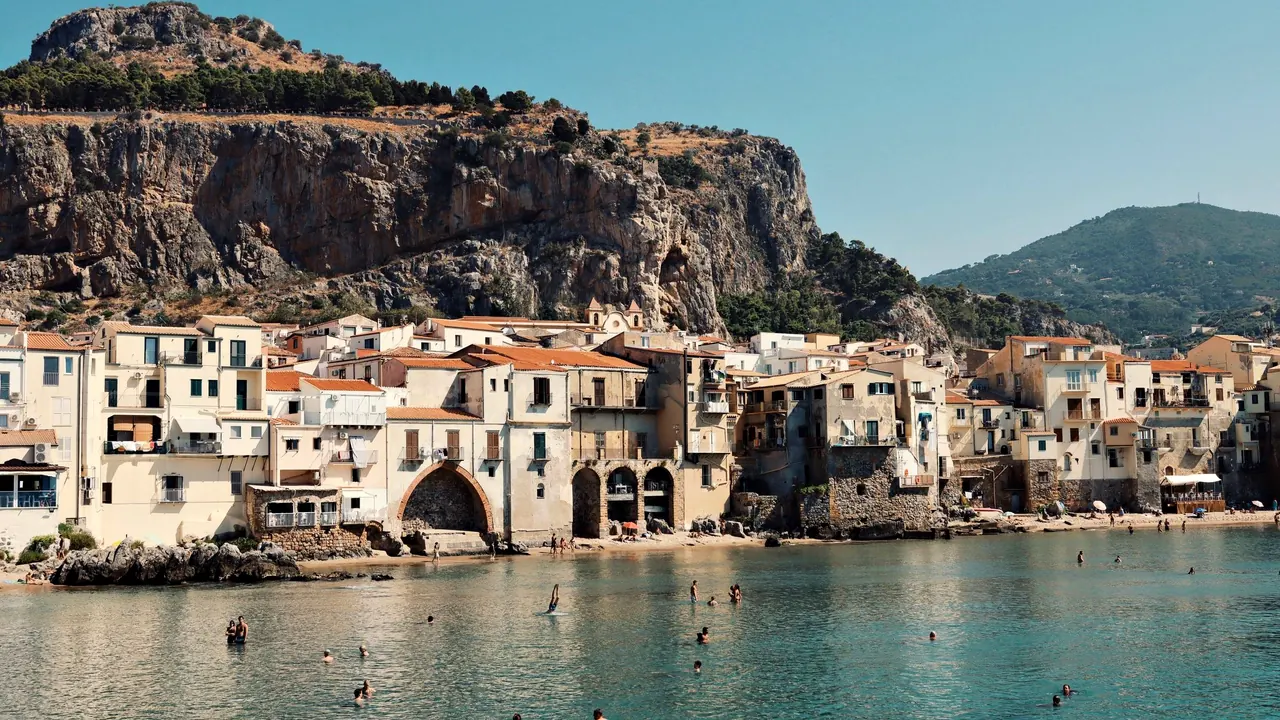
Photos: Sicily by Efrem Efre, Pexels License.
Dolomites or Sicily?
Our verdict in twelve categories, each scored against the same fixed benchmark cities, and the climate month by month, so you can choose for your trip.
Choose Dolomites for
- wellness
- getting around
- families
The Dolomites are for a mountain trip. Lifts lift you straight onto high meadows below pale limestone towers. There are gentle walks for children, via ferrate and hut-to-hut routes for the keen, and in winter one ski area links a dozen valleys. Evenings are quiet and the hotel spas are excellent, so it suits families and walkers who want to rest well. You give up the sea and late nights, and you pay mountain-resort prices for it.
Choose Sicily for
- beaches
- culture and sights
- prices
Sicily wins on almost everything else. Greek temples, Arab-Norman mosaics and baroque hill towns sit within reach of warm, clear water, and you eat well on street food and pastry for little money. It is the island for a long summer trip that mixes swimming, sightseeing and eating. Plan on a hire car and two or three bases, because the best of it is spread across the whole island.
Scoreboard
Twelve categories on one fixed scale from 0 to 100. The shaded stretch is the gap between the two.
Your match
Pick a travel style or drag the sliders, and both match scores follow your weighting.
Wins on wellness and getting around with your weighting.
Wins on beaches and culture and sights with your weighting.
What matters to you?
Category by category
What the scores mean for a trip.
Beaches & swimming
Sicily is the clear choice for swimming. Its coast keeps changing as you go round the island: the long white sweep of San Vito Lo Capo, the marl cliffs of the Scala dei Turchi, the reserve beaches at Vendicari, and the clear water off Favignana and the Aeolian Islands. You can swim from early summer well into autumn.
The Dolomites' famous high lakes, such as Braies and Carezza, are for looking at, not swimming in. Real bathing means Lake Caldaro on the wine route, the lidos at the north end of Lake Garda, or a village pool. You swim on lawns, not sand.
Food & drink
Both are rewarding, but Sicily has more depth and more variety. You can eat standing at the stalls in Palermo's Ballarò and Capo markets, have granita with brioche for breakfast and pasta alla Norma in Catania, and each corner of the island has its own dishes, from Trapani's fish couscous to Modica chocolate and Etna wines.
The Dolomites offer a tighter mix of Alpine and Italian cooking: speck, canederli, strudel and an Italian espresso to follow. A hut lunch on a sunny terrace is one of the joys of a stay. Alta Badia has unusually serious kitchens for a cluster of villages, and the autumn Törggelen evenings south of Bolzano are worth timing a trip around. Outside the two valley cities, though, nearly every menu is local.
Culture & sights
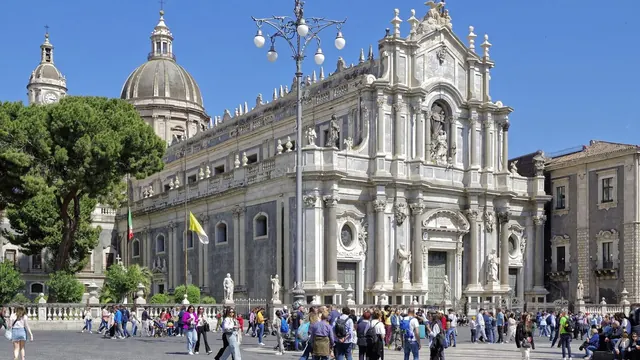
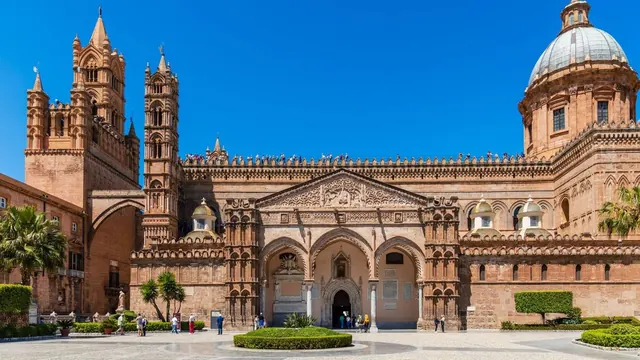
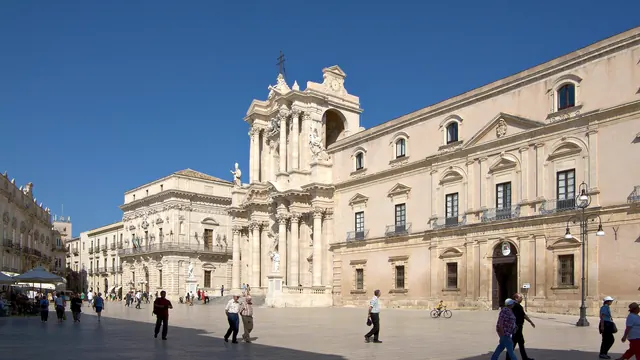
Sicily is far richer here. Greek, Roman, Arab, Norman and baroque Sicily are all on show, in the temples of Agrigento and Segesta, the theatres of Syracuse and Taormina, the gold mosaics of the Palatine Chapel and Monreale, and the honey-stone towns of Noto and Ragusa Ibla. It takes a week and several bases to see the best of it.
In the Dolomites the mountains themselves are the UNESCO heritage. The built sights are pleasant extras for a rainy day: Ötzi the Iceman in Bolzano, the frescoed rooms of Trento's Castello del Buonconsiglio, Bressanone's cloister and the First World War tunnels on the passes.
Nightlife
Neither is a place for serious nightlife, but Sicily has more going on after dark. Catania's historic centre fills with students and locals until late, Palermo drinks in the street around the Vucciria, and in summer open-air clubs open at Mondello and below Taormina.
In the Dolomites the evening is mostly a winter après-ski drink in Selva, Canazei or Cortina, and it ends early. In summer the villages are quiet well before midnight, because everyone is up for the next day's walk.
Nature & outdoors
Both are superb outdoors, in very different ways, but the Dolomites rank among the great mountain landscapes. You can walk the Alpe di Siusi, circle the Tre Cime, follow the Alta Via 1 hut to hut or clip onto a via ferrata, and in winter ski the Sella Ronda. Lifts from almost every village put all of it within easy reach.
Sicily's wild side is volcanic and coastal. You can walk Etna's lava fields with a guide, climb Stromboli at dusk to watch it erupt, follow the Zingaro cliff path and dive around the islands. The catch is the season: Sicily is for spring and autumn, when the interior is green, while the Dolomites are at their best from June to October.
Day trips
Sicily has the edge, because good outings start from any base. From Syracuse the baroque towns of Modica and Scicli are close, from Taormina you reach the Etna wine villages, from Palermo Cefalù and Erice, and ferries make the Egadi or Aeolian Islands an easy day out.
The Dolomites have strong trips too, but they depend on where you stay. From Bolzano, Merano, Trento and Verona are an easy train ride and Innsbruck is just over the Brenner. From a high valley, every outing starts with a slow pass road.
Good for families
The Dolomites are the easier family destination, at least in summer. Nearly flat paths across the Alpe di Siusi and the Armentara meadows, lifts in place of climbs, huts with farm animals, summer toboggan runs and hotels built around children make the days simple. Winter brings well-run ski schools.
Sicily welcomes children warmly, and a beach stay on a shallow bay such as San Vito Lo Capo works well. Beyond the beach, though, there is little built for families, and long drives, steep hill towns and summer heat make touring tiring.
Getting around
The Dolomites are easier without a car. Trains run up the Adige and Puster valleys, buses climb to the resorts on a single regional pass, and once you are in a village the lifts do the rest. Moving between valleys is the slow part, on hairpin pass roads that are busy in high summer.
Sicily nearly always needs a hire car. Coastal trains are sparse and slow, inland roads wind, and driving in Palermo or Catania is chaotic. Island ferries can be cancelled in rough seas. Ortigia, Taormina and Cefalù are lovely on foot once you get there.
Shopping & style
Neither is a fashion destination, and both are best for crafts and food, but the crafts differ. In the Dolomites you bring home Val Gardena wood carving, loden from Bolzano's arcades, speck and grappa, and in December the Advent markets of Bolzano, Merano and Bressanone are a reason to go.
Sicily offers Caltagirone majolica, Trapani coral, Palermo puppets and an edible haul of Modica chocolate, Bronte pistachio and Pantelleria capers. For clothes, Via Libertà in Palermo and Via Etnea in Catania give more choice than Cortina's short line of boutiques.
Affordability
Sicily is much cheaper. Street food and pastry cost little, trattoria lunches are reasonable, and guesthouses and agriturismi in Palermo, Catania and the south east are fairly priced even in summer. Only Taormina, the Aeolians and the August beach resorts push prices up.
The Dolomites are expensive in both ski season and high summer. Cortina and Alta Badia are among the dearest resorts in Italy, and lift passes and guided climbs add to the bill. Staying in Val di Fassa or Bolzano, or going in June or September, softens the cost.
Live music & performing arts
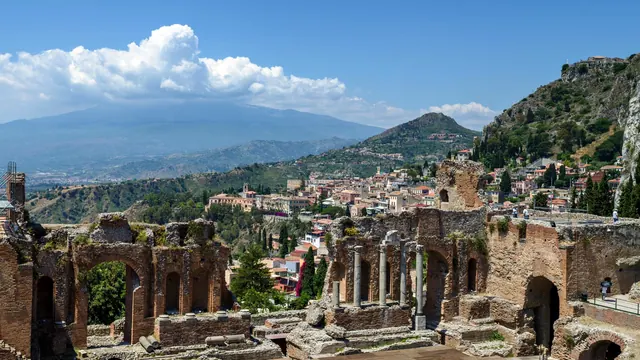
Sicily has much more to see on stage. Palermo's Teatro Massimo, one of Europe's largest opera houses, has a full season. Greek tragedy is played each spring and early summer in the ancient theatre of Syracuse, and Taormina's Greek theatre hosts summer concerts with Etna behind the stage. The opera dei pupi, the island's knightly puppet theatre, is a uniquely local night out.
The Dolomites offer orchestral seasons in Bolzano and Trento and an autumn festival in Merano's old spa halls. Their most memorable shows are summer concerts on alpine meadows and hut terraces.
Wellness & relaxation
The Dolomites are the better place to be pampered. South Tyrol's mountain hotels build saunas and heated outdoor pools around views of the rock walls, and the farmers' hay bath is still offered below the Alpe di Siusi. Merano, a spa town since the nineteenth century, has public thermal baths in its centre beside the river promenade, the one real public bathing culture in the region.
Sicily relaxes you through its pace more than its spas. You can try Vulcano's mud, the hot springs at Sciacca or a swim in Pantelleria's crater lake, but the real cure is a long lunch at a countryside agriturismo or a few slow days on Salina.
When should you go?
Pick your month. The climate figures are measured averages, not a forecast.
Dolomites in July
Sicily in July
Daytime high, °C
Rainfall in the month, mm
Where the figures come from
Sicily's sunshine is measured 67 km from the centre, at Ustica.
Temperature and rainfall are climate normals, averaged over the years shown. Dolomites: 1991-2020 normals, Dobbiaco (22.3 km from centre). Sicily: 1991-2020 normals, Palermo / Punta Raisi (24.1 km from centre).
The two overlap at the start and end of summer, then go separate ways. In the Dolomites, June to September is the walking season. July and August bring highs around 22°C, warm enough for long days on the trails but rarely hot. Summer is also the wettest time of year, with about 130mm of rain in July, so expect some wet days. December to February is cold and fairly dry, with daytime highs near freezing, and this is the snow season. Spring and late autumn fall in between: too cool for the high trails and not reliable for skiing.
Sicily stays warm for much longer. May is pleasant for sightseeing, and the sea is warm enough to swim from June to October, peaking at about 27°C in August. July and August are almost rainless and very sunny, with highs near 30°C. That is fine on the beach but too hot for walking inland or climbing round the hill towns, just when the Dolomites are at their best on foot. The rain returns in September, at around 70mm, and builds to its wettest in December, though highs stay in the mid-teens all winter. June and September suit both: walking in the mountains, or swimming and sightseeing in Sicily. In midsummer the mountains are the cooler place to walk. In winter only the Dolomites have snow, while Sicily is mild but wet.
Which traveller are you?
On a beach and sun trip, choose Sicily without hesitation. It has warm sea from June to October, white sand at San Vito Lo Capo, coves in the Egadi Islands and black volcanic beaches in the Aeolians. In the Dolomites you swim in valley lakes and pools.
For a culture and arts trip, Sicily is again the stronger choice. Agrigento's temples, the mosaics of Monreale and Piazza Armerina, the baroque south east and a season at Palermo's Teatro Massimo outweigh the Dolomites' castles and valley-town museums.
On a family trip with young children, the Dolomites are easier. There are nearly flat high-pasture paths, lifts that take out the climbing, huts with playgrounds and family hotels with children's clubs. Sicily brings long drives and fierce summer heat.
Before you go
| Measure | Dolomites | Sicily |
|---|---|---|
| Official language | Italian | Italian |
| Currency | Euro (EUR) | Euro (EUR) |
| Sockets | CFL230 V, 50 Hz | CFL230 V, 50 Hz |
| Driving side | Right | Right |
| Time zone | UTC+1, UTC+2 in summer | UTC+1, UTC+2 in summer |
| Emergency number | 112 | 112 |
| Main airport | Venice Marco Polo Airport (VCE)103 non-stop destinations | Falcone–Borsellino Airport (PMO)106 non-stop destinations |
| Public holidays this year | 13 days | 13 days |
By the numbers
| Measure | Dolomites | Sicily |
|---|---|---|
| Population | - | 4,983,478 |
| Swim season, months above 21 °C | - | 5 months |
Where else could you go?
Every comparison below shares a destination with this one, so you can follow Dolomites or Sicily somewhere new.
- Austrian Alpsvs Dolomites
- Lake Gardavs Dolomites
- Bavariavs Dolomites
- Lake Comovs Dolomites
- Caprivs Sicily
- Ischiavs Sicily