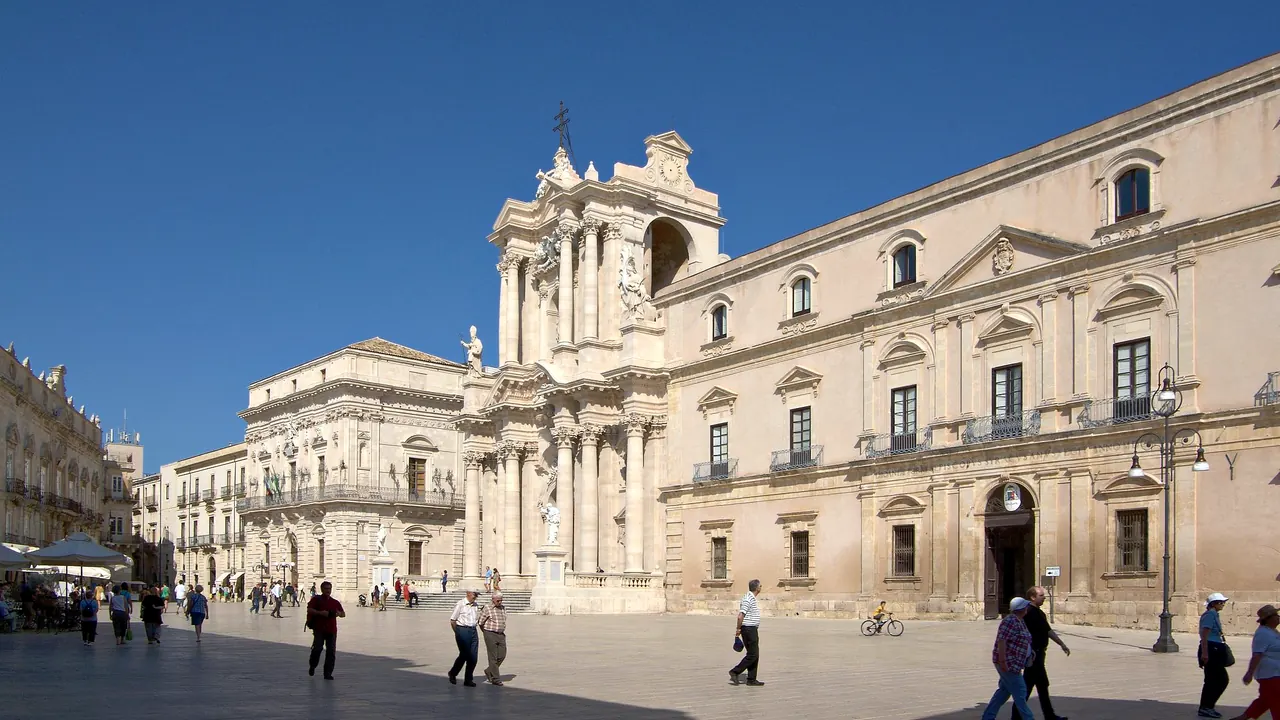
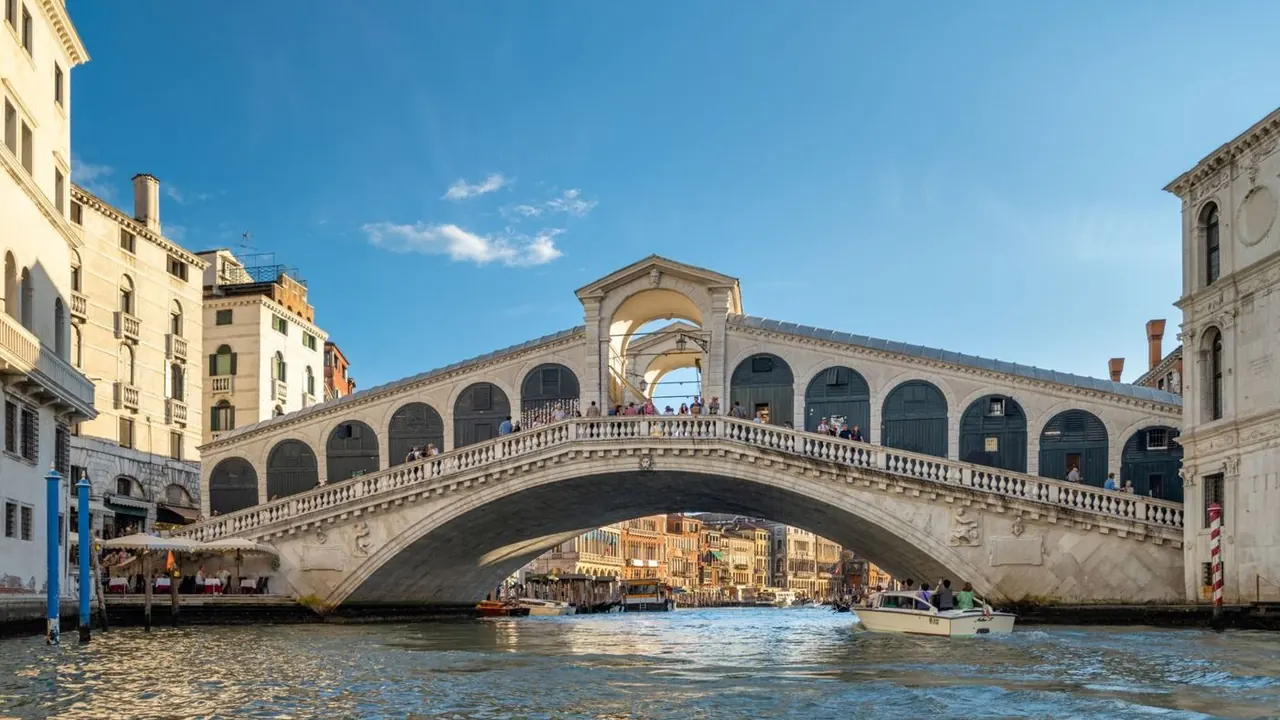
Photos: Syracuse, Sicily by Berthold Werner, CC BY-SA 3.0, cropped; Venice by David Vives, Pexels License.
Syracuse, Sicily or Venice?
Our verdict in twelve categories, each scored against the same fixed benchmark cities, and the climate month by month, so you can choose for your trip.
Choose Syracuse, Sicily for
- prices
- nature and the outdoors
- beaches
Syracuse suits travellers who want the sea and the sun as much as the sights. You can swim below Ortigia's walls in the morning, walk through Greek ruins in the afternoon and eat Sicilian seafood in the evening. It costs much less than Venice, and the baroque towns of the Val di Noto and the gorges inland are close by, though you will want a hire car for them.
Choose Venice for
- live music and the arts
- getting around
- shopping
For art and architecture, Venice is the better pick. Its palaces, churches and galleries could fill a full week, La Fenice gives you proper evenings out and fast trains reach Padua and Verona without a car. It is far more expensive, though, and offers little for beachgoers or anyone who wants to hike.
Scoreboard
Twelve categories on one fixed scale from 0 to 100. The shaded stretch is the gap between the two.
Your match
Pick a travel style or drag the sliders, and both match scores follow your weighting.
Too close to call, 2 points apart
Wins on prices and nature and the outdoors with your weighting.
Wins on live music and the arts and getting around with your weighting.
What matters to you?
Category by category
What the scores mean for a trip.
Beaches & swimming
Syracuse is the place to swim. You can go in off the rocks and wooden platforms below Ortigia's sea walls in clear Ionian water. Families use the sandy bays at Arenella and Fontane Bianche, and the reserve beaches at Vendicari have no buildings behind them.
Venice does have the Lido, long fine sand on the open Adriatic and shallow enough for small children. But much of it is rows of cabanas and the water is greenish, so it suits one hot afternoon rather than a beach trip.
Food & drink
Both cities cook from a great fish market, the Rialto in Venice and the morning market on Ortigia, but Syracuse eats better at the table. Its trattorias serve pasta with sardines or sea urchin, rolled swordfish and caponata, with granita for breakfast and good-value Nero d'Avola.
Venice is at its best standing at a bacaro counter, with cicchetti such as creamed salt cod and a spritz, and with lagoon dishes like black cuttlefish risotto. For a sit-down meal, though, the tourist restaurants around San Marco make a good one harder to find than on Ortigia.
Culture & sights
Venice goes deeper. The whole city is a sight, palaces and churches standing on water around San Marco, the Doge's Palace and the Grand Canal. Its painting runs from Titian and Tintoretto in the Frari and San Rocco to modern art at the Peggy Guggenheim, enough for a week.
Syracuse is about ancient Greece rather than painting. Highlights are a Doric temple built into the cathedral, the rock-cut theatre at Neapolis and the Paolo Orsi museum, with Caravaggio's Saint Lucy as the main work of art. Two or three days cover it well.
Nightlife
Neither city is made for a big night, but Syracuse stays up later. On summer weekends the wine and cocktail bars in Ortigia's lanes stay busy past midnight, and the beach clubs to the south add some dancing in July and August.
Venice is liveliest at aperitivo time, in the bacari on the Fondamenta della Misericordia and around the Rialto, with Campo Santa Margherita the main place to go later. After midnight the canals fall silent.
Nature & outdoors
Syracuse has far more for an outdoor trip. Inland there are limestone gorges, with green pools at Cavagrande del Cassibile and easy trails past the rock-cut tombs below Pantalica. On the coast you have the Vendicari lagoons, snorkelling in the Plemmirio reserve and Etna about an hour and a half north.
In Venice the outdoors means the lagoon. You can kayak or row through the salt marshes around Torcello and cycle the sea walls of the Lido and Pellestrina. Beyond that the land is flat, and the Dolomites are more than two hours away.
Day trips
Both are excellent bases, and the real difference is how you get about. From Syracuse the trips are to the baroque Val di Noto towns, Noto, Modica and Ragusa Ibla, and north to Catania and Taormina. A hired car makes most of them much easier.
From Venice, fast trains reach Padua, Vicenza and Verona without any driving, and the vaporetto takes you to Murano, Burano and Torcello. That makes it the easier base for travellers who would rather not drive.
Good for families
Syracuse works better with children, mainly because of its sandy beaches, which shelve gently, and Ortigia's small, largely car-free lanes. The Ear of Dionysius, the papyrus boat trips and a puppet show also go down well. Plan the beach for hot summer afternoons.
Children love the idea of Venice, with its boats and car-free alleys, but the stepped bridges make pushchairs a struggle and the summer crowds are tiring. It suits a short stay with older children.
Getting around
Venice is the easier city to get around without a car. You walk almost everywhere in the centre, vaporetti run along the Grand Canal and out to the islands, and trains end at Santa Lucia, right in the city. The stepped bridges and crowded boats are the main hardship.
In Syracuse, Ortigia is easy on foot and the archaeological park is a short taxi ride away. Beyond that, buses are infrequent and trains are slow, and you realistically need a hire car for Vendicari or the gorges.
Shopping & style
Venice is the better place to shop. Real workshops in Dorsoduro, Castello and Murano make glass, lace, papier-mâché masks and marbled paper, and the big fashion names line Calle Larga XXII Marzo. On the main routes, though, you need to tell genuine craft from imported copies.
Syracuse's shopping is small-scale: ceramics, coral jewellery and papyrus paintings in Ortigia's lanes, plus capers, almonds and pistachio products from the market.
Affordability
Syracuse is much the cheaper stay. Market sandwiches, granita and trattoria meals with local wine cost little. Ortigia rooms in high summer and the hire car are what push the bill up.
Venice is among the most expensive places to stay in Italy. Most sights charge for entry and the boats are priced for visitors. To save money, eat cicchetti at a bar counter, sleep in Mestre and come in late autumn or winter.
Live music & performing arts
Venice has a far fuller evening programme. La Fenice runs a season of opera, ballet and concerts, Vivaldi is played in churches and scuole grandi, and the Biennale holds festivals of contemporary music, theatre and dance.
Syracuse has one unforgettable event, Greek tragedy staged in the ancient theatre in late spring and early summer, along with the Sicilian puppet theatre on Ortigia. For most of the year, there is little else on.
Wellness & relaxation
Neither city has a spa tradition of its own, and in both the restful part is the slow pace. Venice has grander hotel spas in palazzi and on Giudecca, and the old thermal towns of Abano and Montegrotto are about an hour away.
In Syracuse the calm comes from long lunches and sunsets on Ortigia's sea walls, best outside August. In Venice it comes from quiet early mornings in Castello and Cannaregio, away from the crowds at San Marco.
When should you go?
Pick your month. The climate figures are measured averages, not a forecast.
Syracuse, Sicily in July
Venice in July
Daytime high, °C
Rainfall in the month, mm
Where the figures come from
Syracuse, Sicily's temperatures are measured 45 km from the centre, at Cozzo Spadaro.
Syracuse, Sicily has no rain gauge within 25 km of the centre, so its rainfall comes from a gridded climate dataset read at the city rather than from a gauge further away.
Temperature and rainfall are climate normals, averaged over the years shown. Syracuse, Sicily: 1991-2020 normals, Cozzo Spadaro (45 km from centre). Venice: 1991-2020 (sunshine 1971-2000, rainfall 1981-2010) normals, Venezia / Tessera (6.7 km from centre).
Syracuse has the longer warm season by a wide margin. The sea is pleasant for swimming from June, when it reaches about 22°C, until early October. Summers are almost rainless and very sunny. July and August are hot, near 31°C, so streets and ruins are best seen early or late in the day. The rain arrives in October, the wettest month at around 96mm, and November is nearly as wet. Late autumn stays mild, but you should expect showers. Even January is mild enough to walk around comfortably. April, May and late September are the best times for sightseeing: warm, dry and not yet or no longer too hot.
Venice is cooler and wetter. Winters are chilly, with highs around 7°C in January. Rain is spread through the year rather than falling in one season, and June and October are the wettest months. Late spring and September are the most comfortable for walking. At the Lido, the Adriatic is warm enough for swimming only from June to September, and Venice gets far less sunshine than Syracuse in every month.
Which traveller are you?
On a beach and sun trip, Syracuse is the clear choice. It has more sunshine and a longer swimming season, with clear water off Ortigia's rocks and pale sand at Vendicari. Venice's Lido is shallow, greenish water, good for an afternoon but not a reason to go.
For a culture and arts trip, Venice goes much deeper. The Accademia, Titian in the Frari, Tintoretto at San Rocco, the Biennale and evenings at La Fenice can fill a week. Syracuse's Greek ruins and museum are superb, but two or three days cover them.
On a trip on a tight budget, Syracuse goes much further. Market food, trattoria meals and mainland rooms are cheap, while in Venice the hotels, boats and entry charges at most sights make even a short stay expensive.
Before you go
| Measure | Syracuse, Sicily | Venice |
|---|---|---|
| Official language | Italian | Italian |
| Currency | Euro (EUR) | Euro (EUR) |
| Sockets | CFL230 V, 50 Hz | CFL230 V, 50 Hz |
| Driving side | Right | Right |
| Time zone | UTC+1, UTC+2 in summer | UTC+1, UTC+2 in summer |
| Emergency number | 112 | 112 |
| Elevation | 17 m | 2 m |
| Main airport | Catania-Fontanarossa Airport (CTA)48 km from centre96 non-stop destinations | Venice Marco Polo Airport (VCE)7 km from centre103 non-stop destinations |
| Public holidays this year | 13 days | 13 days |
By the numbers
| Measure | Syracuse, Sicily | Venice |
|---|---|---|
| City population | 115,515 | 250,369 |
| People per km² | 556 | 602 |
| Museums within 10 km | 11 | 52 |
| UNESCO World Heritage sites within 50 km | 2 | 5 |
| Swim season, months above 21 °C | 5 months | 4 months |
Where else could you go?
Every comparison below shares a destination with this one, so you can follow Syracuse, Sicily or Venice somewhere new.
- Paduavs Venice
- Cataniavs Syracuse, Sicily
- Taorminavs Syracuse, Sicily
- Piranvs Venice
- Veronavs Venice
- Rovinjvs Venice