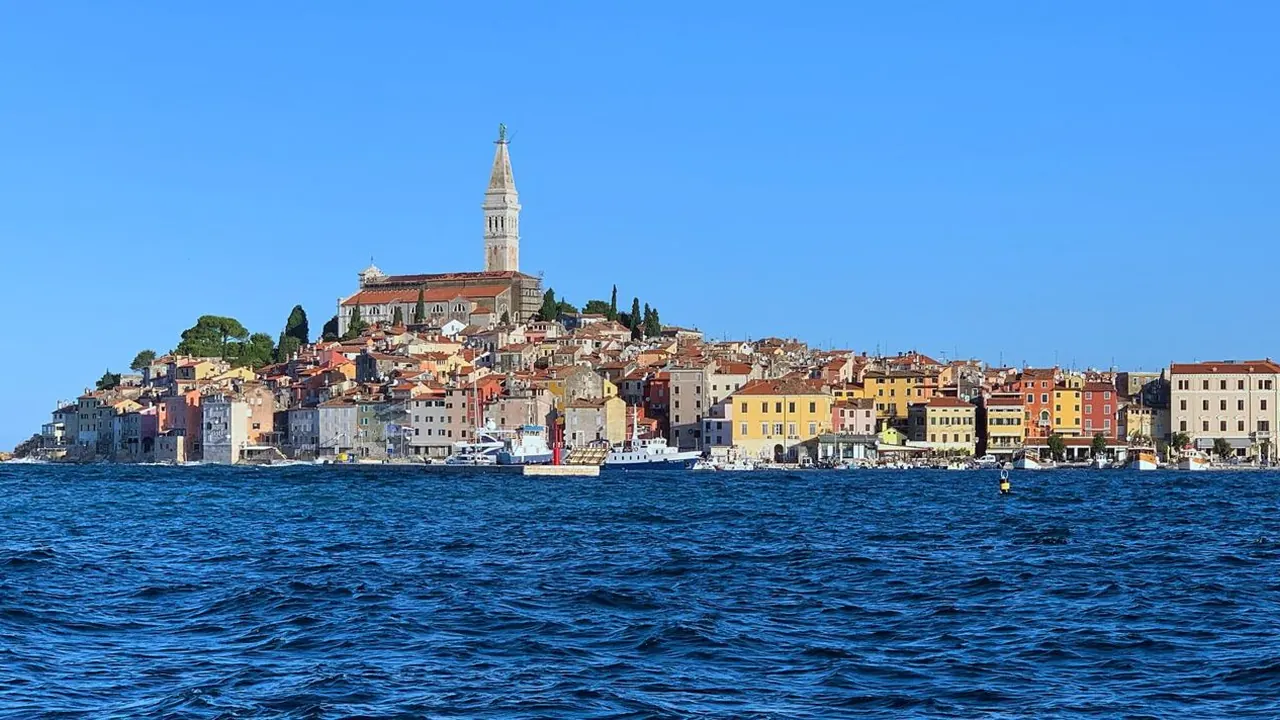
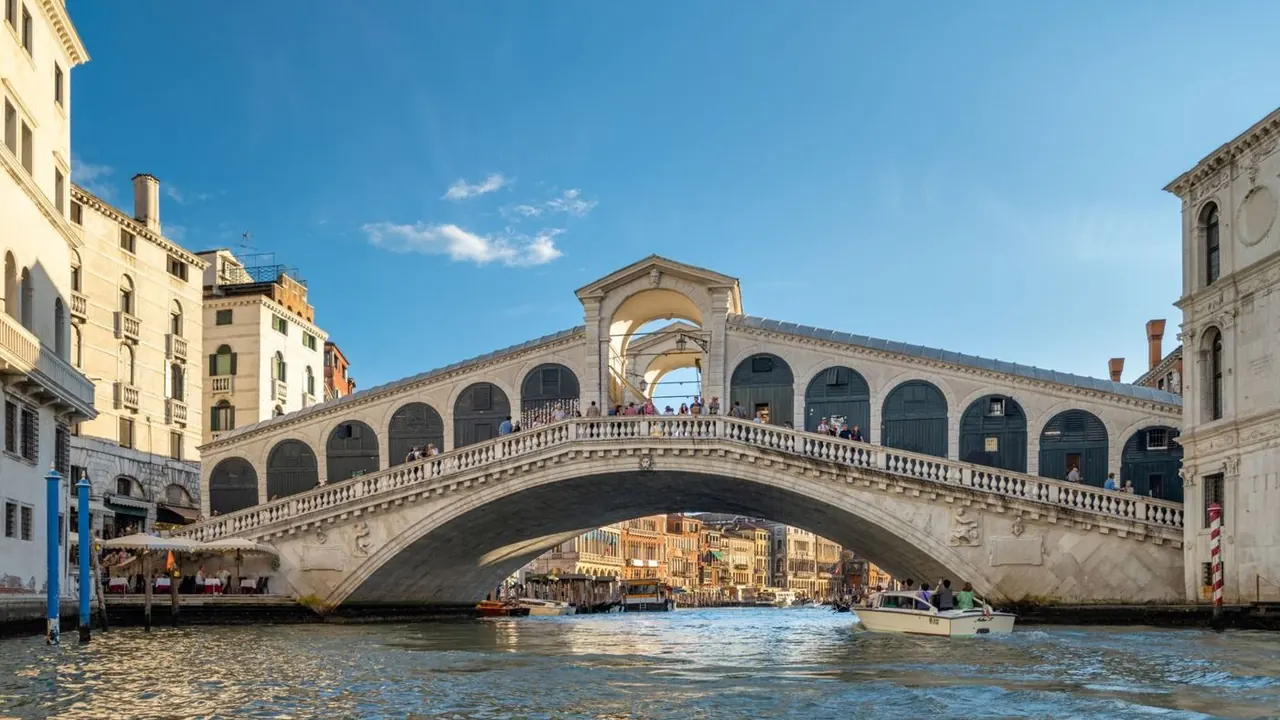
Photos: Rovinj by Vyacheslav Bukharov, CC BY-SA 4.0, cropped; Venice by David Vives, Pexels License.
Rovinj or Venice?
Our verdict in twelve categories, each scored against the same fixed benchmark cities, and the climate month by month, so you can choose for your trip.
Choose Rovinj for
- prices
- nature and the outdoors
- beaches
Rovinj suits a slower summer trip built around the sea: clear water off the rocks below the old town, the pine paths of the Golden Cape, kayaking among the islands, and a car for the Roman sites and hill towns of Istria. It is the easier choice for families and couples who want a week of swimming and long dinners with a little less strain on the budget, and who accept that the town's sights fit into an afternoon.
Choose Venice for
- culture and sights
- live music and the arts
- shopping
For anyone who travels to look and listen, Venice is the stronger pick. Its palaces, churches and painting collections fill days rather than hours, La Fenice and the church concerts give the evenings a purpose, and fast trains put Padua, Verona and Vicenza within easy reach. The sea is an afterthought here and the city costs even more, so it rewards a stay led by culture far more than one built around the beach.
Scoreboard
Twelve categories on one fixed scale from 0 to 100. The shaded stretch is the gap between the two.
Your match
Pick a travel style or drag the sliders, and both match scores follow your weighting.
Wins on prices and nature and the outdoors with your weighting.
Wins on culture and sights and live music and the arts with your weighting.
What matters to you?
Category by category
What the scores mean for a trip.
Beaches & swimming
Rovinj is the better place to swim, as long as you are happy on rock. Limestone ledges, pebble coves and bathing platforms run for kilometres through the Golden Cape park, the water is very clear, and you can get in right below the old town or take a taxi boat to St Catherine and Red Island.
Venice has what Rovinj lacks: real sand. The Lido is a vaporetto ride away and has shallow, gentle water that small children will prefer, though the water is greenish and cabanas take up much of the shore. In Venice the beach is a break from sightseeing. In Rovinj it is the reason for the stay.
Food & drink
Venice has the more distinctive table, mainly because of its bacari: an evening of cicchetti and a small glass of wine around the Rialto or in Cannaregio, plus lagoon cooking from the market such as cuttlefish risotto black with its ink and bigoli in salsa. Both towns have the same trap of tourist menus along the main routes, so the good meals take some finding in each.
Rovinj's strength is its region more than its streets: Istrian pasta with truffle, peppery olive oil, Malvazija and Teran, and country konobas worth the drive. It makes for a week of very good fish dinners, but it has nothing like Venice's habit of eating at the counter.
Culture & sights
The gap here is very wide. Venice is one of Europe's great art cities, with San Marco and the Doge's Palace, the palazzi of the Grand Canal, Titian in the Frari, Tintoretto at San Rocco, the Accademia, and modern art at the Peggy Guggenheim. Even a week leaves plenty unseen.
Rovinj's old town is a lovely Venetian-built quarter in its own right, climbing to the bell tower of St Euphemia. Once you add the town museum and the Batana House, though, the list is done within an afternoon, and anyone staying a week soon drives out for more.
Nightlife
Neither town suits a big night out, and both are quiet by midnight. What differs is the hour and the setting. In Rovinj the evening is a long dinner and then a drink on the rocks or in a waterfront cocktail bar. There are a couple of places to dance in high season and very little outside summer.
Venice is at its liveliest earlier, at aperitivo time, when spritzes fill the bacari of the Rialto and the Fondamenta della Misericordia, and Campo Santa Margherita keeps a student crowd out later. After that, the pleasure is a silent walk along dark canals.
Nature & outdoors
Rovinj has the more rewarding outdoors on its doorstep. The pine and cedar paths of the Golden Cape start at the edge of town, the archipelago is good for kayaking, paddleboarding and diving around reefs and wrecks, and the Lim Fjord and the vineyard country inland offer easy cycling and walking.
In Venice, nature means the lagoon: marshes and mudflats around Torcello and Sant'Erasmo with herons, egrets and flamingos, best seen from a kayak or a rowing boat. It is subtle and flat, the city has little green space, and real hills are an hour or more away.
Day trips
Both are well placed, but Venice makes day trips easier and reaches further. Fast trains get to Padua in about half an hour and to Verona, Vicenza and Bologna with no car needed, and Murano, Burano and Torcello make a full day out by boat alone.
Rovinj's corner of Istria is rich for its size, with Pula's amphitheatre, the mosaics at Porec, hill towns such as Motovun and Groznjan, and even Piran and Trieste within reach. Almost all of it, though, means driving.
Good for families
Rovinj is the somewhat easier family base. The resorts and campsites around town have pools and playgrounds, the flat paths of the Golden Cape suit pushchairs and bikes, and the pace is relaxed. The catches are the rocky shore, which means water shoes, and the steep cobbles of the old town.
Children love the boats and car-free alleys of Venice, and the shallow sand at the Lido is gentler than Rovinj's rocks. But stepped bridges, summer crowds and very few parks or playgrounds make it hard going with toddlers, so it works best as a short stay with older children.
Getting around
Both centres are car-free and best walked, so the difference lies beyond them. Venice adds vaporetti along the Grand Canal and out to the islands, and trains and buses arrive at the edge of the centre, so you never need a car. Bridges with steps make luggage hard work, though.
Rovinj is easy on foot and by bike along the shore, with taxi boats to the islands. There is no railway, however, so exploring the wider region really means hiring a car, and parking near the old town is tight in summer.
Shopping & style
Venice gives shoppers far more to do. Its crafts are the real thing if you buy from the workshops: Murano glass, Burano lace, papier-mâché masks, marbled paper and furlane slippers. The big fashion names line Calle Larga XXII Marzo and the Mercerie. Watch for imported copies along the main routes.
Shopping in Rovinj mostly means food and drink to take home, such as truffles, olive oil and Istrian wine, plus the galleries and studios along Grisia. It is pleasant for an hour, but there are no fashion streets at all.
Affordability
Neither is a bargain, but Rovinj is easier on the wallet. Its summer hotels and harbour restaurants are expensive, and fish sold by weight adds up, yet private apartments, the big campsites, bakeries and the morning market all save real money.
Venice is costly at almost every turn: central hotels, water transport and entry to many churches and sights. Cicchetti at a bar counter and a bed in Mestre or a quieter sestiere help, but the city stays dear.
Live music & performing arts
Venice has a real performing arts life and Rovinj has very little. La Fenice runs a full season of opera, ballet and concerts, the Teatro Goldoni stages drama, the Biennale adds contemporary festivals, and baroque concerts of Vivaldi fill churches most evenings.
In Rovinj there are summer concerts in St Euphemia, music on the squares and the occasional performance of bitinada, the local unaccompanied singing. For a big concert, people go to the Roman arena in Pula.
Wellness & relaxation
Rovinj is a place to unwind outdoors. For spa treatments you go to the larger resort hotels along the Golden Cape, some with pools and saunas open to outside guests. The real rest, though, is a long lunch, a late swim off the rocks and an evening walk under the pines in May, June or September, while in high summer the quiet lies further along the shore, away from the harbour.
Venice is calm in a different way: it is a city without traffic. That quiet is best early in the morning in Castello, Cannaregio or on Giudecca, while San Marco and the Rialto are crowded by day. Its hotel spas are in grand palazzi and on the Lido, and for proper thermal bathing, with hot mud and pools used since Roman times, Abano Terme near Padua is about an hour away.
When should you go?
Pick your month. The climate figures are measured averages, not a forecast.
Rovinj in July
Venice in July
Daytime high, °C
Rainfall in the month, mm
Where the figures come from
Rovinj's temperatures are measured 64 km from the centre, at Trieste.
Rovinj has no rain gauge within 25 km of the centre, so its rainfall comes from a gridded climate dataset read at the city rather than from a gauge further away.
Venice has no rain gauge within 25 km of the centre, so its rainfall comes from a gridded climate dataset read at the city rather than from a gauge further away.
Venice's sunshine is measured 26 km from the centre, at Treviso / S. Angelo.
Temperature and rainfall are climate normals, averaged over the years shown. Rovinj: 1991-2020 normals, Trieste (63.7 km from centre). Venice: 1991-2020 normals, Venezia / Tessera (6.7 km from centre).
Both towns sit on the northern Adriatic and share much the same year. June to September is the swimming season in each, with the sea warmest in August at around 26°C. Daytime highs reach about 29°C in July and August, which makes afternoons sticky for crossing Venice's bridges but suits a day on the rocks at Rovinj. Rovinj also gets a little more sunshine all through the summer.
They differ most in autumn and winter. In Rovinj heavy rain sets in from September to November, peaking at about 102mm, so its best months are May, June and early September. Venice is also wet in September but drier through the winter, and its cool months from November to March, with highs around 7°C in midwinter, still work for museums and churches. Rovinj in winter has little to fill an indoor day.
Which traveller are you?
For a beach and sun trip, Rovinj is the clear pick. Clear water runs right up to the old town walls, swimming rocks and coves line the Golden Cape park for kilometres, and quieter island coves are a short taxi boat away. In Venice the Lido is mostly an afternoon outing.
On a culture and arts trip, Venice is in another league: San Marco and the Doge's Palace, the Accademia, Titian and Tintoretto in the churches they were painted for, the Biennale, and La Fenice in the evening. Rovinj's sights take an afternoon.
For an outdoors trip, Rovinj gives far more to do from the door: cycling and walking in the Golden Cape forest, kayaking and diving around the islands, reefs and wrecks, and quiet vineyard trails inland. Venice offers the flat lagoon marshes and not much else close by.
Before you go
| Measure | Rovinj | Venice |
|---|---|---|
| Official language | Croatian | Italian |
| Currency | Euro (EUR) | Euro (EUR) |
| Sockets | CF230 V, 50 Hz | CFL230 V, 50 Hz |
| Driving side | Right | Right |
| Time zone | UTC+1, UTC+2 in summer | UTC+1, UTC+2 in summer |
| Emergency number | 112 | 112 |
| Elevation | 0 m | 2 m |
| Main airport | Pula Airport (PUY)31 km from centre34 non-stop destinations | Venice Marco Polo Airport (VCE)7 km from centre103 non-stop destinations |
| Public holidays this year | 14 days | 13 days |
By the numbers
| Measure | Rovinj | Venice |
|---|---|---|
| City population | 12,968 | 250,369 |
| People per km² | - | 602 |
| Museums within 10 km | 1 | 52 |
| UNESCO World Heritage sites within 50 km | 1 | 5 |
| Swim season, months above 21 °C | 4 months | 4 months |
Where else could you go?
Every comparison below shares a destination with this one, so you can follow Rovinj or Venice somewhere new.