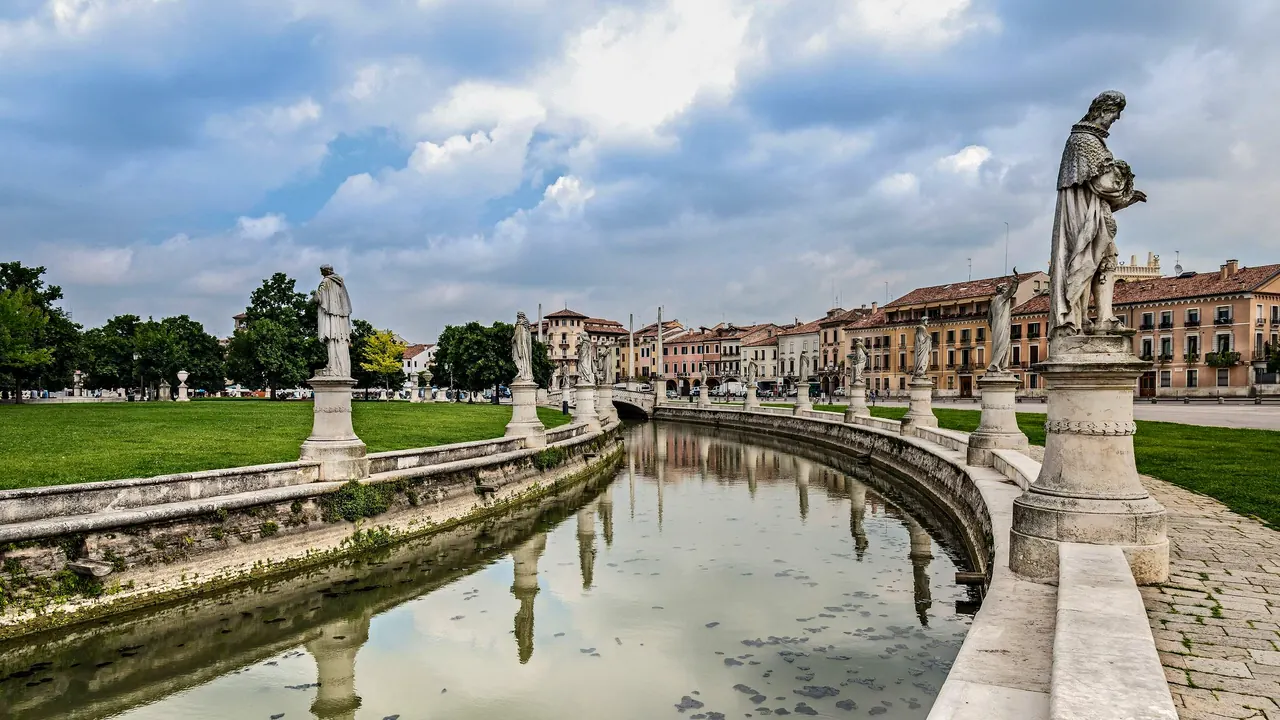
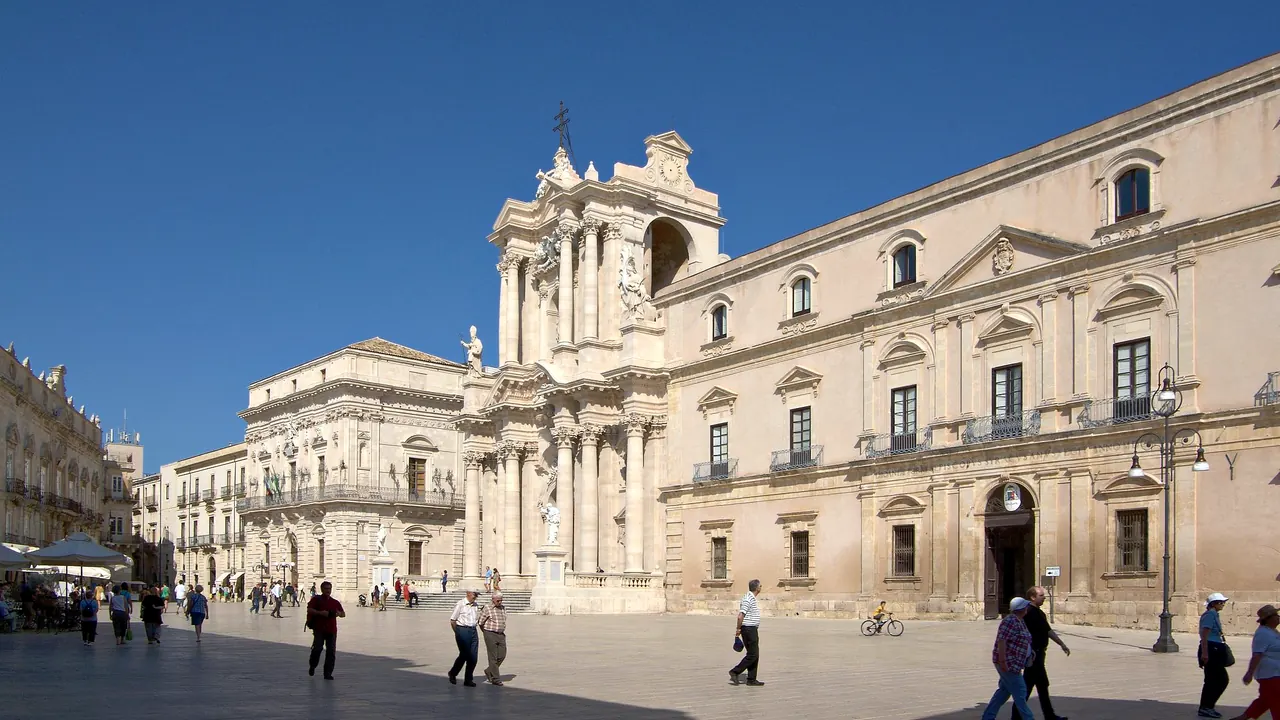
Photos: Padua by Didier Descouens, CC BY-SA 4.0, cropped; Syracuse, Sicily by Berthold Werner, CC BY-SA 3.0, cropped.
Padua or Syracuse, Sicily?
Our verdict in twelve categories, each scored against the same fixed benchmark cities, and the climate month by month, so you can choose for your trip.
Choose Padua for
- getting around
- wellness
- shopping
Padua suits a traveller who wants northern Italy without a car. Giotto's Scrovegni frescoes and the Basilica of Saint Anthony sit within a short walk of each other, and Venice, Vicenza, Verona and Bologna are all easy train rides away. After a day of sightseeing, the thermal pools of Abano are close enough for a soak. It works best for someone happy to sleep in one calm, well-connected place and spend the days somewhere else.
Choose Syracuse, Sicily for
- beaches
- nature and the outdoors
- families
If the sea belongs in the trip, Syracuse is the better choice. Here you can swim off the rocks below Ortigia's walls, see a Greek temple inside a baroque cathedral, then visit pale reserve beaches and green gorge pools further out. Mornings go on ruins and afternoons on the water. It suits people who don't mind hiring a car, because the best of the coast and the Val di Noto towns are hard to reach without one.
Scoreboard
Twelve categories on one fixed scale from 0 to 100. The shaded stretch is the gap between the two.
Your match
Pick a travel style or drag the sliders, and both match scores follow your weighting.
Too close to call, level with your weighting
Wins on getting around and wellness with your weighting.
Wins on beaches and nature and the outdoors with your weighting.
What matters to you?
Category by category
What the scores mean for a trip.
Beaches & swimming
The gap here is wide. Padua is inland, and a beach day means an hour's journey to Sottomarina or the Venice Lido. There you'll find shallow, calm water and long rows of umbrellas rather than scenery.
In Syracuse, swimming is part of everyday life. People swim off the platforms below Ortigia's sea walls, families head for the sandy bays at Arenella and Fontane Bianche, and the Vendicari reserve has pale sand with nothing built behind it. All of this comes with clear Ionian water from June into early October.
Food & drink
Both cities cook regional food rather than international, but Syracuse has the edge, mainly because of its seafood. The Ortigia market supplies swordfish, tuna, sea urchin and capers for pasta and rolled fish dishes, and summer mornings start with granita and brioche.
Padua's food is Venetian home cooking: bigoli with duck, baccalà, and risotto with peas, bought fresh at the twin markets under the Palazzo della Ragione. Here the drinking culture counts for as much as the plate, with the evening spritz and Euganean wines, while Syracuse pours Nero d'Avola and sweet Moscato.
Culture & sights
The two are close in depth but very different in what they offer. Padua is a city of painting and learning. Giotto's Scrovegni Chapel and the UNESCO-listed fresco cycles are its centrepiece, along with Donatello's work at Saint Anthony's, the oldest permanent anatomical theatre and the 1545 botanical garden. All of it fits into a compact centre you can cover in a day or two.
Syracuse goes back to the ancient Greek world. It has a cathedral built around a temple to Athena, the rock-cut theatre and Ear of Dionysius in the Neapolis park, and the Paolo Orsi museum, all set among Ortigia's baroque lanes. It needs two or three full days.
Nightlife
Neither city is for clubbing, but Padua has a little more going on and keeps it up through more of the year. During term, students fill Piazza delle Erbe and Piazza dei Signori with spritz glasses on weekday evenings, and there are wine bars and small pubs around the Bo and the old ghetto.
In Syracuse, evenings follow the seasons. On summer weekends Ortigia's lanes and sea walls stay busy past midnight, and the southern beach clubs add some dancing in July and August. In winter most nights end early. The two cities peak at opposite times, since Padua goes quiet in high summer, just when Syracuse is at its liveliest.
Nature & outdoors
Syracuse has more varied outdoors close at hand. Inland, there are limestone gorges with green pools at Cavagrande and the Anapo valley. Along the coast, flamingos stop at the Vendicari lagoons, and the Plemmirio marine reserve offers snorkelling and diving. Etna is close enough for a day on the volcano.
Around Padua the land is flat, so outdoor days start a little way out of town. Options include vineyard and chestnut trails in the Euganean Hills, level bike rides along the Brenta towpaths and, about one and a half hours away, real mountain walking on Monte Grappa and the Asiago plateau.
Day trips
Both are excellent bases, but Padua has the advantage because its day trips run by train. Venice is under half an hour away and Vicenza even closer, with Verona, Treviso, Bologna and Ferrara all around an hour away. Nearer still are the Brenta villas and the walled towns below the Euganean Hills.
The day trips from Syracuse are just as rewarding. They include the baroque towns of Noto, Modica, Ragusa Ibla and Scicli, Taormina's theatre above the sea and the mosaics at Piazza Armerina. Most of them are much easier with a hire car.
Good for families
Syracuse works better for children, mainly because of its gently sloping sandy beaches. They also tend to enjoy the echo in the Ear of Dionysius, the papyrus boat trips on the Ciane and the puppet shows, and granita makes a good reward along the way.
Padua is safe, flat and largely pedestrianised, and Prato della Valle gives children space to run. Beyond that, the sights are mostly frescoes and churches. Families staying here usually plan outings to Gardaland and Lake Garda, or to the Adriatic.
Getting around
Padua is much easier to get around. The flat centre is sheltered by arcades and is walkable from end to end in about 20 minutes, with a tram linking the station to Prato della Valle. Fast main-line trains make a whole region reachable without a car.
In Syracuse, Ortigia itself is easy to cross on foot, and the archaeological park is a short taxi ride away. Beyond that, buses are infrequent and trains slow, and Vendicari or the gorges are realistically reachable only by car. Most visitors hire one for part of their stay.
Shopping & style
Neither city is a shopping destination, but Padua gives you more to browse. Its arcades are lined with everyday Italian fashion, shoes and books, a range Ortigia's small lanes can't match. Syracuse makes up for it with crafts Padua doesn't have: hand-painted ceramics, linen, coral jewellery and papyrus paintings tied to the Ciane river.
You can buy food to take home in both, though each sends you home with something different. Under the Palazzo della Ragione in Padua, it's cheeses, cured meats and Euganean wine. Ortigia's market sells the flavours of the far south, such as capers, almonds and pistachio. Padua also has a large antiques market in Prato della Valle once a month, and Syracuse has nothing like it.
Affordability
Overall costs are similar, but money goes on different things. Padua's main saving is the bed. Its rooms make a fairly priced base for visiting Venice and the region, the city is walkable and trains are cheap to use. Prices rise around trade fairs and graduations.
In Syracuse, food is the bargain, with arancini, market sandwiches and trattoria meals costing less than in the north. Accommodation on Ortigia in high summer and the near-essential hire car push the total back up. Shoulder seasons and mainland rooms help keep it down.
Live music & performing arts
There isn't much in either city, and what there is differs in kind. Padua has a modest programme all year: prose theatre and some opera at the horseshoe-shaped Teatro Verdi, and chamber concerts in the Sala dei Giganti and the Basilica. The Fenice in Venice and the Arena in Verona are within easy reach.
Syracuse has one unforgettable season. Every late spring and early summer, Greek tragedies and comedies are staged in the ancient theatre, a tradition running since 1914. At other times of year there is little beyond the Sicilian puppet theatres of Ortigia.
Wellness & relaxation
This is one of Padua's strongest cards. Abano Terme and Montegrotto Terme, about 12km away, form a major thermal district with hot mineral pools and mud treatments that go back to Roman times. Many spa hotels welcome day visitors, so a soak fits easily after a morning of sightseeing.
Syracuse has no thermal tradition and only a few hotel spas. What it offers instead is a slow pace: unhurried lunches and evening walks on the sea walls, best outside the heat and crowds of August.
When should you go?
Pick your month. The climate figures are measured averages, not a forecast.
Padua in July
Syracuse, Sicily in July
Daytime high, °C
Rainfall in the month, mm
Where the figures come from
Padua's temperatures are measured 35 km from the centre, at Treviso / Istrana.
Padua has no rain gauge within 25 km of the centre, so its rainfall comes from a gridded climate dataset read at the city rather than from a gauge further away.
Padua's sunshine is measured 36 km from the centre, at Treviso / S. Angelo.
Syracuse, Sicily's temperatures are measured 45 km from the centre, at Cozzo Spadaro.
Syracuse, Sicily has no rain gauge within 25 km of the centre, so its rainfall comes from a gridded climate dataset read at the city rather than from a gauge further away.
Temperature and rainfall are climate normals, averaged over the years shown. Padua: 1991-2020 normals, Treviso / Istrana (35.4 km from centre). Syracuse, Sicily: 1991-2020 normals, Cozzo Spadaro (45 km from centre).
Padua has cold winters, often foggy, with January highs around 8°C. Summers are hot and humid and reach 31°C in July and August. Rain is spread across the year and is heaviest in November, so May, June and September are the comfortable months for walking the arcades and visiting the frescoes. The Adriatic, an hour away, is warm enough for swimming from late June to early September.
Syracuse is milder and much sunnier all year. January reaches about 16°C, which makes winter good for sightseeing. Summer is almost rainless, but midsummer is as hot as in Padua, so the ruins are best early in the day and afternoons belong to the beach. The sea is still cool in spring. By June it is pleasantly warm, though a few degrees below its peak. September keeps the water close to its warmest while the heat eases, which makes it the best month for combining sites and swimming. The rain comes back in October, the wettest month, but the sea stays warm through it.
Which traveller are you?
On a beach and sun trip, Syracuse is the clear choice. You can swim straight off Ortigia's rocks, there are sandy family bays to the south and undeveloped coves in the Vendicari reserve, and a long, dry summer keeps the sea warm. Padua's nearest beaches are an hour away and plain.
For a relaxing and wellness trip, Padua comes out ahead. One of Europe's largest thermal districts lies just outside the city at Abano and Montegrotto, with hot mineral pools and mud treatments. Syracuse offers a slow pace and sunsets, but almost no spa culture.
For a short city break, Padua is easier. The flat, arcaded centre puts the frescoes, basilica and markets within a short walk, and the station sends trains in every direction. Syracuse needs longer and a car to show its best.
Before you go
| Measure | Padua | Syracuse, Sicily |
|---|---|---|
| Official language | Italian | Italian |
| Currency | Euro (EUR) | Euro (EUR) |
| Sockets | CFL230 V, 50 Hz | CFL230 V, 50 Hz |
| Driving side | Right | Right |
| Time zone | UTC+1, UTC+2 in summer | UTC+1, UTC+2 in summer |
| Emergency number | 112 | 112 |
| Elevation | 12 m | 17 m |
| Main airport | Venice Marco Polo Airport (VCE)39 km from centre103 non-stop destinations | Catania-Fontanarossa Airport (CTA)48 km from centre96 non-stop destinations |
| Public holidays this year | 13 days | 13 days |
By the numbers
| Measure | Padua | Syracuse, Sicily |
|---|---|---|
| City population | 206,496 | 115,515 |
| People per km² | 2,220 | 556 |
| Museums within 10 km | 29 | 11 |
| UNESCO World Heritage sites within 50 km | 5 | 2 |
| Swim season, months above 21 °C | 4 months | 5 months |
Where else could you go?
Every comparison below shares a destination with this one, so you can follow Padua or Syracuse, Sicily somewhere new.
- Venicevs Padua
- Cataniavs Syracuse, Sicily
- Veronavs Padua
- Taorminavs Syracuse, Sicily
- Bolognavs Padua
- Cortina d'Ampezzovs Padua