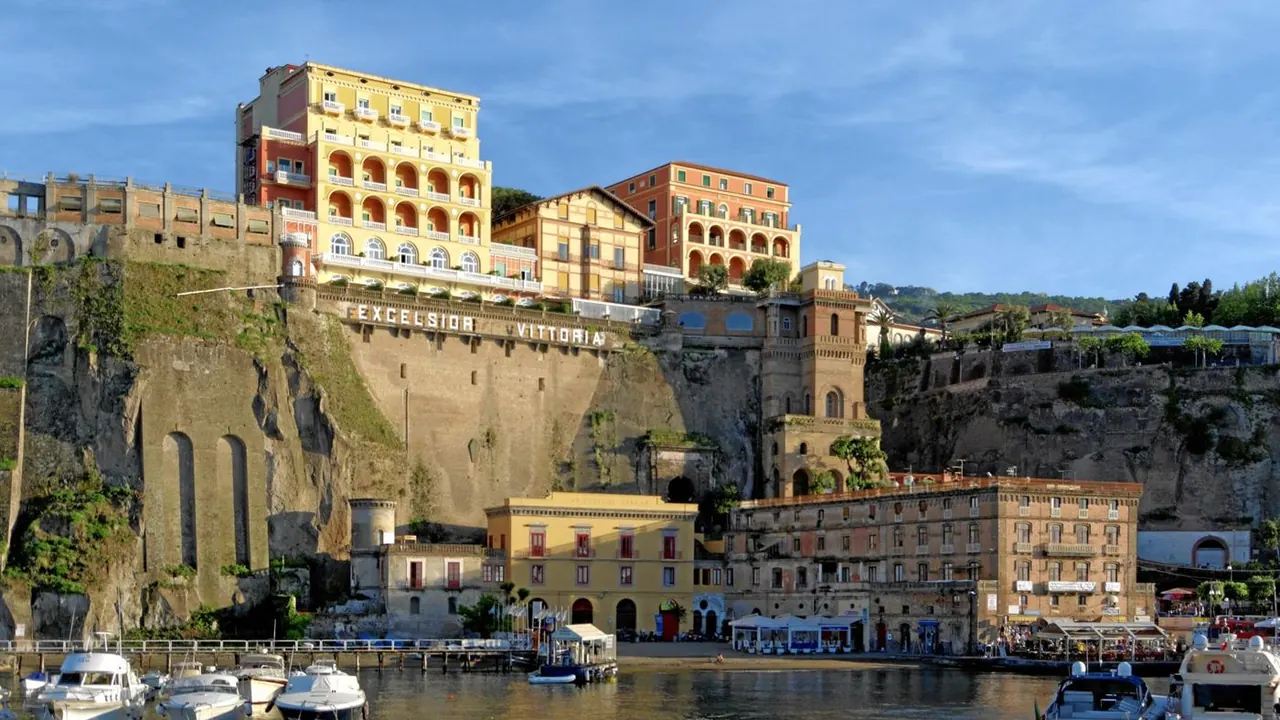
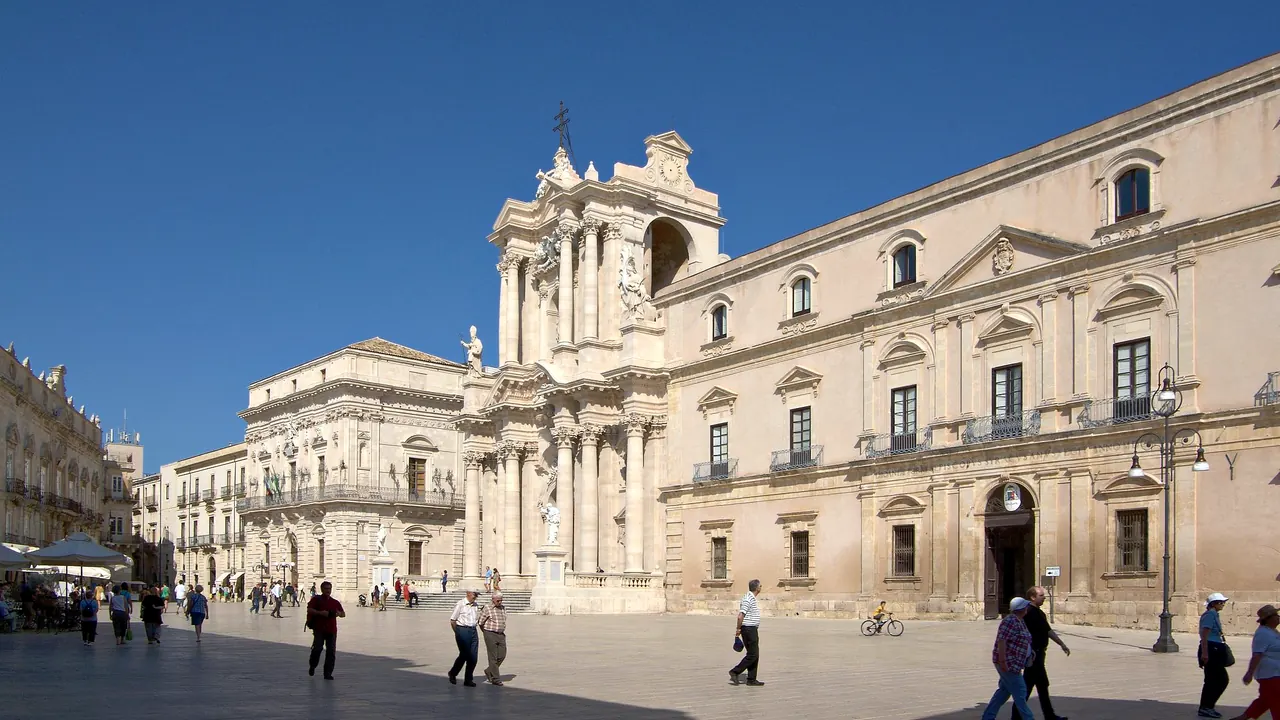
Photos: Sorrento by Berthold Werner, CC BY-SA 3.0, cropped; Syracuse, Sicily by Berthold Werner, CC BY-SA 3.0, cropped.
Sorrento or Syracuse, Sicily?
Our verdict in twelve categories, each scored against the same fixed benchmark cities, and the climate month by month, so you can choose for your trip.
Choose Sorrento for
- getting around
- day trips
- nature and the outdoors
Sorrento is the better base for a traveller who wants to keep moving. Pompeii, Herculaneum, Vesuvius, Capri, the Amalfi Coast and Naples are all reachable by train or boat without a car, and the hills behind town have some of the finest coastal walking in Italy. Choose it if you want to explore a famous region and come back each evening to a quiet terrace over the bay, and you don't mind paying resort prices for it.
Choose Syracuse, Sicily for
- culture and sights
- prices
- beaches
Syracuse suits someone who would rather have a lot to see in the town itself. Ortigia and the Neapolis park hold Greek temples, a rock-cut theatre and baroque streets worth several full days, and the swimming includes real sandy bays as well as rocks. The food is more rooted in its market and the bill is gentler. You will want a car for the beaches and the baroque towns, but the reward is a fuller, warmer and better-value stay.
Scoreboard
Twelve categories on one fixed scale from 0 to 100. The shaded stretch is the gap between the two.
Your match
Pick a travel style or drag the sliders, and both match scores follow your weighting.
Wins on getting around and day trips with your weighting.
Wins on culture and sights and prices with your weighting.
What matters to you?
Category by category
What the scores mean for a trip.
Beaches & swimming
Syracuse offers more kinds of swimming. You can climb in off the rocks and platforms under Ortigia's sea walls, spread out on the gently sloping sand at Arenella and Fontane Bianche, or drive to the undeveloped pale beaches of Vendicari, which are the best of the lot.
Sorrento sits on a cliff and has almost no sand. You swim from wooden lido piers at Marina Piccola and Marina Grande, or from the rocks at the Bagni della Regina Giovanna, into deep, clear water. Much of the shoreline is taken up by paid lidos, and for a real beach you have to catch a bus or a boat.
Food & drink
Syracuse eats better, and its Ortigia market is the reason. Sea urchins, swordfish, capers and citrus from the stalls end up in pasta with sea urchin or sardines, and summer mornings start with almond granita. Good-value Nero d'Avola and Moscato from the surrounding countryside make the meal.
Sorrento has its own strengths: gnocchi alla sorrentina, fish cooked all'acqua pazza, lemons in everything and cheese from the hill dairies. The hill villages also hold some celebrated fine dining. In the centre, though, you need to look past the menus aimed at tour groups to find the good trattorias.
Culture & sights
This is the biggest gap between the two towns. Syracuse was a great Greek city, and you can see it in the Doric columns inside the cathedral, the Greek theatre and the Ear of Dionysius in the Neapolis park, and the Paolo Orsi museum, all set against Ortigia's baroque palaces. It is enough for two or three full days.
Sorrento's own sights fill a gentle day or so: the Roman street grid, the cloister of San Francesco, the Museo Correale and the ravine of the Vallone dei Mulini. The heavyweight history, at Pompeii and in Naples, lies outside the town.
Nightlife
Neither town is built for a big night, but Syracuse stays up later. On summer weekends people move between the small bars in Ortigia's lanes until well past midnight, and in July and August the beach clubs to the south add some dancing.
Sorrento's evening is a stroll along Corso Italia, a drink on a terrace over the bay, or Neapolitan songs in a piano bar, and most of the year it is quiet early. Because the last trains and ferries leave in the evening, a real night out in Naples or on Capri means staying over there.
Nature & outdoors
Sorrento has the more dramatic surroundings. Terraced limestone slopes drop to sheer coast, with paths to Punta Campanella and the protected bay of Ieranto, and the Path of the Gods, Monte Faito and Vesuvius are close by. Boats and kayaks explore the grottoes and coves.
Syracuse's landscape is quieter and more varied than you might expect. Gorges with green pools at Cavagrande, rock-cut tombs in the Anapo valley, and flamingos on the Vendicari lagoons are all within reach, and Etna is a longer drive. Its one clear advantage is under water: the Plemmirio marine reserve is a better place for snorkelling and diving.
Day trips
Both are excellent bases, but Sorrento comes out ahead because so many famous places are close and easy to reach without a car. The Circumvesuviana takes you to Pompeii and Herculaneum, ferries cross to Capri, and Naples is about an hour away. In summer, boats also run along the Amalfi Coast to Positano and Amalfi, and from Amalfi a bus climbs to the villa gardens of Ravello.
From Syracuse, the outings are to the UNESCO-listed baroque towns of Noto, Modica and Ragusa Ibla, to Catania, and to the Greek theatre at Taormina. They are just as rewarding, but they are further apart and much easier to reach with a hire car than by bus.
Good for families
Syracuse is easier with children, mainly because of its beaches. The sand at Arenella and Fontane Bianche slopes gently into the water, Ortigia's lanes are mostly free of cars, and puppet shows and boat rides among the papyrus help to break up the archaeology.
Sorrento's flat centre is easy with a pushchair, and a boat to Capri or a train to Pompeii goes down well with children. However, the swimming is off piers and rocks into deep water, and many hotels are on steep lanes with no pavements, so families with small children usually rely on a hotel pool.
Getting around
Both have small, walkable centres where a car is a nuisance. The difference is what happens once you leave them. From Sorrento you can reach most places by the Circumvesuviana train, by bus or by ferry. They are often crowded or slow, but you will not need to hire a car.
In Syracuse, Ortigia takes about fifteen minutes to cross on foot. Beyond it, city buses are confusing for visitors, regional services are thin, and the Vendicari beaches and the inland gorges are realistically only reachable by car, so most visitors hire one for part of their stay.
Shopping & style
Shopping is modest in both, and what differs is the local craft. Sorrento has intarsia boxes and trays made of inlaid wood and leather sandals made to measure while you wait, and the boutiques of Capri are one boat ride away if you want more. Syracuse has hand-painted Sicilian ceramics, papyrus paintings, and capers, almonds and pistachio products from the morning market to take home.
Affordability
Syracuse is noticeably cheaper. Eating out costs little, from market sandwiches to trattoria meals with local wine, and both site entry and mainland rooms are reasonable. The real costs are Ortigia rooms in high summer and the hire car you will probably need.
Sorrento charges what you would expect on one of Italy's most famous coasts. Sea-view rooms, lido sunbeds, terrace restaurants and private boats all add up quickly, although cheap public transport and lower hotel rates in spring and late autumn help.
Live music & performing arts
Syracuse has one event that Sorrento cannot match. Every late spring and early summer, Greek tragedies and comedies are performed in the ancient theatre, a tradition dating from 1914, and Ortigia's family puppet theatres keep the Sicilian tales of knights alive.
In Sorrento, performances mean Neapolitan song and tarantella shows put on for visitors, plus summer concerts in the San Francesco cloister. For opera, go to the Teatro di San Carlo in Naples.
Wellness & relaxation
Neither has a bathing tradition of its own, but Sorrento has more to offer. Its cliff-top hotels have spas and pools over the bay, and Ischia's thermal gardens by the sea are about an hour away by ferry.
Syracuse offers a slower pace more than treatments. There are a handful of hotel and day spas, but the restful part is long lunches and sunset walks on Ortigia's sea walls outside August.
When should you go?
Pick your month. The climate figures are measured averages, not a forecast.
Sorrento in July
Syracuse, Sicily in July
Daytime high, °C
Rainfall in the month, mm
Where the figures come from
Sorrento has no rain gauge within 25 km of the centre, so its rainfall comes from a gridded climate dataset read at the city rather than from a gauge further away.
Sorrento's sunshine is measured 54 km from the centre, at Grazzanise.
Syracuse, Sicily's temperatures are measured 45 km from the centre, at Cozzo Spadaro.
Syracuse, Sicily has no rain gauge within 25 km of the centre, so its rainfall comes from a gridded climate dataset read at the city rather than from a gauge further away.
Temperature and rainfall are climate normals, averaged over the years shown. Sorrento: 2005-2025 (sunshine 1991-2020, rainfall 1991-2020) normals, Capri (17 km from centre). Syracuse, Sicily: 1991-2020 normals, Cozzo Spadaro (45 km from centre).
Both towns have a beach season from June to September, and the sea is about equally warm, peaking near 26°C in August. The differences come at the edges of the year. Syracuse is the warmer, drier and sunnier of the two. Its summer is almost rainless and its winter days stay mild enough for walking around Ortigia and the archaeological park. Sorrento is cooler in winter, and it turns wet much earlier and more heavily, from September onwards, with November the soggiest month at around 151mm.
Both are hot in July and August, at about 30°C, which is hard work for sightseeing or hiking in the middle of the day. For walking, Sorrento is at its best in May and early June, before the heat and while the trails are dry. Syracuse is pleasant earlier in spring and stays good later in autumn, with October still around 24°C, although it brings the first proper rain.
Which traveller are you?
On a culture and arts trip, Syracuse is the clear choice. Greek and baroque history fills several days within walking distance of your room, and a classical play in the ancient theatre in early summer is something Sorrento cannot offer.
For a trip on a tight budget, Sorrento works against you, since a famous coast sets the prices and only the public transport is cheap. Syracuse lets money go further, especially at the table, although the hire car eats into the savings.
On an outdoors trip, Sorrento is the better pick. The peninsula is made for walking, with footpaths running from village to village high above the sea, and many start close to town. In Syracuse, most of the wild country needs a drive.
Before you go
| Measure | Sorrento | Syracuse, Sicily |
|---|---|---|
| Official language | Italian | Italian |
| Currency | Euro (EUR) | Euro (EUR) |
| Sockets | CFL230 V, 50 Hz | CFL230 V, 50 Hz |
| Driving side | Right | Right |
| Time zone | UTC+1, UTC+2 in summer | UTC+1, UTC+2 in summer |
| Emergency number | 112 | 112 |
| Elevation | 50 m | 17 m |
| Main airport | Naples International Airport (NAP)30 km from centre131 non-stop destinations | Catania-Fontanarossa Airport (CTA)48 km from centre96 non-stop destinations |
| Public holidays this year | 13 days | 13 days |
By the numbers
| Measure | Sorrento | Syracuse, Sicily |
|---|---|---|
| City population | 15,407 | 115,515 |
| People per km² | 1,541 | 556 |
| Museums within 10 km | 6 | 11 |
| UNESCO World Heritage sites within 50 km | 5 | 2 |
| Swim season, months above 21 °C | 5 months | 5 months |
Where else could you go?
Every comparison below shares a destination with this one, so you can follow Sorrento or Syracuse, Sicily somewhere new.
- Positanovs Sorrento
- Amalfivs Sorrento
- Naplesvs Sorrento
- Salernovs Sorrento
- Cataniavs Syracuse, Sicily
- Taorminavs Syracuse, Sicily