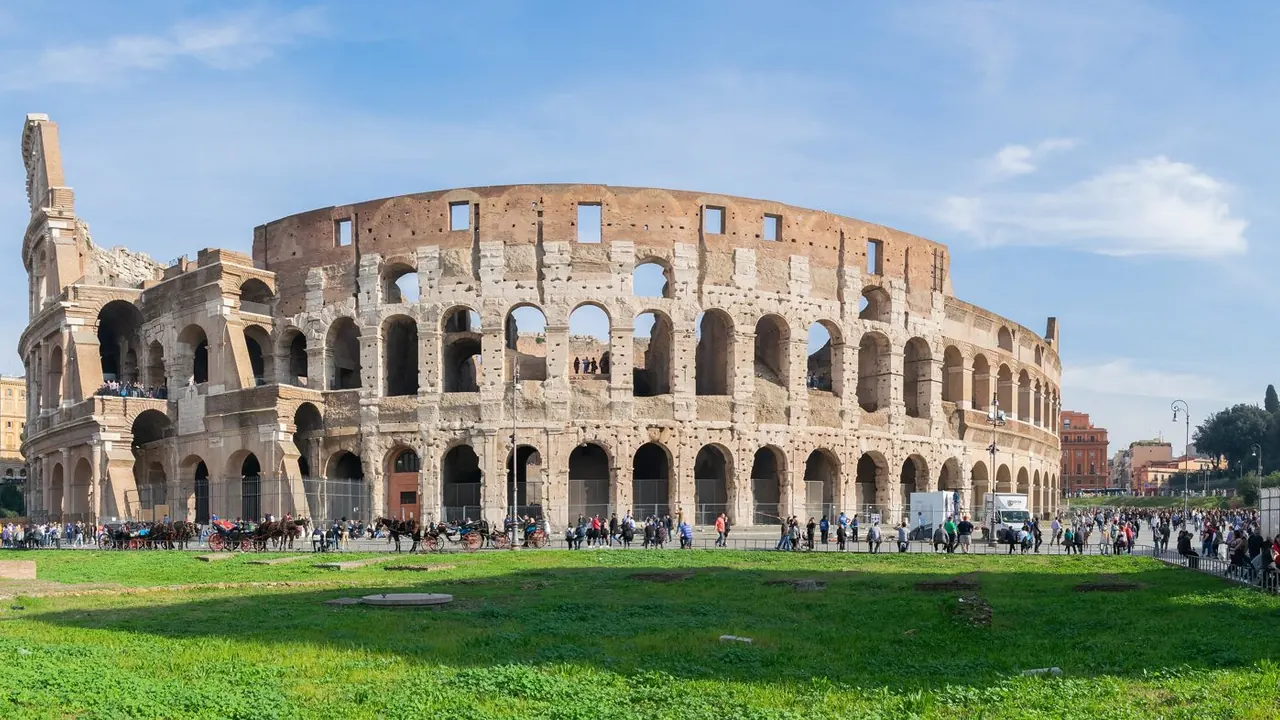
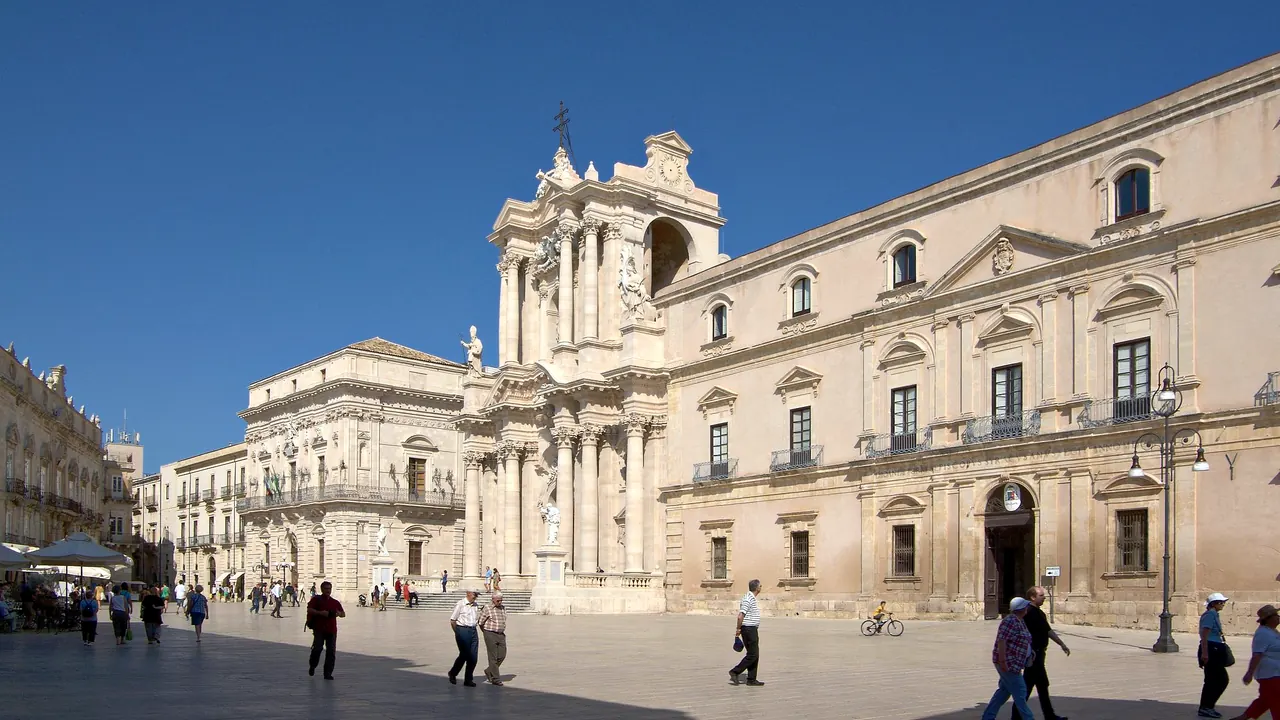
Photos: Rome by Tournasol7, CC BY-SA 4.0, cropped; Syracuse, Sicily by Berthold Werner, CC BY-SA 3.0, cropped.
Rome or Syracuse, Sicily?
Our verdict in twelve categories, each scored against the same fixed benchmark cities, and the climate month by month, so you can choose for your trip.
Choose Rome for
- shopping
- live music and the arts
- culture and sights
Rome is the choice for a trip built around history, art and food. The ancient city, the Vatican and the Baroque churches are in a class of their own. The trattorias of Testaccio and Trastevere serve one of Italy's most distinctive cuisines, and evenings offer more, from wine bars in the piazzas to opera. It suits travellers who are happy to walk all day in a big, loud city and pay for a central room.
Choose Syracuse, Sicily for
- beaches
- prices
- nature and the outdoors
Syracuse is better for a slower vacation where the sea is part of every day. You can swim off the rocks below Ortigia's walls, spend afternoons on the sandy bays to the south, and use a hire car to reach gorges, marshes and Baroque towns. Its Greek temples and theatres are well worth seeing too. Eating and staying cost less, and it rewards people who want sun and quiet evenings more than a long list of sights.
Scoreboard
Twelve categories on one fixed scale from 0 to 100. The shaded stretch is the gap between the two.
Your match
Pick a travel style or drag the sliders, and both match scores follow your weighting.
Wins on shopping and live music and the arts with your weighting.
Wins on beaches and prices with your weighting.
What matters to you?
Category by category
What the scores mean for a trip.
Beaches & swimming
Syracuse is far better for swimming. The sea starts right on Ortigia, where people go in off the rocks below the old walls. Further south are the family beaches at Arenella and Fontane Bianche, rocky coves on the Plemmirio peninsula and the pale, empty sand of Vendicari, all with clear Ionian water.
In Rome the sea is a train ride away rather than part of the day. Ostia's dark volcanic sand is mostly taken up by paid lidos, the water is rarely clear, and for a pretty cove you have to go as far as Sperlonga or Sabaudia.
Food & drink
Rome eats better, with a cooking tradition all its own. There are carbonara, cacio e pepe and the other Roman pastas, artichokes fried the Jewish way in the Ghetto, Testaccio's offal dishes and pizza al taglio sold by weight. The catch is the tired menus around the big sights, which you avoid by walking to Trastevere, Monti or Testaccio.
Syracuse has a narrower range, but its food is rooted in the sea and in Ortigia's morning market: pasta with sea urchin, rolled swordfish, raw prawns and almond granita for breakfast. Its Nero d'Avola and sweet Moscato are more interesting than Rome's Frascati, but the choice of food stays regional.
Culture & sights
Few places anywhere match Rome for this. A short walk takes in the Colosseum, the Forum and the Pantheon. Then there are the Vatican Museums, the Borghese Gallery and centuries of churches shaped by Bernini, Borromini and Caravaggio, enough to fill a week and still leave things out.
Syracuse is well worth seeing too, but its focus is narrower. Its strength is Greek: the temple columns built into the cathedral, the rock-cut theatre in the Neapolis park and the Paolo Orsi museum, all close to Ortigia's baroque lanes. Two or three days cover it well, which leaves time for the sea.
Nightlife
Neither is a clubbing city, but Rome gives you more choice of evening. Trastevere's lanes stay busy late, Monti has cocktail bars, San Lorenzo is cheap and full of students, and Pigneto draws an arty crowd. There are also clubs in Testaccio and Ostiense for those who want them.
Syracuse offers one good evening, repeated: an aperitivo on Ortigia's sea walls and then a few small bars, with beach-club dancing only in high summer. Out of season, nights end early, and for real clubbing you go to Catania.
Nature & outdoors
Syracuse has wilder country around it. Inland, the limestone gorges of Cavagrande and the Anapo valley have trails and green pools, and Vendicari's lagoons draw flamingos. The Plemmirio reserve and Ortigia's sea caves are made for snorkelling and kayaking, and Etna is close enough for a day trip.
Rome's outdoors is gentler and more urban: the old villa parks, a bike ride along the Appian Way past tombs and aqueducts, and the crater lakes of the Alban Hills. For hiking or skiing in the Apennines you need a longer drive.
Day trips
Both make excellent bases, and Rome is slightly ahead on range and ease. High-speed trains reach Florence and Naples in about ninety minutes. Closer in are Ostia Antica, Hadrian's Villa and Villa d'Este at Tivoli, the Etruscan tombs and cliff-top Orvieto.
Syracuse's day trips have more of a single theme: the baroque towns of the Val di Noto, meaning Noto, Modica, Ragusa Ibla and Scicli. Catania, Taormina and the Piazza Armerina mosaics add variety. Most of them are easier with a hire car than by bus.
Good for families
Neither city is built around children, and both have the Italian warmth that makes eating out with them easy. The difference is in how the day runs. Rome has more organised attractions, such as the Bioparco zoo and rowing boats in Villa Borghese, a children's museum, gladiators and catacombs, but cobbles, crowds and queues make sightseeing tiring.
Syracuse relies on the sea. It has gently shelving sand at Arenella and Fontane Bianche, a mostly car-free Ortigia to wander, puppet shows and papyrus boat trips, but no zoo or aquarium to fall back on.
Getting around
Rome is the easier place to spend a whole stay without a car. Most of the days are spent on foot in a centre where one great sight leads to the next within minutes, and public transport handles the longer hops to the Vatican or the station and the rail trips out of town. You will tire of the cobbles in July and August, but you will never need to drive.
In Syracuse the opposite is true. Ortigia and the archaeological park are an easy walk or a short taxi ride apart, but the main reasons to stay longer, Vendicari's sand, the gorges inland and the baroque towns, are poorly served by buses and slow trains. Most visitors hire a car for part of the trip and then have to park it outside Ortigia's restricted lanes.
Shopping & style
Rome is a proper shopping city. It has the fashion houses on Via Condotti and nearby streets, the chains of Via del Corso, Monti's young designers and vintage shops, antique dealers around Via dei Coronari and the sprawling Sunday market at Porta Portese.
Syracuse is for small purchases: hand-painted ceramics, linen, coral jewellery and papyrus paintings in Ortigia's lanes, plus capers, almonds and pistachio products from the market. It has no luxury street to speak of.
Affordability
Syracuse is the cheaper vacation. The gap shows most in food: market sandwiches, arancini and trattoria meals with local wine all cost little, and entry to the sites is moderate. The extra costs are car hire and Ortigia rooms in August.
In Rome, central rooms are small and costly, and the Vatican, the Colosseum and the Borghese all charge substantial fees. Standing espresso, pizza al taglio, free water from the fountains and free entry to churches soften the bill.
Live music & performing arts
Rome has a full year of music. The Teatro dell'Opera stages opera and ballet in winter and moves to the Baths of Caracalla in summer. The Santa Cecilia orchestra plays at the Auditorium Parco della Musica, and there are jazz clubs and concerts in churches.
Syracuse has one outstanding event: Greek drama in the ancient theatre each late spring and early summer, a tradition since 1914. Otherwise there is little beyond puppet theatre and a modest municipal programme, so if this matters, plan your visit around the plays.
Wellness & relaxation
Neither city has a bathing culture, so in both a spa day means a hotel spa. Rome at least has real thermal water nearby, at Bagni di Tivoli and the hot springs around Viterbo. Its centre is noisy, though, and for calm you go to the villa gardens and the Aventine.
What Syracuse offers is a slower pace rather than treatments: a quiet Ortigia outside high summer, long lunches and sunsets from the sea walls.
When should you go?
Pick your month. The climate figures are measured averages, not a forecast.
Rome in July
Syracuse, Sicily in July
Daytime high, °C
Rainfall in the month, mm
Where the figures come from
Rome's sunshine is measured 31 km from the centre, at Vigna Di Valle.
Syracuse, Sicily's temperatures are measured 45 km from the centre, at Cozzo Spadaro.
Syracuse, Sicily has no rain gauge within 25 km of the centre, so its rainfall comes from a gridded climate dataset read at the city rather than from a gauge further away.
Temperature and rainfall are climate normals, averaged over the years shown. Rome: 1991-2020 normals, Roma / Ciampino (15.1 km from centre). Syracuse, Sicily: 1991-2020 normals, Cozzo Spadaro (45 km from centre).
Both cities are at their best in May, June and September, but they differ at either end of the year. Rome has a proper winter, cool and often grey, and its autumn is wet, with November the rainiest month at 114mm. July and August reach 31°C, which makes walking across the centre hard work after mid-morning, so spring and early autumn suit sightseeing better. Ostia's water is warm enough for a swim from June to September.
Syracuse is milder and drier all year. Winter days still reach about 16°C with clearly more sunshine than Rome, and summer is almost rainless. The sea is the main draw: it peaks at 26°C in August and is still around 23°C in October, so you can swim later in the year than in Rome. High summer is hot here as well, so sightseeing is best done in the mornings and evenings, and the rain sets in during October.
Which traveller are you?
For a beach and sun trip, choose Syracuse and stay on Ortigia, so a swim off the rocks can start the day before breakfast. Hire a car for a few days to reach Vendicari, and come between June and early October. In Rome the sea is just one cooling day out.
On a shopping trip, Rome is the obvious choice. Leave room in your luggage for leather goods and handmade shoes, keep one Sunday morning free for the flea market, and set aside whole afternoons for browsing. Syracuse is fine for a few gifts, not a shopping trip.
On a tight budget, Syracuse makes the money last longer. Go in spring or autumn, take a mainland room rather than one on Ortigia, make lunch a market picnic and hire a car only on beach days. In Rome, central rooms take most of the budget.
Before you go
| Measure | Rome | Syracuse, Sicily |
|---|---|---|
| Official language | Italian | Italian |
| Currency | Euro (EUR) | Euro (EUR) |
| Sockets | CFL230 V, 50 Hz | CFL230 V, 50 Hz |
| Driving side | Right | Right |
| Time zone | UTC+1, UTC+2 in summer | UTC+1, UTC+2 in summer |
| Emergency number | 112 | 112 |
| Elevation | 21 m | 17 m |
| Main airport | Rome–Fiumicino Leonardo da Vinci International Airport (FCO)23 km from centre242 non-stop destinations | Catania-Fontanarossa Airport (CTA)48 km from centre96 non-stop destinations |
| Public holidays this year | 13 days | 13 days |
By the numbers
| Measure | Rome | Syracuse, Sicily |
|---|---|---|
| City population | 2,748,109 | 115,515 |
| People per km² | 2,135 | 556 |
| Museums within 10 km | 178 | 11 |
| UNESCO World Heritage sites within 50 km | 8 | 2 |
| Swim season, months above 21 °C | 5 months | 5 months |
Where else could you go?
Every comparison below shares a destination with this one, so you can follow Rome or Syracuse, Sicily somewhere new.
- Cataniavs Syracuse, Sicily
- Taorminavs Syracuse, Sicily
- Vallettavs Syracuse, Sicily
- Sienavs Rome
- Naplesvs Rome
- Palermovs Syracuse, Sicily