Photos: Cortina d'Ampezzo by Andreas Neubauer, Pexels License; Syracuse, Sicily by Berthold Werner, CC BY-SA 3.0, cropped.
Cortina d'Ampezzo or Syracuse, Sicily?
Our verdict in twelve categories, each scored against the same fixed benchmark cities, and the climate month by month, so you can choose for your trip.
Choose Cortina d'Ampezzo for
- nature and the outdoors
- shopping
- wellness
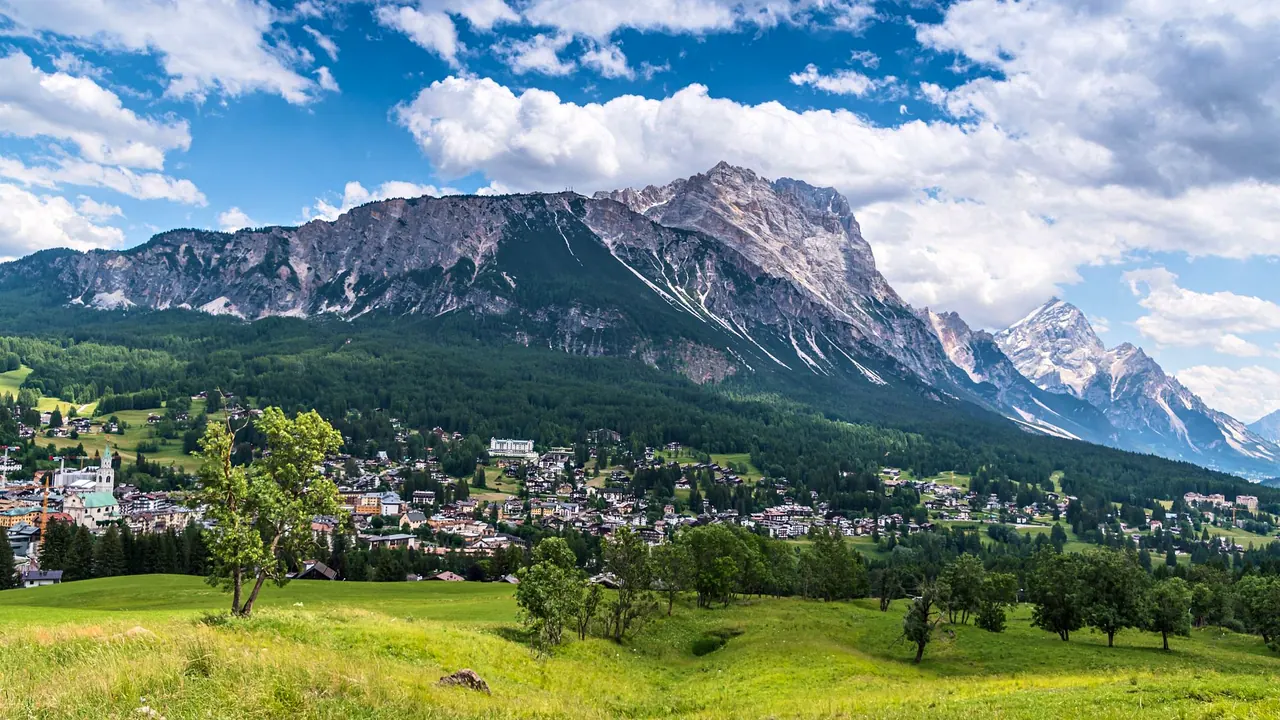
Choose Cortina d'Ampezzo when the mountains are the point of the trip. The Dolomites rise straight from the town and lifts carry you onto the peaks. In winter the valley is part of one of the largest ski areas in the Alps, and in summer there is hut-to-hut hiking and via ferrata. You have to accept that it is expensive, that it goes quiet after dinner and that it has little in the way of sights, beaches or evenings out.
Choose Syracuse, Sicily for
- beaches
- culture and sights
- prices
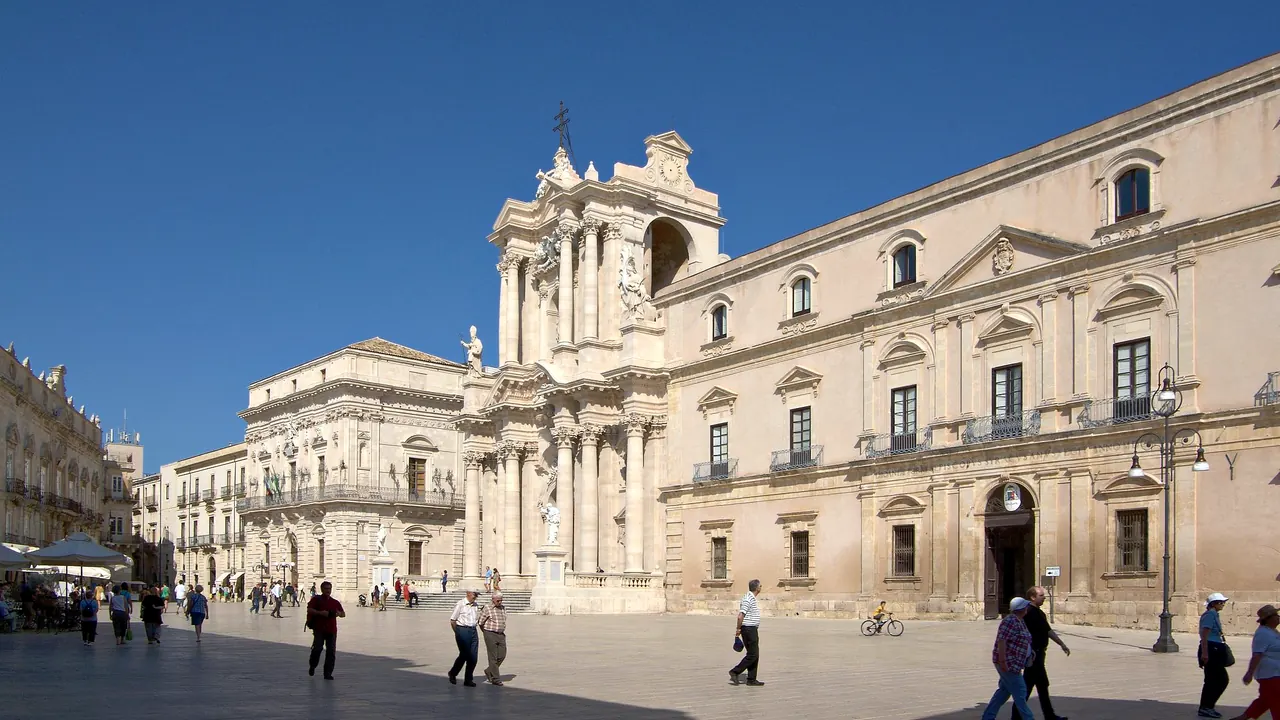
Travellers who want history, sea and food in one place will find Syracuse far richer. On Ortigia you can see a Greek temple inside a baroque cathedral, swim off the rocks below the sea walls and shop at the morning market, all within a short walk. The baroque towns of the Val di Noto are close by. It also costs much less, although its own countryside, fine as it is, cannot match the Dolomites.
Scoreboard
Twelve categories on one fixed scale from 0 to 100. The shaded stretch is the gap between the two.
Your match
Pick a travel style or drag the sliders, and both match scores follow your weighting.
Wins on nature and the outdoors and shopping with your weighting.
Wins on beaches and culture and sights with your weighting.
What matters to you?
Category by category
What the scores mean for a trip.
Beaches & swimming
These two are not comparable for swimming. Cortina sits in a high valley more than two hours from the Adriatic. Its lakes, Ghedina and Pianozes among them, are fed by snowmelt and stay cold, so swimming mostly means a hotel pool.
In summer, life in Syracuse revolves around the sea. People swim from the platforms under Ortigia's sea walls, families go to the lidos at Arenella and Fontane Bianche, and the Vendicari reserve, about forty minutes south, has sand with no development behind it.
Food & drink
Both cuisines are rooted in their regions, but Syracuse gives you more variety and more good meals. Cortina's Ampezzan cooking is mountain food: casunziei with poppy seeds, polenta with game and barley soup. Its best meals are on rifugio terraces, and the choice in the valley is narrow.
Syracuse starts with the Ortigia market, with its swordfish, sea urchins and capers and sandwiches made to order. From there come pasta with sardines, arancini, and granita with brioche for breakfast, with Nero d'Avola and sweet Moscato in the glass. Cortina has almost no street food to compare.
Culture & sights
Syracuse is one of the great ancient sites of the Mediterranean, while Cortina is a resort with a pleasant centre. In Cortina, the basilica's bell tower, the painted houses, the 1956 Olympic ice stadium and the Rimoldi art collection fill a rainy afternoon. Its most moving heritage, the First World War tunnels on Lagazuoi and the Cinque Torri, takes a day in the mountains.
Syracuse needs two or three full days. There is the cathedral built around the columns of a Greek temple, the baroque lanes of Ortigia, and the Greek theatre and Ear of Dionysius at Neapolis. The Paolo Orsi museum and Caravaggio's Burial of Saint Lucy complete the list.
Nightlife
Neither is a place for big nights out, but Syracuse has more going on after dinner. In Cortina the evening means après-ski, a stroll along the Corso Italia and a long dinner. A few smart bars and a club stay open late only in the peak winter weeks.
On Ortigia, an aperitivo along the sea walls leads on to small wine and cocktail bars in the lanes, which stay busy past midnight on summer weekends. In July and August the beach clubs to the south add some dancing. For serious clubbing you have to go to Catania.
Nature & outdoors
Cortina is well ahead here, mostly because of the sheer scale of the scenery. A ring of Dolomite peaks, including the Tofane, Cristallo and the Cinque Torri, starts at the edge of town. You can ski the Dolomiti Superski area in winter and climb some of the oldest via ferrata routes in the Alps in summer.
The countryside around Syracuse is gentler and more varied than you might expect. There are green pools at Cavagrande del Cassibile and easy trails in the Anapo valley below Pantalica. Flamingos stop in the Vendicari lagoons, and the Plemmirio marine reserve is good for snorkelling.
Day trips
Syracuse is by far the better base for day trips. Noto is about forty minutes away, and Modica, Ragusa Ibla and Scicli make up the rest of the UNESCO-listed Val di Noto towns. To the north, Catania and Taormina are within easy reach, and Etna makes a day on the volcano.
From Cortina, most outings go into the mountains rather than to towns. South Tyrol has San Candido, Brunico, and Bolzano with its Iceman, and Venice is possible as a long day by coach. These are pleasant extras rather than reasons to come.
Good for families
The two are broadly level for families, but they suit different children. Cortina works for families who ski or hike. It has ski schools, beginner slopes at Socrepes, public skating at the Olympic stadium and easy walks to huts with meadows to play in. Rainy days and the cost are its weak points.
Syracuse depends on the sea, with gently shelving sand at Arenella and Fontane Bianche. Children also tend to like the echoing Ear of Dionysius and the boat trips through the papyrus. Neither city has a zoo or a theme park.
Getting around
Both centres are small and easy to walk, and both get harder to manage beyond them. Cortina has had no railway since 1964, so you arrive by coach from Venice or by car, and buses up to the passes and the Tre Cime are limited. In winter, ski buses and lifts do most of the work.
Syracuse has slow trains and regional buses to Noto and Catania, but Vendicari and the gorges really need a car. Within Ortigia's restricted traffic zones, though, a car is a burden. In both places the usual answer is to hire a car for part of the stay.
Shopping & style
Cortina has the edge if you want to buy something smart. The Corso Italia is a short street of luxury fashion, jewellers, furriers and high-end mountain wear. It is anchored by the Cooperativa di Cortina, founded in 1893, but there is little beyond it.
Syracuse is more about crafts and food than designer labels. Ortigia's lanes sell hand-painted ceramics, linen, coral jewellery and papyrus paintings, and the market has capers and pistachio products to take home. There is no luxury street, and the Corso Gelone has only ordinary chain stores.
Affordability
There is a wide gap in cost. Cortina is among the most expensive places to stay in Italy. Hotels and restaurants charge luxury-resort prices in the winter peak and in August, and lift passes and equipment hire add to the bill. Meals at the rifugi and the quieter early and late weeks of each season help a little, and many budget travellers sleep in cheaper valleys nearby.
Syracuse is reasonably priced. Market sandwiches, arancini and trattoria meals cost far less than in northern Italy. Rooms on Ortigia in summer are the expensive part, but mainland stays and the shoulder months keep costs moderate.
Live music & performing arts
Neither has a proper theatre or concert season, but Syracuse has one event worth planning a trip around. Cortina has summer chamber and classical concerts in churches and sometimes in mountain settings, the odd concert around New Year, and little else.
In late spring and early summer, Syracuse stages Greek tragedies and comedies in its ancient theatre, a tradition running since 1914. Ortigia also keeps the Sicilian puppet theatre alive in small family-run theatres. For opera or an orchestra you would still have to go to Catania.
Wellness & relaxation
Neither has thermal springs, so the difference between them is in kind. In Cortina, wellness means hotel spas in the Alpine style, with saunas, hay baths, indoor pools and massages after a day on the slopes. The clear air and quiet hut terraces in June and September add to the calm.
Syracuse has fewer spas, and its restfulness comes from the slow pace of Ortigia: long lunches, evening walks along the sea walls and sunsets over the harbour. In August the heat and crowds take that away, much as the peak weeks do in Cortina.
When should you go?
Pick your month. The climate figures are measured averages, not a forecast.
Cortina d'Ampezzo in July
Syracuse, Sicily in July
Daytime high, °C
Rainfall in the month, mm
Where the figures come from
Syracuse, Sicily's temperatures are measured 45 km from the centre, at Cozzo Spadaro.
Syracuse, Sicily has no rain gauge within 25 km of the centre, so its rainfall comes from a gridded climate dataset read at the city rather than from a gauge further away.
Temperature and rainfall are climate normals, averaged over the years shown. Cortina d'Ampezzo: 1991-2020 normals, Dobbiaco (22.5 km from centre). Syracuse, Sicily: 1991-2020 normals, Cozzo Spadaro (45 km from centre).
The two cities have opposite seasons. Cortina is a snow resort from December to March, with daytime highs around freezing in midwinter. From June to September it is mild for hiking, with highs of about 22°C in July and August. Those warm months are also the wettest, with around 130mm of rain in July, so September is often the steadier time for long days on the trails. Spring and late autumn are cool and in between seasons.
Syracuse is dry and sunny in summer and wet in winter. From June to early October the sea is warm enough for proper swimming, reaching 26°C in August. In July and August daytime highs reach 31°C, which makes midday sightseeing hard work. The rain arrives in October, with about 96mm, and lasts through the winter, though the days stay mild enough for walking the streets. April and May are dry, sunny and warm without being hot, and are the best months for seeing the city on foot.
Which traveller are you?
On an outdoors trip, Cortina is the clear choice. Lifts rise from the town into the Dolomites, and the Tre Cime and the Fanes-Sennes-Braies park are close. In winter you can ski, and in summer you can walk the Alta Via 1 or climb via ferrata.
For a beach and sun trip, Syracuse wins easily. You can swim off Ortigia's rocks with the old town behind you, or drive to the pale sand of Vendicari. Cortina's alpine lakes stay cold even in midsummer.
On a culture and arts trip, Syracuse gives you days of things to see: the cathedral built around a Greek temple, the Neapolis theatre, the Paolo Orsi museum and Greek plays staged in spring. Cortina's small museums fill an afternoon at most.
Before you go
| Measure | Cortina d'Ampezzo | Syracuse, Sicily |
|---|---|---|
| Official language | Italian | Italian |
| Currency | Euro (EUR) | Euro (EUR) |
| Sockets | CFL230 V, 50 Hz | CFL230 V, 50 Hz |
| Driving side | Right | Right |
| Time zone | UTC+1, UTC+2 in summer | UTC+1, UTC+2 in summer |
| Emergency number | 112 | 112 |
| Elevation | 1,224 m | 17 m |
| Main airport | Venice Marco Polo Airport (VCE)116 km from centre103 non-stop destinations | Catania-Fontanarossa Airport (CTA)48 km from centre96 non-stop destinations |
| Public holidays this year | 13 days | 13 days |
By the numbers
| Measure | Cortina d'Ampezzo | Syracuse, Sicily |
|---|---|---|
| City population | 5,546 | 115,515 |
| People per km² | 22 | 556 |
| Museums within 10 km | 3 | 11 |
| UNESCO World Heritage sites within 50 km | 1 | 2 |
| Swim season, months above 21 °C | - | 5 months |
Where else could you go?
Every comparison below shares a destination with this one, so you can follow Cortina d'Ampezzo or Syracuse, Sicily somewhere new.
- Cataniavs Syracuse, Sicily
- Taorminavs Syracuse, Sicily
- Innsbruckvs Cortina d'Ampezzo
- Venicevs Cortina d'Ampezzo
- Paduavs Cortina d'Ampezzo
- Vallettavs Syracuse, Sicily