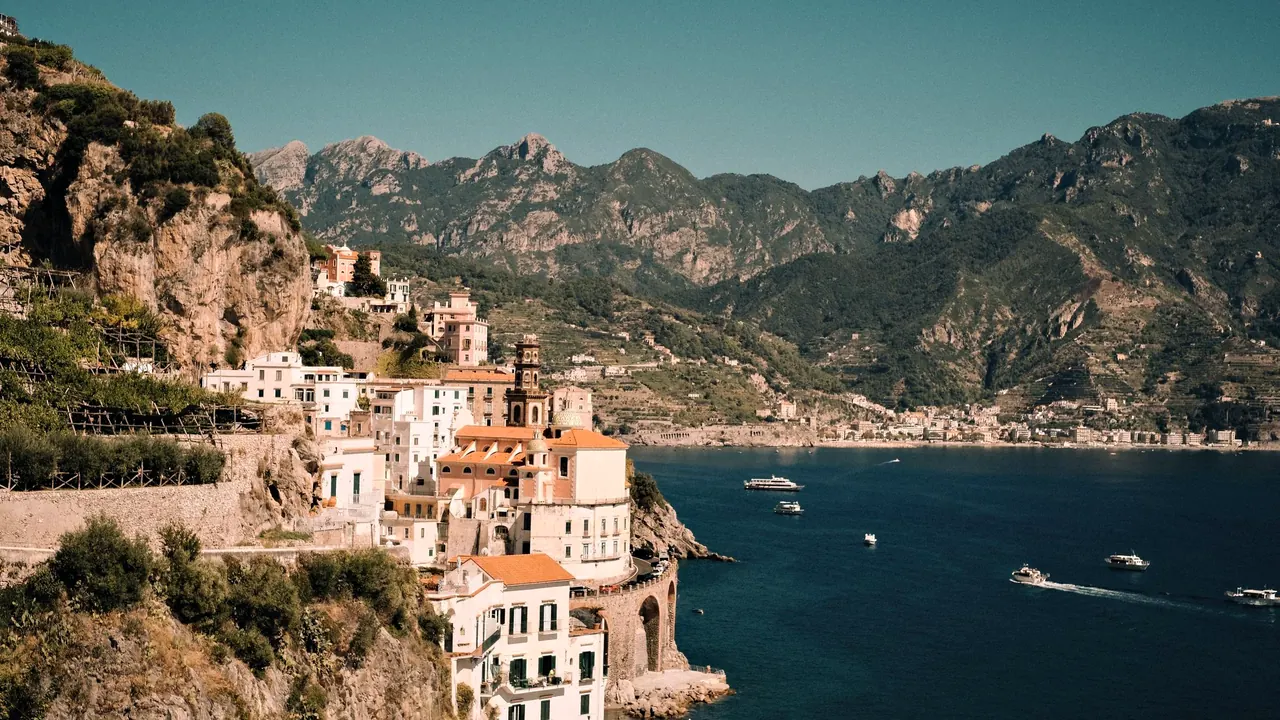
Photos: Amalfi Coast by Alina Chernii, Pexels License.
Amalfi Coast or Dolomites?
Our verdict in twelve categories, each scored against the same fixed benchmark cities, and the climate month by month, so you can choose for your trip.
Choose Amalfi Coast for
- beaches
- day trips
- shopping
The Amalfi Coast is for a summer of sea, terraces and famous names. Choose it if you want to swim from pebble coves or a hired boat below the cliffs, eat seafood and lemons on a terrace, and take day trips to Pompeii, Capri and Paestum. It suits couples best. The steep towns, the single crowded road and the very high prices make it a tiring choice with small children or on a tight budget.
Choose Dolomites for
- families
- getting around
- nature and the outdoors
The Dolomites suit travellers who want the mountains at the centre of the trip. Here lifts carry you up to meadows, hut lunches and some of the finest walking and skiing in Europe. It works far better for families, its hotel spas are calmer, and getting around is easier if you base yourself in one valley. What you give up is the sea, as the lakes are mostly too cold for swimming, along with much of the history close at hand.
Scoreboard
Twelve categories on one fixed scale from 0 to 100. The shaded stretch is the gap between the two.
Your match
Pick a travel style or drag the sliders, and both match scores follow your weighting.
Too close to call, 1 point apart
Wins on beaches and day trips with your weighting.
Wins on families and getting around with your weighting.
What matters to you?
Category by category
What the scores mean for a trip.
Beaches & swimming
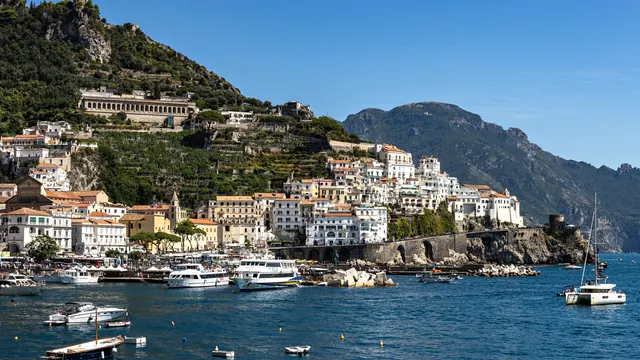
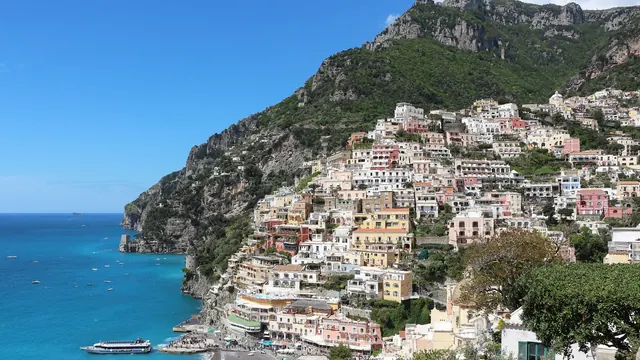
This is the Amalfi Coast's clearest advantage. The water is deep, clear and warm at the foot of the cliffs, with grey-pebble coves at Positano, Amalfi, Atrani and the Furore fjord. Maiori and Minori have more sand and more room. Many visitors find the best swimming is from a hired boat between Positano and Amalfi.
The Dolomites cannot really compete on this. Braies and Carezza are lakes to look at, not swim in. The real bathing is low down, at the lidos and lawns of Lake Caldaro or the northern tip of Lake Garda, so swimmers need a valley base near Bolzano or Trento.
Food & drink
Both are good places to eat, but they offer very different cooking. The Amalfi Coast cooks from the sea and the lemon terraces: scialatielli with clams, anchovies and colatura from Cetara, sfogliatella from Conca dei Marini and limoncello. The risk is the tired menus on the waterfronts at Positano and Amalfi.
The Dolomites serve Alpine dishes with Italian coffee: speck, canederli, schlutzkrapfen and strudel. Lunch at a mountain hut after a morning's walk is part of the day, and the wines of the slopes south of Bolzano are a real draw. The range is narrower outside Bolzano and Trento, though Alta Badia has unusually ambitious kitchens for such small villages.
Culture & sights
The Amalfi Coast offers more for sightseers. Amalfi's striped Arab-Norman cathedral and Cloister of Paradise recall the old maritime republic, and Ravello's Villa Rufolo and Villa Cimbrone add gardens with views over the gulf. The coast itself is a UNESCO-listed landscape of stacked towns, though there are no major museums.
In the Dolomites the history lies in the valley towns: Ötzi the Iceman in Bolzano, the frescoed Castello del Buonconsiglio in Trento, and the cathedral at Bressanone with Novacella Abbey nearby. Add the castles and the First World War tunnels on the passes, and these make good rainy-day outings rather than a reason to come.
Nightlife
Neither is a place for a big night out, and in both the evening centres on dinner. On the Amalfi Coast that means an aperitivo with a sea view, a few late cocktail bars in Positano in summer and café tables in Amalfi's cathedral square until around midnight.
The Dolomites have their liveliest moments in winter, with après-ski in Selva, Canazei and Cortina that winds down by early evening. Bolzano and Trento have student and wine bars, but anyone wanting more from either region has to head to a city: Naples or Salerno from the coast.
Nature & outdoors
The Amalfi Coast has superb outdoors. The Path of the Gods runs high above Positano, the Valle delle Ferriere climbs a shaded gorge with waterfalls, and you can kayak or snorkel around sea caves and the Li Galli islets. But it is one strip of cliffs, and the steep trails are best in spring and autumn, because the midsummer heat wears you out.
The Dolomites work on a far bigger scale. The Tre Cime, the Sella and the Marmolada glacier rise above meadows you can reach by lift, the Alta Via 1 crosses the range from hut to hut, and via ferrate take non-climbers onto the rock. The mountains have two clear seasons: June to October for hiking, mountain biking and cycling over the passes, and winter for skiing across the linked valleys.
Day trips
Few places have as many famous names within a day's reach as the Amalfi Coast. From there you can reach Pompeii and Herculaneum, the ferry to Capri, the Greek temples at Paestum and the archaeological museum in Naples. The roads are slow, but the boats make up for much of that.
The Dolomites have good outings too, mostly from the Adige valley. The thermal baths at Merano, the wine route through Caldaro, Verona by train and Innsbruck over the Brenner are all within reach. From the high villages, though, every trip starts with a winding pass road, and Venice is a long day out.
Good for families
With children the Dolomites are much the easier choice. Lifts take the climbing out of the day, the high pastures of the Alpe di Siusi and Armentara have wide, almost flat paths, and many huts have playgrounds and farm animals. Summer toboggan runs, gentle nursery slopes and family hotels with pools fill out the stay.
The Amalfi Coast is built for couples. Its vertical towns mean hundreds of steps, pushchairs are close to useless, and long stretches of the road have no pavement. Families do best in flatter Maiori or Minori, with boat trips and the emerald grotto as the highlights.
Getting around
Both are slow to cross, but the Dolomites are easier to get around. South Tyrol's trains run along the Adige and Puster valleys, buses climb to most resorts on one regional pass, and once you are in a village the lifts do much of the work. A car only becomes necessary if you want to move between several valleys over the passes.
On the Amalfi Coast everything depends on one narrow cliff road that jams in summer, with crowded buses and very little parking. From spring to autumn the ferries are the easiest way between towns, and a waterfront base in Amalfi or Positano saves a lot of climbing.
Shopping & style
The Amalfi Coast has more to buy and more character to it. Positano's lanes are full of linen boutiques and sandal makers who fit while you wait, Amalfi still sells paper from its old mills, and Vietri sul Mare paints majolica, from single tiles to whole dinner services.
The Dolomites have the carved wood of Ortisei, the old shops under Bolzano's arcades and a short row of luxury boutiques in Cortina. Their real high point is the Advent markets, and the things worth carrying home are mostly edible: speck, cheese, grappa and wine.
Affordability
Neither is cheap, but the Amalfi Coast is the more expensive of the two. In high season, sea-view rooms in Positano and Ravello, sunbeds, private boats and even a simple lunch by the water all cost a great deal. Staying in Maiori, Minori or Agerola and travelling in late September helps.
The Dolomites are also expensive at their peaks, especially in Cortina and Alta Badia. But the Trentino valleys of Fassa and Fiemme and the towns of Bolzano and Bressanone cost noticeably less. Half board and June or September dates bring the bill down further.
Live music & performing arts
For music in summer, the Amalfi Coast has the more memorable stage. Ravello's festival puts orchestras on a platform built out over the cliff in the gardens of Villa Rufolo, with chamber concerts in the town on many evenings. Away from Ravello and outside the season, there is little beyond church concerts.
The Dolomites spread their music more thinly. Bolzano and Trento have orchestras and theatres with regular seasons, and in summer there are concerts on alpine meadows and a jazz festival in castles and wineries. None of it matches the pull of Ravello.
Wellness & relaxation
The Dolomites do relaxation with more care. South Tyrol's mountain hotels are built around saunas facing rock walls and heated outdoor pools in the snow, the old hay bath is still offered below the Alpe di Siusi, and Merano has public thermal baths beside its river promenade.
On the Amalfi Coast, rest comes more from the slow pace than from treatments. There are long lunches, gardens and balconies over the sea, with spas only in the luxury cliffside hotels. Ravello, Atrani and Praiano are the calm bases, and July and August in Positano are anything but restful.
When should you go?
Pick your month. The climate figures are measured averages, not a forecast.
Amalfi Coast in July
Dolomites in July
Daytime high, °C
Rainfall in the month, mm
Where the figures come from
Amalfi Coast's temperatures are measured 65 km from the centre, at Grazzanise.
Amalfi Coast has no rain gauge within 25 km of the centre, so its rainfall comes from a gridded climate dataset read at the destination rather than from a gauge further away.
Temperature and rainfall are climate normals, averaged over the years shown. Amalfi Coast: 1991-2020 normals, Grazzanise (64.7 km from centre). Dolomites: 1991-2020 normals, Dobbiaco (22.3 km from centre).
The Amalfi Coast is at its best from late spring to early autumn. The sea is warm enough to swim from June to early October and reaches about 26°C in August. July and August are the driest and sunniest months, but highs of 31°C make the stairways and the Path of the Gods hard going by midday. June and September give the best mix of warm water and comfortable walking, and May and October suit walkers, though the sea is still cool in May. Rain picks up from late September, autumn turns properly wet by November, and winter is mild but grey.
In the Dolomites the pattern is almost the reverse, and conditions vary a great deal with altitude: the valley towns of Bolzano and Trento are warmer, while the high villages and passes are cooler. Where these figures were taken, summer highs reach only about 22°C, which makes for good hiking from June to September. Summer is also the wettest time, with around 130mm in July, so September, noticeably drier and still mild, is the best month for long walks. Winter is cold and dry, with daytime highs around freezing from December to February, and that is the snow season. In short, go to the coast in June or September for sea and walking, and to the mountains in September for hiking or in January for snow.
Which traveller are you?
On a beach and sun trip, choose the Amalfi Coast. It has warm, clear sea from June to early October, coves at Positano and Atrani, the sandier beaches of Maiori, and boat days below the cliffs. In the Dolomites, swimming means valley lidos and cold lakes.
On a family trip with young children, the Dolomites are much easier. Lifts take you to flat meadow paths on the Alpe di Siusi, the huts have playgrounds and animals, and many hotels are built for families. The Amalfi Coast means stairs, pebbles and a road without pavements.
For a winter ski trip, only the Dolomites will do. The Dolomiti Superski area links a dozen valleys, the Sella Ronda circles a whole massif, and the ski schools are well run. In winter the Amalfi Coast is a mild, quiet coast with much of it closed.
Before you go
| Measure | Amalfi Coast | Dolomites |
|---|---|---|
| Official language | Italian | Italian |
| Currency | Euro (EUR) | Euro (EUR) |
| Sockets | CFL230 V, 50 Hz | CFL230 V, 50 Hz |
| Driving side | Right | Right |
| Time zone | UTC+1, UTC+2 in summer | UTC+1, UTC+2 in summer |
| Emergency number | 112 | 112 |
| Main airport | Naples International Airport (NAP)131 non-stop destinations | Venice Marco Polo Airport (VCE)103 non-stop destinations |
| Public holidays this year | 13 days | 13 days |
By the numbers
| Measure | Amalfi Coast | Dolomites |
|---|---|---|
| Swim season, months above 21 °C | 5 months | - |
Where else could you go?
Every comparison below shares a destination with this one, so you can follow Amalfi Coast or Dolomites somewhere new.
- Caprivs Amalfi Coast
- Naplesvs Amalfi Coast
- Ischiavs Amalfi Coast
- Austrian Alpsvs Dolomites
- Lake Gardavs Dolomites
- Bavariavs Dolomites