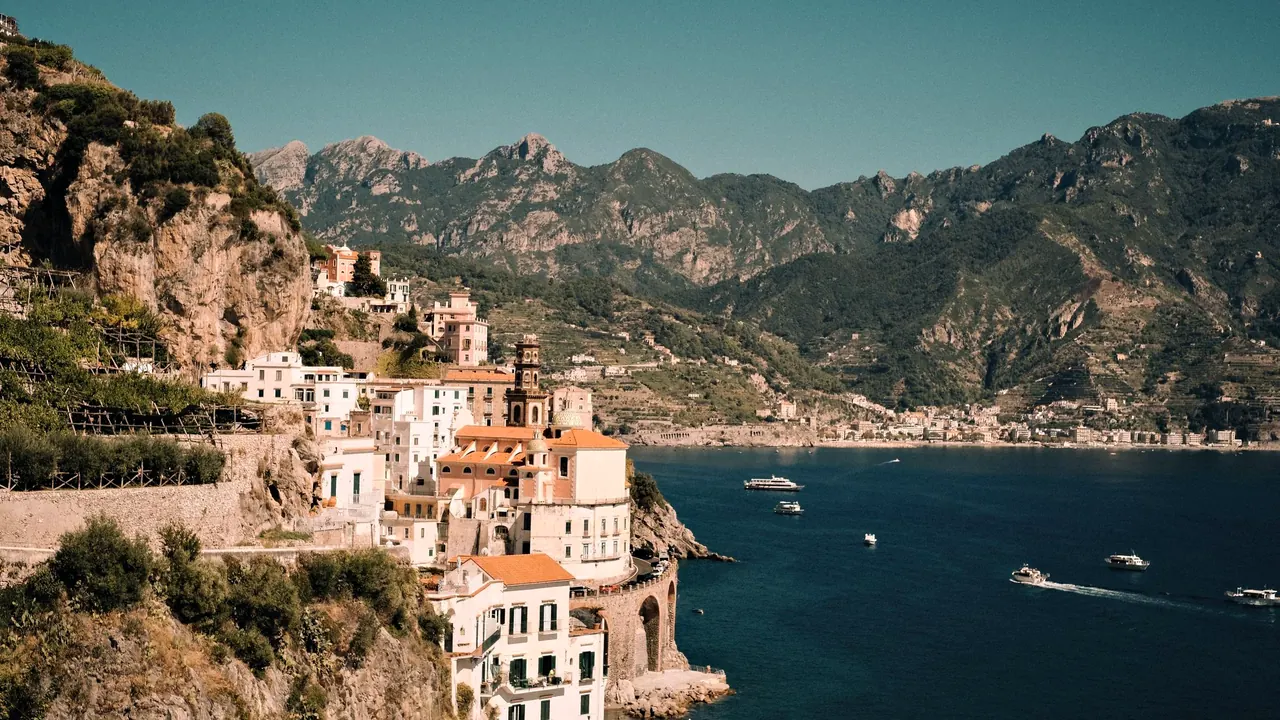
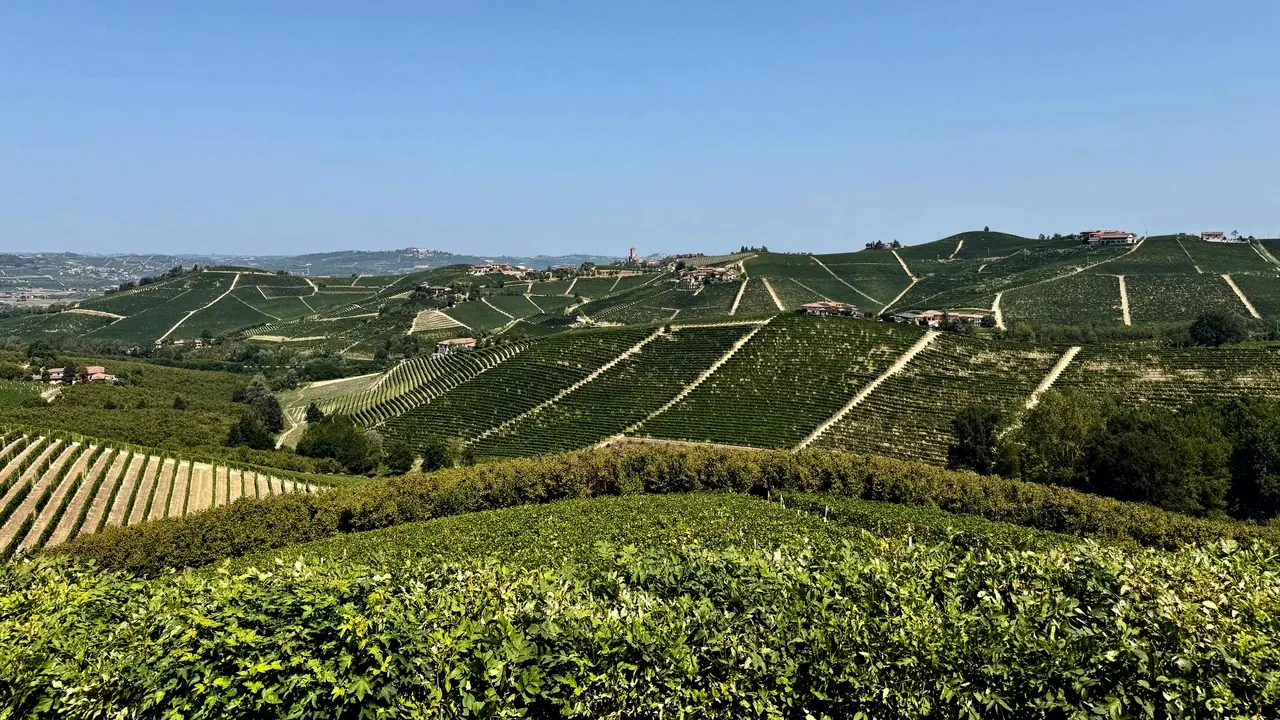
Photos: Amalfi Coast by Alina Chernii, Pexels License; Piedmont by Martina Amaro, Pexels License.
Amalfi Coast or Piedmont?
Our verdict in twelve categories, each scored against the same fixed benchmark cities, and the climate month by month, so you can choose for your trip.
Choose Amalfi Coast for
- beaches
- day trips
The Amalfi Coast is the choice for a sea vacation that looks the way people picture southern Italy. You get warm, clear water below the cliffs, boat days to sea caves and Capri, pastel towns stacked above the gulf and long terrace dinners. It suits couples and honeymooners who want scenery and swimming more than variety, who can live with stairs, slow roads and high prices, and who won't miss museums or late nights.
Choose Piedmont for
- prices
- getting around
- families
Piedmont is the better trip for anyone who travels to eat, drink and look at things. Barolo and truffle country around Alba, Turin's Egyptian Museum and royal palaces, Alpine valleys and two quiet lakes make it a region to move around in, ideally with a car. It is noticeably cheaper, easier with children and livelier after dark in Turin. What it can't give you is a sea.
Scoreboard
Twelve categories on one fixed scale from 0 to 100. The shaded stretch is the gap between the two.
Your match
Pick a travel style or drag the sliders, and both match scores follow your weighting.
Wins on beaches and day trips with your weighting.
Wins on prices and getting around with your weighting.
What matters to you?
Category by category
What the scores mean for a trip.
Beaches & swimming
This is the Amalfi Coast's ground. You swim in clear, deep Tyrrhenian water from small grey-pebble coves at Positano, Atrani and Furore. Maiori and Minori have more sand and room, and the best swimming of all is from a hired boat anchored under the cliffs.
Piedmont has no coast, so a beach day means a lido or bathing platform on Lake Maggiore around Stresa and Baveno, or a grassy spot on Lake Orta. That is pleasant in high summer, but it is an extra on a lake stay, not a reason to come.
Food & drink
Both regions cook close to the land, but Piedmont is one of Italy's great food destinations. The Langhe hills give you Barolo and Barbaresco, white truffles in autumn and dishes like tajarin and agnolotti del plin. Turin adds historic coffee houses, bicerin, vermouth and a serious aperitivo.
The Amalfi Coast eats from the sea and the lemon terraces: scialatielli with clams, Cetara's colatura and Sfusato lemons in everything. It is good food, but the waterfronts of Positano and Amalfi lean on tired day-tripper menus, and the best meals take a walk uphill.
Culture & sights
Piedmont has more to see by a wide margin. Turin's Egyptian Museum, the Royal Palace and the Savoy residence at Venaria Reale are major sights. Beyond the city are the Sacra di San Michele on its crag and the Baroque palaces of the Borromean Islands.
On the Amalfi Coast the coastline itself is the sight: the striped cathedral and Cloister of Paradise in Amalfi, the garden villas of Ravello, and towns that are worth seeing simply as places. There are no big collections, though, so you have to go to Naples or Pompeii for those.
Nightlife
Neither region is built for partying, but Piedmont at least has Turin. After aperitivo, the bar streets of San Salvario and Vanchiglia fill with students, and in summer people drink along the Po.
On the Amalfi Coast the night is a long terrace dinner, a few cocktail bars in Positano and café tables in Amalfi's cathedral square until around midnight. Much of it shuts down in winter.
Nature & outdoors
The outdoors is a strength in both, and it is very different in each. On the Amalfi Coast the Lattari mountains fall straight into the sea. The Path of the Gods and the old mule tracks are walks with the gulf below you, and kayaks and snorkellers explore sea caves and the Li Galli islets.
Piedmont's outdoors is Alpine on a much bigger scale. There are high trails beneath Monte Rosa, ibex on Gran Paradiso, skiing in the Via Lattea and the empty wilderness of the Val Grande, plus cycling through the vineyard hills. It gives you winter sports and true mountains, while Amalfi gives you mountains and sea in a single view.
Day trips
From the Amalfi Coast, the outings lead into the ancient world and out to sea. Pompeii and Herculaneum are a little over an hour away, Paestum has its Greek temples, Naples has its archaeological museum, and Capri is a ferry ride off. The road is slow, so the boat is often the quickest way out.
Piedmont's outings follow rail lines and wine roads instead. Milan is about an hour from Turin by fast train, and the Ligurian coast is not much further. A Langhe base puts La Morra, Barolo and Serralunga within an easy drive for a day of cellars. From Lake Maggiore, boats cross to the Swiss shore, and Orta San Giulio with its island monastery is close by.
Good for families
Piedmont is clearly kinder to children. Turin has flat arcaded streets, mummies in the Egyptian Museum and the Valentino park. Lake Maggiore has island boats, peacocks in palace gardens and lake lidos, and the mountains offer gentle ski slopes and summer meadows.
The Amalfi Coast works better for couples. Steep stairways rule out pushchairs, and the beaches are mostly pebble. Families who go anyway should base themselves in flatter Maiori or Minori and plan around boat trips and the emerald grotto.
Getting around
Getting around is far simpler in Piedmont. Turin has trams, a metro line and a flat grid, and regional trains reach Alba, Asti and Stresa. Beyond the rail lines, the roads are good and driving is pleasant.
The Amalfi Coast hangs on one narrow cliff road that jams in summer. The buses are crowded and parking is scarce. Ferries are the easy option from spring to autumn, and inside each town it is all stairs.
Shopping & style
Neither region is a shopping destination in the big-city sense, so the difference is in what kind of shopping each offers. On the Amalfi Coast it is small-scale and tied to the place: summer linen and made-to-measure sandals in Positano, paper from Amalfi's mill tradition and painted ceramics from the Vietri workshops. It makes pleasant browsing between swims, but the choice runs out quickly, and much of the waterfront stock repeats from one town to the next.
Piedmont offers more, in two very different ways. Turin is a proper shopping city, with brand names under the arcades and a Saturday flea market for antiques. Across the rest of the region, what visitors take home is mostly edible: chocolate, cheese, hazelnuts and wine bought straight from the producers. Biella's wool mills add one serious line in clothing, but for high fashion you still need Milan rather than either region.
Affordability
This is the widest gap between the two. In high season the Amalfi Coast is among the most expensive stretches of coast in Europe: sea-view rooms in Positano and Ravello, sunbeds, private boats and even a simple waterfront lunch all cost a lot. Staying in Maiori, Minori or Agerola softens it.
Piedmont is mid-priced and good value for its quality. Turin's hotels and aperitivo are reasonable and country trattorias are fair. Only the truffle season in the Langhe and the high-summer lake resorts push costs up.
Live music & performing arts
Piedmont has a year-round stage in Turin. The Teatro Regio has opera and ballet, the RAI National Symphony Orchestra plays in its own hall, and the historic Teatro Carignano puts on drama. The Stresa festival adds summer concerts on Lake Maggiore.
The Amalfi Coast has a single highlight, but a memorable one: Ravello's summer festival, with orchestras on a stage built out over the cliff at Villa Rufolo. Apart from that it is church concerts and feast-day bands.
Wellness & relaxation
Piedmont has real thermal waters. At Acqui Terme the Bollente spring rises steaming in the middle of town, and there are mountain baths at Valdieri and Vinadio. Wine resorts in the Langhe add their own spas and a slow rural pace.
The Amalfi Coast has no spa tradition of its own beyond its cliffside luxury hotels. You rest here by slowing down in Ravello's gardens or quiet Atrani, ideally in May, June or September, before or after the summer crowds.
When should you go?
Pick your month. The climate figures are measured averages, not a forecast.
Amalfi Coast in July
Piedmont in July
Daytime high, °C
Rainfall in the month, mm
Where the figures come from
Amalfi Coast's temperatures are measured 65 km from the centre, at Grazzanise.
Amalfi Coast has no rain gauge within 25 km of the centre, so its rainfall comes from a gridded climate dataset read at the destination rather than from a gauge further away.
Piedmont has no weather station within reach, so its figures come from a gridded climate model rather than a measured record, and read a broad area rather than one spot.
Temperature and rainfall are climate normals, averaged over the years shown. Amalfi Coast: 1991-2020 normals, Grazzanise (64.7 km from centre). Piedmont: 1991-2020 normals, TerraClimate 4 km grid at the town, no weather station within 90 km.
The Amalfi Coast is at its best from late spring to early autumn. The sea is warm enough for swimming from June to early October and peaks around 26°C in August. July and August are dry and very sunny, but daytime highs near 31°C make the steep stairways and the Path of the Gods hard work by midday. May is good for walking, but the sea is still cool. Late September is the best balance, with comfortable trails and water that is still warm. The rain arrives in October and is heaviest in November, at about 143mm, and the winters are mild but wet and grey.
Piedmont's figures come from the lowland where most visitors stay, and they describe a cooler, more continental year. Summers are a little less hot, around 29°C, and lake swimming lasts only from June to early September. Winters are colder, with highs near 9°C, but they are surprisingly dry, which suits city days in Turin and skiing in the mountains. Spring and September to October are the comfortable months for the wine country and for walking, though late autumn brings the region's heaviest rain.
Which traveller are you?
For a beach and sun trip, the Amalfi Coast is the clear pick. It has warm sea from June to early October, deep clear water off pebble coves and boat days below the cliffs. Piedmont has only lake lidos, and its swimming season is short.
On a trip on a tight budget, Piedmont stretches your money much further. Turin's hotels, generous aperitivo and countryside trattorias are fairly priced. On the Amalfi Coast, sea-view rooms, sunbeds and waterfront meals push costs very high in season.
On a family trip with children, Piedmont is far easier. Turin is flat, with mummies and an interactive cinema museum, and Lake Maggiore has island boats and gardens. Amalfi's endless stairs, pebble beaches and road without pavements wear families down.
Before you go
| Measure | Amalfi Coast | Piedmont |
|---|---|---|
| Official language | Italian | Italian |
| Currency | Euro (EUR) | Euro (EUR) |
| Sockets | CFL230 V, 50 Hz | CFL230 V, 50 Hz |
| Driving side | Right | Right |
| Time zone | UTC+1, UTC+2 in summer | UTC+1, UTC+2 in summer |
| Emergency number | 112 | 112 |
| Main airport | Naples International Airport (NAP)131 non-stop destinations | Turin Airport (TRN)65 non-stop destinations |
| Public holidays this year | 13 days | 13 days |
By the numbers
| Measure | Amalfi Coast | Piedmont |
|---|---|---|
| Population | - | 4,341,375 |
| Swim season, months above 21 °C | 5 months | 4 months |
Where else could you go?
Every comparison below shares a destination with this one, so you can follow Amalfi Coast or Piedmont somewhere new.
- Caprivs Amalfi Coast
- Naplesvs Amalfi Coast
- Procidavs Amalfi Coast
- Ischiavs Amalfi Coast
- Lake Maggiorevs Piedmont
- Cinque Terrevs Piedmont