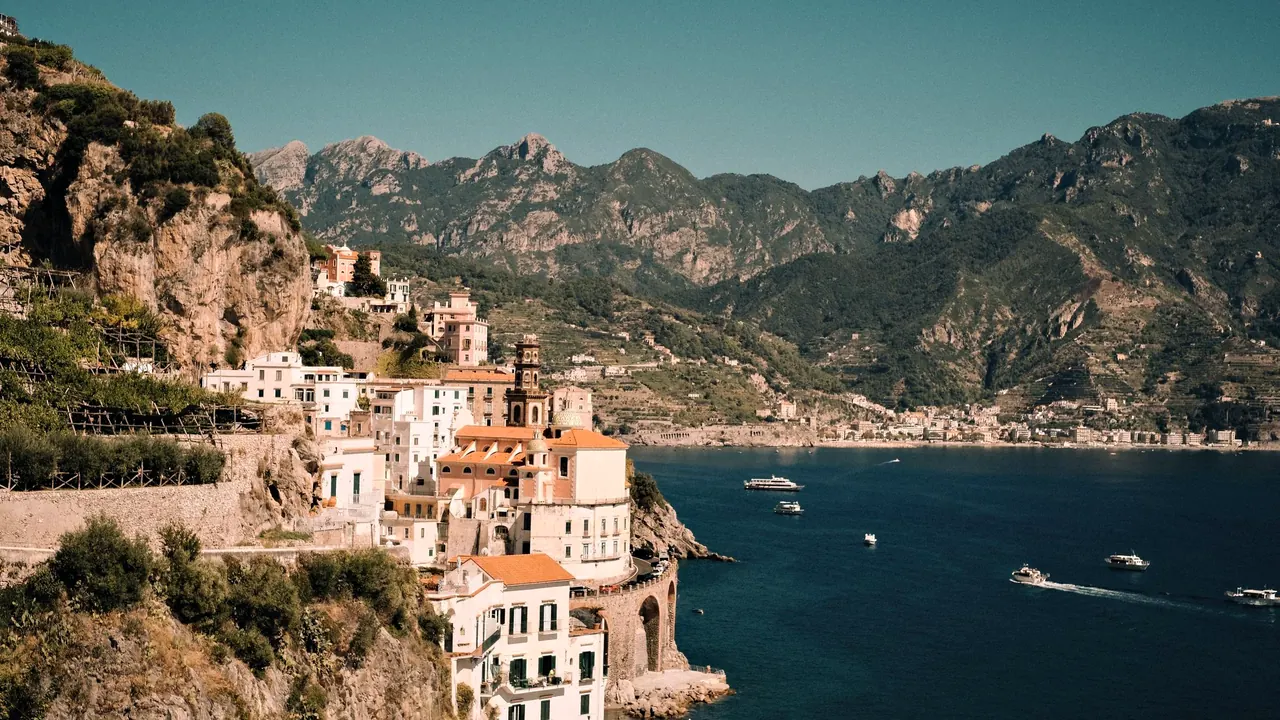
Photos: Amalfi Coast by Alina Chernii, Pexels License.
Amalfi Coast or Tuscany?
Our verdict in twelve categories, each scored against the same fixed benchmark cities, and the climate month by month, so you can choose for your trip.
Choose Amalfi Coast for
- nature and the outdoors
The Amalfi Coast suits a trip built around one view: a balcony over the sea, swimming from a boat below the cliffs, and long dinners on a terrace. It works best for couples and honeymooners who want to stay put in one place, walk the Path of the Gods and take the ferry to Capri or a bus to Pompeii, and who accept steep stairs, a slow coast road and high prices in exchange for the scenery.
Choose Tuscany for
- culture and sights
- wellness
- families
Tuscany is the bigger, broader trip. Florence and Siena give it Renaissance art and medieval towns that the coast cannot match, and the wine country, hot springs, farmhouse stays and sandy beaches add a great deal more to do. Families, food and wine lovers, and anyone who wants to move between towns rather than settle on a cliff will usually find it the better choice.
Scoreboard
Twelve categories on one fixed scale from 0 to 100. The shaded stretch is the gap between the two.
Your match
Pick a travel style or drag the sliders, and both match scores follow your weighting.
Wins on nature and the outdoors with your weighting.
Wins on culture and sights and wellness with your weighting.
What matters to you?
Category by category
What the scores mean for a trip.
Beaches & swimming
Both have good swimming, but of very different kinds. On the Amalfi Coast you swim in deep, clear water at the foot of cliffs, from small grey-pebble coves at Positano, Atrani or Furore, and the best of it comes from a hired boat anchored below the rocks. Only Maiori and Minori offer real sand and room to spread out.
Tuscany's coast has much more sand: Elba's bays at Fetovaia and Biodola, pine-backed strands in the Maremma, and the long, orderly beach clubs of Versilia. The catch is distance, since from Florence or the hill towns the sea is a separate trip, while on the Amalfi Coast it is right below your room.
Food & drink
Tuscany is the stronger destination for food, mainly because wine runs through the whole region. You can taste Chianti Classico, Brunello and Vino Nobile at the cellars where they are made, and Florence adds rare Florentine steak, lampredotto from street carts and the old market halls.
The Amalfi Coast cooks a narrower, sea-based menu, with scialatielli with clams, anchovies and colatura from Cetara, and Sfusato lemons in everything from limoncello to granita. It is very good when you leave the day-tripper menus on the Positano and Amalfi waterfronts, but it does not have Tuscany's range.
Culture & sights
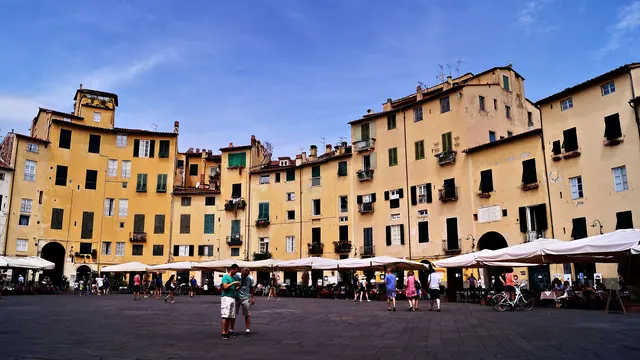
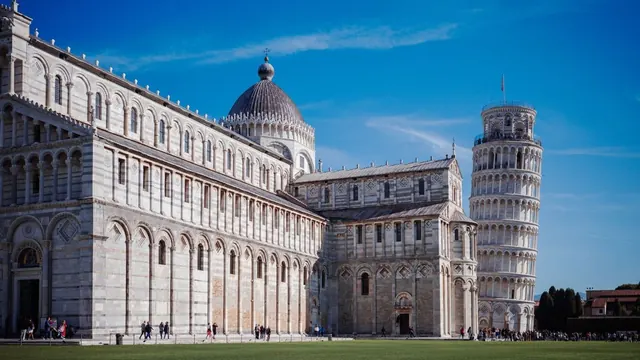
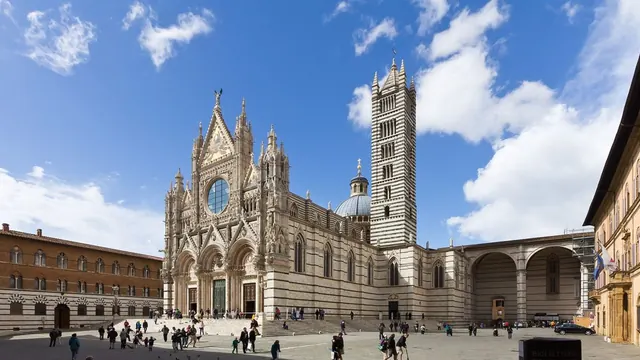
This is the widest gap between the two. Tuscany holds the heart of the Italian Renaissance, with the Uffizi, the Accademia and the Bargello in walkable Florence, Siena's Campo and cathedral, the Pisa cathedral square and a run of towns from San Gimignano to Pienza and Arezzo.
The Amalfi Coast's heritage is smaller and centred on its setting: Amalfi's Arab-Norman cathedral and Cloister of Paradise from its maritime republic, the gardens of Villa Rufolo and Villa Cimbrone in Ravello, and the UNESCO-listed coastline itself. For great collections you would have to leave the coast for Naples.
Nightlife
Neither is a party destination, but Tuscany has more going on after dark. Florence has students on the steps of Santo Spirito, wine bars in Oltrarno and a few late clubs, and in summer Versilia's beach clubs and dance halls run until dawn.
On the Amalfi Coast the evening is an aperitivo with a sea view, then dinner, then a stroll. Positano has a handful of cocktail bars and Amalfi's cathedral square stays busy until around midnight, and that is about it.
Nature & outdoors
Both are superb outdoors, in different ways. The Amalfi Coast is all drama in one narrow strip: the Lattari mountains falling into the sea, the Path of the Gods high above Positano, the gorge of the Valle delle Ferriere, and kayaking or snorkelling among sea caves around Punta Campanella and Li Galli.
Tuscany is gentler and far larger, with cypress lanes and vineyards in Chianti and the Val d'Orcia made for slow cycling and walking between towns. Its wilder side is the Apuan Alps above Carrara, the Casentino beech forests and the Maremma park, with sailing and diving around Elba.
Day trips
Both are exceptional bases, and Tuscany edges ahead on sheer number and ease. From Florence or Chianti, Siena, Lucca, Pisa and Volterra are close, the southern wine towns make an easy loop, and Bologna, Umbria and the Cinque Terre lie just beyond the border.
The Amalfi Coast's list is shorter but very famous: Pompeii and Herculaneum, Capri by ferry, the Greek temples at Paestum and a full day in Naples. Its slow roads mean the boat is often the best way out, which limits outings outside the ferry season.
Good for families
Tuscany is much the easier choice with children. A farmhouse with a pool and animals, combined with the shallow, lifeguarded beaches of Versilia or Elba's sheltered bays, is a well-tried formula, and Collodi's Pinocchio park and cycling on Lucca's walls add some outings made for children.
The Amalfi Coast is built for couples: hundreds of steps, pebble beaches, a road without pavements and no attractions for children. Families who go should base themselves in flatter Maiori or Minori and plan around boat trips and the emerald grotto.
Getting around
Tuscany is easier to move around, at least along the rail line linking Florence with Pisa, Lucca, Arezzo and Viareggio, and Florence itself is best on foot. For Chianti, the Val d'Orcia and the Maremma you need a car, but the roads are good.
The Amalfi Coast depends on a single narrow cliff road that jams in summer, with crowded buses and almost no parking. From spring to autumn the ferries between Positano, Amalfi, Maiori and Salerno solve much of that, and within each town you walk, mostly up and down stairs.
Shopping & style
Tuscany offers more serious shopping. Florence has leather workshops around Santa Croce, goldsmiths on the Ponte Vecchio, bookbinders in Oltrarno and the luxury houses of Via de' Tornabuoni, and the region's towns add alabaster, marble and ceramics, plus large designer outlets.
The Amalfi Coast's offer is narrower but distinctive: linen resort clothes and sandals made to measure in Positano, handmade paper from Amalfi's mills and majolica from Vietri sul Mare. Beyond those, it is mostly lemon souvenirs.
Affordability
Both are expensive in season, but the Amalfi Coast is the harder on a budget. Sea-view rooms in Positano and Ravello, sunbeds, private boats and even a simple waterside lunch all cost more, and only Maiori, Minori, Atrani or the hills of Agerola ease the bill.
Tuscany has real budget options. Trattoria meals, market lunches and cellar-door wine are reasonable, and Lucca, Arezzo, Pistoia and the Maremma cost noticeably less than Florence, although car hire is an added cost.
Live music & performing arts
Tuscany has the deeper musical life, and it runs most of the year. Florence has the Maggio Musicale with its own opera house and the Teatro della Pergola, Lucca honours Puccini with recitals and the outdoor opera season at Torre del Lago, and Siena's Accademia Chigiana fills palaces with summer concerts.
The Amalfi Coast's performing arts come down to Ravello: its summer festival with orchestras on a stage over the cliff at Villa Rufolo, plus chamber concerts. It is a memorable setting, but beyond church concerts and feast-day bands there is little else, and almost nothing out of season.
Wellness & relaxation
Tuscany has a long bathing tradition built on its hot springs, and the Amalfi Coast has none. Tuscany offers the grand spa town of Montecatini, the free warm cascades at Saturnia, the steaming square of Bagno Vignoni and the white pools of Bagni San Filippo, with calm farmhouse stays in the Val d'Orcia to match.
On the Amalfi Coast, rest means hotel spas with seawater pools, gardens and slow afternoons in Ravello, Atrani or Praiano, best in the quieter months either side of high summer.
When should you go?
Pick your month. The climate figures are measured averages, not a forecast.
Amalfi Coast in July
Tuscany in July
Daytime high, °C
Rainfall in the month, mm
Where the figures come from
Amalfi Coast's temperatures are measured 65 km from the centre, at Grazzanise.
Amalfi Coast has no rain gauge within 25 km of the centre, so its rainfall comes from a gridded climate dataset read at the destination rather than from a gauge further away.
Tuscany has no rain gauge within 25 km of the centre, so its rainfall comes from a gridded climate dataset read at the destination rather than from a gauge further away.
Tuscany's sunshine is measured 71 km from the centre, at Pisa / S. Giusto.
Temperature and rainfall are climate normals, averaged over the years shown. Amalfi Coast: 1991-2020 normals, Grazzanise (64.7 km from centre). Tuscany: 1995-2020 (sunshine 1991-2020, rainfall 1991-2020) normals, Firenze / Peretola (5.6 km from centre).
On the Amalfi Coast the beach season runs from June, when the sea has warmed to about 23°C, into early October, and the summers are dry and very sunny. July and August reach 31°C, which makes the steep stairways and trails hard going by midday, so May, June and September are easier for walking. Rain arrives with September and October and peaks in November at about 143mm, and winter is mild but wet.
Tuscany swings harder between the seasons. Inland around Florence, August reaches about 33°C, so city sightseeing is uncomfortable in high summer, while winter days are cooler than on the Amalfi Coast. May, June and September are the most comfortable months for towns and countryside alike. Autumn brings the rain, with November the wettest at about 124mm, though Tuscany's winters are drier overall than those on the Amalfi Coast.
Which traveller are you?
For a beach and sun trip, the Amalfi Coast fits better. Swimming there is part of every day rather than an outing, the sea stays warm into early October, and Capri is a boat ride away. Anyone set on soft sand should still choose Elba.
On a culture and arts trip, Tuscany is the clear choice. The Amalfi Coast's own sights fill a day or two, and after that the great collections mean long trips to Naples. A week in Tuscany can bring a different art town every day, many of them by train.
On a trip on a tight budget, Tuscany goes further. The Amalfi Coast's cheaper bases, Maiori, Minori and Atrani, sit right on the water, and late September keeps the sea warm at lower rates, but boats, sunbeds and meals still add up. In Tuscany, a base in Lucca or Arezzo keeps Florence a short train ride away.
Before you go
| Measure | Amalfi Coast | Tuscany |
|---|---|---|
| Official language | Italian | Italian |
| Currency | Euro (EUR) | Euro (EUR) |
| Sockets | CFL230 V, 50 Hz | CFL230 V, 50 Hz |
| Driving side | Right | Right |
| Time zone | UTC+1, UTC+2 in summer | UTC+1, UTC+2 in summer |
| Emergency number | 112 | 112 |
| Main airport | Naples International Airport (NAP)131 non-stop destinations | Florence Airport, Peretola (FLR)46 non-stop destinations |
| Public holidays this year | 13 days | 13 days |
By the numbers
| Measure | Amalfi Coast | Tuscany |
|---|---|---|
| Population | - | 3,729,641 |
| Swim season, months above 21 °C | 5 months | - |
Where else could you go?
Every comparison below shares a destination with this one, so you can follow Amalfi Coast or Tuscany somewhere new.
- Caprivs Amalfi Coast
- Naplesvs Amalfi Coast
- Ischiavs Amalfi Coast
- Umbriavs Tuscany
- Cinque Terrevs Tuscany
- Lake Gardavs Tuscany