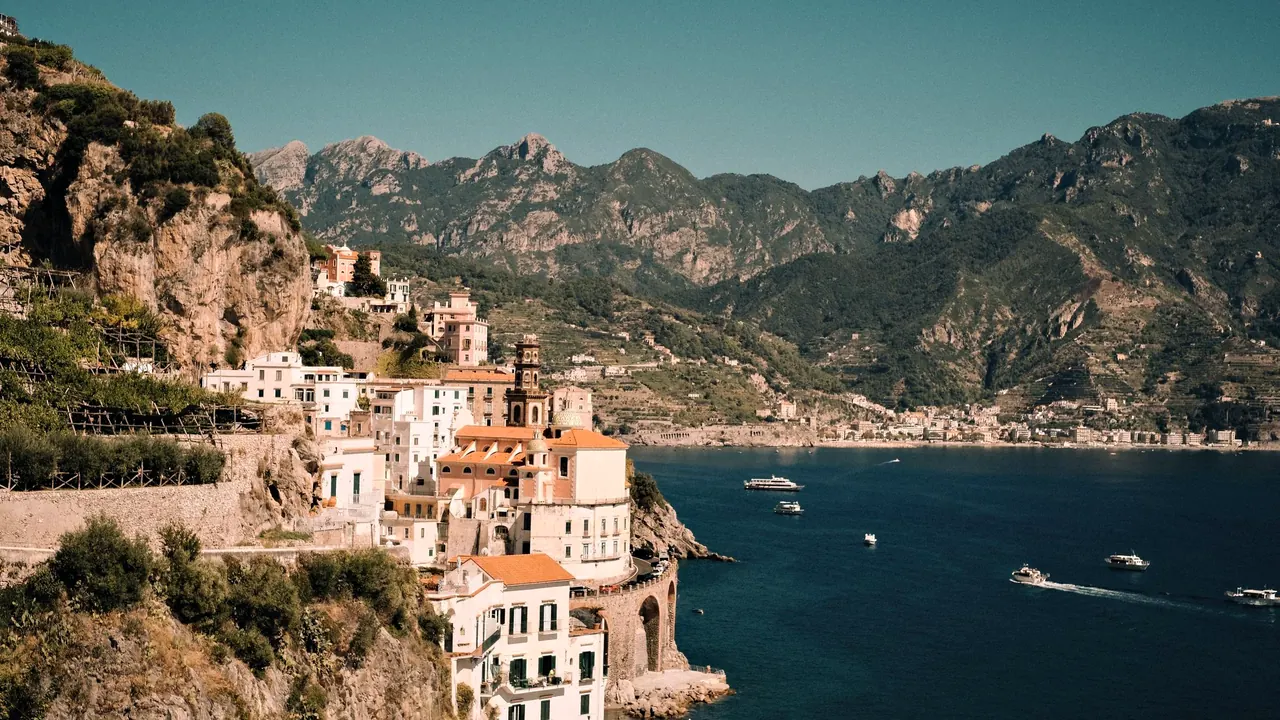
Photos: Amalfi Coast by Alina Chernii, Pexels License.
Amalfi Coast or Hvar?
Our verdict in twelve categories, each scored against the same fixed benchmark cities, and the climate month by month, so you can choose for your trip.
Choose Amalfi Coast for
- shopping
- day trips
- nature and the outdoors
The Amalfi Coast suits travellers who want scenery and sightseeing in the same trip. The Lattari mountains fall straight into the sea, the Path of the Gods runs above Positano, and Pompeii, Capri and Naples are all within a day's reach. The food is better too, and Ravello adds gardens and summer concerts. In return you get a slow, crowded road and some of the highest prices in Europe. It is the better choice for couples and walkers who want plenty to see and do.
Choose Hvar for
- nightlife
- prices
- getting around
Hvar is the island for people whose days centre on the water and whose nights run late. Its swimming is a little better, with taxi boats out to the pine-backed Pakleni Islands, and in July and August Hvar Town is among the Adriatic's best-known places to party. The quieter towns on the north side, Jelsa, Stari Grad and Vrboska, are easier on families and cost less. You will find fewer sights and shops and a gentler landscape.
Scoreboard
Twelve categories on one fixed scale from 0 to 100. The shaded stretch is the gap between the two.
Your match
Pick a travel style or drag the sliders, and both match scores follow your weighting.
Wins on shopping and day trips with your weighting.
Wins on nightlife and prices with your weighting.
What matters to you?
Category by category
What the scores mean for a trip.
Beaches & swimming
Neither place has much sand, so on both you swim off pebbles and rock into clear, warm water. Hvar does it a little better. Taxi boats run from Hvar Town harbour to the pine-backed bays of the Pakleni Islands, there are quiet coves along the wild south coast, and the north side has shallow, calm water.
The Amalfi Coast's coves are smaller and squeezed between cliffs, with rented sunbeds taking up much of the space. Maiori and Minori are the exception if you want room to spread out. On both, much of the best swimming is from a boat. Hvar's taxi boats make that easy to arrange, while on the Amalfi side it usually means hiring a boat below the cliffs between Positano and Amalfi.
Food & drink
Both places cook seafood simply, but the Amalfi Coast has more to explore at the table. Cetara's cured anchovies and colatura fish sauce, scialatielli with clams, fish baked in lemon leaves, the sfogliatella from Conca dei Marini and mozzarella from the nearby plains give it a richer, more varied cooking. The trattorias of Minori, Maiori and Agerola are a good alternative to the tired menus on the Positano waterfront.
Hvar's strength is its wine. Plavac Mali grows on the slopes around Ivan Dolac and Bogdanjuša on the Stari Grad plain, and family cellars will pour a tasting. Its best meals are peka lamb or gregada in the inland konobas.
Culture & sights
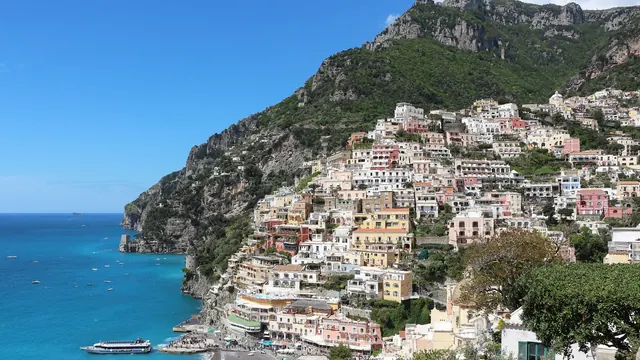
The Amalfi Coast has more to see. Amalfi's striped Arab-Norman cathedral and its Cloister of Paradise recall a medieval maritime republic, Ravello has the gardens of Villa Rufolo and Villa Cimbrone, and the UNESCO-listed coast of pastel towns and lemon terraces is a sight in itself.
Hvar's heritage is smaller in scale but goes back further. Stari Grad was founded by Greek settlers, and the fields of the Stari Grad Plain still follow the boundaries they laid out. Hvar Town has a Venetian square, the Fortica fortress and the 1612 theatre above the Arsenal. Neither has major museums, and two or three days are enough on Hvar.
Nightlife
The two could hardly be more different after dark. In July and August, Hvar Town is one of the Adriatic's best-known party spots. Sundowners on the harbour lead to packed cocktail bars in the stepped lanes, and the beach clubs on the Pakleni Islands keep going into the night, with taxi boats carrying people back and forth.
The Amalfi Coast spends its evenings over a long terrace dinner, an aperitivo and a late walk. There are a few bars in Positano and café tables in Amalfi's cathedral square, but people go to Naples or Salerno if they want to dance.
Nature & outdoors
The Amalfi Coast is the more dramatic landscape. The mountains drop straight into the sea, the Path of the Gods runs high above Positano with Capri in view, and the old stairways and the shaded Valle delle Ferriere give walkers plenty of choice. Out on the water there are sea caves, the Grotta dello Smeraldo and snorkelling around Li Galli.
Hvar is gentler. You can climb Sveti Nikola, visit lavender fields around Velo Grablje and abandoned stone villages, and kayak around the Pakleni Islands. Its quiet roads suit cyclists more than Amalfi's cliff road does.
Day trips
From the Amalfi Coast you can reach famous places in every direction. Pompeii and Herculaneum are a little over an hour away, ferries go to Capri, Naples makes a full day, and the Greek temples of Paestum lie to the south. The roads are slow, so the ferry is often the quickest way.
Hvar's outings are mostly other islands and Split, reached by catamaran. Diocletian's Palace, Korčula's walled town and the quiet harbours of Vis all make good days out, but each depends on boat timetables. Outside summer there are fewer choices.
Good for families
Hvar is the easier choice with children, as long as they are happy with simple seaside days. Jelsa, Stari Grad and Vrboska have calm, shallow bays, some fine gravel and flat promenades. Hvar Town, with its steps and late nights, is best avoided.
The Amalfi Coast is built on steps, and pushchairs are almost useless there. Its beaches are mostly pebble, and the coast road has long stretches without a pavement. Maiori and Minori are the exceptions, and boat trips to the emerald grotto are a hit with children. Neither place has attractions made for children.
Getting around
On the Amalfi Coast everything relies on one narrow cliff road. It jams for hours in summer, the buses fill up fast and parking is scarce. From spring to autumn the ferries between Positano, Amalfi, Maiori and Salerno are the sensible alternative and double as sightseeing, but within the towns you will spend much of your time on stairs.
Hvar is less of a struggle once you are there, though getting onto the island takes a ferry or catamaran from Split. Its towns are small and walkable and taxi boats serve the nearby coves. The island buses run only now and then, so a hired car or scooter is the way to reach the south coast and the hill villages, despite the single-lane tunnel and the tight parking near Hvar Town.
Shopping & style
The Amalfi Coast has much more to shop for. In Positano's lanes there are linen boutiques and sandal makers who will fit a pair while you wait, Amalfi sells handmade paper, and Vietri sul Mare is the place for majolica ceramics. Much of what lines the waterfronts is the same souvenir stock, though.
Hvar's shopping is small and mostly edible: lavender from the harbour stalls, olive oil, honey and wine from the cellars. Hvar Town adds lace made by the Benedictine nuns and a few resort boutiques.
Affordability
Neither is cheap in high summer, but the Amalfi Coast costs considerably more. Sea-view rooms in Positano and Ravello, sunbeds, private boats and taxis on the coast road quickly push up the bill. Staying in Atrani or Agerola and using the buses and ferries helps.
On Hvar the expense is concentrated in Hvar Town's harbour and beach clubs. A family-run apartment in Stari Grad or Vrboska and meals in village konobas make a stay much cheaper, and prices drop sharply in June and September.
Live music & performing arts
Ravello gives the Amalfi Coast the edge. Its summer festival puts orchestras on a stage over the cliff in the gardens of Villa Rufolo, and a chamber series fills the town's churches and halls through the warm months.
Hvar has a remarkable building in the 1612 theatre, but no regular season. Instead there are summer concerts in its churches and the Franciscan cloister, and klapa singing at village feasts. On both, there is very little outside summer.
Wellness & relaxation
For rest, the Amalfi Coast has a slight edge. Its luxury cliffside hotels have seawater pools and treatment rooms looking over the gulf, and Ravello's gardens, high above the beach crowds, are especially calm. There is no spa or thermal tradition of its own, though, and Ischia's thermal parks are a long ferry day away.
Hvar has no bathing tradition either, so its calm comes from the pace in Vrboska, Stari Grad and the hill villages, with pine and lavender in the air and an evening walk by the water. In both places, stay away from the busiest towns in July and August.
When should you go?
Pick your month. The climate figures are measured averages, not a forecast.
Amalfi Coast in July
Hvar in July
Daytime high, °C
Rainfall in the month, mm
Where the figures come from
Amalfi Coast's temperatures are measured 65 km from the centre, at Grazzanise.
Amalfi Coast has no rain gauge within 25 km of the centre, so its rainfall comes from a gridded climate dataset read at the destination rather than from a gauge further away.
Hvar's temperatures are measured 38 km from the centre, at Split / Marjan.
Hvar has no rain gauge within 25 km of the centre, so its rainfall comes from a gridded climate dataset read at the destination rather than from a gauge further away.
Hvar's sunshine is measured 38 km from the centre, at Split / Marjan.
Temperature and rainfall are climate normals, averaged over the years shown. Amalfi Coast: 1991-2020 normals, Grazzanise (64.7 km from centre). Hvar: 1991-2020 (sunshine 1971-2000) normals, Split / Marjan (38.2 km from centre).
The two follow almost the same summer curve. Both reach about 31°C in July and August, which makes the steep lanes and trails hard going in the middle of the day, and both seas are warm enough for swimming from June. The Amalfi Coast holds its warmth a little longer, with the sea still around 24°C in September and pleasant into early October, so it is the better pick for a late swim. On Hvar, September days are already noticeably cooler, and the swimming season ends in late September.
As a rule Hvar is the drier of the two, and from spring to early winter it also gets more sun. The difference shows most in autumn and winter: the Amalfi Coast turns wet from September, with November its wettest month at around 143mm, while Hvar stays noticeably drier. For walking, spring suits both, as May and early June bring warm days and little rain. October is mild in both places but already wet on the Amalfi side. Winter is cool and damp in both, and neither is a winter destination.
Which traveller are you?
For an outdoors trip, the Amalfi Coast clearly comes first. The Path of the Gods, the mule tracks between lemon terraces and the waterfall gorge of the Valle delle Ferriere are far more dramatic than Hvar's limestone ridge, and the snorkelling around Punta Campanella is good as well.
On a food and nightlife trip, Hvar is the pick if the nights matter most. Sundowners on the harbour, beach clubs on the Pakleni Islands and late cocktail bars beat Amalfi's terrace dinners and quiet strolls, but Amalfi has the better cooking.
For a trip on a tight budget, Hvar is the easier fit. Family apartments in Jelsa or Stari Grad, village konobas and wine bought from the cellar keep costs down. On the Amalfi Coast, even a simple lunch by the sea is expensive.
Before you go
| Measure | Amalfi Coast | Hvar |
|---|---|---|
| Official language | Italian | Croatian |
| Currency | Euro (EUR) | Euro (EUR) |
| Sockets | CFL230 V, 50 Hz | CF230 V, 50 Hz |
| Driving side | Right | Right |
| Time zone | UTC+1, UTC+2 in summer | UTC+1, UTC+2 in summer |
| Emergency number | 112 | 112 |
| Main airport | Naples International Airport (NAP)131 non-stop destinations | Split Saint Jerome Airport (SPU)69 non-stop destinations |
| Public holidays this year | 13 days | 14 days |
By the numbers
| Measure | Amalfi Coast | Hvar |
|---|---|---|
| Swim season, months above 21 °C | 5 months | 4 months |
Where else could you go?
Every comparison below shares a destination with this one, so you can follow Amalfi Coast or Hvar somewhere new.
- Caprivs Amalfi Coast
- Naplesvs Amalfi Coast
- Splitvs Hvar
- Pugliavs Amalfi Coast
- Pugliavs Hvar
- Sicilyvs Amalfi Coast