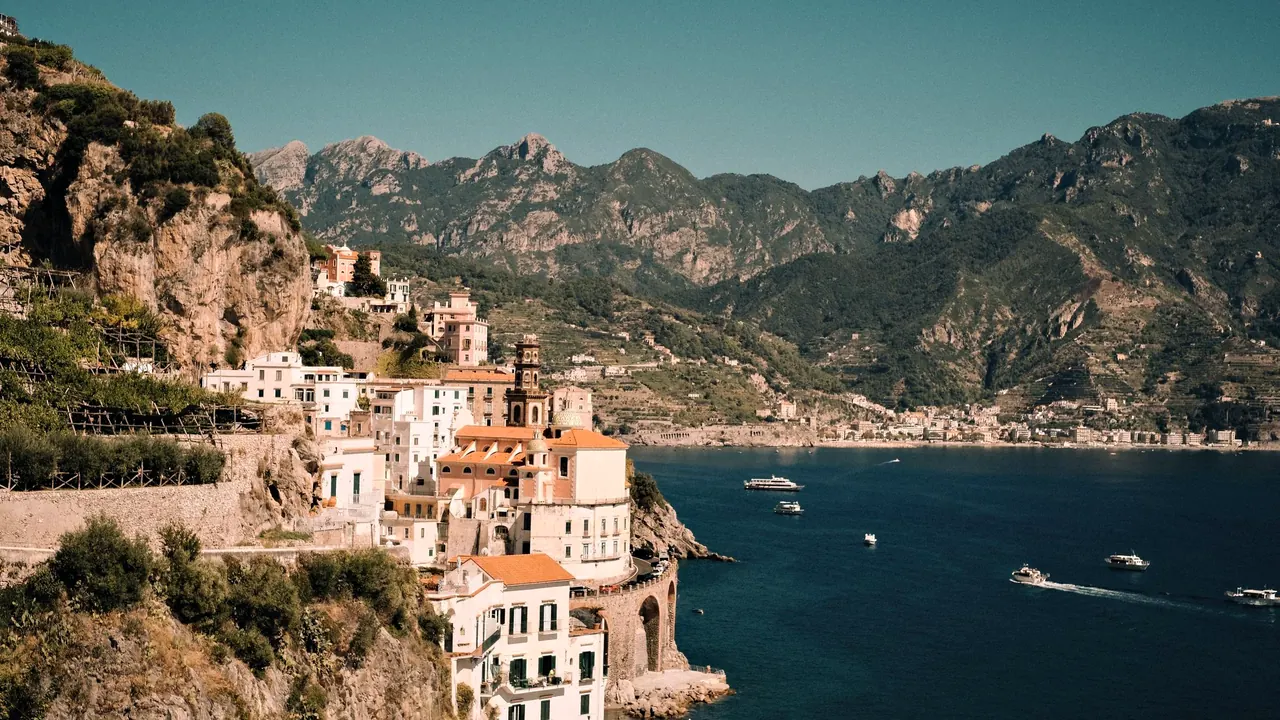
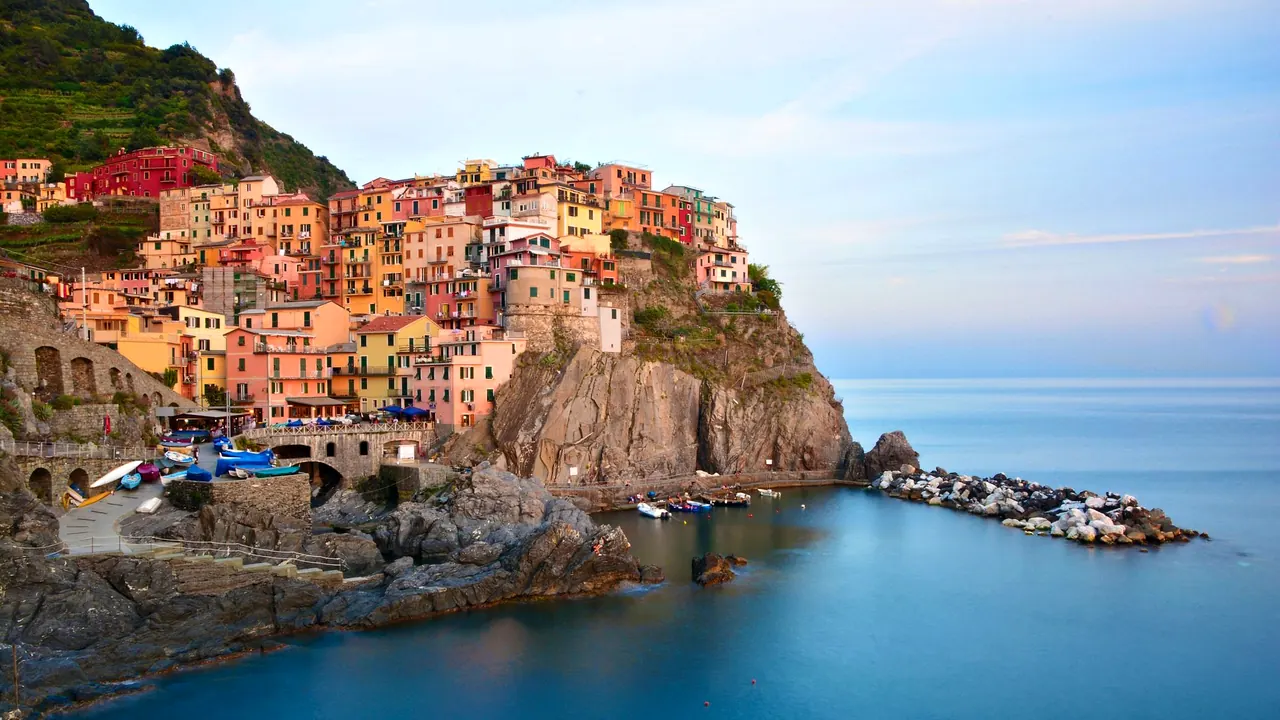
Photos: Amalfi Coast by Alina Chernii, Pexels License; Cinque Terre by Narcisa Aciko, Pexels License.
Amalfi Coast or Cinque Terre?
Our verdict in twelve categories, each scored against the same fixed benchmark cities, and the climate month by month, so you can choose for your trip.
Choose Amalfi Coast for
- shopping
- live music and the arts
- culture and sights
The Amalfi Coast is the richer and more polished trip, for travellers who want long terrace dinners, swimming from a hired boat below the cliffs, Ravello's gardens and concerts, and Pompeii, Capri and Paestum all within a day. It suits couples and anyone willing to pay for a sea view and put up with a slow, crowded coast road in return.
Choose Cinque Terre for
- getting around
- prices
Walkers on a tighter budget will get on better with Cinque Terre. Five car-free villages sit on a train line, and you can hike from one to the next and ride back in minutes. Focaccia, pesto and harbour-wall sunsets replace fine dining and boutiques. The trip is simpler and quieter, and Pisa, Lucca and Genoa are all within reach by rail.
Scoreboard
Twelve categories on one fixed scale from 0 to 100. The shaded stretch is the gap between the two.
Your match
Pick a travel style or drag the sliders, and both match scores follow your weighting.
Wins on shopping and live music and the arts with your weighting.
Wins on getting around and prices with your weighting.
What matters to you?
Category by category
What the scores mean for a trip.
Beaches & swimming
Neither coast is built for a long day on the sand, but the Amalfi Coast gives swimmers more. It has a row of grey-pebble coves at Positano, Amalfi, Atrani and Furore. Maiori and Minori have real room to spread out, and the best swimming of all is from a hired boat anchored below the cliffs.
Cinque Terre has one proper beach town, Monterosso, where the umbrellas stand close together at Fegina. In the other villages you lower yourself into the sea from rock shelves and slipways. That makes a lovely cool-off between walks, but it is not a beach day.
Food & drink
The Amalfi Coast cooks from a larger larder. Its kitchen brings together lemons, the catch from the gulf and the mozzarella and tomatoes of inland Campania. It also covers the full range, from plain family cooking in Minori and the Agerola hills to elaborate dinners on grand hotel terraces. Cetara's colatura and the sfogliatella of Conca dei Marini are specialities you will not find anywhere else.
Cinque Terre's food is herb-led and simple, and much of it is eaten standing up: pesto, focaccia and farinata from the bakery counter, and fried fish on the harbour wall. Its best moments are often in the glass, with the terraced white and sweet Sciacchetrà. There is little formal dining, so anyone who wants variety heads to La Spezia.
Culture & sights
Both coasts are UNESCO-listed landscapes, and neither has a major museum. The Amalfi Coast has more history to stand in front of: the striped Arab-Norman cathedral and Cloister of Paradise from Amalfi's years as a maritime republic, the villas and gardens of Ravello, and a Roman villa at Minori.
In Cinque Terre the villages themselves are the sight. There are Vernazza's harbour square, Manarola's coloured houses and Corniglia's ridge-top lanes, plus a few striped Ligurian Gothic churches and the Doria tower. Most visitors have seen it all in a day or two.
Nightlife
Neither coast suits a night out. The Amalfi Coast at least has a summer evening scene, with cocktail bars in Positano and café tables in Amalfi's cathedral square until around midnight. Cinque Terre has a few wine bars in Monterosso and Riomaggiore, no clubs, and villages that are asleep well before midnight. For anything more, you go to Naples or Salerno from Amalfi, and to La Spezia from Liguria.
Nature & outdoors
The two are well matched as walking country, but the walking is different. The Amalfi Coast is bigger and wilder. The Lattari mountains drop straight to the sea, the Path of the Gods runs high above Positano, and the Valle delle Ferriere climbs a shaded gorge with waterfalls. Below the cliffs, the Grotta dello Smeraldo and the waters off Punta Campanella draw kayakers and snorkellers.
Cinque Terre is a tighter network of paths that is easier to use. The Sentiero Azzurro links the five villages through vineyards and olive groves, and the Sentiero Rosso follows the wooded ridge above. You can walk one way and take the train back, and the sea below is a protected marine reserve.
Day trips
The Amalfi Coast has some of the greatest day trips in Europe. Pompeii and Herculaneum, Capri by ferry, the Greek temples of Paestum and the archaeological museum in Naples are all within reach. The roads are slow, though, so the sea is often the quickest way out.
Cinque Terre's day trips are more varied in kind and easier to reach. Portovenere and Lerici are a short boat ride away, Pisa and Lucca are reachable by train, the marble quarries of Carrara are close, and Genoa and Portofino lie up the Riviera. Few of them, though, match the weight of the sites near Amalfi.
Good for families
Both coasts are steep, stepped and hard going with small children, and neither has anything made for them. The Amalfi Coast is a little more forgiving, because Maiori and Minori are flat and have sandier, gentler beaches. The boat trips and the emerald grotto also tend to go down well.
In Cinque Terre, Monterosso is really the only option for families with young children. Corniglia's hundreds of steps from the station and the packed summer trains show what the rest of the coast asks of a family.
Getting around
Cinque Terre is far easier to get around. A local train links all five villages through tunnels, with only a few minutes between stops, and the trails and seasonal ferries give you two more ways along the coast. The village centres are car-free, so you never need to drive.
The Amalfi Coast depends on a single narrow cliff road that jams for hours in summer, with crowded buses and very little parking. From spring to autumn the ferries are the relief, and choosing a waterfront base in Amalfi or Positano spares you much of the struggle.
Shopping & style
The Amalfi Coast has real crafts to shop for. Positano's lanes sell linen clothing and sandals fitted while you wait, Amalfi makes handmade paper, and Vietri sul Mare is known for hand-painted majolica, from single tiles to whole dinner services.
Cinque Terre has no fashion or design shopping at all. What is worth taking home there is food and drink: jars of pesto and anchovies, and a bottle of Sciacchetrà.
Affordability
On the Amalfi Coast almost everything costs more: the sea-view rooms in Positano and Ravello, the sunbeds, the private boats, the taxis on the coast road and even a plain lunch by the water. You can soften the cost by basing yourself in Maiori, Minori, Atrani or the Agerola hills and getting around by bus and ferry, or by going in late September or early October.
In Cinque Terre the expense is concentrated in the beds. Rooms in the villages are few, small and much in demand, and the national park charges for use of its paths. Once you are there, though, eating and getting about cost relatively little.
Live music & performing arts
Only the Amalfi Coast gives you a reason to plan your evenings around music, and only in the warm months, when Ravello becomes a small concert town with classical music on many nights. If that is what draws you, stay up in Ravello rather than down by the beach, so the concert is a short walk away and not a ride up the cliff road.
Away from Ravello, and everywhere in winter, the two coasts are much alike: a church concert, a band following a saint's procession, and perhaps a piano bar on the Amalfi side. Cinque Terre offers no more than that at any time of year. Neither coast has a theatre or an opera house, so for a staged performance you have to leave the coast, going to the San Carlo in Naples from Amalfi or to the Carlo Felice in Genoa from the Ligurian villages.
Wellness & relaxation
For a restful stay, timing matters on both coasts, and the Amalfi Coast rewards it more. In May, June and September it settles into long lunches, garden walks and afternoons on a balcony above the sea, while Positano and Amalfi in July and August are noisy and crowded. For proper thermal bathing, you can take the ferry to the thermal parks of Ischia, though it uses up a day.
Cinque Terre has no spa culture at all, so its calm comes simply from having no cars. You find it early in the morning, in spring and autumn, and once the day visitors leave, and it disappears on a crowded summer afternoon.
When should you go?
Pick your month. The climate figures are measured averages, not a forecast.
Amalfi Coast in July
Cinque Terre in July
Daytime high, °C
Rainfall in the month, mm
Where the figures come from
Amalfi Coast's temperatures are measured 65 km from the centre, at Grazzanise.
Amalfi Coast has no rain gauge within 25 km of the centre, so its rainfall comes from a gridded climate dataset read at the destination rather than from a gauge further away.
Cinque Terre's temperatures are measured 78 km from the centre, at Pisa / S. Giusto.
Cinque Terre has no rain gauge within 25 km of the centre, so its rainfall comes from a gridded climate dataset read at the destination rather than from a gauge further away.
Temperature and rainfall are climate normals, averaged over the years shown. Amalfi Coast: 1991-2020 normals, Grazzanise (64.7 km from centre). Cinque Terre: 1991-2020 normals, Pisa / S. Giusto (77.8 km from centre).
The two coasts keep much the same calendar, with the Amalfi Coast a degree or so warmer for most of the year. Swimming is good on both from June to September, and the sea is warmest in August, at about 26°C on the Amalfi side and a degree less in Liguria. In July and August, highs reach around 31°C on the Amalfi Coast and 30°C in Cinque Terre. That is hot enough to make steep stairways and cliff paths hard work by midday, so May, June and late September suit walkers better. Summer is dry and sunny on both coasts, and the Amalfi Coast gets slightly more sun.
Autumn is where they part. Rain returns to both in September, but in Cinque Terre October and November are far wetter, at around 170mm a month, and heavy rain can close sections of the coastal path. The Amalfi Coast also turns wet from October, though less so, and its sea stays warm enough for a swim into early October. From November to March both coasts are cool and damp, and neither is a beach destination.
Which traveller are you?
For a culture and arts trip, choose the Amalfi Coast. Amalfi's cathedral, Ravello's cliffside villas and its summer festival in the Villa Rufolo gardens give it far more to see and hear, and Pompeii, Herculaneum and Naples are within a day.
On a trip on a tight budget, Cinque Terre is the easier of two expensive coasts. Focaccia, fried fish in paper cones and a cheap local train keep daily costs down, and you can sleep in La Spezia or Levanto and take the train in.
For a relaxing and wellness trip, the Amalfi Coast offers more. Its cliffside hotels have spas and seawater pools, and Ravello, Atrani and Praiano are calm bases. Cinque Terre has little beyond the odd massage, so the rest you get there depends on quiet terraces and the evening hours.
Before you go
| Measure | Amalfi Coast | Cinque Terre |
|---|---|---|
| Official language | Italian | Italian |
| Currency | Euro (EUR) | Euro (EUR) |
| Sockets | CFL230 V, 50 Hz | CFL230 V, 50 Hz |
| Driving side | Right | Right |
| Time zone | UTC+1, UTC+2 in summer | UTC+1, UTC+2 in summer |
| Emergency number | 112 | 112 |
| Main airport | Naples International Airport (NAP)131 non-stop destinations | Pisa International Airport (PSA)82 non-stop destinations |
| Public holidays this year | 13 days | 13 days |
By the numbers
| Measure | Amalfi Coast | Cinque Terre |
|---|---|---|
| Swim season, months above 21 °C | 5 months | 4 months |
Where else could you go?
Every comparison below shares a destination with this one, so you can follow Amalfi Coast or Cinque Terre somewhere new.
- Caprivs Amalfi Coast
- Naplesvs Amalfi Coast
- Portofinovs Cinque Terre
- Lake Comovs Cinque Terre
- Venicevs Cinque Terre
- Sicilyvs Amalfi Coast