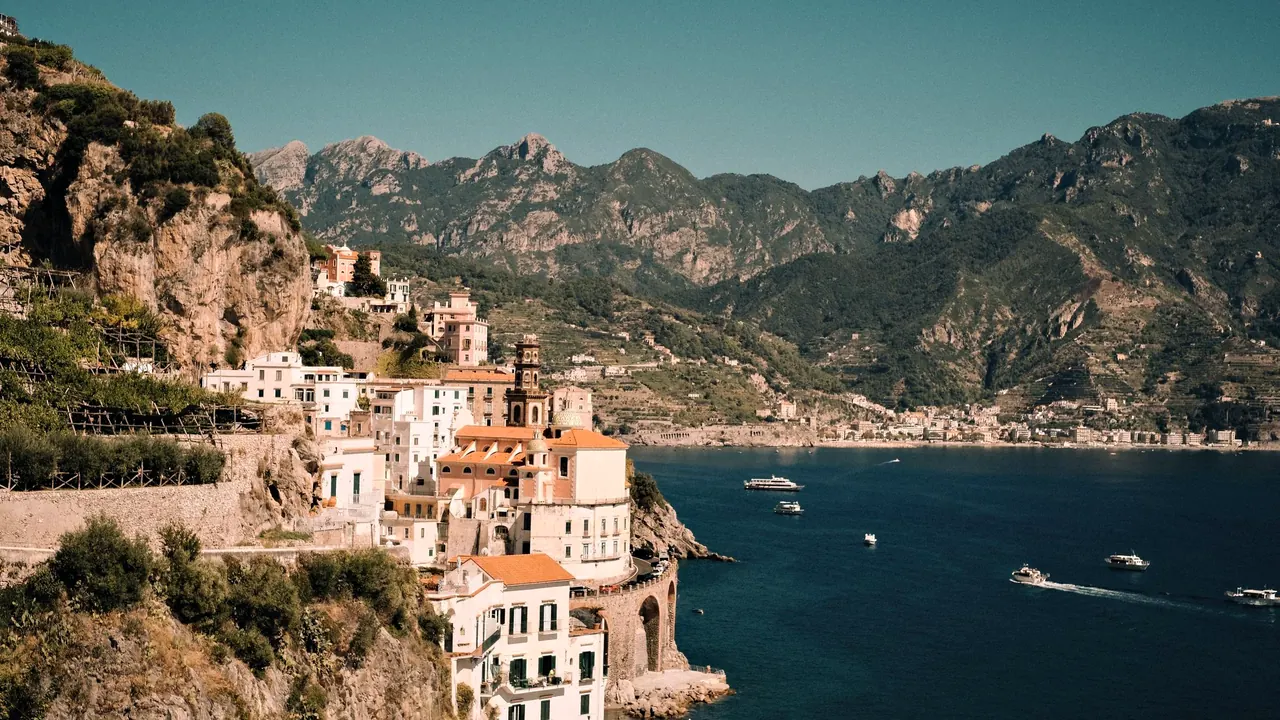
Photos: Amalfi Coast by Alina Chernii, Pexels License.
Amalfi Coast or Umbria?
Our verdict in twelve categories, each scored against the same fixed benchmark cities, and the climate month by month, so you can choose for your trip.
Choose Amalfi Coast for
- beaches
- shopping
- nature and the outdoors
The Amalfi Coast is for a trip built around the sea and the view: swimming from a boat below the cliffs, walking the Path of the Gods, and dinners on terraces above pastel towns stacked over the water. It suits couples and honeymooners with a generous budget who are happy to stay in one spectacular place and put up with stairs, packed buses and high summer prices.
Choose Umbria for
- prices
- culture and sights
- getting around
Choose Umbria if you want art and countryside on the same trip. You can see Giotto in Assisi, Orvieto's cathedral and a different hill town every day, then go back to a farmhouse with a pool. It costs noticeably less, is far easier to drive, and works better for families and slow travellers. The price is that there is no sea, and the swimming is in lakes and pools.
Scoreboard
Twelve categories on one fixed scale from 0 to 100. The shaded stretch is the gap between the two.
Your match
Pick a travel style or drag the sliders, and both match scores follow your weighting.
Wins on beaches and shopping with your weighting.
Wins on prices and culture and sights with your weighting.
What matters to you?
Category by category
What the scores mean for a trip.
Beaches & swimming
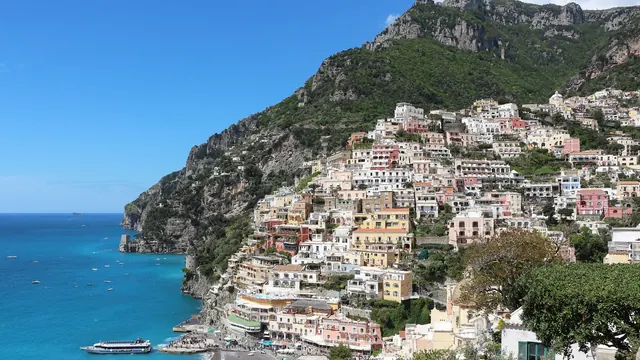
Here the two are far apart. The Amalfi Coast offers real sea swimming: clear, deep water in grey-pebble coves at Positano, Atrani and Furore, many of them best reached by boat. Anyone who wants sand and room to spread out heads for Maiori.
In Umbria, the swimming is in fresh water. Lake Trasimeno's lidos are shallow and warm, good for paddling but rarely clear, and most visitors end up in the pool at their farmhouse. If you want the sea, you are looking at a drive of two hours or more.
Food & drink
Both eat very well, but one cooks from the sea and the other from the hills. On the Amalfi Coast that means scialatielli with clams, Cetara's anchovies and colatura, and lemons in everything from cakes to limoncello. The best meals are often a short climb away from the waterfronts.
Umbria offers black truffle over handmade strangozzi, Norcia's pork, and Sagrantino and Orvieto wines tasted at the estates where they are made. It is the better place for a wine-focused trip, though seafood barely features.
Culture & sights
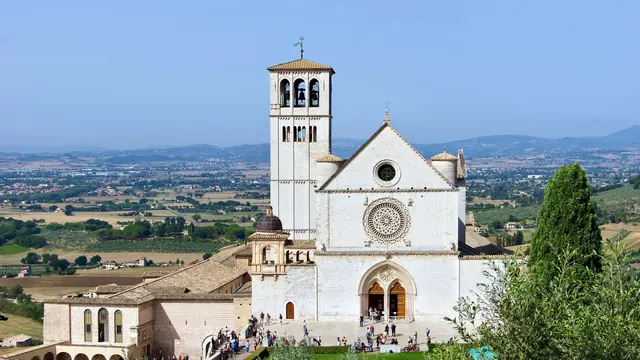
Umbria is the richer place for art and history. Assisi's basilica holds frescoes by Giotto and Cimabue, Orvieto's cathedral has Signorelli's Last Judgement, Perugia has its national gallery, and Gubbio, Spoleto, Todi and Spello each add their own set piece.
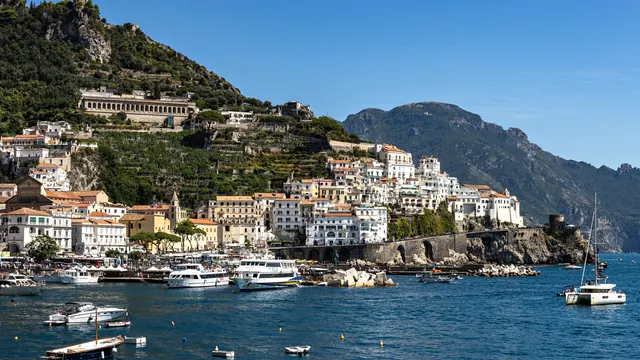
The Amalfi Coast offers the striped cathedral and cloister of a former maritime republic, and the gardens of Villa Rufolo and Villa Cimbrone in Ravello. Above all it has the UNESCO-listed coast itself. There are no big collections, so for those you have to go to Naples.
Nightlife
Neither is a place to go out late, so evenings mean a long dinner and a stroll in both. On the Amalfi Coast, that comes with an aperitivo looking out to sea, a few cocktail bars in Positano and café tables in Amalfi's cathedral square, and much of it closes in winter.
Umbria's livelier corner is Perugia, where students fill the cathedral steps and the old-centre wine bars. The rest of the region goes quiet early.
Nature & outdoors
The Amalfi Coast has the more dramatic landscape. The Lattari mountains drop straight into the sea, and you can take the Path of the Gods above Positano, then go kayaking or snorkelling past the sea caves and the Li Galli islets on another day.
Umbria is gentler and greener, with olive groves and oak woods, but it has a wide range of outdoor activities inland. Wildflowers cover the Castelluccio plain below the Monti Sibillini, there is rafting in the Valnerina, the Marmore Falls are worth a visit, and cyclists ride the old Spoleto to Norcia railway path.
Day trips
Both are excellent bases for excursions, but the outings are of different kinds. From the Amalfi Coast they are big single destinations: Pompeii and Herculaneum, Capri by ferry, Paestum's Greek temples and a full day in Naples. On these slow roads, the boat is often the quickest way out.
In Umbria the day trip is the routine of the stay, a different hill town each day by car, from Gubbio to Bevagna. Cortona, Montepulciano and Siena are close by in Tuscany, and Rome is a little over an hour by train from Orvieto.
Good for families
Umbria is the easier choice with children. A farmhouse with a pool, animals and space outdoors makes a relaxed base, Lake Trasimeno's shallow water suits small swimmers, and there is an amusement park outside Perugia. Its hill towns are still steep and cobbled, though.
The Amalfi Coast is harder going. Towns are built up the cliff with hundreds of steps, the beaches are pebbly, and the coast road has long stretches without a pavement. Families do best in flatter Maiori or Minori, with boat trips and the emerald grotto as highlights.
Getting around
Getting around is much easier in Umbria. The roads are good, distances are short and traffic is light. You park below the walls of each hill town and ride up by escalator or funicular. Without a car, a rail line links Perugia, Assisi, Spello and Spoleto, though the countryside is hard to reach.
On the Amalfi Coast, everything depends on one narrow cliff road that jams in summer, and the buses on it fill quickly. From spring to autumn the ferries make the trip pleasant and double as sightseeing. A waterfront base in Amalfi or Positano saves a lot of climbing.
Shopping & style
Both sell painted majolica, but the Amalfi Coast offers more variety. Positano's lanes are full of linen resort clothing and sandal makers who fit a pair while you wait, Amalfi sells its handmade paper, and Vietri sul Mare is full of ceramic workshops.
Umbria's shopping is more about food and craft. There are Deruta's roadside potteries, hand-loomed linens in Montefalco and Bevagna, cashmere outlets near Perugia, and Norcia's hams and truffles. Beyond that, Perugia's high street is fairly ordinary.
Affordability
The gap here is wide. In high season the Amalfi Coast is among the most expensive coasts in Europe, with sea-view rooms in Positano and Ravello, sunbeds, boats and taxis all adding up. Staying in Maiori, Atrani or Agerola and travelling by bus and ferry helps.
Umbria is one of the more gently priced parts of central Italy. Farmhouse stays are noticeably cheaper than over the Tuscan border, and village lunches and local wine are good value. The main extra costs are a hire car and a weakness for truffles.
Live music & performing arts
On the Amalfi Coast, music means Ravello, the town Wagner knew. In summer, orchestras play on a stage built out over the cliff in the gardens of Villa Rufolo, and a chamber series fills its churches and halls on many evenings. Elsewhere there are church concerts and brass bands at feast-day processions. The coast has no theatre or opera house, and out of season there is very little.
Umbria offers more, and in more forms. In July, Umbria Jazz takes over Perugia, with headline concerts in the arena and free bands in the squares. Spoleto's Festival dei Due Mondi brings opera, dance and theatre to its Roman theatre and opera house from late June. In the rest of the year there are occasional performances at Perugia's Teatro Morlacchi and in small 19th-century town theatres, plus a winter jazz edition in Orvieto around the New Year.
Wellness & relaxation
Neither has a strong thermal tradition, and in both the relaxation comes from the slow pace. Umbria is slightly better for it. Country houses offer pools, massage and yoga among the olive groves, Assisi and the hermitages on Monte Subasio are places for silence, and there are small historic spas at San Gemini and Nocera Umbra.
On the Amalfi Coast, the spas belong to the luxury cliff hotels. For quiet, choose Ravello, Atrani or Praiano, or come in May, June or September, because Positano and Amalfi are noisy in midsummer.
When should you go?
Pick your month. The climate figures are measured averages, not a forecast.
Amalfi Coast in July
Umbria in July
Daytime high, °C
Rainfall in the month, mm
Where the figures come from
Amalfi Coast's temperatures are measured 65 km from the centre, at Grazzanise.
Amalfi Coast has no rain gauge within 25 km of the centre, so its rainfall comes from a gridded climate dataset read at the destination rather than from a gauge further away.
Umbria's temperatures are measured 53 km from the centre, at Frontone.
Umbria has no rain gauge within 25 km of the centre, so its rainfall comes from a gridded climate dataset read at the destination rather than from a gauge further away.
Temperature and rainfall are climate normals, averaged over the years shown. Amalfi Coast: 1991-2020 normals, Grazzanise (64.7 km from centre). Umbria: 1991-2020 normals, Frontone (52.9 km from centre).
On the Amalfi Coast, beach season runs from June to early October. The sea is warm enough to swim by June and reaches about 26°C in August. July and August are hot, with afternoons around 31°C, and that makes the steep stairways and trails hard work by midday. The summer is dry and sunny. Rain returns in September and peaks in November at about 143mm, so late spring and September are the best times for walking and swimming in the same trip.
Umbria's inland towns and valleys have colder winters, with January highs of about 7°C, which makes hill-town sightseeing a chilly business. Summer reaches around 30°C in the valleys, so July days are best spent by a farmhouse pool or the lake. May, June, September and early October are the most comfortable months for walking the towns and hills. Rain builds through autumn but never falls as heavily as it does on the coast in late autumn.
Which traveller are you?
On a beach and sun trip, choose the Amalfi Coast. It has clear, deep, warm water, pebble coves below the cliffs and boat days anchored off Positano. Umbria has no coast at all, and its lake beaches are shallow, often cloudy and muddy underfoot.
For a culture and arts trip, Umbria is the stronger choice. Assisi's frescoed basilica, Orvieto's cathedral and Perugia's gallery of Perugino are all within short reach of each other. The Amalfi Coast has fine villas and a cathedral, but its great sight is the landscape itself.
On a tight budget, Umbria makes far more sense. Farmhouse stays, village set lunches and cheap local wine keep costs down, and most of the sights are churches that cost little. The Amalfi Coast is among Europe's priciest coasts in season, even if you base yourself in Maiori or Agerola.
Before you go
| Measure | Amalfi Coast | Umbria |
|---|---|---|
| Official language | Italian | Italian |
| Currency | Euro (EUR) | Euro (EUR) |
| Sockets | CFL230 V, 50 Hz | CFL230 V, 50 Hz |
| Driving side | Right | Right |
| Time zone | UTC+1, UTC+2 in summer | UTC+1, UTC+2 in summer |
| Emergency number | 112 | 112 |
| Main airport | Naples International Airport (NAP)131 non-stop destinations | Perugia San Francesco d'Assisi – Umbria International Airport (PEG)17 non-stop destinations |
| Public holidays this year | 13 days | 13 days |
By the numbers
| Measure | Amalfi Coast | Umbria |
|---|---|---|
| Population | - | 852,085 |
| People per km² | - | 101 |
| Swim season, months above 21 °C | 5 months | - |
Where else could you go?
Every comparison below shares a destination with this one, so you can follow Amalfi Coast or Umbria somewhere new.
- Caprivs Amalfi Coast
- Naplesvs Amalfi Coast
- Ischiavs Amalfi Coast
- Tuscanyvs Umbria
- Pugliavs Amalfi Coast
- Cinque Terrevs Umbria