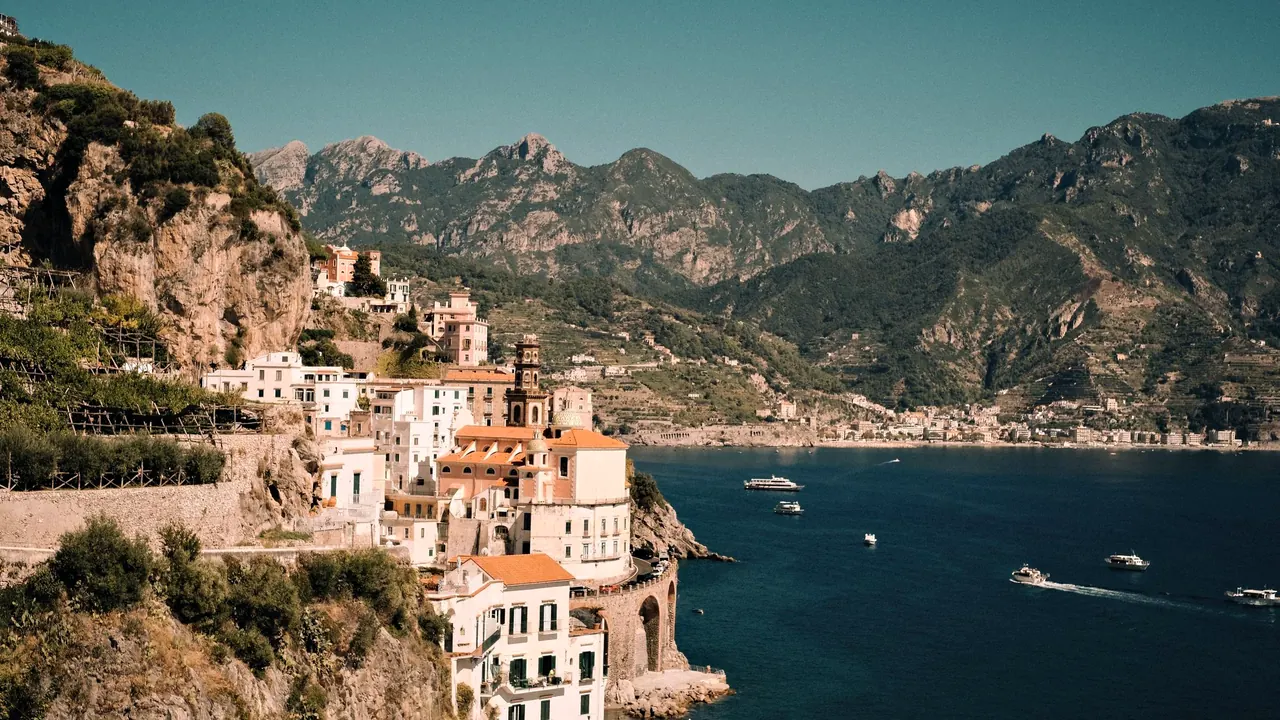
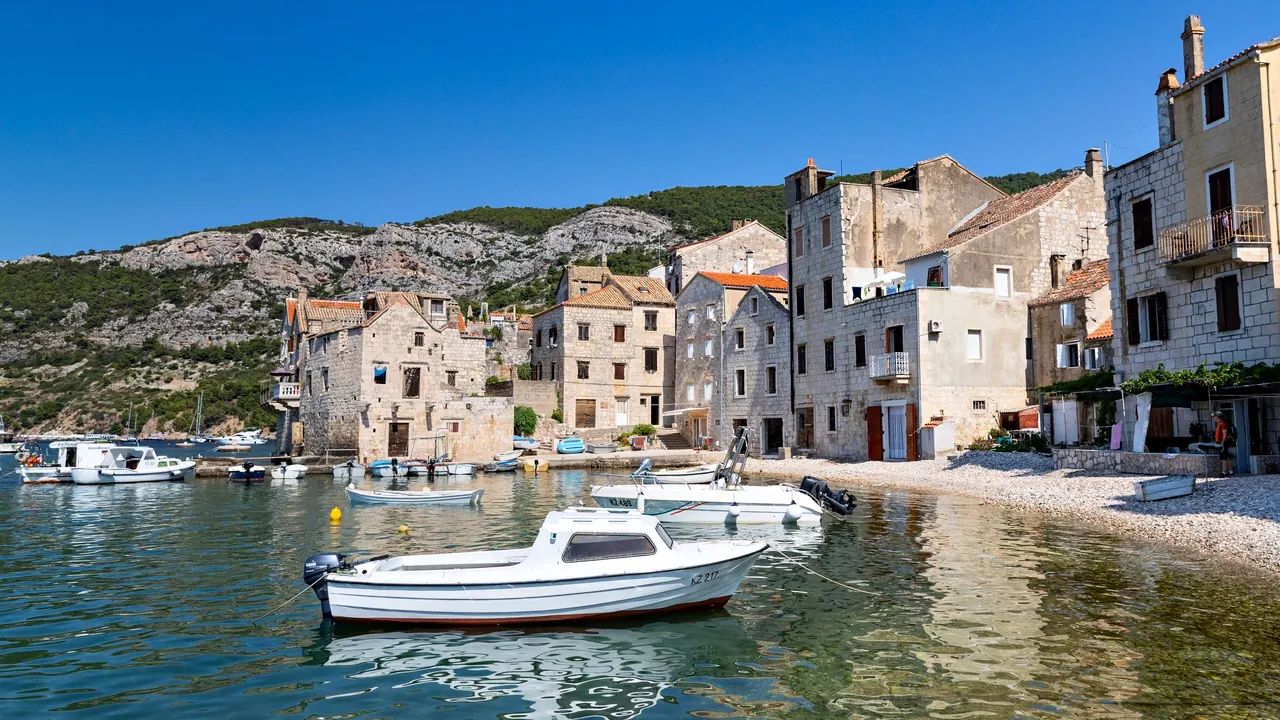
Photos: Amalfi Coast by Alina Chernii, Pexels License; Vis by dronepicr, CC BY 2.0, cropped.
Amalfi Coast or Vis?
Our verdict in twelve categories, each scored against the same fixed benchmark cities, and the climate month by month, so you can choose for your trip.
Choose Amalfi Coast for
- day trips
- shopping
- culture and sights
The Amalfi Coast suits travellers who want plenty to do from one base. Its food is richer and more varied, Ravello adds gardens and summer concerts, and Pompeii, Capri, Paestum and Naples are all within a day's reach. The price is steep, and the cliffside towns get crowded in high summer. It works best for couples and anyone who would rather spend the days looking at things than sitting on a beach.
Choose Vis for
- prices
- beaches
- families
Vis is for people who want to switch off by the sea. It is more remote and noticeably cheaper, and the water is a little clearer. The coves are emptier, and the outer islets are a short boat ride away. You give up nearly everything else: there is little shopping, no concert life, and towns and heritage sites have to be fitted in before or after the island. Choose it for a quiet week of swimming, fish dinners and harbour evenings.
Scoreboard
Twelve categories on one fixed scale from 0 to 100. The shaded stretch is the gap between the two.
Your match
Pick a travel style or drag the sliders, and both match scores follow your weighting.
Wins on day trips and shopping with your weighting.
Wins on prices and beaches with your weighting.
What matters to you?
Category by category
What the scores mean for a trip.
Beaches & swimming
Both are cove coasts of pebble and rock under cliffs, so the real difference is how crowded the water feels. On the Amalfi Coast the sea is deep and a touch warmer, but in the small grey coves below Positano and Amalfi rows of hired sunbeds take most of the space, and free spots are squeezed to the edges. The quieter coves need a long stairway down or a boat.
Vis comes out a little ahead because its coves are emptier and its water clearer, and on the outer islets you may have a bay almost to yourself. Getting there takes more planning, though. Stiniva and the southern bays mean hiring a scooter or car or taking a taxi boat, and once you arrive there is little shade.
Food & drink
Lemons, anchovies and mozzarella from the hills give the Amalfi Coast a far deeper larder than Vis. There is scialatielli with clams, Cetara's colatura and cured anchovies, the cream-filled sfogliatella named after Conca dei Marini, and mozzarella from the plains nearby. You can eat anywhere from a family trattoria in Minori to terrace dining in Ravello, as long as you avoid the waterfront menus aimed at day-trippers.
Vis is simpler, and good at what it does. Konobas serve fish, lobster and peka, along with anchovy pogaca and local Vugava and Plavac wines. Beyond that there is little choice, no real markets, and many places close once summer ends.
Culture & sights
The Amalfi Coast has more to see. Amalfi's striped cathedral and Cloister of Paradise recall its days as a maritime republic, and Ravello has the gardens of Villa Rufolo and Villa Cimbrone. The UNESCO-listed coastline, with Positano and Atrani stacked on the cliffs, is a sight in itself, though there are no major museums.
Vis has less, but it is unusual. There are the remains of Greek Issa, a small archaeological museum in an Austrian fortress, and British forts from the Napoleonic wars. Most memorable are Tito's cave on Hum and the submarine pens from the island's long years as a closed military zone.
Nightlife
Neither place is for a night out. The Amalfi Coast offers a little more: a few cocktail bars in Positano stay open late in summer, and Amalfi's cathedral square is busy until around midnight. On Vis, evenings come down to harbour tables in Vis town and Komiza, a handful of wine bars, and the odd weekend beach party. For clubs, you would have to go to Naples from the Amalfi Coast, and Vis has nothing comparable.
Nature & outdoors
The Amalfi Coast is the more dramatic landscape for walkers. The Lattari mountains drop straight into the sea, and the Path of the Gods above Positano is one of Europe's great coastal walks. Add the mule tracks between lemon terraces and the shaded waterfall gorge of the Valle delle Ferriere.
On Vis the sea matters more than the land. The interior is a dry plateau of vineyards under Hum, while the geopark islets, sea caves and wreck and wall dives are what draw people outdoors. Both are best on foot in spring and autumn.
Day trips
Here the two are furthest apart. From the Amalfi Coast you can reach Pompeii and Herculaneum, take a ferry to Capri, visit the Greek temples at Paestum, or spend a full day in Naples. Vietri sul Mare and Salerno are close by, and boats are often quicker than the road.
Vis is too far out at sea for any of that, because Split is too long a ferry crossing for a day trip. Outings mean boats to Bisevo's Blue Cave, Ravnik and Budikovac, or a day in whichever of the two towns you are not staying in.
Good for families
Neither suits young children especially well, and the problems differ. On the Amalfi Coast the towns are built on hundreds of steps, much of the main road has no pavement, and summer buses are packed, so families do best in flat Maiori or Minori.
Vis is quieter and gives children more freedom in its small harbours, and Stoncica has shallow water. Shade is scarce there, though, and many coves are a steep path away. Neither has attractions built for children, so boat trips and simple sea days are what keep them happy in both places.
Getting around
Both take effort, in different ways. On the Amalfi Coast everything depends on one twisting cliff road that jams for hours in summer. Buses fill quickly, so from spring to autumn the ferries between Positano, Amalfi and Salerno are the easier way to travel.
On Vis the hard part is getting there: a crossing from Split of an hour and a half or more, with few sailings. On the island, Vis town and Komiza are linked by bus, but reaching the coves means hiring a scooter or taking taxi boats.
Shopping & style
The Amalfi Coast offers real shopping, if a narrow range: linen boutiques and made-to-measure sandals in Positano, handmade paper in Amalfi, and hand-painted majolica in Vietri sul Mare. On Vis there is almost nothing beyond grocery stores and farm wine, olive oil and herbal brandies, so bring whatever you need with you.
Affordability
On the Amalfi Coast you pay for the setting itself. Cliffside rooms and terrace tables are priced for honeymooners, and sunbeds and taxis on the coast road add more. The fix is simply to stay a town or a hillside away from the views, and the gap narrows in late September and October.
Vis costs less overall, because modest apartments and guesthouses keep the room bill down. What pushes the price up is the island's remoteness: fish sold by weight, taxi boats to the coves, scooter hire, the ferry and island shop prices. Come in June or September and the bill is noticeably lighter.
Live music & performing arts
Ravello gives the Amalfi Coast a real musical tradition. Its summer festival puts orchestras on a stage over the cliff in Villa Rufolo's gardens, and chamber concerts fill its churches on many evenings. Elsewhere on the coast there is little beyond church music and feast-day bands. Vis has no concert life at all, only klapa singing in the harbours and Komiza's fishermen's feasts if you happen to be there.
Wellness & relaxation
Neither has thermal springs. The Amalfi Coast offers more pampering: its cliffside hotels have seawater pools and treatment rooms. Ravello, Atrani and Praiano are calm bases away from crowded Positano in midsummer.
Vis offers a different kind of rest, with little traffic, early evenings and harbour towns that never get busy. It has only a few massage rooms, so it suits people who want to switch off rather than be looked after.
When should you go?
Pick your month. The climate figures are measured averages, not a forecast.
Amalfi Coast in July
Vis in July
Daytime high, °C
Rainfall in the month, mm
Where the figures come from
Amalfi Coast's temperatures are measured 65 km from the centre, at Grazzanise.
Amalfi Coast has no rain gauge within 25 km of the centre, so its rainfall comes from a gridded climate dataset read at the destination rather than from a gauge further away.
Vis's temperatures are measured 55 km from the centre, at Split / Marjan.
Vis has no rain gauge within 25 km of the centre, so its rainfall comes from a gridded climate dataset read at the destination rather than from a gauge further away.
Vis's sunshine is measured 55 km from the centre, at Split / Marjan.
Temperature and rainfall are climate normals, averaged over the years shown. Amalfi Coast: 1991-2020 normals, Grazzanise (64.7 km from centre). Vis: 1991-2020 (sunshine 1971-2000) normals, Split / Marjan (54.8 km from centre).
Around the main towns of both places, summer follows the same pattern. Daytime highs reach about 31°C in July and August, and the sea is warm enough to swim from June to early October. Midday heat makes the steep paths hard going in high summer, so May and late September are better for walking and sightseeing. The Amalfi Coast holds its warmth a little longer. Its sea peaks at about 26°C in August, a degree above Vis, and September stays hotter there, so late-season swimming feels easier.
The main difference is rain. On the Amalfi Coast the weather breaks hard in autumn, with October wet and November reaching about 143mm. Vis gets clearly less from September to February, with November closer to 94mm, and it is slightly sunnier through the summer months. That makes Vis the steadier choice in early autumn. On the Amalfi Coast, winter is a degree or two milder but noticeably wetter.
Which traveller are you?
For a culture and arts trip, the Amalfi Coast is the clear choice. Amalfi's cathedral, Ravello's villas and summer festival, and day trips to Pompeii, Herculaneum, Paestum and the museums of Naples give you far more than Vis's Greek walls and military tunnels.
On a trip on a tight budget, Vis goes further. Private apartments and guesthouses keep the cost of a stay down, and June and September are easier still. On the Amalfi Coast, the cost of rooms, sunbeds and waterfront meals soon adds up, even in the cheaper towns.
For a beach and sun trip, Vis has a slight edge, because whole days there are built around coves and boat trips. The Amalfi Coast suits sun-seekers who want sand and room to spread out, as long as they stay in Maiori or Minori.
Before you go
| Measure | Amalfi Coast | Vis |
|---|---|---|
| Official language | Italian | Croatian |
| Currency | Euro (EUR) | Euro (EUR) |
| Sockets | CFL230 V, 50 Hz | CF230 V, 50 Hz |
| Driving side | Right | Right |
| Time zone | UTC+1, UTC+2 in summer | UTC+1, UTC+2 in summer |
| Emergency number | 112 | 112 |
| Main airport | Naples International Airport (NAP)131 non-stop destinations | Split Saint Jerome Airport (SPU)69 non-stop destinations |
| Public holidays this year | 13 days | 14 days |
By the numbers
| Measure | Amalfi Coast | Vis |
|---|---|---|
| Swim season, months above 21 °C | 5 months | 4 months |
Where else could you go?
Every comparison below shares a destination with this one, so you can follow Amalfi Coast or Vis somewhere new.
- Hvarvs Vis
- Caprivs Amalfi Coast
- Naplesvs Amalfi Coast
- Bračvs Vis
- Procidavs Amalfi Coast
- Ischiavs Amalfi Coast