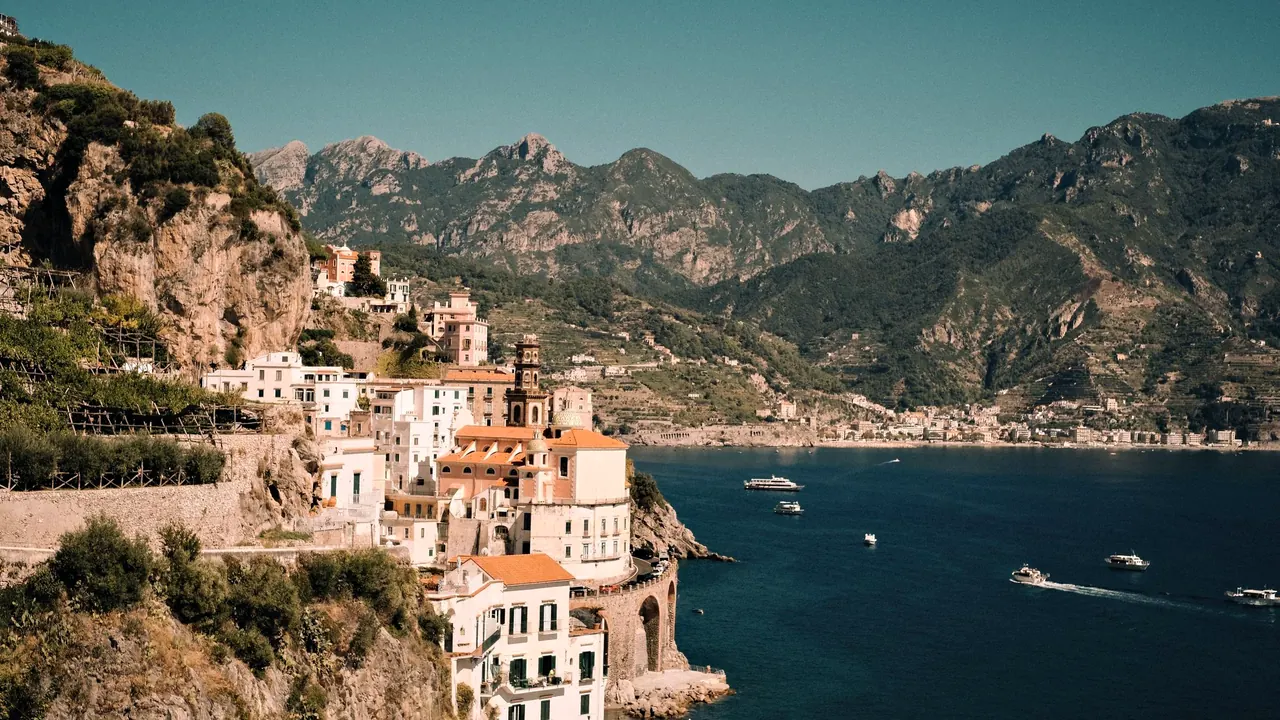
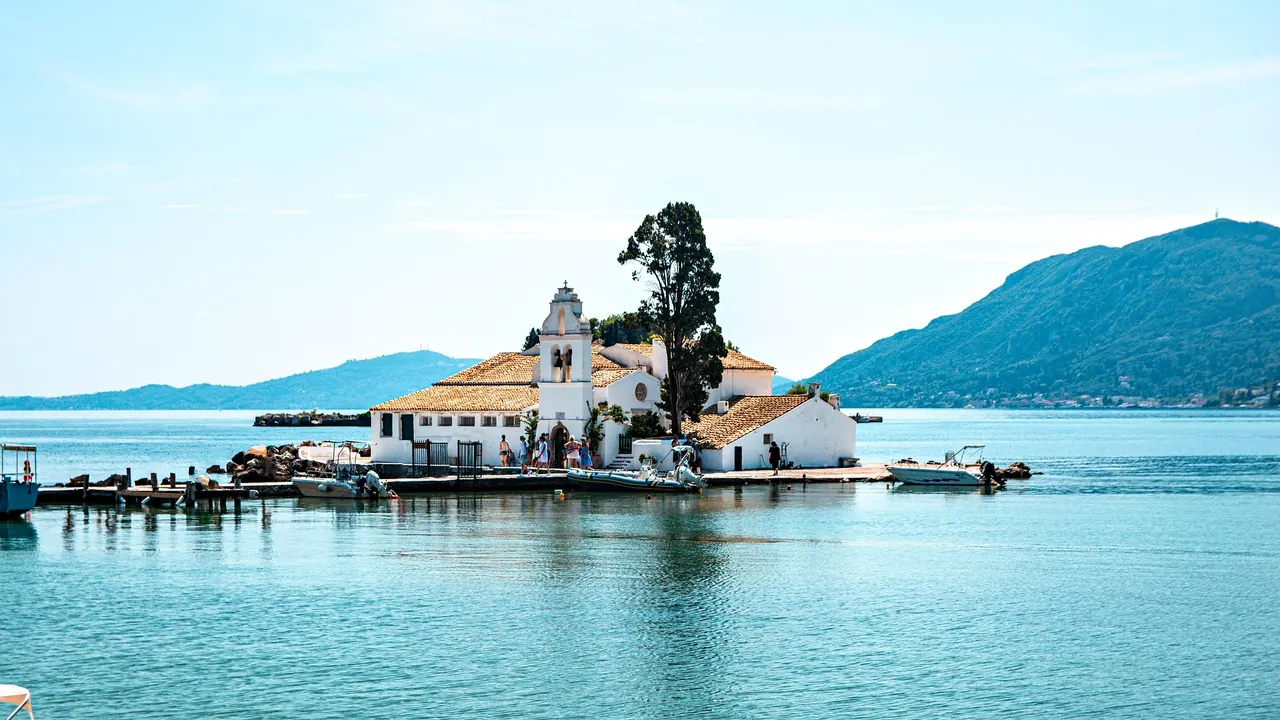
Photos: Amalfi Coast by Alina Chernii, Pexels License; Corfu by Nico Hartnauer, Pexels License.
Amalfi Coast or Corfu?
Our verdict in twelve categories, each scored against the same fixed benchmark cities, and the climate month by month, so you can choose for your trip.
Choose Amalfi Coast for
- day trips
- nature and the outdoors
- shopping
The Amalfi Coast suits couples and walkers who care more about the setting than about sand. It has cliff paths high above the sea, days on a boat below the villages and some of the best seafood in southern Italy, and Pompeii, Capri and Paestum are all within reach. In return you get endless steps, slow roads and very high prices, and the coast goes quiet after dinner.
Choose Corfu for
- prices
- families
- nightlife
Corfu is the easier and broader choice for a beach stay, especially with children or on a tighter budget. It has long sandy beaches on the west and north coasts, a Venetian old town and evenings that run from cocktails on the Liston to the clubs of Kavos. Its resorts are built for families, so it is a place to settle into, though seeing the whole island means hiring a car.
Scoreboard
Twelve categories on one fixed scale from 0 to 100. The shaded stretch is the gap between the two.
Your match
Pick a travel style or drag the sliders, and both match scores follow your weighting.
Wins on day trips and nature and the outdoors with your weighting.
Wins on prices and families with your weighting.
What matters to you?
Category by category
What the scores mean for a trip.
Beaches & swimming
The Amalfi Coast is wonderful for swimming but short on beach. Its small grey-pebble coves at Positano, Amalfi and Atrani are often reached only by boat or long stairways, and rows of sunbeds take up much of the space. Maiori and Minori are the exceptions, with sand and room to spread out, and most visitors do their best swimming from a hired boat below the cliffs.
Corfu has far more choice. Long sandy beaches run down the west coast from Glyfada to the dunes of Issos, the north coast is shallow and sandy, Paleokastritsa has clear coves under green cliffs, and boats go out to the turquoise bays of Antipaxos.
Food & drink
The Amalfi Coast eats better, and its cooking is built on its own sea and lemons. Expect scialatielli with clams, fish baked in lemon leaves, Cetara's cured anchovies and colatura, and the big Sfusato lemons in everything from granita to limoncello. Family trattorias in Minori, Maiori and Agerola sit alongside grand terrace dining in Positano and Ravello.
Corfu's Venetian-rooted dishes, such as pastitsada, sofrito and the fiery bourdeto, are unusual within Greece, and kumquat liqueur and ginger beer add local touches. The resorts rely heavily on package menus, though, so the good meals have to be found in Corfu Town's back lanes and the inland villages.
Culture & sights
Corfu has the stronger centre. Corfu Town's UNESCO-listed Venetian lanes, the Liston and the Spianada, two fortresses and proper museums, including the Asian art collection and the archaic Gorgon pediment, can fill several days. Further out are the Achilleion palace and the cliff-top ruins of Angelokastro.
The Amalfi Coast's heritage is spread more thinly but sits in a more dramatic setting. It has Amalfi's striped Arab-Norman cathedral and Cloister of Paradise, the villas and gardens of Ravello and the listed landscape of pastel towns and lemon terraces. Large collections mean a trip to Naples.
Nightlife
Corfu has real nightlife, and more than one kind. The clubs of Kavos run until dawn for a young crowd, Ipsos and Dassia have beach bars and late venues, and Corfu Town offers cocktails under the Liston arcades and bars in the old lanes.
On the Amalfi Coast an evening means a long dinner, an aperitivo with a sea view and a late stroll past the café tables in Amalfi's cathedral square. Positano has a few bars beyond that. It suits couples, and anyone who wants to dance heads to Naples or Salerno.
Nature & outdoors
The Amalfi Coast has the more spectacular landscape, with the Lattari mountains dropping almost straight into the sea. The Path of the Gods is one of Europe's great coastal walks, and old mule tracks link the lemon terraces. Below the cliffs are the green glow of the Grotta dello Smeraldo and protected snorkelling waters around the Li Galli islets.
Corfu is softer and greener, with old olive groves, spring wildflowers, walks on Mount Pantokrator at about 900m and the Corfu Trail running the length of the island. The Korission lagoon draws birdwatchers, and the sheltered east coast suits sailing.
Day trips
Few bases match the Amalfi Coast for days out. Pompeii and Herculaneum are a little over an hour away, ferries run to Capri, and both Paestum's Greek temples and Naples with its archaeological museum make full days. The roads are slow, so the boat is often the quickest way out.
Corfu's day trips also go by sea but are fewer and mostly run only in season. They include Paxos with Antipaxos and Parga on the mainland. The best of them is the short crossing to Albania for the layered ruins of Butrint.
Good for families
Corfu is much easier with children. Gently shelving sand in the north and south, tavernas that welcome children at any hour, a large water park and pirate-style boat trips give families plenty to work with. Calmer families should stay away from Kavos and Ipsos.
On the Amalfi Coast, the steps between road, hotel and sea and the long stretches of road without a pavement make it hard going with small children. Flatter Maiori and Minori are the bases to choose, with boat trips and the emerald grotto as the highlights. Older children who like walking can tackle the Path of the Gods.
Getting around
Neither is simple, but Corfu is the easier of the two. Its roads are narrow and twisting and the buses run too rarely, but a hire car or scooter opens up the western beaches and hill villages, and the old town is best seen on foot.
The Amalfi Coast depends on a single cliff road that jams for hours in summer, with packed buses and little parking, so many visitors never hire a car. From spring to autumn the ferries between Positano, Amalfi, Minori, Maiori and Salerno are the real transport, and every town involves stairs.
Shopping & style
The Amalfi Coast is better for crafts and resort style. Positano's lanes have linen boutiques and sandal makers who will fit a pair while you wait, Amalfi has handmade paper from its old mills, and Vietri sul Mare sells hand-painted majolica, from single tiles to whole dinner services.
Corfu's shopping is smaller and mostly in Corfu Town, along Nikiforou Theotoki and the lanes behind the Liston. Look for olive-wood boards, kumquat sweets, olive oil and soaps. The resorts have little beyond beachwear.
Affordability
The Amalfi Coast asks far more of a budget, and the gap is widest in July and August, when sea-view rooms in Positano and Ravello, sunbeds, private boats and taxis on the coast road all push the bill up. It narrows if you stay in Maiori, Minori, Atrani or up in Agerola, eat in the backstreets and travel by bus and ferry. Late September and early October also bring lower rates while the sea is still warm enough to swim.
Even with those savings, Corfu is usually the cheaper stay. Its dearer corners are few, mainly the villas around Kassiopi and Corfu Town at the height of summer, so a resort base in the north or east or an inland village keeps costs modest, and spring and autumn lower them further. The extra cost on Corfu is a hire car, which many visitors to the Amalfi Coast go without.
Live music & performing arts
Neither has a theatre or opera scene, so the difference is in character. The Amalfi Coast's music is concentrated in Ravello. There a summer festival puts orchestras on a stage built out over the cliff at Villa Rufolo, and a chamber series fills churches and halls, which makes it a draw for lovers of classical music.
Corfu's tradition is more popular and belongs to its streets. Historic philharmonic bands play in the Spianada and in village squares, the Easter processions are the high point of the year, and kantades serenades survive in tavernas.
Wellness & relaxation
Neither has thermal springs or a bathing culture, so on both the rest comes from a slow pace rather than from treatments. The Amalfi Coast has a slight edge in luxury cliffside hotel spas with seawater pools, and Ravello, Atrani and Praiano make calm bases away from crowded Positano and Amalfi.
Corfu adds yoga retreats in the olive groves of the west and north. A hill village or the quiet northeast coast is very restful, provided you stay away from the busy resort strips.
When should you go?
Pick your month. The climate figures are measured averages, not a forecast.
Amalfi Coast in July
Corfu in July
Daytime high, °C
Rainfall in the month, mm
Where the figures come from
Amalfi Coast's temperatures are measured 65 km from the centre, at Grazzanise.
Amalfi Coast has no rain gauge within 25 km of the centre, so its rainfall comes from a gridded climate dataset read at the destination rather than from a gauge further away.
Temperature and rainfall are climate normals, averaged over the years shown. Amalfi Coast: 1991-2020 normals, Grazzanise (64.7 km from centre). Corfu: 1991-2020 normals, Kerkyra Airport (0.9 km from centre).
Both are at their warmest from June to September. In July and August the daytime high reaches about 31°C around the Amalfi Coast's main towns and 32°C around Corfu Town, hot enough to make steep walking hard going by midday. On both the sea is warm enough to swim from June into early October, at about 26°C in August. Corfu has the drier, sunnier high summer, with almost no rain in July.
The two drift apart in autumn and winter. Rain returns to both in September, but Corfu's winters are much wetter, with about 188mm in November, and that rain is what keeps the island so green. April and May are the best months for walking on either, warm but not yet hot. Late September works on both for a trip that mixes walking with swimming.
Which traveller are you?
On a family trip with young children, Corfu is the clear pick. Its sandy north coast and the southern beaches of Issos and Agios Georgios shelve gently into calm water, and the resorts have pools and kids' clubs. Amalfi's stairways and pebble coves wear families out.
For a trip on a tight budget, Corfu again makes more sense. Taverna meals, local wine and the package resorts on the north and east coasts are fairly priced. The Amalfi Coast is among Europe's dearest, and saving there means staying in Maiori, Minori or Agerola.
For an outdoors trip, choose the Amalfi Coast. The Path of the Gods, the old mule tracks between villages and the waterfalls of the Valle delle Ferriere make exceptional walking, and kayakers and snorkellers can explore sea caves and protected waters. Corfu's trails are greener but gentler.
Before you go
| Measure | Amalfi Coast | Corfu |
|---|---|---|
| Official language | Italian | Greek |
| Currency | Euro (EUR) | Euro (EUR) |
| Sockets | CFL230 V, 50 Hz | CF230 V, 50 Hz |
| Driving side | Right | Right |
| Time zone | UTC+1, UTC+2 in summer | UTC+2, UTC+3 in summer |
| Emergency number | 112 | 112 |
| Main airport | Naples International Airport (NAP)131 non-stop destinations | Corfu Ioannis Kapodistrias International Airport (CFU)88 non-stop destinations |
| Public holidays this year | 13 days | 15 days |
By the numbers
| Measure | Amalfi Coast | Corfu |
|---|---|---|
| Population | - | 100,854 |
| People per km² | - | 161 |
| Swim season, months above 21 °C | 5 months | 5 months |
Where else could you go?
Every comparison below shares a destination with this one, so you can follow Amalfi Coast or Corfu somewhere new.
- Caprivs Amalfi Coast
- Naplesvs Amalfi Coast
- Sicilyvs Amalfi Coast
- Sardiniavs Amalfi Coast
- Caprivs Corfu
- Milosvs Corfu