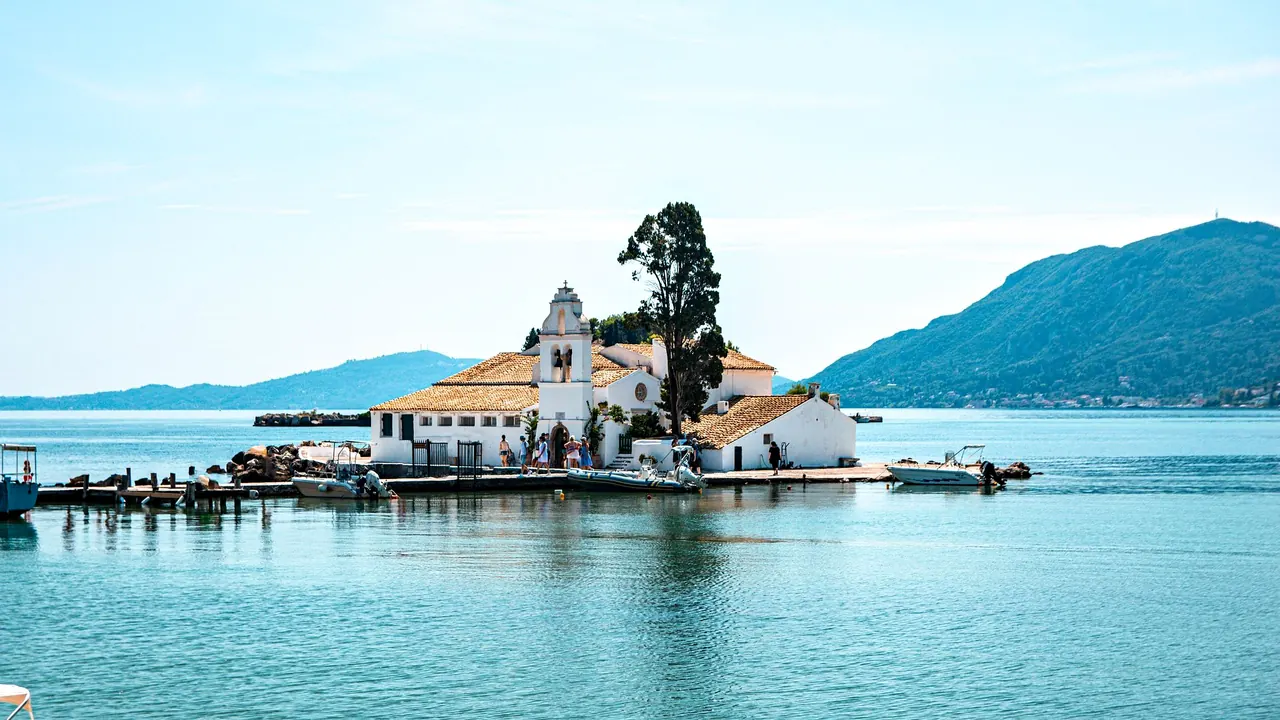
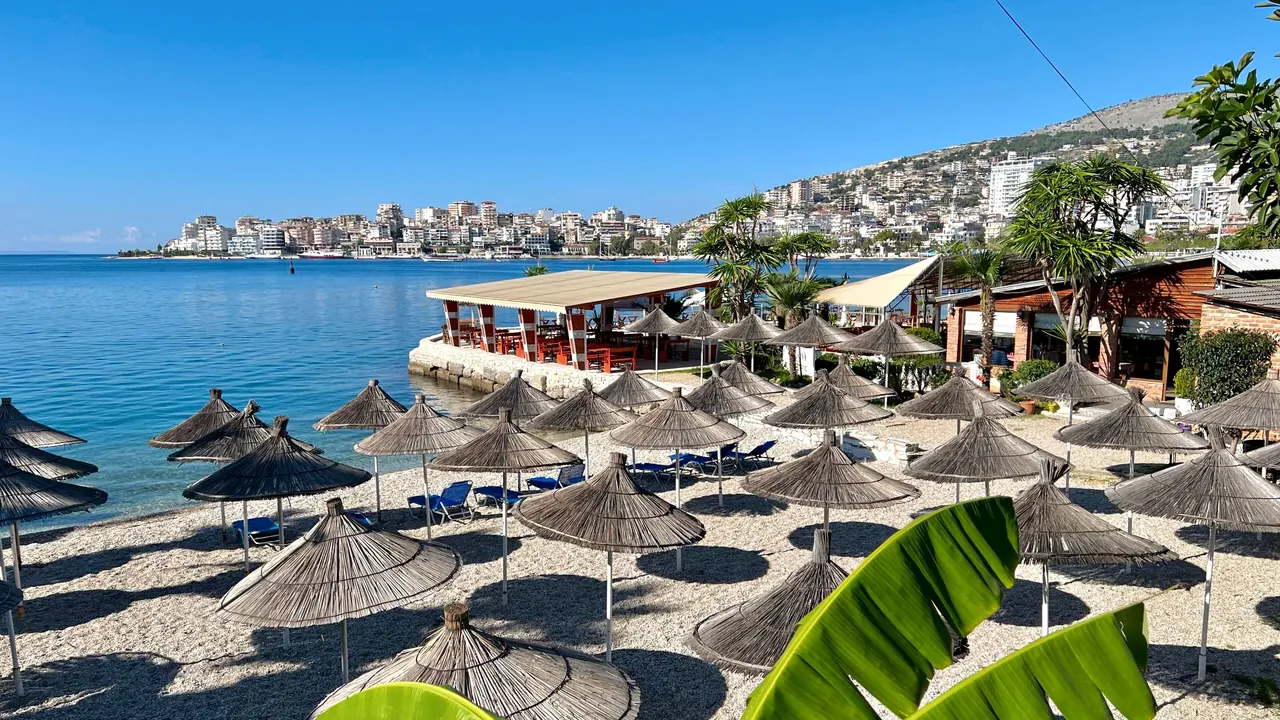
Photos: Corfu by Nico Hartnauer, Pexels License; Saranda by Sharon Hahn Darlin, CC BY 2.0, cropped.
Corfu or Saranda?
Our verdict in twelve categories, each scored against the same fixed benchmark cities, and the climate month by month, so you can choose for your trip.
Choose Corfu for
- culture and sights
- live music and the arts
- families
Corfu suits travellers who want an island to explore rather than a single base. Alongside its beaches it has a real old town in Corfu Town, with Venetian lanes and two fortresses, a cuisine of its own, and evenings that range from the Liston arcades to the clubs of Kavos. Its gently shelving sands also make it the easier choice with children. It costs more, and seeing it properly usually means hiring a car.
Choose Saranda for
- prices
- day trips
- nature and the outdoors
Saranda is the cheaper, simpler choice. The clear coves of Ksamil are close by, and some of the region's best excursions are within easy reach: Butrint, Gjirokaster and Corfu itself by ferry. The town has little to see, and its food is mostly seafood and grills. It works best for travellers who are happy to spend their days at the beach or on outings and their evenings on the promenade.
Scoreboard
Twelve categories on one fixed scale from 0 to 100. The shaded stretch is the gap between the two.
Your match
Pick a travel style or drag the sliders, and both match scores follow your weighting.
Wins on culture and sights and live music and the arts with your weighting.
Wins on prices and day trips with your weighting.
What matters to you?
Category by category
What the scores mean for a trip.
Beaches & swimming
The two are level for swimming, but the beaches differ in kind. Corfu gives more variety across a whole island. The west coast has long sandy beaches such as Glyfada and Issos, with sunsets and some surf, and there are small cold-water coves under the cliffs of Paleokastritsa, shallow sands in the north and calm pebble bays in the northeast. Boat trips also reach the turquoise bays of Antipaxos.
Saranda's own shore is pebble and fine only for a quick dip. Its strength is Ksamil, just south of town, where pale coves and little islets sit in very clear water. Further up the Riviera, the pebble bays of Lukova and Borsh are quieter. Both get crowded in high summer, and on the Albanian side sunbeds are packed especially close together.
Food & drink
Corfu gives you more to eat. Its Venetian past survives in pastitsada, veal sofrito and the fiery fish stew bourdeto, with kumquat liqueur and local ginger beer as island specialities. The best of it is in Corfu Town's back lanes and in the inland village tavernas rather than the resorts.
Saranda eats simply and well within a narrow range: mussels from the Butrint lagoon, grilled fish and octopus, morning byrek and southern Albanian home cooking in the back-street taverns. Beyond that there is little, with no fine dining and not much of a wine or coffee culture.
Culture & sights
The gap here is wide. Corfu Town alone fills several days, with its UNESCO-listed Venetian lanes, the Spianada and Liston, the Old and New Fortresses, Agios Spyridon and museums holding the Gorgon pediment and Asian art. The Achilleion and the cliff-top ruins of Angelokastro lie further out on the island.
Saranda is a modern town. Its own sights are the mosaic floors of an ancient synagogue, stretches of old wall and the view from Lekuresi Castle. Its serious history is at Butrint, which visitors to Corfu can also reach by ferry.
Nightlife
Corfu has much more choice after dark. Kavos is a full party resort running until dawn, Ipsos and Dassia have beach bars and late venues, and Corfu Town offers cocktails under the arcades and bars in the old lanes. That gives a night out for most ages and moods.
Saranda's nightlife is concentrated on the seafront promenade in July and August, with loud cocktail bars and a few DJ beach clubs at Ksamil, and a young, largely Albanian and Kosovar crowd. Outside those months it quietens to a drink on the waterfront.
Nature & outdoors
The two are level, with very different landscapes. Corfu is green with olive groves and cypresses. You can walk on Mount Pantokrator with its abandoned stone villages, follow the Corfu Trail from one end of the island to the other, dive off Paleokastritsa or watch birds at the Korission lagoon.
Saranda's setting is starker: bare limestone mountains above a horseshoe bay. Nearby are the reed beds and oak woods of Butrint National Park, the startling spring of the Blue Eye and the cliff coast of the Riviera for kayaking. Its trails are mostly unmarked, while Corfu's long-distance route is easier to follow. On both sides of the strait, summer heat pushes serious walking into spring and autumn.
Day trips
Saranda has the stronger excursions, and most of them go by road. Butrint, a layered Greek, Roman and Venetian city in lagoon woodland, is about half an hour away. The Ottoman tower houses and castle of Gjirokaster take a little over an hour, and Corfu's old town is less than an hour away by ferry.
From Corfu, every outing goes by sea: Paxos and Antipaxos, Parga under its Venetian castle, Sivota and the Diapontia islets. Butrint is possible too, but only via the ferry to Saranda, and most of these trips run only in the main season.
Good for families
Corfu is clearly easier with children. Long, gently shelving sands in the north and south, resorts built around pools and kids' clubs, a large water park and boat trips give families plenty to do. Avoiding Kavos and Ipsos keeps things calm.
Saranda welcomes children warmly, and the sheltered coves at Ksamil suit young swimmers, but that is about all. There are no attractions made for children, and steep streets, patchy pavements and packed August beaches make a pool hotel in June or September the best plan.
Getting around
Both are broadly level here, and on both a car makes life easier, but for different reasons. Corfu is an island about 60km long. Its buses run too rarely for a varied stay, so a car or scooter is needed for the western beaches and hill villages, on narrow, twisting roads.
Saranda is compact, and its promenade links beaches, restaurants and the port on foot. Buses run to Ksamil and Butrint, though without printed timetables. A car only really matters for the Blue Eye, Gjirokaster or the Riviera, and the hotels on the slopes mean steep climbs back up.
Shopping & style
Neither is a shopping destination, but Corfu has more. Corfu Town's old lanes, around Nikiforou Theotoki and behind the Liston, sell olive-wood bowls, kumquat liqueur, soaps and handmade jewellery, and there are ordinary clothing chains in the newer part of town.
Saranda offers beachwear and souvenirs, and the best things to take home are olive oil, mountain honey, raki and dried herbs. For crafts, the old bazaar at Gjirokaster is better than anything in the town.
Affordability
Saranda is noticeably cheaper. Simple meals, buses, taxis and rooms in small family hotels cost little for most of the year, though Ksamil's sunbeds and the seafront hotels cost more in July and August.
Corfu sits in the middle for a Mediterranean island. The package resorts in the north and east are reasonable, but the villas around Kassiopi and summer rooms in Corfu Town are expensive, and car hire adds to the bill. On both sides, late spring and September are the times to save.
Live music & performing arts
Corfu has a musical life of its own and Saranda has almost none. Corfu's historic philharmonic bands play in the Spianada and village squares in summer and lead the Easter processions. Kantades serenades are still sung in tavernas, and there are classical evenings in the Old Fortress.
Saranda offers at most a summer concert on the seafront, the occasional performance in Butrint's ancient theatre or live Albanian music in a restaurant. Those interested in polyphonic singing need to head inland towards Gjirokaster.
Wellness & relaxation
Corfu is the more restful of the two, mainly because of where you can stay. Yoga retreats sit in the olive groves of the west and north, and a hill village or the quiet northeast coast offers long, empty afternoons away from the resort strips.
Saranda has hotel spas and massages at the beach resorts, and in July and August the town is loud late into the night. It only settles into quiet terraces and evening walks by the bay in May, June and late September.
When should you go?
Pick your month. The climate figures are measured averages, not a forecast.
Corfu in July
Saranda in July
Daytime high, °C
Rainfall in the month, mm
Where the figures come from
Saranda's temperatures are measured 30 km from the centre, at Kerkyra Airport.
Saranda has no rain gauge within 25 km of the centre, so its rainfall comes from a gridded climate dataset read at the destination rather than from a gauge further away.
Temperature and rainfall are climate normals, averaged over the years shown. Corfu: 1991-2020 normals, Kerkyra Airport (0.9 km from centre). Saranda: 1991-2020 normals, Kerkyra Airport (29.8 km from centre).
The two sit either side of a narrow strait and share almost the same weather. Both are warm enough for the beach from June to early October. July and August reach 32°C, too hot for long walks in the old town or on hill trails in the middle of the day. Corfu's sea peaks at about 26°C in August, a degree warmer than the water off Saranda. Late May, June and September are the best months for combining swimming with sightseeing, and both get long, sunny days through the summer.
The difference is the rain. It returns in September on both shores, but the Albanian side is noticeably wetter from autumn to spring, with Saranda reaching about 234mm in December against Corfu's 177mm. In winter Corfu is the drier of the two for a mild off-season visit focused on its town, while Saranda has little to offer then.
Which traveller are you?
On a family trip with young children, Corfu is the better pick. The north-coast sands at Roda and Acharavi shelve gently into calm water, many resorts have pools and kids' clubs, and there is a water park. Saranda has steep streets, heavy summer traffic and nothing built for children.
For a culture and arts trip, Corfu wins clearly. Corfu Town's UNESCO-listed old town, its fortresses, museums and philharmonic bands give days of interest. Saranda's own sights are few, though Butrint and Gjirokaster make excellent day trips from it.
On a trip with a tight budget, Saranda goes much further. Meals of grilled fish or byrek, local buses and rooms in small family hotels cost little, and Ksamil's coves are as clear as anything on Corfu, where hiring a car and staying in high season add up.
Before you go
| Measure | Corfu | Saranda |
|---|---|---|
| Official language | Greek | Albanian |
| Currency | Euro (EUR) | Lek (ALL) |
| Sockets | CF230 V, 50 Hz | CF220 V, 50 Hz |
| Driving side | Right | Right |
| Time zone | UTC+2, UTC+3 in summer | UTC+1, UTC+2 in summer |
| Emergency number | 112 | 112 |
| Elevation | - | 0 m |
| Main airport | Corfu Ioannis Kapodistrias International Airport (CFU)88 non-stop destinations | Corfu Ioannis Kapodistrias International Airport (CFU)32 km from centre88 non-stop destinations |
| Public holidays this year | 15 days | 14 days |
By the numbers
| Measure | Corfu | Saranda |
|---|---|---|
| Population | 100,854 | 22,613 |
| People per km² | 161 | 383 |
| Museums within 10 km | - | 0 |
| UNESCO World Heritage sites within 50 km | - | 3 |
| Swim season, months above 21 °C | 5 months | 5 months |
Where else could you go?
Every comparison below shares a destination with this one, so you can follow Corfu or Saranda somewhere new.