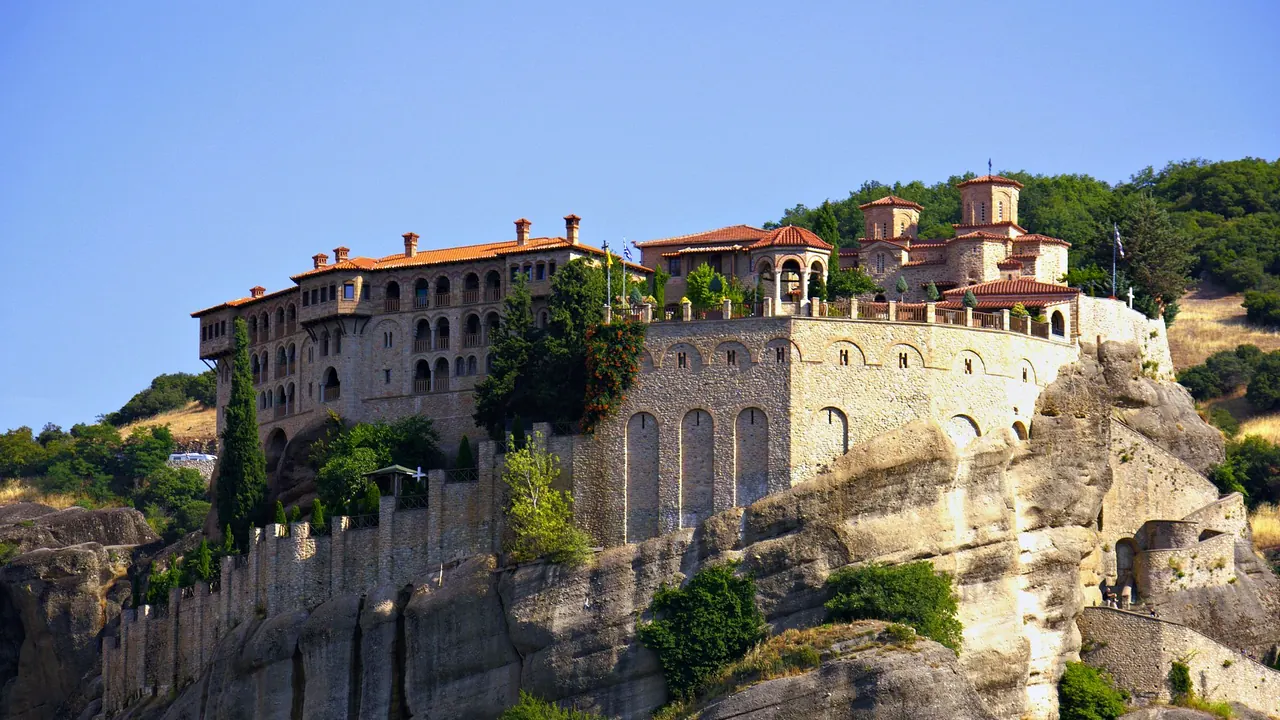
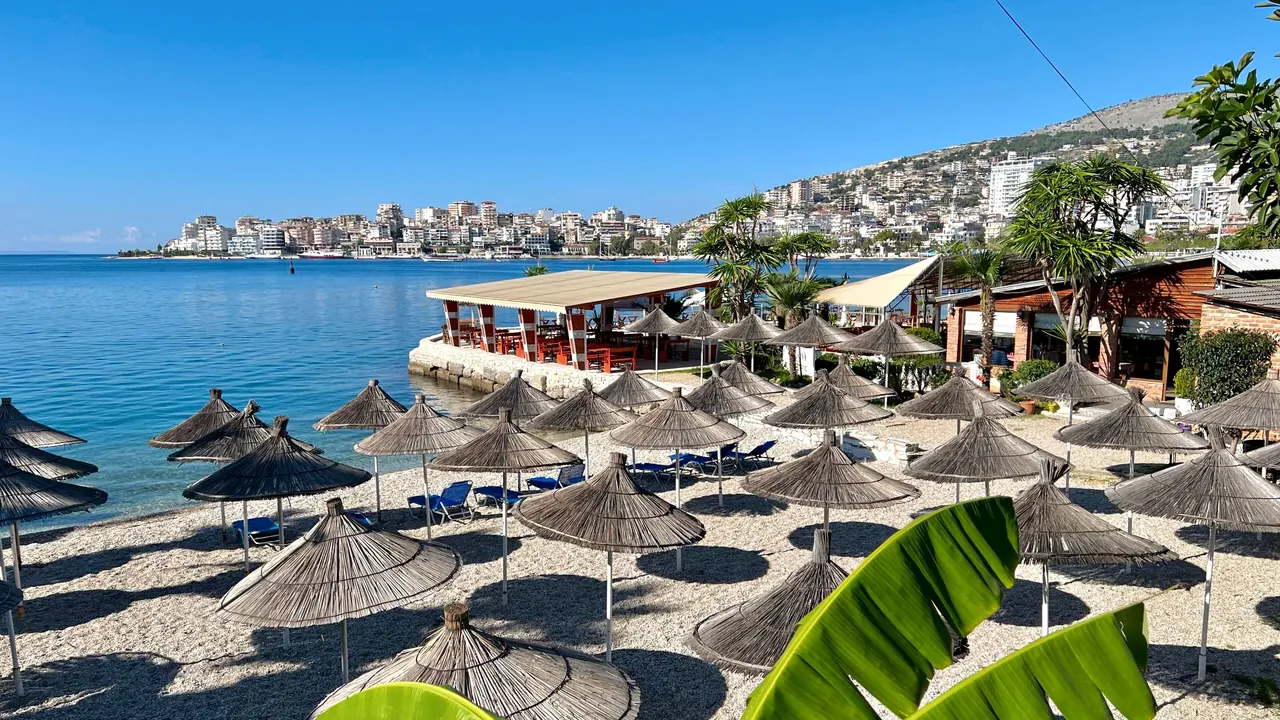
Photos: Kalambaka by José Barbosa, Pexels License; Saranda by Sharon Hahn Darlin, CC BY 2.0, cropped.
Kalambaka or Saranda?
Our verdict in twelve categories, each scored against the same fixed benchmark cities, and the climate month by month, so you can choose for your trip.
Choose Kalambaka for
- culture and sights
- nature and the outdoors
- wellness
Kalambaka suits travellers who want to be among the rocks of Meteora rather than glimpse them from a coach window. You get the monasteries on their pillars, the old monks' paths between them, climbing on the conglomerate and the Pindos forests to the west. It is quiet, inland and early to bed, and works best as a stop of two or three nights on a wider tour of mainland Greece.
Choose Saranda for
- beaches
- nightlife
- day trips
For a seaside stay with some history on the side, Saranda is the better pick. The coves at Ksamil and the bays along the Riviera come first. Butrint and Gjirokaster fill the days off the beach, Corfu is a short ferry ride away, and in high summer the promenade stays up late. The trade-off is the crowds of July and August.
Scoreboard
Twelve categories on one fixed scale from 0 to 100. The shaded stretch is the gap between the two.
Your match
Pick a travel style or drag the sliders, and both match scores follow your weighting.
Wins on culture and sights and nature and the outdoors with your weighting.
Wins on beaches and nightlife with your weighting.
What matters to you?
Category by category
What the scores mean for a trip.
Beaches & swimming
This is where the two differ most. Kalambaka has no sea at all, so swimming means a hotel pool or a cold river in the Pindos.
Saranda is a seaside town first. It has pebble beaches below the promenade, the pale coves and islets of Ksamil a short drive south, and longer, emptier bays such as Lukova and Borsh up the Riviera. The catch is the August crush of sunbeds on the beaches nearest town.
Food & drink
Both serve plain, generous regional cooking and little else, so neither is a destination for food. Kalambaka's tavernas rely on the grill, slow-baked meat, bean soups and pies with tsipouro, and a table facing the pillars at sunset does a lot of the work.
Saranda has the edge thanks to the sea. There are mussels from the Butrint lagoon, grilled fish and octopus, and byrek in the morning, and the family kitchens in the back streets cook better than the seafront terraces.
Culture & sights
Kalambaka is clearly ahead, because Meteora sits on its doorstep. Six working monasteries, among them the Great Meteoron, Varlaam and Roussanou, hold frescoes, old refectories and manuscript collections, and the Byzantine church of the Dormition in town adds more frescoes. Two days does it all justice.
Saranda itself offers the mosaic floors of its old synagogue site, fragments of city wall and Lekuresi Castle, which people visit mostly for the view. Its serious history lies outside town.
Nightlife
Kalambaka goes to bed early. The evening is dinner and then a drink at a café-bar on the square, and Trikala, half an hour away, is the nearest place for anything livelier.
Saranda has a real night out, but only in summer. In July and August the promenade turns from the family stroll to loud cocktail bars open past midnight, and beach clubs at Ksamil keep going later with DJs. Out of season, a night out comes down to a quiet drink on the waterfront.
Nature & outdoors
Both have striking settings, but in Kalambaka the landscape is the reason to go. The Meteora pillars rise straight from the back streets, with footpaths through oak woods to the clifftops and long bolted climbing routes. To the west lie the Pindos forests, the Aspropotamos valley and small ski slopes near Metsovo in winter.
Saranda's nature is gentler and more spread out: the horseshoe bay facing Corfu, birdwatching in Butrint's lagoons, the Blue Eye spring inland and kayaking along the Riviera. Its mountain trails are mostly unmarked.
Day trips
Kalambaka's outings are pleasant rather than essential. They include Trikala's Varousi quarter and castle, the stone village of Metsovo, and Ioannina's lake island further out, and all of them are much easier with a car.
Saranda's list is shorter but stronger, and two of its trips are major sights in their own right: ancient Butrint in its lagoon woodland and the Ottoman tower houses of Gjirokaster. The ferry to Corfu's Venetian old town even adds a second country in a single day.
Good for families
Neither town is built around children, but Saranda gives them a little more to do. Kalambaka suits older children who can manage the trails or a beginners' climb, while younger ones tire of the monastery steps and dress rules.
Saranda has calm, sheltered water at Ksamil and an evening promenade with ice cream and rides. Its steep streets, summer traffic and packed August beaches make June or September the better time to come.
Getting around
In both towns a car does most of the work beyond the centre. Kalambaka is flat and easy to walk, with a rail link towards Athens and Thessaloniki. The monasteries, though, sit along a winding road above town with only an infrequent bus, so you hike up or take a taxi or tour.
Saranda's promenade ties its centre together, and local buses run to Ksamil and Butrint, though without printed timetables. Steep climbs to hillside hotels and summer jams on the coast road are the drawbacks.
Shopping & style
Neither is a place for shopping, and the difference lies in the souvenirs. Kalambaka sells painted icons, carvings and the monasteries' religious items alongside honey and tsipouro. Saranda's promenade runs to beachwear, the olive oil, mountain honey and raki are what is worth taking home, and for crafts the bazaar in Gjirokaster is the place to go.
Affordability
Both are good value by European standards, and Saranda is a little cheaper for everyday spending. Kalambaka's guesthouses and tavernas are fairly priced, though rooms facing the rocks, Orthodox Easter, car hire and guided tours push costs up.
In Saranda, simple meals, buses and taxis cost little, and the entry fee at Butrint is modest. The big swing comes with the season: July and August raise the price of sunbeds and seafront rooms, while late spring and September cost far less.
Live music & performing arts
There is very little to attend in either town. In Kalambaka there is the odd summer festival, and you can hear Byzantine chant at a monastery service, which is worship rather than a show. Saranda may put on a summer performance in Butrint's ancient theatre, and Gjirokaster is the place to look for Albanian polyphonic singing.
Wellness & relaxation
Neither town has a bathing tradition, and in both the spa options stop at hotel facilities. What differs is when you get the quiet. Kalambaka is calm in every season, with early nights and dawn light on the rocks, while Saranda only slows down in May, June and late September, because July and August bring loud music and crowds.
When should you go?
Pick your month. The climate figures are measured averages, not a forecast.
Kalambaka in July
Saranda in July
Daytime high, °C
Rainfall in the month, mm
Where the figures come from
Kalambaka's temperatures are measured 68 km from the centre, at Larissa Airport.
Kalambaka's station stands 164 m below the city centre, so the centre is likely a little cooler than the figures say.
Kalambaka has no rain gauge within 25 km of the centre, so its rainfall comes from a gridded climate dataset read at the destination rather than from a gauge further away.
Saranda's temperatures are measured 30 km from the centre, at Kerkyra Airport.
Saranda has no rain gauge within 25 km of the centre, so its rainfall comes from a gridded climate dataset read at the destination rather than from a gauge further away.
Temperature and rainfall are climate normals, averaged over the years shown. Kalambaka: 1991-2020 normals, Larissa Airport (68.1 km from centre). Saranda: 1991-2020 normals, Kerkyra Airport (29.8 km from centre).
Kalambaka has the bigger swings of an inland town. May and late September into October are the months for walking, mild and bright. From June to August the afternoons reach 34°C, which is too hot for the exposed paths up to the monasteries except at dawn and dusk, though the summer sunshine is long and reliable. Winters are cold and grey, and December is the wettest month at 104mm.
Saranda is milder in winter, and its year revolves around the sea. The water is good for swimming from June into early October and is warmest in August at 25°C, when the air is about as hot as it is inland. Rain returns in September, and November and December are very wet, peaking at 234mm, far more than at Kalambaka. September is the month that suits both: the sea is still warm, and Meteora is cooling down enough to walk.
Which traveller are you?
For a beach and sun trip, Saranda wins outright. Ksamil's clear coves and islets, the quieter pebble bays up the Riviera and warm Ionian water from June to October make it a proper seaside base. Kalambaka's nearest sea is more than two hours away.
On a culture and arts trip, Kalambaka is the stronger choice. The Meteora monasteries, with frescoed churches, icon museums and their rock-top setting, outweigh Saranda's modest town sights. Saranda's best history, ancient Butrint, is a day trip rather than in town.
For an outdoors trip, Kalambaka has the edge. Footpaths climb from town between the pillars, the rock is a well-known climbing area and the Pindos adds fir forests and rafting. Saranda has kayaking, the Blue Eye and Butrint's lagoons, but its trails are mostly unmarked.
Before you go
| Measure | Kalambaka | Saranda |
|---|---|---|
| Official language | Greek | Albanian |
| Currency | Euro (EUR) | Lek (ALL) |
| Sockets | CF230 V, 50 Hz | CF220 V, 50 Hz |
| Driving side | Right | Right |
| Time zone | UTC+2, UTC+3 in summer | UTC+1, UTC+2 in summer |
| Emergency number | 112 | 112 |
| Elevation | 237 m | 0 m |
| Main airport | Thessaloniki Macedonia International Airport (SKG)146 km from centre93 non-stop destinations | Corfu Ioannis Kapodistrias International Airport (CFU)32 km from centre88 non-stop destinations |
| Public holidays this year | 15 days | 14 days |
By the numbers
| Measure | Kalambaka | Saranda |
|---|---|---|
| Population | 8,372 | 22,613 |
| People per km² | 4,925 | 383 |
| Museums within 10 km | 0 | 0 |
| UNESCO World Heritage sites within 50 km | 1 | 3 |
| Swim season, months above 21 °C | - | 5 months |
Where else could you go?
Every comparison below shares a destination with this one, so you can follow Kalambaka or Saranda somewhere new.
- Corfuvs Saranda
- Thessalonikivs Kalambaka
- Ohridvs Saranda
- Tiranavs Saranda
- Leccevs Saranda
- Ohridvs Kalambaka