Photos: Saranda by Sharon Hahn Darlin, CC BY 2.0, cropped; Tirana by Bjørn Christian Tørrissen, CC BY-SA 4.0, cropped.
Saranda or Tirana?
Our verdict in twelve categories, each scored against the same fixed benchmark cities, and the climate month by month, so you can choose for your trip.
Choose Saranda for
- beaches
- day trips
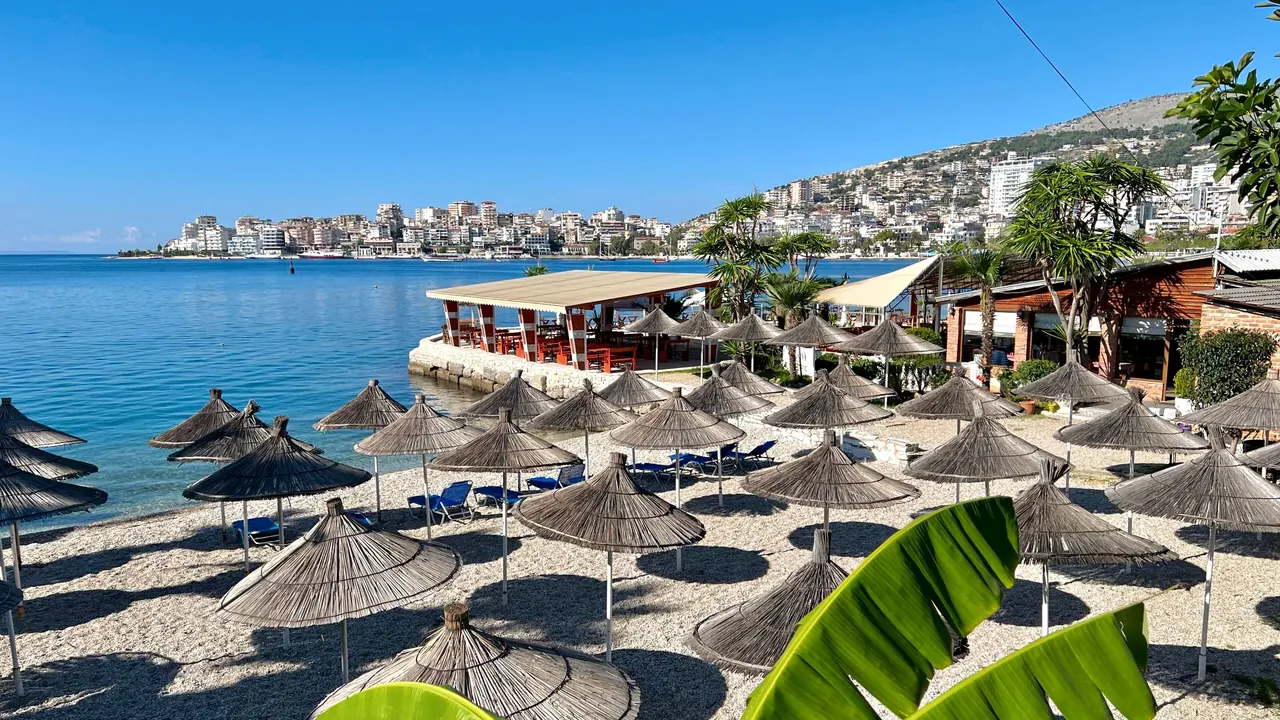
Saranda is the choice for a summer spent by the water. The clear coves of Ksamil and the quieter Riviera bays to the north are close by, and the ruins of Butrint are half an hour away, so it makes a good base for swimming, boat trips and a few strong outings at a gentle cost. In return you get a modern town with little to see and evenings that mostly mean a walk along the promenade.
Choose Tirana for
- live music and the arts
- culture and sights
- nightlife
For a few days of city life, Tirana makes more sense. You eat better there, Blloku stays out later, and it has the opera house and the communist-era visits of Bunk'Art and the House of Leaves. Berat and Kruja are within a day's reach. The sea at Durrës, an hour away, is fine for a warm swim but not for a beach vacation.
Scoreboard
Twelve categories on one fixed scale from 0 to 100. The shaded stretch is the gap between the two.
Your match
Pick a travel style or drag the sliders, and both match scores follow your weighting.
Wins on beaches and day trips with your weighting.
Wins on live music and the arts and culture and sights with your weighting.
What matters to you?
Category by category
What the scores mean for a trip.
Beaches & swimming
This is where the two differ most. Saranda lives on its shore: small pebble beaches right below the promenade, the strikingly clear water and islets of Ksamil a short ride south, and longer, emptier pebble bays such as Lukova and Borsh up the Riviera. The catch is the August crush of sunbeds on the nearest beaches.
Tirana has no sea of its own. Durrës, under an hour west, has a long sandy beach with shallow water that children like, but it is lined with hotels, packed on summer weekends and less clear near the port. The sand is the one thing it has over Saranda's pebbles.
Food & drink
Tirana is the better place to eat. It has the farm restaurants on the surrounding hills, the busy restaurant streets of Blloku and around Pazari i Ri, and a slow, serious coffee culture on every block. Dishes like tavë kosi and fërgesë show inland Albanian cooking at its best.
Saranda does fewer things well: mussels from the Butrint lagoon, grilled fish and octopus, best eaten in back-street family taverns rather than on the seafront. Beyond seafood and home cooking the choice soon runs out, and coffee and wine are an afterthought.
Culture & sights
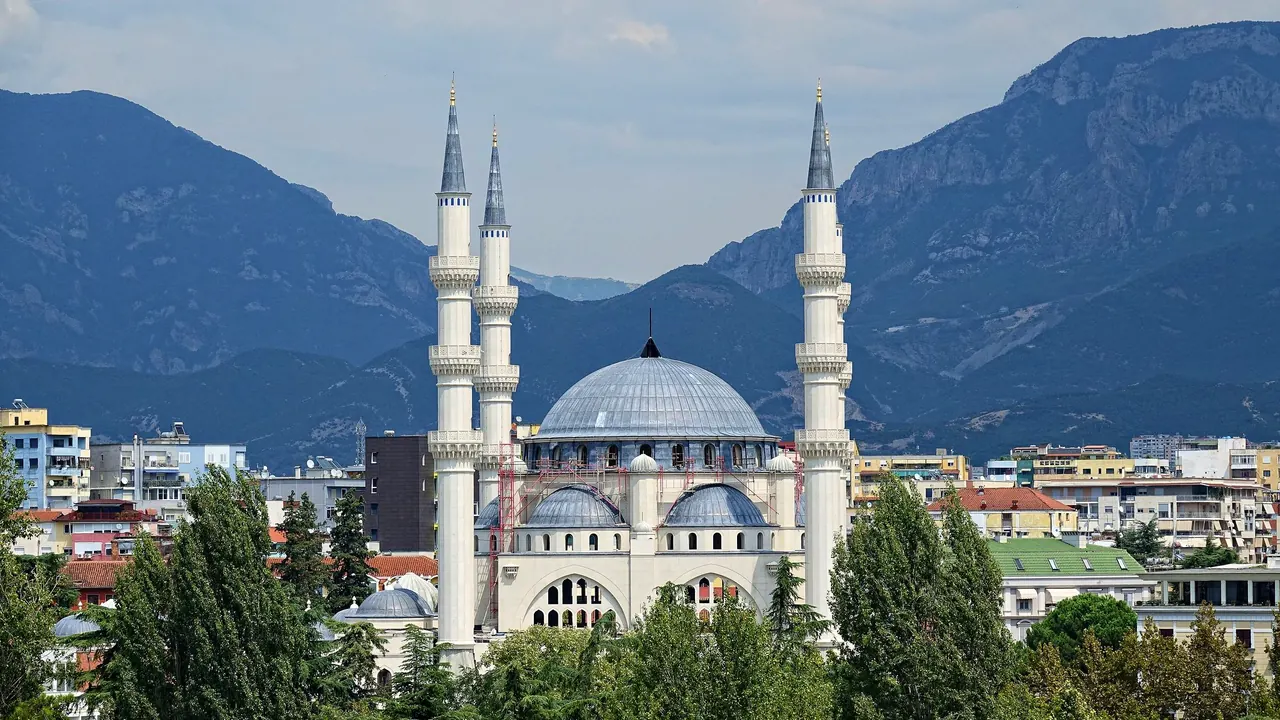
Neither is a heritage city, but Tirana gives you far more to do in town. Skanderbeg Square, the Et'hem Bey Mosque and above all the communist-era visits, Bunk'Art and the House of Leaves, fill a couple of absorbing days.
Saranda's own sights take a morning: the mosaic floors of the ancient synagogue, stretches of city wall and the view from Lekuresi Castle across to Corfu. Its real history lies outside town, at Butrint.
Nightlife
Going out in Tirana is a city scene centred on Blloku's cocktail bars, lounge terraces and small clubs. A young local crowd dresses up and stays out past midnight, and larger clubs near the Grand Park lake go on into the early hours.
Saranda's nights follow the season. In July and August there are loud bars on the promenade and a few beach clubs with DJs at Ksamil, with many of the crowd Albanians and Kosovars on vacation. Out of season a night out shrinks to a quiet drink by the water.
Nature & outdoors
The two are equally good for the outdoors, but the landscapes are different. Saranda's is coast and water: the bay with Corfu on the horizon, the lagoon and reed beds of Butrint for birdwatching, the Blue Eye spring inland and sea kayaking along the Riviera.
Tirana's is mountain and forest. A cable car runs from the edge of the city onto Mount Dajti's beech and pine slopes, and the Bovilla reservoir and the hiking around Gamti are within an hour. In both places summer heat pushes walking into spring and autumn.
Day trips
Saranda has the stronger short list. Butrint, where a theatre, baths and Venetian walls sit layered in lagoon woodland, is half an hour away. Gjirokaster's stone tower houses are an easy drive, and the ferry makes Corfu's old town a simple day out on a foreign island.
Tirana's list is longer but more spread out. Kruja is close, but Berat, Shkodra and Apollonia are each about two hours by road, so most outings take up a whole day.
Good for families
Neither city is built around children, and both welcome them warmly. In Saranda the days revolve around the calm, sheltered coves at Ksamil and the evening promenade, ideally in June or September with a pool hotel. In Tirana they revolve around the Grand Park playgrounds, the Dajti cable car and a small zoo, with the sea an hour away. Steep streets in one and heavy traffic in the other make pushing a buggy hard work in both.
Getting around
Tirana is the easier place to get about. Its centre is flat, and everything from Skanderbeg Square to Blloku is within a twenty-minute walk. Cheap taxis cover Bunk'Art and the cable car.
Saranda's promenade links beaches, restaurants and the port on foot, but hotels on the slopes mean steep climbs. Buses to Ksamil run without printed timetables, and the Blue Eye or the Riviera really need a car, taxi or tour.
Shopping & style
Neither city is worth visiting for the shops, but the gap between them is the gap between a beach resort and a capital. Saranda sells what a seaside crowd needs, so the promenade is mostly swimwear, fridge magnets and daily supplies. The best souvenirs there are edible, bought from the food stalls rather than the shops, and for crafts you have to go inland to Gjirokaster.
Tirana gives you a little more to browse in town. The market quarter around Pazari i Ri puts textiles, filigree silver and copper next to the farm produce, and Kruja's covered bazaar is close enough to add more. It also has proper clothes shopping, which Saranda lacks: high-street chains in the malls and a few boutiques in Blloku, though nothing luxurious or independent.
Affordability
Both are cheap by European standards, but in different ways. In Tirana what you pay depends less on the season than on where you go: the smart Blloku restaurants and cocktail bars cost more, while coffee, byrek, buses and museums barely register.
Saranda's costs follow the calendar. Apartments and family hotels are good value most of the year, but in July and August sunbeds at Ksamil and seafront rooms cost noticeably more. Late spring or September gives you the same sea for far less.
Live music & performing arts
Tirana has the only real stage of the two. The National Theatre of Opera and Ballet on Skanderbeg Square puts on opera, ballet and concerts through the season, tickets are easy to get, and a few bars have jazz and live bands.
Saranda has almost nothing beyond the odd open-air summer concert or a performance in Butrint's ancient theatre. For Albania's iso-polyphonic singing, neither city is the best place; the south around Gjirokaster is.
Wellness & relaxation
Neither has a bathing tradition, and in both cities a spa means a hotel facility, though Tirana has the simple, old-fashioned thermal hotels of Llixha about an hour away. What sets them apart is the pace. Saranda slows down nicely in May, June and late September but is noisy in high summer, while Tirana offers long coffees, the evening xhiro and the shade of the Grand Park and Dajti away from the traffic.
When should you go?
Pick your month. The climate figures are measured averages, not a forecast.
Saranda in July
Tirana in July
Daytime high, °C
Rainfall in the month, mm
Where the figures come from
Saranda's temperatures are measured 30 km from the centre, at Kerkyra Airport.
Saranda has no rain gauge within 25 km of the centre, so its rainfall comes from a gridded climate dataset read at the destination rather than from a gauge further away.
Temperature and rainfall are climate normals, averaged over the years shown. Saranda: 1991-2020 normals, Kerkyra Airport (29.8 km from centre). Tirana: 1961-1990 normals, Tirana (3 km from centre).
Saranda is a summer place. From June to August the days are hot and almost rainless, with July and August reaching 32°C. The Ionian is warm enough to swim from June into October and is at its warmest, around 25°C, in August. June and early September are the best balance of warm sea, long sunny days and heat you can still walk the hill to the castle in. Rain returns in September and gets heavy from November, with well over 200mm a month in midwinter, and the town has little to do indoors.
Tirana follows a similar curve but suits walking the streets for longer. Midsummer highs of around 31°C make midday sightseeing hard going, so April, May, late September and October are the comfortable months for the centre and for Dajti. Its rain is spread more evenly. Summers are a little less dry than on the coast, and winters are wet but not as relentlessly as in Saranda. The Adriatic at Durrës warms up for swimming in the same months as the Ionian.
Which traveller are you?
On a beach and sun trip, Saranda is the obvious pick. Ksamil's pale coves and islets are twenty minutes away, the Riviera bays run north, and the sea stays swimmable well into autumn. From Tirana, the beach is a day out to the busier sands of Durrës.
For a food and nightlife trip, Tirana wins comfortably. Its farm restaurants on the hills, inland dishes like tavë kosi and its serious coffee habit beat Saranda's seafood and taverns for range. Blloku's bars draw a local crowd late, while Saranda's nights depend on high season.
On a culture and arts trip, Tirana is the better base. Bunk'Art, the House of Leaves and the opera house fill two days, with Berat and Kruja as day trips. Saranda has Butrint and Gjirokaster nearby but almost nothing in town itself.
Before you go
| Measure | Saranda | Tirana |
|---|---|---|
| Official language | Albanian | Albanian |
| Currency | Lek (ALL) | Lek (ALL) |
| Sockets | CF220 V, 50 Hz | CF220 V, 50 Hz |
| Driving side | Right | Right |
| Time zone | UTC+1, UTC+2 in summer | UTC+1, UTC+2 in summer |
| Emergency number | 112 | 112 |
| Elevation | 0 m | 110 m |
| Main airport | Corfu Ioannis Kapodistrias International Airport (CFU)32 km from centre88 non-stop destinations | Tirana International Airport Mother Teresa (TIA)13 km from centre121 non-stop destinations |
| Public holidays this year | 14 days | 14 days |
By the numbers
| Measure | Saranda | Tirana |
|---|---|---|
| Population | 22,613 | 389,323 |
| People per km² | 383 | 9,314 |
| Museums within 10 km | 0 | 11 |
| UNESCO World Heritage sites within 50 km | 3 | 0 |
| Swim season, months above 21 °C | 5 months | 5 months |
Where else could you go?
Every comparison below shares a destination with this one, so you can follow Saranda or Tirana somewhere new.