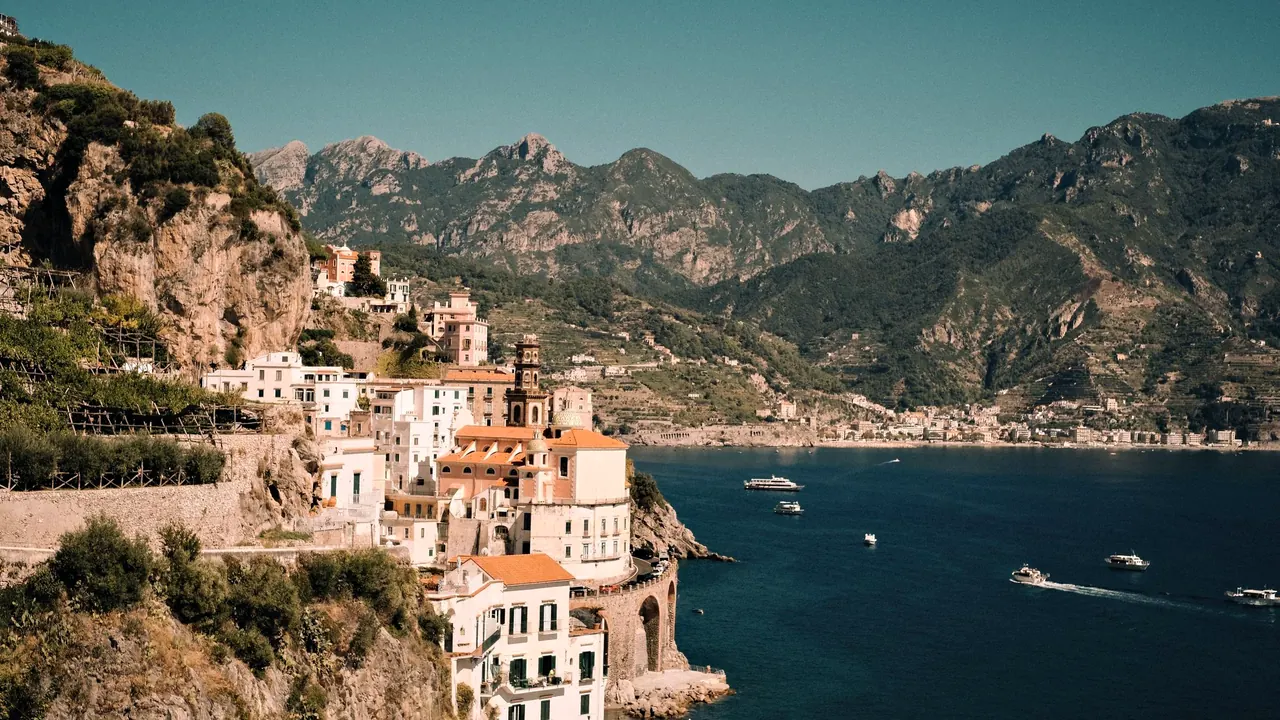
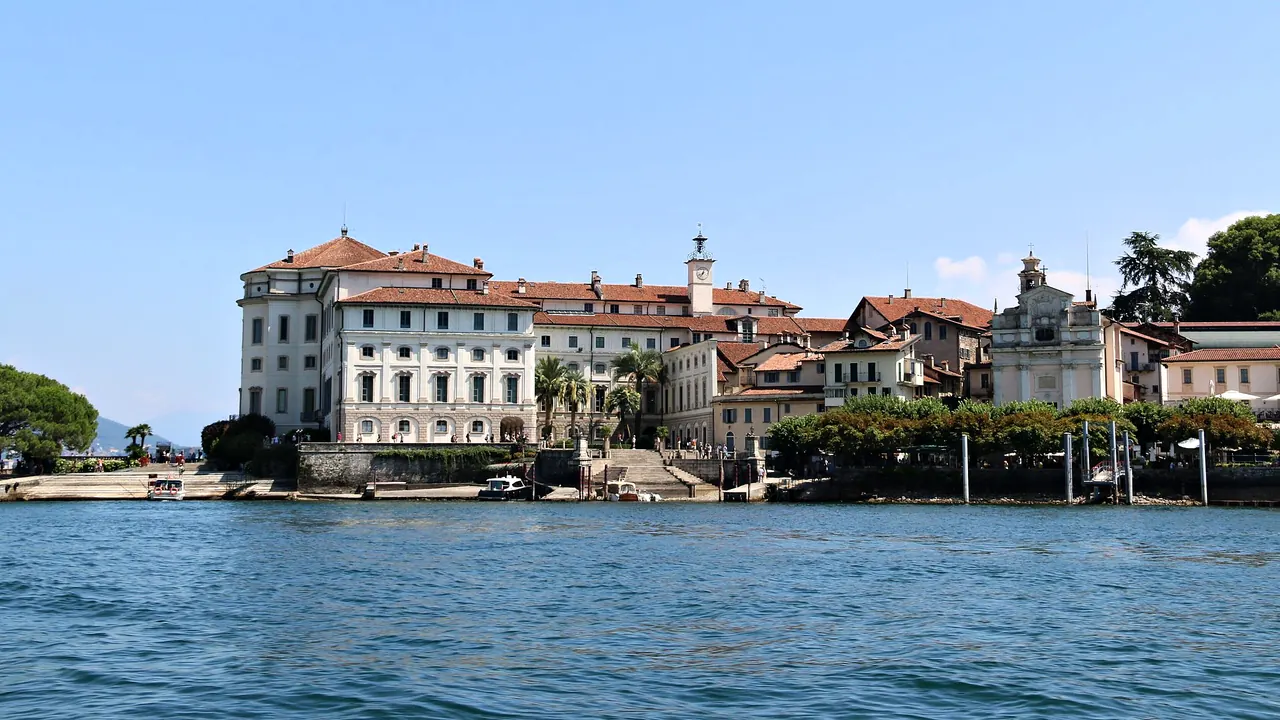
Photos: Amalfi Coast by Alina Chernii, Pexels License; Lake Maggiore by FrDr, CC BY-SA 4.0, cropped.
Amalfi Coast or Lake Maggiore?
Our verdict in twelve categories, each scored against the same fixed benchmark cities, and the climate month by month, so you can choose for your trip.
Choose Amalfi Coast for
- beaches
- shopping
- food and drink
The Amalfi Coast is the pick for a sea vacation with real glamour behind it: warm salt water below the cliffs, boat days between Positano and Amalfi, seafood and lemons at every meal, and Pompeii, Capri and Paestum all within a day. It suits couples and honeymooners best, as long as they accept steep stairs, a jammed coast road and some of the highest bills in southern Italy.
Choose Lake Maggiore for
- prices
- families
- getting around
Lake Maggiore asks less of its visitors and gives a gentler trip. Families, travellers watching their spending and anyone who wants to leave the car at home will find it easier: rail lines from Milan and Ticino, ferries out to the Borromean Islands, flat promenades and moderate prices on the Piedmont shore. The trade-off is fresh lake swimming instead of a warm sea, and plainer cooking.
Scoreboard
Twelve categories on one fixed scale from 0 to 100. The shaded stretch is the gap between the two.
Your match
Pick a travel style or drag the sliders, and both match scores follow your weighting.
Too close to call, 1 point apart
Wins on beaches and shopping with your weighting.
Wins on prices and families with your weighting.
What matters to you?
Category by category
What the scores mean for a trip.
Beaches & swimming
The Amalfi Coast gives you sea swimming in deep, clear water that warms into the mid-twenties by August, from grey-pebble coves at Positano, Atrani and the Furore fjord, or from a hired boat anchored under the cliffs. Space is tight and sunbeds take most of it, but Maiori's long beach offers room and some sand.
Lake Maggiore's swimming is fresher and shorter in season, from lidos, jetties and small pebble beaches around Cannobio and Cannero Riviera, with gentler sandy entries at the southern end. It fits between a garden and a ferry ride rather than filling the day.
Food & drink
The Amalfi Coast eats better and more distinctively: scialatielli with clams, fish baked in lemon leaves, Cetara's colatura anchovy sauce, Sfusato lemons in granita and limoncello, and Conca dei Marini's sfogliatella. The catch is the tired day-tripper menus on the Positano and Amalfi waterfronts, which a short walk uphill avoids.
Lake Maggiore's table is quieter northern fare of perch in butter and sage, risotto, polenta and Ossola cheeses, lifted by the stone-cellar grotti above Locarno and reds from Ghemme and Gattinara. Its range runs out quickly over a week in one town.
Culture & sights
The two are much alike in weight, and neither has a museum of major rank, but their heritage differs. The Amalfi Coast's comes from a medieval maritime republic, seen in Amalfi's striped cathedral and the Ravello villas, and the UNESCO-listed cliff landscape of pastel towns and lemon terraces is the real sight.
Lake Maggiore's is aristocratic and spread out: the Borromeo palace and gardens on Isola Bella, the frescoed Rocca di Angera, Santa Caterina del Sasso hanging over the water and the Sacro Monte of Ghiffa. Each makes a half-day by boat, so seeing it takes more planning.
Nightlife
Neither is a place for clubbing, but the Amalfi Coast has a little more life after dinner, with Positano's cocktail bars running late on summer nights and café tables filling Amalfi's cathedral square until around midnight. Much of it closes early out of season.
On Lake Maggiore, a promenade drink in Stresa, Verbania or Ascona is about the limit, and the lakefronts fall quiet by midnight. Both send serious night owls to a city, Naples or Salerno from one, Milan from the other.
Nature & outdoors
Both are superb outdoors, but one is sea mountains and the other an Alpine lake. On the Amalfi Coast the Lattari mountains drop straight into the water, so the highlights are the Path of the Gods above Positano, the waterfall gorge of the Valle delle Ferriere, and kayaking or snorkelling around sea caves, Punta Campanella and the Li Galli islets.
Lake Maggiore has more variety inland: the seven-lake view from Mottarone, the true wilderness of the Val Grande, the green river of the Verzasca valley, afternoon winds for sailing and windsurfing on the upper lake, and flat cycling at the southern end.
Day trips
The Amalfi Coast has the more famous list. Pompeii and Herculaneum are a little over an hour away, Capri is a ferry ride, the Greek temples of Paestum lie south of Salerno, and Naples fills a rich day. Slow roads mean the boat is often the best way out.
Lake Maggiore's outings are easier to manage, mostly by train across three regions and two countries: Milan's cathedral and Last Supper, Lake Orta's island village, Bellinzona's castles, Lugano and the Centovalli railway to Domodossola. It is a long and varied list, though with fewer world-class names.
Good for families
Lake Maggiore is much kinder to children. It has small towns with safe promenades, shallow lidos, boat trips that feel like an adventure, roaming animals in the Villa Pallavicino park, and summer rides and adventure trails on Mottarone. Nothing on it is built on a large scale for children, but the days are easy.
The Amalfi Coast is built vertically, with stairways in place of pavements, pebble beaches and packed buses. Families who go anyway do best in flatter Maiori or Minori, with boat trips and the emerald grotto as the highlights.
Getting around
Lake Maggiore is the simpler place to move around. Stresa and Arona sit on the Milan railway, Locarno has Swiss rail links, and ferries hop to the islands and across the lake, so a car-free base works. A car only becomes useful for the valleys and the quieter eastern shore.
The Amalfi Coast hangs on a single cliff road that jams for hours in summer, with buses that fill fast and almost no parking. Ferries between Positano, Amalfi, Maiori and Salerno ease this from spring to autumn, but in town you are climbing stairs.
Shopping & style
The Amalfi Coast has the more distinctive crafts: linen resort clothing and sandals made to measure in Positano's lanes, handmade paper from Amalfi's mills, and the hand-painted majolica of Vietri sul Mare. Much of the waterfront stock is the same lemon souvenirs, though.
Lake Maggiore's best shopping is its weekly markets, above all Luino's big Wednesday market, with Cannobio and Intra on a smaller scale. Beyond a few galleries in Ascona and Locarno, and honey or chestnut products, real fashion means Milan.
Affordability
Lake Maggiore is clearly the cheaper trip, provided you stay on the Italian side. Agriturismi, campsites and family-run hotels in smaller Piedmont towns keep things moderate, though Stresa's grand hotels and the Swiss shore around Locarno and Ascona cost far more.
On the Amalfi Coast, sea-view rooms, sunbeds, private boats and taxis add up fast in high season. Basing yourself in Maiori, Minori, Atrani or Agerola, taking the buses and ferries, and coming in late September all soften the bill.
Live music & performing arts
Both rely on summer festivals rather than a year-round stage, but Ravello gives the Amalfi Coast the edge. Orchestras play on a platform over the cliff at Villa Rufolo, and a chamber series fills churches on many warm evenings.
Lake Maggiore spreads its music wider: the Stresa Festival's classical concerts in palaces and on the islands, big open-air nights in Locarno's Piazza Grande and jazz on Ascona's lakefront. Opera means Milan, and both go quiet off season.
Wellness & relaxation
Lake Maggiore has the thermal waters that the Amalfi Coast lacks: the baths in the Ossola valleys behind Verbania and the old spring village of Bognanco, each an easy half-day out. On the coast the spas belong only to the luxury cliffside hotels, and the nearest thermal parks are on Ischia, a long ferry day away.
Apart from that the two are level, and how calm your stay is depends on where you base yourself. On the Amalfi Coast that means Ravello, Praiano or Conca dei Marini, well away from Positano and Amalfi in July and August. On Maggiore the shore villages fall silent early in the evening, and spring and early autumn are the slowest seasons.
When should you go?
Pick your month. The climate figures are measured averages, not a forecast.
Amalfi Coast in July
Lake Maggiore in July
Daytime high, °C
Rainfall in the month, mm
Where the figures come from
Amalfi Coast's temperatures are measured 65 km from the centre, at Grazzanise.
Amalfi Coast has no rain gauge within 25 km of the centre, so its rainfall comes from a gridded climate dataset read at the destination rather than from a gauge further away.
Lake Maggiore's temperatures are measured 36 km from the centre, at Lugano.
Lake Maggiore has no rain gauge within 25 km of the centre, so its rainfall comes from a gridded climate dataset read at the destination rather than from a gauge further away.
Temperature and rainfall are climate normals, averaged over the years shown. Amalfi Coast: 1991-2020 normals, Grazzanise (64.7 km from centre). Lake Maggiore: 1991-2020 normals, Lugano (35.9 km from centre).
The Amalfi Coast is the hotter, sunnier and drier of the two in summer. July and August reach about 31°C with almost no rain and the sea at around 26°C. That is ideal for swimming, but by midday it is tiring on the steep paths. June has warm water and gentler heat. In September the sea is still warm, but the rain comes back that month and builds through October to a peak of about 143mm in November. Winters are mild but damp.
Lake Maggiore is cooler all year. Midsummer peaks near 27°C, which is comfortable for walking around the towns, though the shore turns hazy. The lake is warm enough for a swim only from July to early September. Rain is spread more evenly over the year, with wet spells in late spring (May has about 124mm) and again in autumn. Winters are properly cold, with daytime highs in single figures. April to June and September are the best months for gardens and hiking. In high summer the Amalfi side has the clear advantage.
Which traveller are you?
On a beach and sun trip, the Amalfi Coast is the obvious choice. The sea is warm from June into October, the cliffs make every boat day memorable, and Maiori and Minori have sand for those who want it. Maggiore's lake swim is fresh and brief by comparison.
On a family trip with young children, Lake Maggiore is far easier. Flat promenades, shallow lidos, the animal park at Villa Pallavicino and the summer ride on Mottarone are all there, while the Amalfi Coast means hundreds of steps and roads without pavements.
For a trip on a tight budget, Lake Maggiore again comes out ahead. A family-run hotel or campsite on the Piedmont shore and an ordinary trattoria keep costs down, whereas even modest lunches on the Amalfi waterfront are priced for honeymooners.
Before you go
| Measure | Amalfi Coast | Lake Maggiore |
|---|---|---|
| Official language | Italian | Italian |
| Currency | Euro (EUR) | Euro (EUR) |
| Sockets | CFL230 V, 50 Hz | CFL230 V, 50 Hz |
| Driving side | Right | Right |
| Time zone | UTC+1, UTC+2 in summer | UTC+1, UTC+2 in summer |
| Emergency number | 112 | 112 |
| Main airport | Naples International Airport (NAP)131 non-stop destinations | Milan Malpensa International Airport (MXP)208 non-stop destinations |
| Public holidays this year | 13 days | 13 days |
By the numbers
| Measure | Amalfi Coast | Lake Maggiore |
|---|---|---|
| Swim season, months above 21 °C | 5 months | - |
Where else could you go?
Every comparison below shares a destination with this one, so you can follow Amalfi Coast or Lake Maggiore somewhere new.
- Caprivs Amalfi Coast
- Naplesvs Amalfi Coast
- Procidavs Amalfi Coast
- Ischiavs Amalfi Coast
- Lake Comovs Lake Maggiore
- Swiss Alpsvs Lake Maggiore