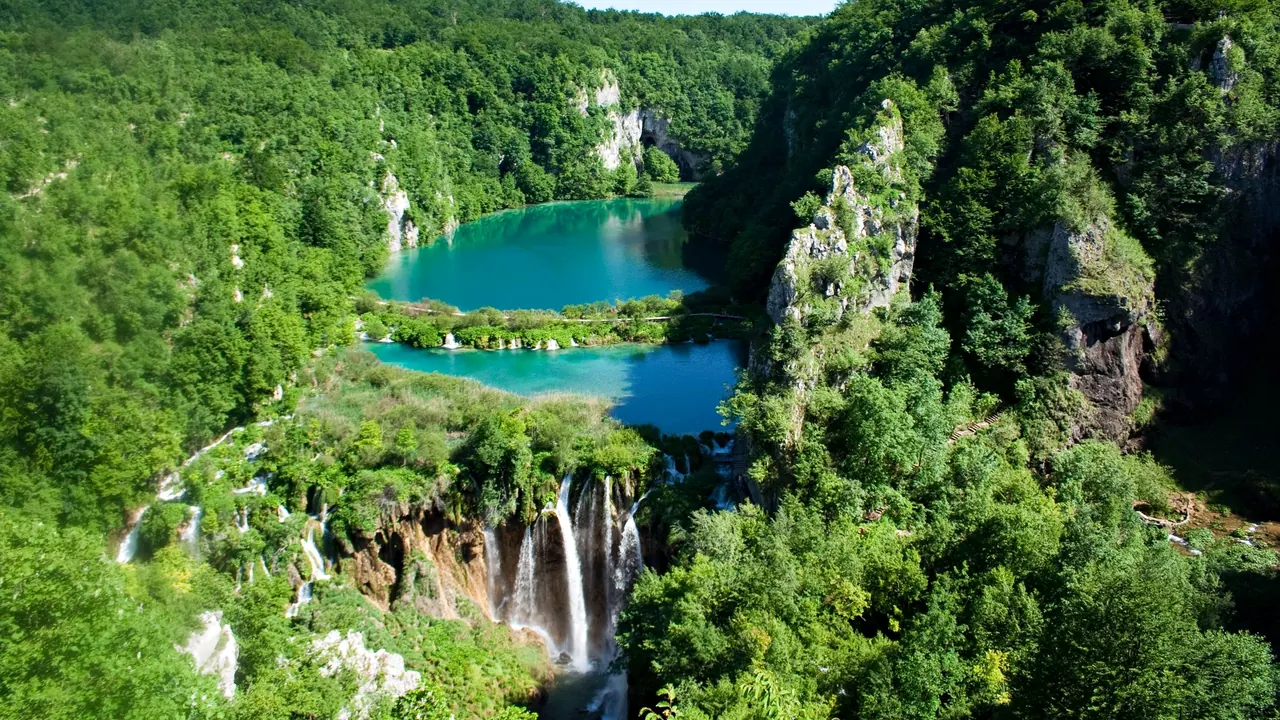
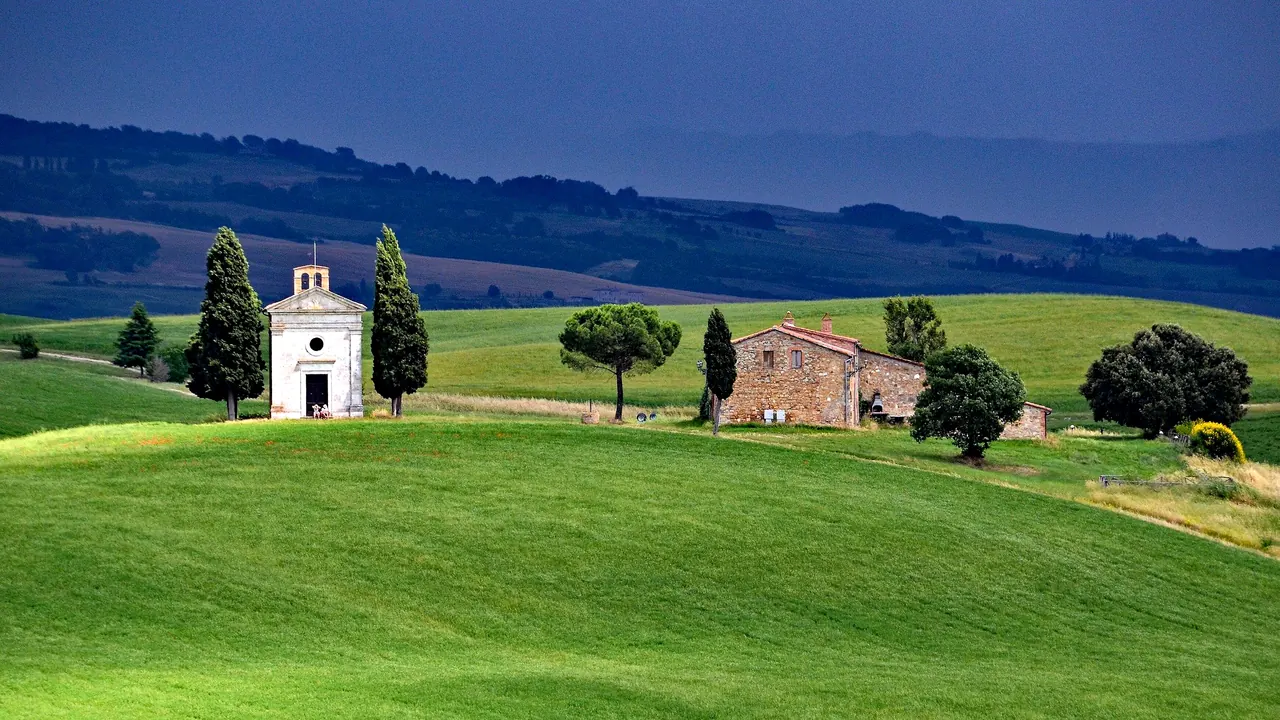
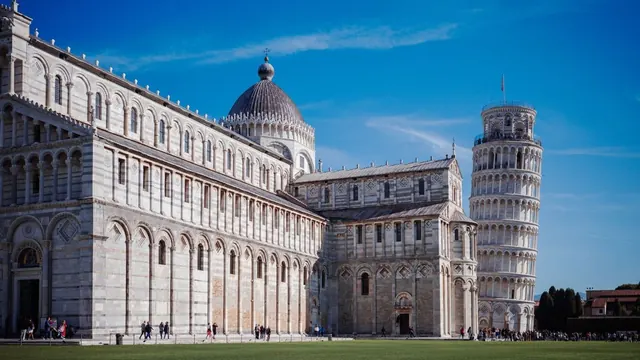
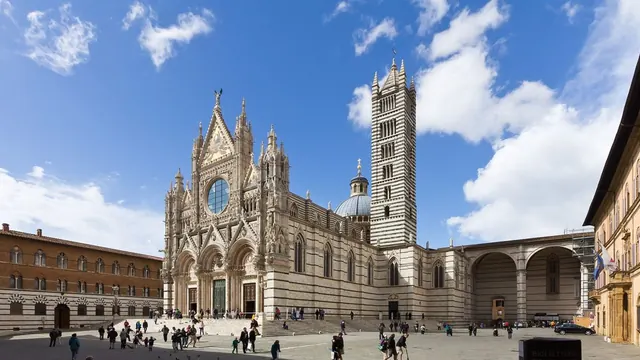
Photos: Plitvice Lakes by Pablo BM from London, England, CC BY 2.0, cropped; Tuscany by Hervé Simon, CC BY-SA 2.0, cropped.
Plitvice Lakes or Tuscany?
Our verdict in twelve categories, each scored against the same fixed benchmark cities, and the climate month by month, so you can choose for your trip.
Choose Plitvice Lakes for
- prices
- nature and the outdoors
Plitvice Lakes is for the traveller who wants one extraordinary natural sight and is happy to build a short stop around it. The terraced lakes, waterfalls and boardwalks are the whole point, with quiet village guesthouses, early starts and lamb dinners around them. It fits best as a night or two between Zagreb and the Adriatic, and it costs less than Tuscany.
Choose Tuscany for
- culture and sights
- shopping
- beaches
Choose Tuscany for a full vacation with many sides. Renaissance Florence, the hill towns, wine country, hot springs and a real summer coast all sit within one region, so a week or two never runs short of things to do. You pay more for it, and the countryside works best with a car, but nearly everything Plitvice lacks is here.
Scoreboard
Twelve categories on one fixed scale from 0 to 100. The shaded stretch is the gap between the two.
Your match
Pick a travel style or drag the sliders, and both match scores follow your weighting.
Wins on prices and nature and the outdoors with your weighting.
Wins on culture and sights and shopping with your weighting.
What matters to you?
Category by category
What the scores mean for a trip.
Beaches & swimming
Tuscany wins easily. Elba's sandy bays and coves, the pine-backed strands of the Maremma and the long sand of Versilia make a proper summer coast, with swimming from June into late September.
At Plitvice you cannot swim in the lakes at all. The nearest swimming is in the cool, clear Korana river around Slunj, and the Adriatic is about two hours away over the mountains.
Food & drink
Plitvice's food is filling Lika country cooking: spit-roast lamb, river trout and dishes slow-cooked under an iron bell, served in roadside inns, often for passing tour groups. One good dinner is usually enough.
Tuscany is a destination for eating in its own right. There are Florence's market halls and lampredotto carts, the Florentine T-bone, white truffles in San Miniato and pecorino in Pienza. Cellar visits run from Chianti Classico to Brunello and Bolgheri, so wine can shape the whole route.
Culture & sights
The two hardly compare here. Plitvice's World Heritage status is for nature, and its built heritage is Rastoke's water mills, the ruined walls of Drežnik and memorials to the first deaths of the 1990s war, enough for an afternoon.
Tuscany is where the Renaissance began. Brunelleschi's dome, the Uffizi and David are in Florence, Siena has its Campo, Pisa its leaning tower, and there are frescoes in Arezzo and towers in San Gimignano.
Nightlife
Nights at Plitvice end with dinner and a glass of local brandy, and the villages fall silent soon after dark, which suits the early starts on the trails.
Tuscany at least offers a choice. Students and visitors gather on the steps of Santo Spirito in Florence, Oltrarno has its wine bars, and in summer the Versilia beach clubs run until dawn. Even so, the hill towns go quiet after dinner as well.
Nature & outdoors
Both are strong outdoors, but in different ways, and Plitvice has the more remarkable sight. Its sixteen turquoise lakes step down through the forest over travertine falls, with the Barać caves, river rafting and the Velebit ridges close by. Bears and lynx live in the woods.
Tuscany's best-known countryside is farmed: cypress lanes, vineyards and the Val d'Orcia's rolling fields, ideal for slow cycling. Its wilder side is the marble peaks of the Apuan Alps, the Casentino forests and the Maremma's coastal park.
Day trips
Plitvice has a handful of good outings: Rastoke within half an hour, Bihać and the Una falls across the Bosnian border, and Tesla's birthplace near Gospić. Beyond those, Zadar and Zagreb are long days of about two hours each way.
Tuscany has far more choice than one stay can use. Siena, Lucca, Pisa and Volterra are all close to Florence or Chianti, and the Montalcino and Pienza wine loop fills a day in the south. Bologna, Umbria and the Cinque Terre are easy to reach across the borders.
Good for families
Children love Plitvice's boardwalks, the fish in the clear water and the boat across Kozjak, but it is a single outing. The narrow wet walkways have no railings and are hard with toddlers, and swimming is not allowed.
Tuscany suits a longer family stay better. You can split it between an agriturismo with a pool and animals and the shallow, lifeguarded beaches of Versilia or Elba, with the Pinocchio park and cycling on Lucca's walls for variety.
Getting around
Inside the park, Plitvice is simple, with signed circuits, electric boats and panoramic trains, and many guesthouses are a walk from an entrance. Outside it, buses only pass through, and anything further really needs a car.
Tuscany gives you more options without one. Florence is walkable, and regional trains link it with Pisa, Lucca, Arezzo and Viareggio. Chianti, the Val d'Orcia and the Maremma still call for a car, and Elba and Giglio need the ferry.
Shopping & style
Plitvice's shopping comes down to souvenir kiosks and farm stalls selling cheese, honey and fruit brandy. The brandy and honey are worth taking home.
Tuscany is a real place to shop for craft. There is leather around Santa Croce, gold on the Ponte Vecchio, marbled paper in Oltrarno, alabaster in Volterra and marble in Pietrasanta, with luxury on Via de' Tornabuoni and designer outlets in the Arno valley.
Affordability
Plitvice is the cheaper of the two. Village guesthouses and country inns are reasonable, though the summer park fee and the hotels by the gates push costs up, so spring or autumn gives the best value.
Tuscany costs more in season. Florence hotels, Chianti villas and Versilia beach clubs are all expensive, and car hire comes on top. Trattoria meals, cellar-door wine and cheaper towns such as Lucca, Arezzo or the Maremma help to balance it.
Live music & performing arts
At Plitvice, live performance means at most some Lika folk music at a village festival. For concerts or theatre you would go to Zagreb or Zadar.
Tuscany has a real music life built on opera and chamber music. Florence has the Maggio Musicale and its opera house, Lucca holds Puccini recitals all year, and his operas are staged outdoors by the lake at Torre del Lago each summer.
Wellness & relaxation
Plitvice offers quiet rather than treatments. You get meadow and forest guesthouses, clean air and silent evenings, but only a few hotel saunas, and the boardwalks are crowded at midday in summer.
Tuscany has a long tradition of bathing in its hot springs. There are the grand pump rooms of Montecatini Terme, Saturnia's free warm cascades, the steaming medieval pool at Bagno Vignoni and the white pools of Bagni San Filippo. A farmhouse with a pool in the Val d'Orcia completes the picture.
When should you go?
Pick your month. The climate figures are measured averages, not a forecast.
Plitvice Lakes in July
Tuscany in July
Daytime high, °C
Rainfall in the month, mm
Where the figures come from
Plitvice Lakes has no weather station within reach, so its figures come from a gridded climate model rather than a measured record, and read a broad area rather than one spot.
Tuscany has no rain gauge within 25 km of the centre, so its rainfall comes from a gridded climate dataset read at the destination rather than from a gauge further away.
Tuscany's sunshine is measured 71 km from the centre, at Pisa / S. Giusto.
Temperature and rainfall are climate normals, averaged over the years shown. Plitvice Lakes: 2001-2020 normals, NASA POWER reanalysis grid, no weather station within 90 km. Tuscany: 1995-2020 (sunshine 1991-2020, rainfall 1991-2020) normals, Firenze / Peretola (5.6 km from centre).
Plitvice sits high in the Lika hills and is much cooler than Tuscany all year. Its summer highs reach about 27°C, which is pleasant for long walks on the trails, while winter days barely rise above freezing and the falls can ice over. Rain falls in every month, and the autumn months bring the most, around 140mm, so late spring and early autumn are the best balance of water, colour and mild weather.
Tuscany is warmer and sunnier. July and August reach 32°C to 33°C with long hours of sunshine. That is ideal on the coast but tiring in Florence's streets and on hill-town climbs. May, June and September are the best months for touring, with the sea warm enough to swim from June. Rain builds from October and peaks in November, though winter stays mild, close to 11°C by day.
Which traveller are you?
On an outdoors trip, Plitvice Lakes gives you the more striking landscape: waterfalls under the boardwalks, beech and fir forest trails, rafting on the Korana and caves nearby. Tuscany is better for gentle cycling between vineyards and for ridge walks in the Apuan Alps.
For a culture and arts trip, Tuscany is the clear choice. Florence's galleries, Siena, Pisa, San Gimignano and the countryside abbeys could fill weeks, with opera at Torre del Lago in summer. Plitvice has little more than Rastoke's mills and a ruined fortress.
On a trip on a tight budget, Plitvice Lakes is easier on the wallet. Village guesthouses and big country-inn portions keep costs moderate, especially in spring or autumn. Tuscany's season prices in Florence, Chianti and Versilia add up fast, as does the car hire.
Before you go
| Measure | Plitvice Lakes | Tuscany |
|---|---|---|
| Official language | Croatian | Italian |
| Currency | Euro (EUR) | Euro (EUR) |
| Sockets | CF230 V, 50 Hz | CFL230 V, 50 Hz |
| Driving side | Right | Right |
| Time zone | UTC+1, UTC+2 in summer | UTC+1, UTC+2 in summer |
| Emergency number | 112 | 112 |
| Main airport | Zagreb Franjo Tuđman International Airport (ZAG)66 non-stop destinations | Florence Airport, Peretola (FLR)46 non-stop destinations |
| Public holidays this year | 14 days | 13 days |
By the numbers
| Measure | Plitvice Lakes | Tuscany |
|---|---|---|
| Population | - | 3,729,641 |
Where else could you go?
Every comparison below shares a destination with this one, so you can follow Plitvice Lakes or Tuscany somewhere new.
- Umbriavs Tuscany
- Krkavs Plitvice Lakes
- Elbavs Tuscany
- Cinque Terrevs Tuscany
- Lake Gardavs Tuscany
- Bračvs Plitvice Lakes