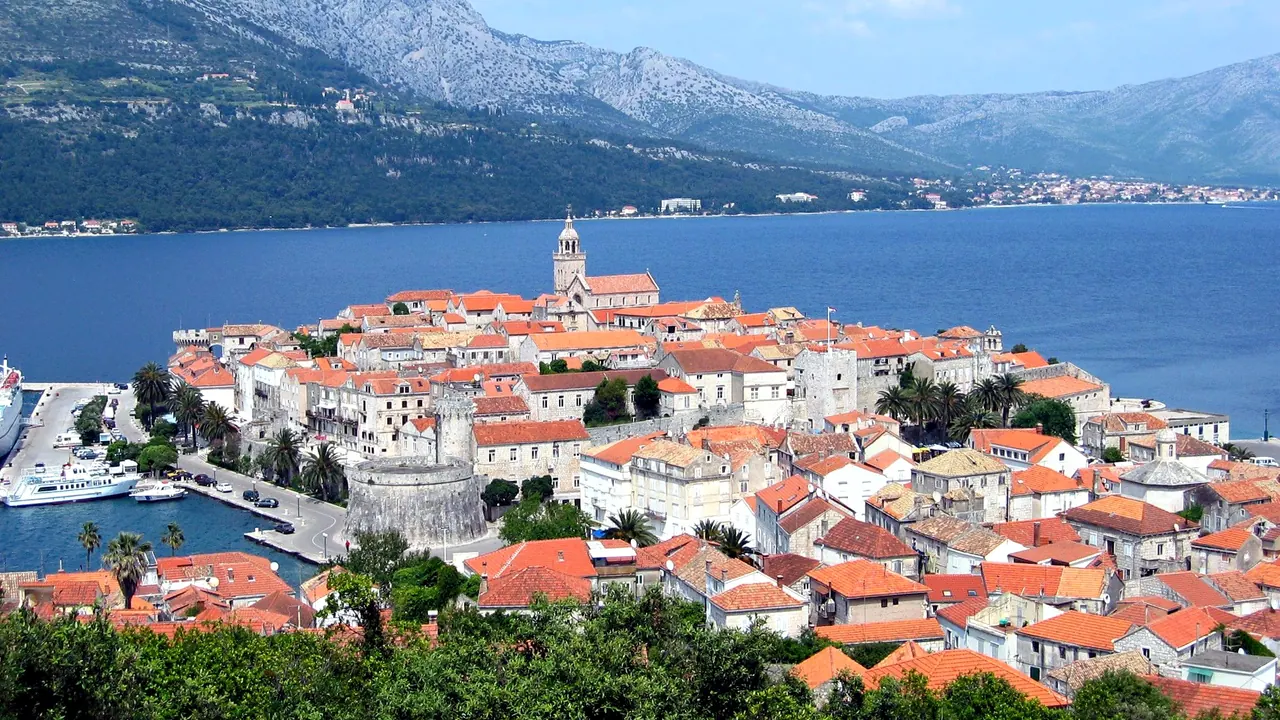
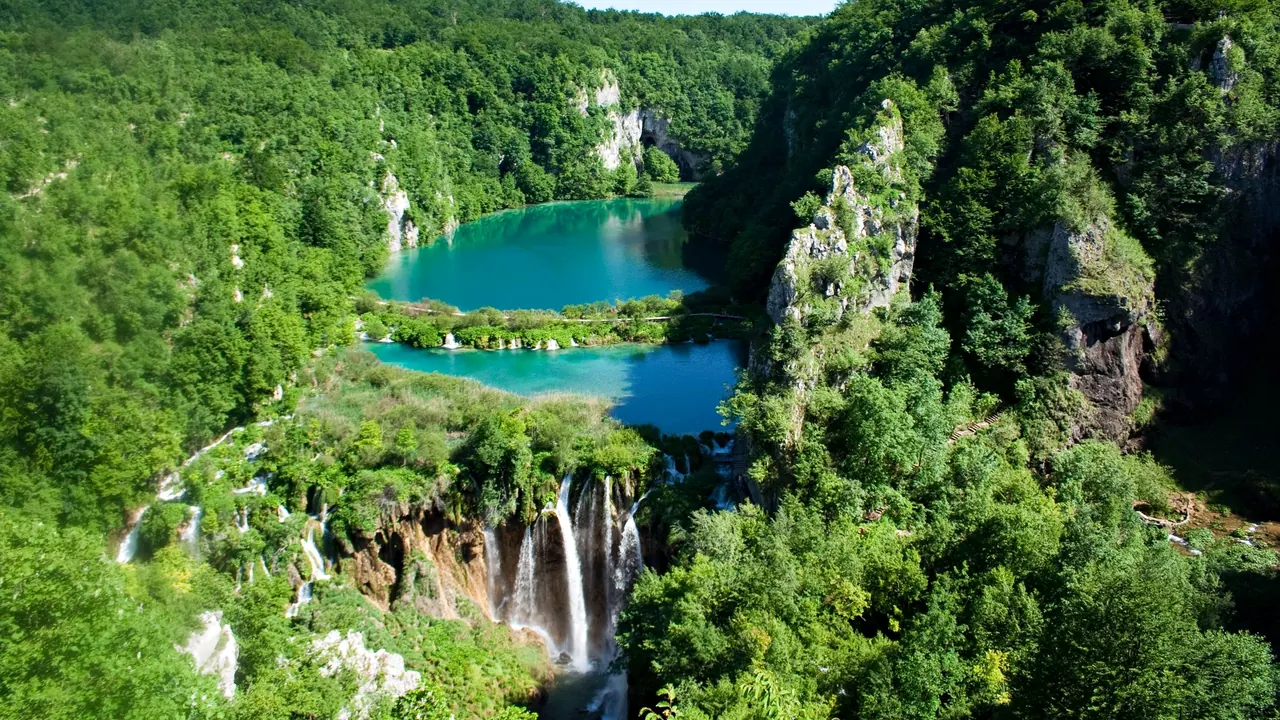
Photos: Korčula by Εὐθυμένης, CC BY-SA 3.0, cropped; Plitvice Lakes by Pablo BM from London, England, CC BY 2.0, cropped.
Korčula or Plitvice Lakes?
Our verdict in twelve categories, each scored against the same fixed benchmark cities, and the climate month by month, so you can choose for your trip.
Choose Korčula for
- beaches
- culture and sights
- nightlife
Korčula suits a summer week by the sea. You get clear water for swimming, a walled stone town to wander in the evening, island white wines with dinner, and boat trips to Pelješac, Mljet and the islets. It is the better place to stay put, with enough food, history and small pleasures to fill several days.
Choose Plitvice Lakes for
- nature and the outdoors
- prices
- getting around
Plitvice Lakes is for people who travel to see landscape. The terraced turquoise lakes and waterfalls are the whole reason to go, and walking among them early in the morning is unlike anything on the coast. There is little to do once the trails are done, so most people give it a night or two on the road between Zagreb and the Adriatic rather than a full vacation.
Scoreboard
Twelve categories on one fixed scale from 0 to 100. The shaded stretch is the gap between the two.
Your match
Pick a travel style or drag the sliders, and both match scores follow your weighting.
Wins on beaches and culture and sights with your weighting.
Wins on nature and the outdoors and prices with your weighting.
What matters to you?
Category by category
What the scores mean for a trip.
Beaches & swimming
Korčula is a swimming destination and Plitvice is not. The island has very clear water, rocky coves backed by pine, the rare sandy shallows of Pržina and Bilin Žal near Lumbarda, Pupnatska Luka on the south coast, and taxi boats out to the flat rocks of Badija.
At Plitvice the lakes look inviting, but swimming in the park is strictly forbidden. The nearest option is the cool, green Korana river around Korana village and Slunj, and the sea at Senj or Zadar is a two-hour drive over the mountains.
Food & drink
Both places cook meat and fish slowly under an iron bell. Korčula has more to offer around it: grilled fish, black risotto and octopus in village konobas, Žrnovo's hand-rolled makaruni, and above all wine, with Grk from Lumbarda, Pošip from Čara and Smokvica, and Pelješac reds and Ston oysters across the channel.
Plitvice serves Lika country food in roadside inns: lamb and suckling pig turned on spits, river trout, local cheeses, honey and brandy. It is filling and honest, but much of it is cooked for passing tour groups, and one good lamb dinner is usually enough.
Culture & sights
Korčula Town has real substance for its size. There is the herringbone street plan inside the walls, St Mark's Cathedral with its carved portal and Tintoretto altarpiece, the treasury and town museum, and the house claimed as Marco Polo's birthplace, with the prehistoric cave of Vela Spila at the far end of the island.
Plitvice's World Heritage listing is for nature, not buildings. Its built heritage comes down to the water mills of Rastoke, the ruined Drežnik fortress above the Korana canyon, and memorials to the first deaths of the 1991 war, which fill an afternoon at most.
Nightlife
Neither is a place to party, but Korčula at least has an evening scene. There are cocktails on the old walls and towers at sunset and harbour bars open late in high summer. At Plitvice the night ends with dinner and a brandy at the guesthouse, because everyone is up early for the trails.
Nature & outdoors
Plitvice is the landscape people cross the country to see. Sixteen lakes step down a forested limestone valley over travertine barriers, there are boardwalks above the cascades and the Veliki slap at the foot of the Lower Lakes, and the forests hold bears, wolves and lynx. Around it you can visit the Barać caves, raft on the Korana and the Una, and hike for days on Velebit.
Korčula's nature is gentler: a green island of pine, holm oak, olives and vineyards, with easy ridge walks and kayaking among the islets. Its more dramatic outings lie across the water, on the climb up Sveti Ilija, in the wind off Viganj and around the lakes of Mljet.
Day trips
From Korčula, short crossings open up a varied set of trips: the Dingač wineries and the walls and oyster beds of Ston on Pelješac, the lake monastery and Roman palace on Mljet, and a catamaran to Hvar Town.
Plitvice has fewer close outings: Rastoke half an hour away, Bihać and the Una falls across the Bosnian border, and the Tesla birthplace at Smiljan. Zadar and Zagreb are both about two hours away, which is why the lakes work better as a stop on the way than as a touring base.
Good for families
Both work for families in very different ways. On Korčula, the shallow sandy bays at Lumbarda and boat trips to the islets make easy beach days, though the stepped lanes of the old town defeat a pushchair.
At Plitvice, children love the boardwalks over the water, the fish in the lakes, the electric boat and the little train. But the walkways are wet and mostly without railings, so bring a carrier and keep toddlers close. And there is no swimming at the end of a hot day.
Getting around
Getting to Korčula and away again depends on ferries and catamarans, which run reliably in summer and less often out of season. Korčula Town is walkable, and taxi boats run to Lumbarda, the islets and Orebić. Beyond that, the island is long and narrow, with one main road, infrequent buses and the best coves down steep side roads, so a hired car or scooter makes the stay much easier.
Plitvice works the other way round, because inside the park you never need a car. Signed walking circuits, electric boats across Kozjak and panoramic trains between the Upper and Lower Lakes take you everywhere, and villages such as Mukinje and Jezerce are within walking distance of an entrance. Coaches between Zagreb and the coast stop at the gates, but nothing local reaches Rastoke or the wider Lika countryside, so outside the park you need your own wheels here too.
Shopping & style
There is little to buy in either place, but Korčula has a bit more. Its lanes hold small jewellery and craft studios and galleries, and the island's Grk, Pošip, olive oil and cukarini biscuits travel well. Plitvice has souvenir kiosks at the entrances and farm stalls selling cheese, honey and brandy, and nothing more.
Affordability
Plitvice is the gentler choice for your budget. Village guesthouses and country inns with big portions cost less than the coast, though the park entry charge is steep in summer and the hotels nearest the gates charge for their location. Spring and autumn are the cheapest times to visit.
In July and August Korčula charges popular-island prices around the old town, and boats, car hire and drinks on the walls add up. A private apartment in Lumbarda or Vela Luka, meals at inland konobas and a visit in June or September bring the cost down.
Live music & performing arts
Korčula has one real tradition to plan an evening around: the Moreška, a centuries-old sword dance performed in the old town through the summer. Older sword dances survive in the villages, and klapa choirs sing in churches and squares. Plitvice has nothing comparable beyond a chance evening of Lika folk music, so for a concert you would have to go to Zagreb or Zadar.
Wellness & relaxation
Neither has spas worth the journey, and both offer quiet instead. Korčula's quiet is a coastal one, with vineyard villages, long shaded lunches and empty evenings, at its calmest in June and September.
Plitvice offers forest calm, clean air and silent nights in a farmhouse guesthouse. The lakes themselves are only peaceful early in the morning or outside summer, before the coach groups arrive.
When should you go?
Pick your month. The climate figures are measured averages, not a forecast.
Korčula in July
Plitvice Lakes in July
Daytime high, °C
Rainfall in the month, mm
Where the figures come from
Korčula's temperatures are measured 69 km from the centre, at Mostar.
Korčula has no rain gauge within 25 km of the centre, so its rainfall comes from a gridded climate dataset read at the destination rather than from a gauge further away.
Plitvice Lakes has no weather station within reach, so its figures come from a gridded climate model rather than a measured record, and read a broad area rather than one spot.
Temperature and rainfall are climate normals, averaged over the years shown. Korčula: 1991-2020 normals, Mostar (69.2 km from centre). Plitvice Lakes: 2001-2020 normals, NASA POWER reanalysis grid, no weather station within 90 km.
Korčula is a summer island. The sea is warm enough to swim from June to late September and reaches about 25°C in August. July and August are long, dry and sunny, with afternoons around 33°C that make midday walking hard going, so June and September are the easier months for combining swimming with exploring. Rain arrives in October, peaks at about 121mm in November, and winters are mild but grey.
Plitvice sits high in the hills and is much cooler. Summer highs of about 27°C are comfortable for a day on the boardwalks, which is exactly when the coast is at its hottest. Rain falls all year and is heaviest from September to November, while winter days hover around 3°C, cold enough for snow and frozen falls. Late spring brings the fullest waterfalls, and autumn the coloured forests.
Which traveller are you?
On a beach and sun trip, Korčula is the obvious choice. Its clear sea, sandy bays at Lumbarda and pebble coves along the south coast give you months of swimming, while Plitvice forbids bathing in its lakes and sits two hours from the sea.
For an outdoors trip, Plitvice wins. Its sixteen terraced lakes, waterfalls and beech forests rank among Europe's great natural sights, and rafting on the Korana or hiking on Velebit is close by. Korčula's gentle ridge walks and kayaking are pleasant but milder.
On a culture and arts trip, choose Korčula. The walled old town, St Mark's Cathedral with its Tintoretto, the Moreška sword dance and klapa concerts give you real substance. Around Plitvice, the mills of Rastoke fill an afternoon and little else.
Before you go
| Measure | Korčula | Plitvice Lakes |
|---|---|---|
| Official language | Croatian | Croatian |
| Currency | Euro (EUR) | Euro (EUR) |
| Sockets | CF230 V, 50 Hz | CF230 V, 50 Hz |
| Driving side | Right | Right |
| Time zone | UTC+1, UTC+2 in summer | UTC+1, UTC+2 in summer |
| Emergency number | 112 | 112 |
| Main airport | Dubrovnik Ruđer Bošković Airport (DBV)76 non-stop destinations | Zagreb Franjo Tuđman International Airport (ZAG)66 non-stop destinations |
| Public holidays this year | 14 days | 14 days |
By the numbers
| Measure | Korčula | Plitvice Lakes |
|---|---|---|
| Swim season, months above 21 °C | 5 months | - |
Where else could you go?
Every comparison below shares a destination with this one, so you can follow Korčula or Plitvice Lakes somewhere new.
- Bračvs Korčula
- Hvarvs Korčula
- Krkavs Plitvice Lakes
- Krkavs Korčula
- Bračvs Plitvice Lakes
- Hvarvs Plitvice Lakes