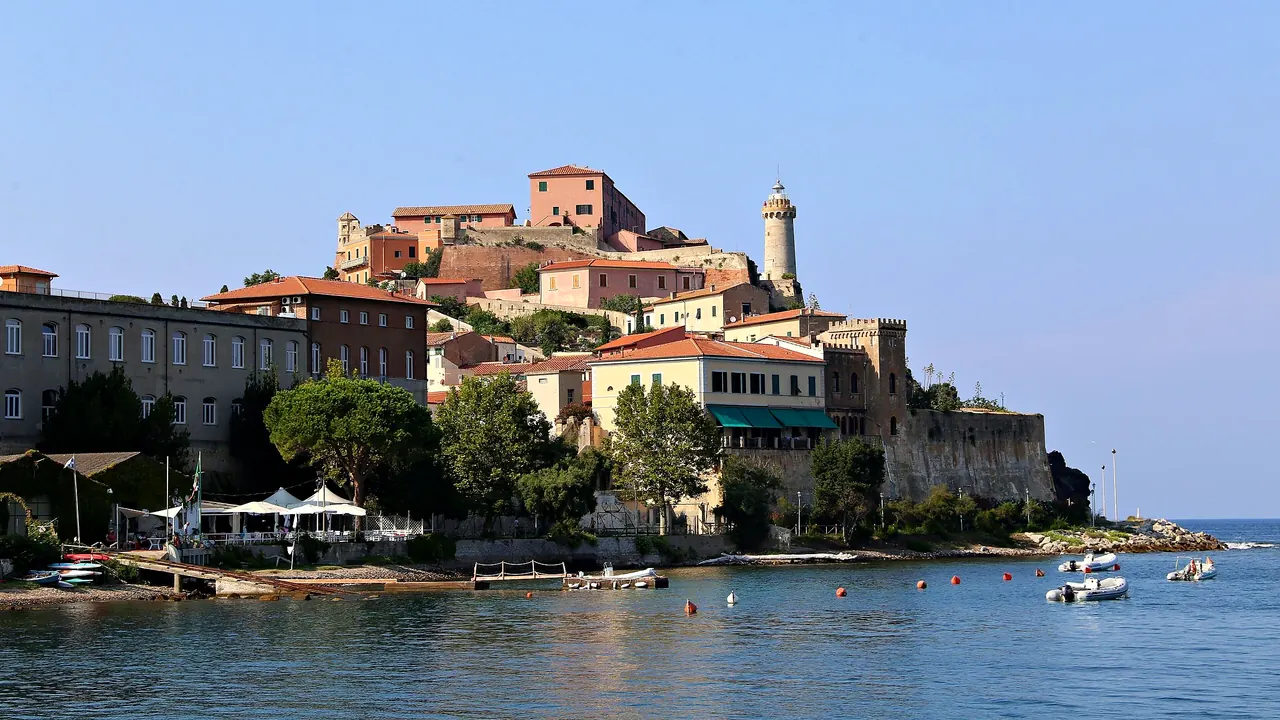
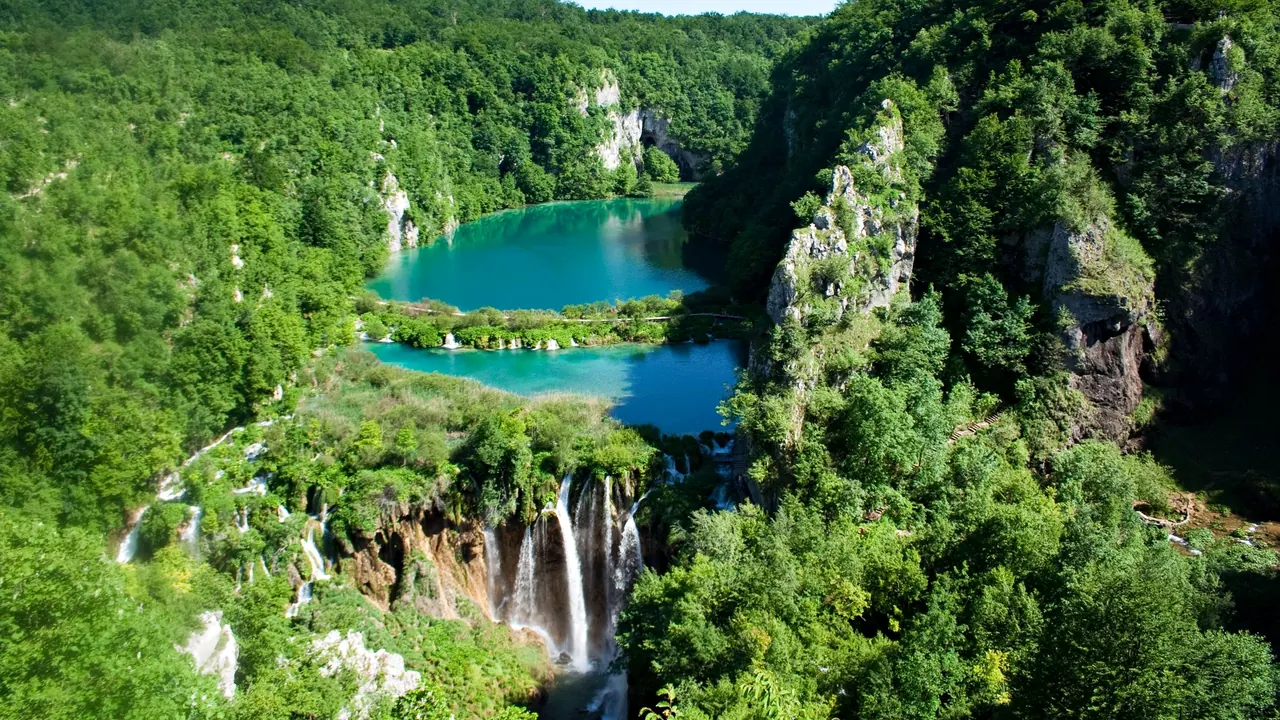
Photos: Elba by Sailko, CC BY 3.0, cropped; Plitvice Lakes by Pablo BM from London, England, CC BY 2.0, cropped.
Elba or Plitvice Lakes?
Our verdict in twelve categories, each scored against the same fixed benchmark cities, and the climate month by month, so you can choose for your trip.
Choose Elba for
- beaches
- food and drink
- culture and sights
Elba is the choice for a summer sea vacation with some variety around it. The granite bays of the south-west, the long sand at Marina di Campo and the pebble coves near Portoferraio give you a different beach every day. Napoleon's residences, Medici bastions, hill-village trattorias and warm evenings in the piazzas fill the time in between. It suits couples and families who want to base themselves in one place for a week or more and will pay summer island prices to do it.
Choose Plitvice Lakes for
- nature and the outdoors
- prices
- getting around
Plitvice Lakes is for travellers who come for the landscape itself: terraced turquoise lakes, waterfalls under the boardwalks, and beech and fir forest that changes with each season. There is no swimming, little to eat beyond country cooking and nothing to do after dark, so most people give it two or three days on a road trip between Zagreb and the Croatian coast. Walkers and photographers who stay in a quiet village guesthouse and reach the trails at opening time get the most out of it, and for less money than Elba in summer.
Scoreboard
Twelve categories on one fixed scale from 0 to 100. The shaded stretch is the gap between the two.
Your match
Pick a travel style or drag the sliders, and both match scores follow your weighting.
Wins on beaches and food and drink with your weighting.
Wins on nature and the outdoors and prices with your weighting.
What matters to you?
Category by category
What the scores mean for a trip.
Beaches & swimming
These two are barely comparable for swimming. Elba has around 150km of coast, from the pale granite bays of Fetovaia and Cavoli to the long sandy front at Marina di Campo and the white pebble coves under the cliffs near Portoferraio. Even in August you can find a quieter cove at the end of a footpath.
At Plitvice the lakes look made for swimming, but bathing in the park is strictly forbidden. The alternative is the cool green Korana river around Korana village and Slunj. The sea is a long mountain drive away, so anyone who wants beach days should see the lakes on the way to the coast.
Food & drink
Elba has the more interesting table: cacciucco, stuffed squid, local sea bream and schiaccia briaca, with its own Ansonica and Aleatico wines to go with them. The trattorias of Capoliveri, Marciana and Sant'Ilario are the places to eat, though the resort waterfronts are predictable and much closes out of season.
Around Plitvice the food is Lika country cooking, with spit-roast lamb and suckling pig, river trout and dishes cooked under the iron bell, plus farm cheeses and brandies. It is filling and satisfying after a day's walking, but the menu hardly changes from one roadside inn to the next.
Culture & sights
Neither is a culture destination, but Elba gives you far more to see between swims. There are Napoleon's two residences at Portoferraio and San Martino, the fortified Medici port itself, Porto Azzurro's star-shaped fortress, a Roman villa and mining museums that go back to the Etruscans.
Plitvice's World Heritage status is for nature alone. The built sights nearby amount to the mill village of Rastoke, the ruined walls of Drežnik and the memorials to the first deaths of the 1991 war, which fill an afternoon at most.
Nightlife
On Elba a summer evening means a late dinner, an aperitivo and a stroll through Capoliveri's piazza or along the harbours of Porto Azzurro and Marina di Campo, with a few seasonal discos near Procchio. At Plitvice the villages go quiet soon after dark, and since everyone is up early for the trails, a glass of brandy at the guesthouse is the whole evening.
Nature & outdoors
Plitvice's landscape is the reason to go. Terraced lakes linked by travertine barriers, dozens of waterfalls ending at Veliki slap and boardwalks laid right over the water make it unlike anywhere else. Beyond them are beech forest trails, the Barać caves, river rafting and the Velebit ridges, with bears and lynx in the woods.
Elba's nature is mountain and sea combined. You can take the open basket lift up Monte Capanne to see Corsica, walk the Grande Traversata Elbana, mountain-bike the iron-red east, and snorkel or dive among granite reefs, which Plitvice cannot offer.
Day trips
Both are places you mostly stay put in, and each offers one or two good outings. From Elba they begin with an hour on the ferry to Piombino, for Etruscan Populonia above Baratti, hill towns like Suvereto and Massa Marittima, and boat trips to Pianosa and Capraia.
From Plitvice you drive. Rastoke is half an hour away, and Bihać and the Una falls in Bosnia are within an hour. Zadar, Senj and Zagreb all make long days.
Good for families
Elba is easier with children. The sandy bays at Marina di Campo, Lacona and Procchio shelve gently for paddling, campsites are set up for families, and the lift up Monte Capanne or a boat trip fills a half-day. The winding roads and August heat are the main trials.
Plitvice enchants school-age children with its boardwalks, fish in the clear water, the electric boat and the panoramic train. However, the narrow, wet paths without railings are tricky with toddlers and pushchairs, swimming is off-limits, and there is little else for children nearby.
Getting around
Plitvice is slightly simpler. Guesthouses in Mukinje or Jezerce are within walking distance of the park, and boats and trains link the circuits once you are inside. Zagreb-coast buses stop at the gates, although anything beyond them needs a car.
Elba is small, but its twisting hill roads make drives slow, and the buses are too sparse to rely on. In August traffic queues into Portoferraio and beach car parks fill early. Add the ferry, which should be booked ahead in summer, and a car or scooter becomes close to essential.
Shopping & style
Elba at least gives you an evening browse, with linen, beachwear and jewellery in the lanes of Capoliveri and Porto Azzurro, summer markets, and local wine, honey and mineral crystals to take home. At Plitvice there are entrance kiosks and farmers' stalls selling cheese, jam and fruit brandy, and nothing more.
Affordability
Plitvice costs less. Village rooms and private guesthouses are reasonably priced, and the inns serve generous plates. The catches are a steep summer park fee and expensive hotels near the gates, so spring or autumn in an outlying village is the best deal.
Elba is at its dearest in the summer you come for, once the car ferry, hire car, parking and sunbeds are added up. Campsites, self-catering and inland trattorias soften the bill, and June or September give you the same sea for noticeably less.
Live music & performing arts
Neither is worth choosing for live performance, though Elba has the occasional summer event. There are concerts in Portoferraio's squares, churches and fortresses, and a long-standing chamber music festival in late summer. Around Plitvice you might hear Lika folk music at a village festival, and for anything more you would have to go to Zagreb or Zadar.
Wellness & relaxation
Elba has an actual bathing tradition in the thermal establishment at San Giovanni, which uses mud and seawater from the old salt pans, and there are hotel spas around Biodola and Procchio. A June or September stay in Marciana or a vineyard farmhouse is very relaxed.
Plitvice has only a few hotel saunas. What it offers instead is real silence in its meadow and forest guesthouses once the coaches leave. Both lose their calm in high summer, with traffic on Elba and crowded boardwalks at the lakes.
When should you go?
Pick your month. The climate figures are measured averages, not a forecast.
Elba in July
Plitvice Lakes in July
Daytime high, °C
Rainfall in the month, mm
Where the figures come from
Elba's temperatures are measured 62 km from the centre, at Grosseto.
Elba has no rain gauge within 25 km of the centre, so its rainfall comes from a gridded climate dataset read at the destination rather than from a gauge further away.
Plitvice Lakes has no weather station within reach, so its figures come from a gridded climate model rather than a measured record, and read a broad area rather than one spot.
Temperature and rainfall are climate normals, averaged over the years shown. Elba: 1991-2020 (sunshine 1961-1990) normals, Grosseto (61.7 km from centre). Plitvice Lakes: 2001-2020 normals, NASA POWER reanalysis grid, no weather station within 90 km.
Elba's beach season runs from June to late September, when the sea warms to around 25°C by August and rain is rare. July and August are also very sunny and hot, with daytime highs near 32°C, which makes midday walking on the open slopes hard work. May, June and September are the most comfortable months for combining beaches with hiking or cycling. The rain arrives in October and peaks in November, and through winter the island is mild but grey, with no beach life.
Plitvice is cooler and much wetter all year, and the climate suits walking rather than swimming. Summer highs of about 27°C are pleasant on the forest trails, and late spring brings the fullest waterfalls. September and November are the wettest months, with around 140mm in September, though autumn colour makes October worth the risk of rain. Winter is cold, with January highs near 3°C, and the falls can freeze under snow. So Elba is at its best in high summer, while Plitvice is at its best either side of it.
Which traveller are you?
On a beach and sun trip, Elba is the clear choice. It has clear turquoise water in the south-west bays, gently shelving sand at Lacona and Biodola, and a warm sea all summer. Bathing is banned throughout Plitvice's park, and the Adriatic is two hours away.
For an outdoors trip, Plitvice Lakes edges ahead with its sixteen lakes, boardwalks over the cascades, forest trails, the Barać caves and rafting on the Korana. Elba answers with Monte Capanne, ridge walks and diving, which suits walkers who also want the sea.
On a trip on a tight budget, Plitvice works out cheaper, with village guesthouses, large inn portions and much lower park fees outside summer. On Elba the ferry, car hire and sunbeds soon add up in season, although campsites help.
Before you go
| Measure | Elba | Plitvice Lakes |
|---|---|---|
| Official language | Italian | Croatian |
| Currency | Euro (EUR) | Euro (EUR) |
| Sockets | CFL230 V, 50 Hz | CF230 V, 50 Hz |
| Driving side | Right | Right |
| Time zone | UTC+1, UTC+2 in summer | UTC+1, UTC+2 in summer |
| Emergency number | 112 | 112 |
| Main airport | Pisa International Airport (PSA)82 non-stop destinations | Zagreb Franjo Tuđman International Airport (ZAG)66 non-stop destinations |
| Public holidays this year | 13 days | 14 days |
By the numbers
| Measure | Elba | Plitvice Lakes |
|---|---|---|
| Population | 32,000 | - |
| People per km² | 143 | - |
| Swim season, months above 21 °C | 4 months | - |
Where else could you go?
Every comparison below shares a destination with this one, so you can follow Elba or Plitvice Lakes somewhere new.
- Krkavs Plitvice Lakes
- Tuscanyvs Elba
- Cinque Terrevs Elba
- Corsicavs Elba
- Umbriavs Elba
- Bračvs Plitvice Lakes