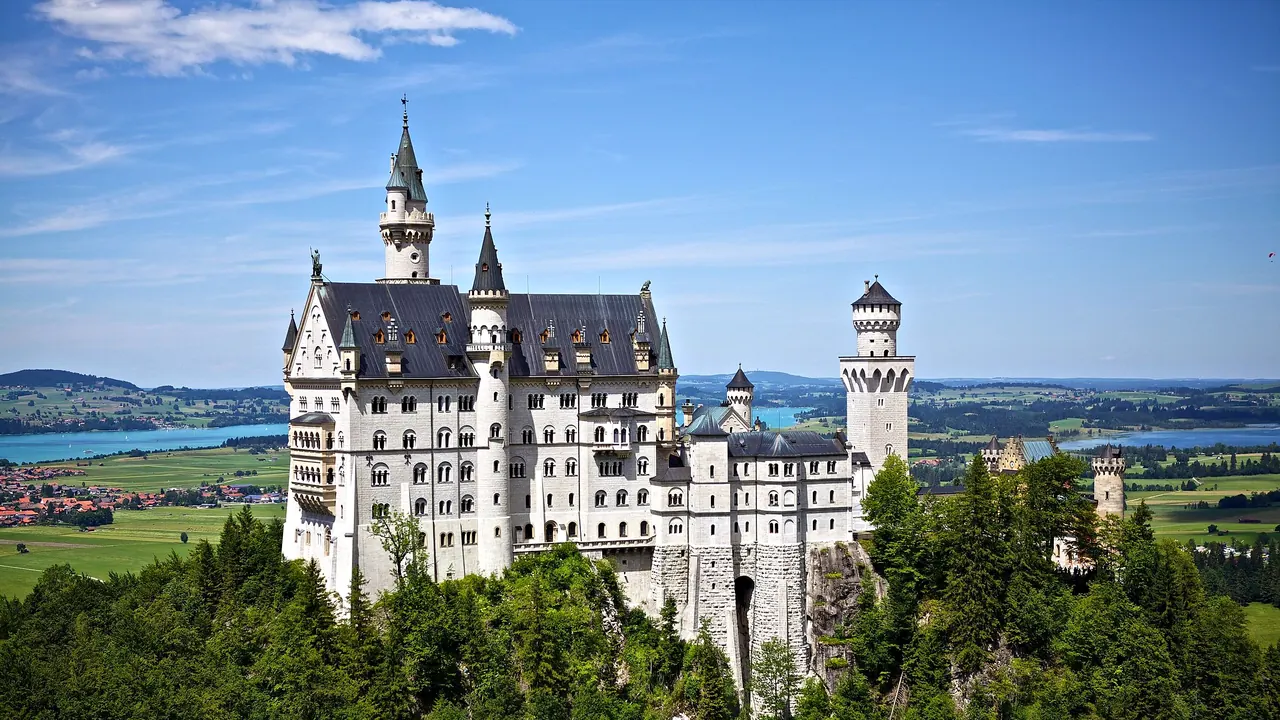
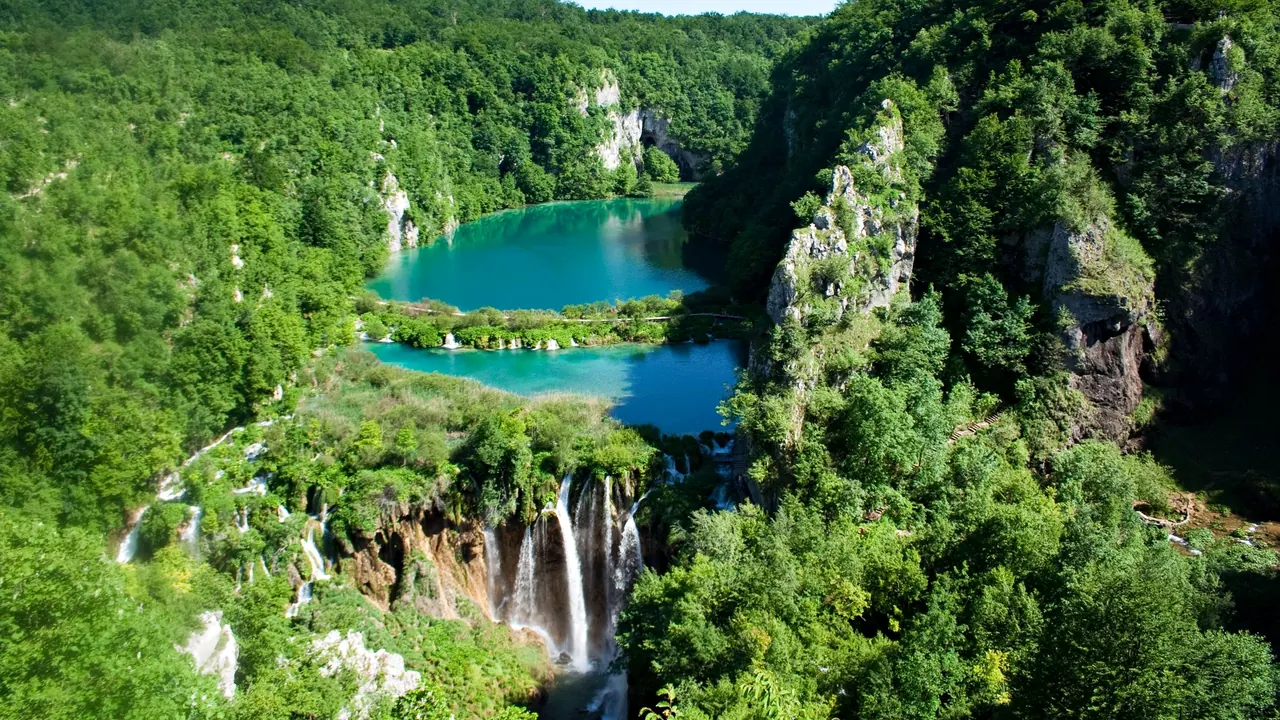
Photos: Bavaria by cameralends, CC0; Plitvice Lakes by Pablo BM from London, England, CC BY 2.0, cropped.
Bavaria or Plitvice Lakes?
Our verdict in twelve categories, each scored against the same fixed benchmark cities, and the climate month by month, so you can choose for your trip.
Choose Bavaria for
- live music and the arts
- culture and sights
- shopping
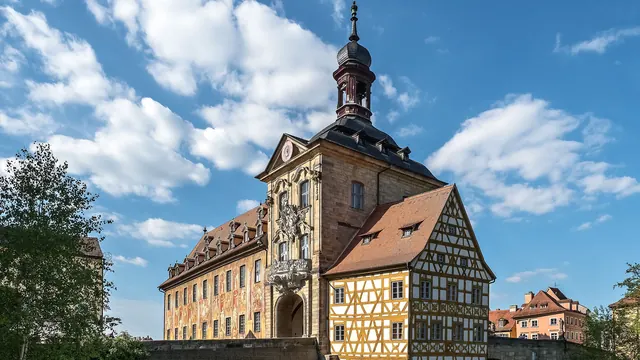
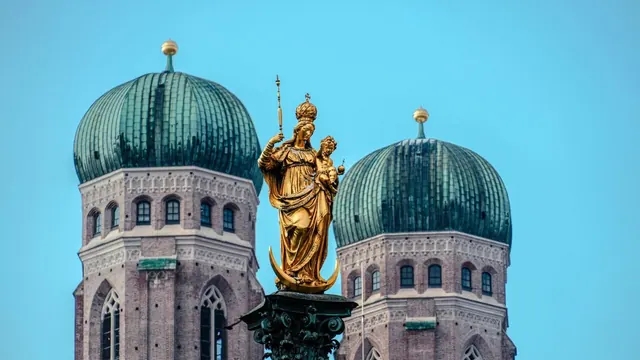
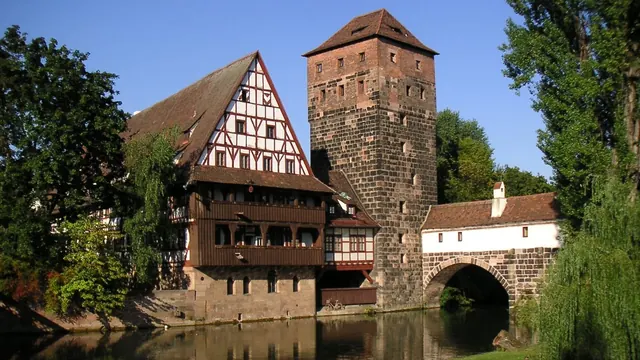
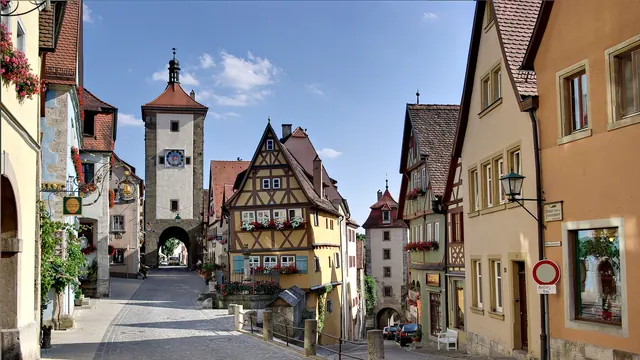
Bavaria suits a longer, varied trip with several bases. In one vacation you can see Munich's galleries and opera, the medieval streets of Bamberg and Regensburg, Ludwig II's castles, hut-to-hut walking in the Alps and the old spa towns, mostly linked by regional trains. It is the better choice for families, for beer and food lovers and for anyone who wants the evenings to be as full as the days. Munich's prices are the cost of all that.
Choose Plitvice Lakes for
- prices
Plitvice Lakes is one natural sight, not a region you tour. You get terraced turquoise lakes, waterfalls under the boardwalks, beech and fir forest, and village guesthouses that are silent after dark. Most people stay a night or two on the way between Zagreb and the Adriatic. It is for travellers who come for the walking and the quiet and don't need towns, shops or a night out.
Scoreboard
Twelve categories on one fixed scale from 0 to 100. The shaded stretch is the gap between the two.
Your match
Pick a travel style or drag the sliders, and both match scores follow your weighting.
Wins on live music and the arts and culture and sights with your weighting.
Wins on prices with your weighting.
What matters to you?
Category by category
What the scores mean for a trip.
Beaches & swimming
Neither place has a sea beach, but Bavaria at least has a real summer bathing habit. People swim from jetties and grassy meadows on the Starnberger See, the Chiemsee and the shallow Staffelsee, and take quick dips from the gravel banks of the Isar in Munich.
At Plitvice the lakes look made for swimming, but bathing is banned throughout the park. The nearest swimming is in the cold, clear Korana river at Slunj, and the Adriatic is a long two-hour drive over the mountains.
Food & drink
Bavaria gives you far more to eat and drink. There are Munich's beer gardens under the chestnut trees, the village breweries of Upper Franconia with Bamberg's smoked beer, Silvaner in the wine taverns of Würzburg, and a proper fine-dining scene and the Viktualienmarkt in Munich. The cooking itself is heavy and fairly narrow once you leave the cities.
Plitvice has hearty Lika country food in roadside inns: lamb and suckling pig turning on spits, river trout, and dishes slow-cooked under an iron bell, with local cheese and homemade brandy. It is good for a dinner or two, but there are no markets or cafés to explore.
Culture & sights
The two are far apart here. Bavaria could fill a whole trip with culture alone: Old Masters at the Alte Pinakothek, Nuremberg's imperial castle and the Nazi rally grounds, Tiepolo's ceiling in Würzburg, the walls of Rothenburg and Neuschwanstein in the south.
Plitvice is World Heritage for its landscape, not its buildings. Its heritage is mostly the water mills of Rastoke, the ruined walls of Drežnik above the Korana canyon and the memorials to the first deaths of the 1990s war. That takes an afternoon, not a vacation.
Nightlife
In Bavaria the evenings centre on Munich: cocktail bars in Glockenbachviertel, student bars in Schwabing, a decent club scene and beer halls that get loud after dark, with Oktoberfest as the yearly peak. Bamberg, Würzburg and Regensburg add student pub streets. At Plitvice there is simply none. The evening is dinner and perhaps a brandy at the guesthouse before an early start on the trails.
Nature & outdoors
Both are excellent outdoors, in different ways. Bavaria has a whole Alpine edge: the Zugspitze above Garmisch, the Königssee in the Berchtesgaden national park, hut-to-hut hiking and via ferratas in the Allgäu, and skiing in winter. Further north are the wild woods of the Bavarian Forest and long river cycle paths.
Plitvice is one concentrated wonder: sixteen lakes stepping down over travertine barriers, with boardwalks across the falls and the Veliki slap at the bottom. Around it you can raft on the Korana and the Una and hike the Velebit ridges, and bears and lynx live in the forest. In summer you need to start early to beat the crowds.
Day trips
Bavaria is built for day trips. From Munich you can reach Augsburg, Nuremberg, Regensburg, Salzburg and the Chiemsee by train. From Würzburg or Nuremberg you can reach Bamberg, the wine villages on the Main and the Romantic Road towns of Rothenburg and Dinkelsbühl.
From Plitvice the choice is thinner and more spread out. You have Rastoke half an hour away, Bihać and the Una falls in Bosnia, and the Tesla centre at Smiljan. Zadar and Zagreb are each about two hours away, which is why most visitors treat the lakes as a stop on the way rather than a base.
Good for families
Bavaria is the easier family choice. Beer gardens have playgrounds and inns welcome children. Munich has the Hellabrunn zoo and the Deutsches Museum's children's section, Nuremberg has a toy museum, and summer brings shallow lake beaches and gentle cable-car walks.
Plitvice delights school-age children with fish in the clear water and the electric boat across Kozjak. But the narrow, wet boardwalks without railings make toddlers hard work, pushchairs are impractical and swimming is forbidden.
Getting around
Bavaria is much the easier of the two without a car. You can walk Munich's compact centre or cross it by U-Bahn, S-Bahn and tram, and one regional day ticket takes you by train on to Nuremberg, Regensburg, Garmisch, Berchtesgaden and the lakes, so you can change bases by rail. You only really need to drive for the remote Alpine valleys and Franconian villages, where buses are few. Trains are often late, and drivers face jams towards the Alps on summer weekends and full car parks at the castles.
At Plitvice it works the other way round. Inside the park, the walking circuits, the electric boats on Kozjak and the panoramic trains cover everything, and from a guesthouse in Mukinje or Jezerce you can walk to the gate. Outside it, the coaches on the Zagreb-to-coast route only drop you at the entrances. With almost no local service, you need to drive to reach Rastoke, the Korana or the Una, and the Lika roads there are slow and winding.
Shopping & style
There is no contest. Bavaria has luxury houses on Maximilianstrasse, department stores between Marienplatz and Karlsplatz, and crafts such as Oberammergau woodcarving, Mittenwald violins and Nuremberg gingerbread, plus the Christmas markets in December. At Plitvice the shopping is souvenir kiosks at the gates and farm stalls selling cheese, honey and brandy.
Affordability
Plitvice is a little easier on the wallet. Village guesthouses and country inns are fairly priced, though the summer park fee is steep and hotels by the gates charge for the location. Coming in spring or autumn gives the best value.
Bavaria's costs depend on where you stay. Munich is expensive all year and very expensive during Oktoberfest and trade fairs. Bamberg, Würzburg, the Bavarian Forest and Alpine guesthouses are moderate, and you can bring your own food to a beer garden.
Live music & performing arts
Bavaria is one of Europe's great places for music. Munich has the State Opera at the National Theatre, two orchestras of international rank and the rococo Cuvilliés Theatre, and there is the Wagner festival at Bayreuth and Mozart in Würzburg's Residenz. Plitvice has nothing you could plan around beyond the odd evening of Lika folk music. For concerts you would have to go to Zagreb or Zadar.
Wellness & relaxation
Bavaria has a long spa tradition. There are the colonnades of Bad Kissingen, the brine baths of Bad Reichenhall, the thermal resort at Bad Füssing and Kneipp's water cure at Bad Wörishofen, as well as the huge sauna complex at Erding and the Art Nouveau Müller'sches Volksbad in Munich.
Plitvice has no bathing culture and only a few hotel saunas. What it offers is quiet: meadows, fir forest and silent evenings in an outlying village, best in late spring or autumn.
When should you go?
Pick your month. The climate figures are measured averages, not a forecast.
Bavaria in July
Plitvice Lakes in July
Daytime high, °C
Rainfall in the month, mm
Where the figures come from
Plitvice Lakes has no weather station within reach, so its figures come from a gridded climate model rather than a measured record, and read a broad area rather than one spot.
Temperature and rainfall are climate normals, averaged over the years shown. Bavaria: 1991-2020 normals, München (1.9 km from centre). Plitvice Lakes: 2001-2020 normals, NASA POWER reanalysis grid, no weather station within 90 km.
In southern Bavaria, where most visitors stay, the warm months are June to August, with highs of about 25°C and the most sunshine of the year. This is also the wettest part of the year, with showers and storms bringing about 120mm a month, and a cool spell can stop the lake swimming, which runs roughly from June to early September. May and September are comfortable for walking around towns. Winter is cold and grey, about 4°C in January, which suits Christmas markets and snow in the Alps more than sightseeing.
Plitvice warms up on much the same pattern and is a little hotter at its peak, about 27°C in July and August. Its rain comes the other way round, though. Summer is the drier season, and the heaviest rain falls from September to November, about 140mm in the wettest months. Spring brings the fullest waterfalls, October brings the autumn colours if you accept the risk of rain, and winter is cold enough to freeze the falls.
Which traveller are you?
For a culture and arts trip, Bavaria is the clear choice and is worth a week or more. Split it between Munich, a Franconian base such as Nuremberg and the castle country in the south. At Plitvice, culture means adding Zagreb or Zadar to the route.
On a family trip with children, Bavaria can be the whole vacation: a week divided between Munich and a lake or Alpine resort, with short journeys between them. Plitvice works better as a night on the way to the coast, best with school-age children.
On a tight budget, Plitvice comes out slightly cheaper, especially if you keep it to one or two nights and eat where you sleep. In Bavaria, stay in a smaller town and go into Munich for the day by train rather than sleeping there.
Before you go
| Measure | Bavaria | Plitvice Lakes |
|---|---|---|
| Official language | German | Croatian |
| Currency | Euro (EUR) | Euro (EUR) |
| Sockets | CF230 V, 50 Hz | CF230 V, 50 Hz |
| Driving side | Right | Right |
| Time zone | UTC+1, UTC+2 in summer | UTC+1, UTC+2 in summer |
| Emergency number | 112 | 112 |
| Main airport | Munich Airport (MUC)211 non-stop destinations | Zagreb Franjo Tuđman International Airport (ZAG)66 non-stop destinations |
| Public holidays this year | 12 days | 14 days |
By the numbers
| Measure | Bavaria | Plitvice Lakes |
|---|---|---|
| Population | 13,038,724 | - |
Where else could you go?
Every comparison below shares a destination with this one, so you can follow Bavaria or Plitvice Lakes somewhere new.
- Austrian Alpsvs Bavaria
- Krkavs Plitvice Lakes
- Dolomitesvs Bavaria
- Bračvs Plitvice Lakes
- Hvarvs Plitvice Lakes
- Korčulavs Plitvice Lakes