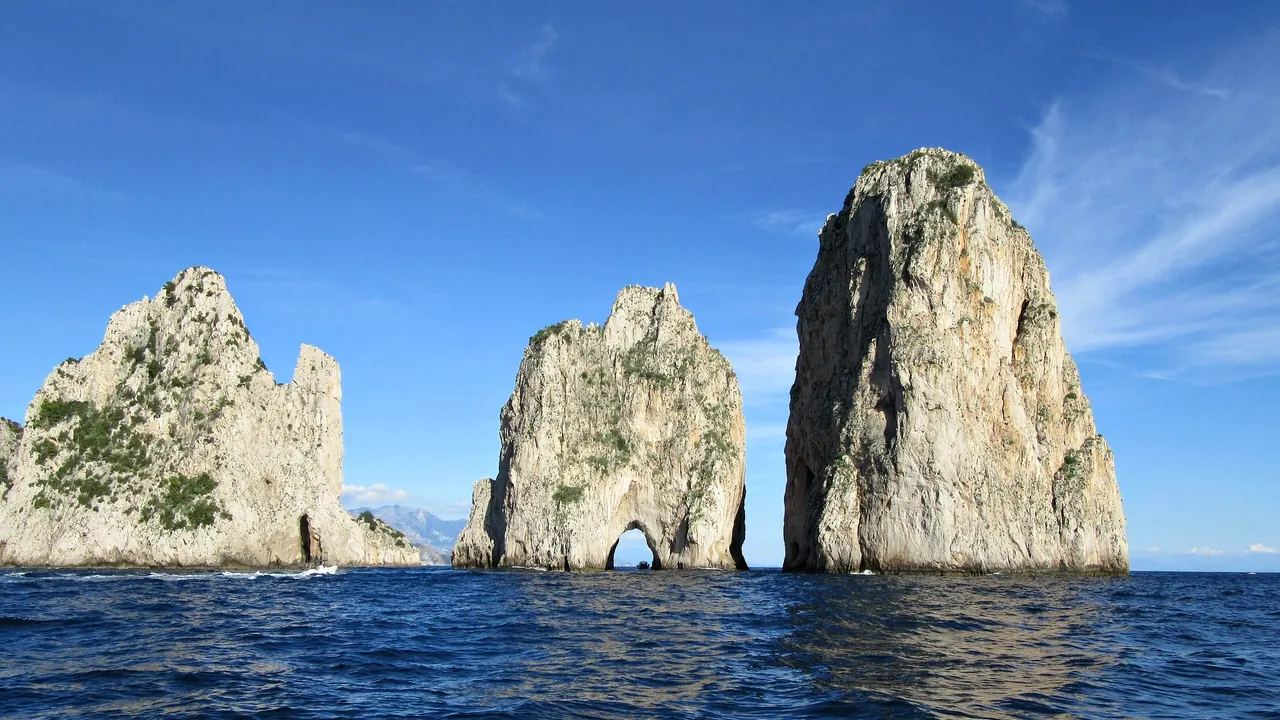
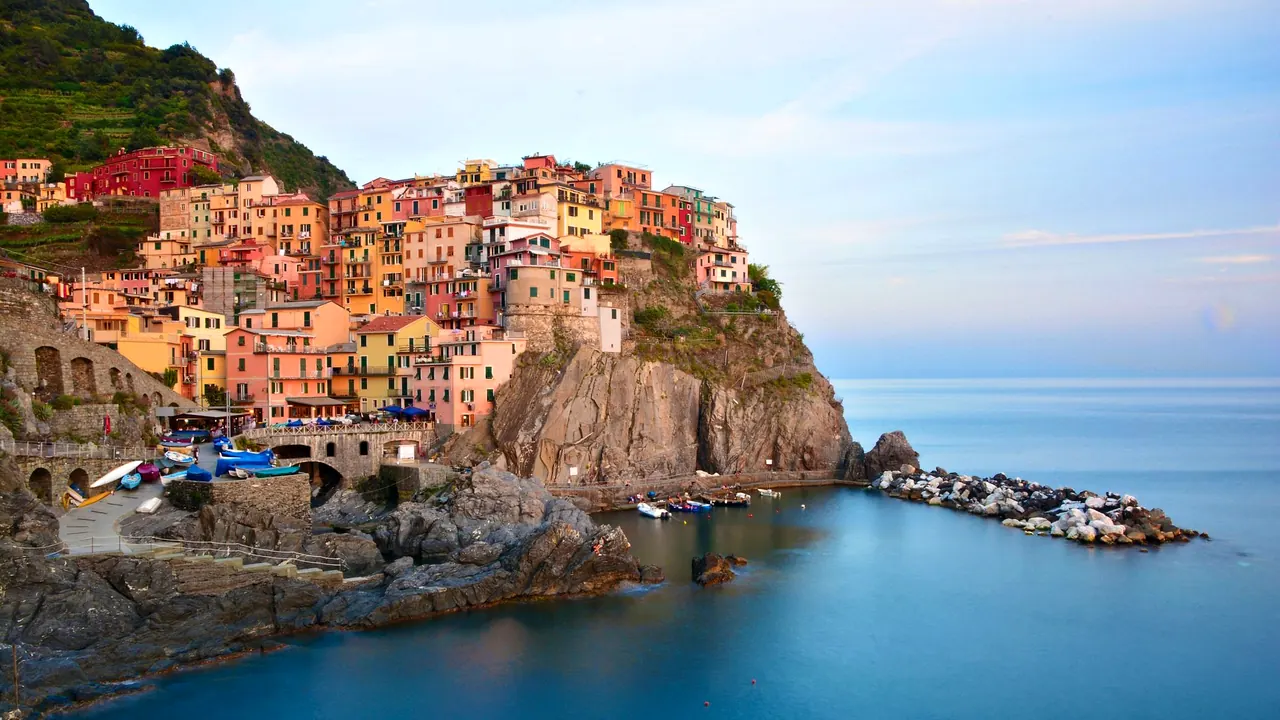
Photos: Capri by Sheeba Samuel, CC BY-SA 4.0, cropped; Cinque Terre by Narcisa Aciko, Pexels License.
Capri or Cinque Terre?
Our verdict in twelve categories, each scored against the same fixed benchmark cities, and the climate month by month, so you can choose for your trip.
Choose Capri for
- shopping
- nightlife
- wellness
Capri suits a slower, dressier stay built around the sea and the evenings. You swim off rocks and from boats in very clear water, take an aperitivo in the Piazzetta once the last ferries leave, browse the boutique lanes and retreat to a hotel spa or a garden terrace in Anacapri. It is much the dearer of the two, so it rewards a generous budget. Boats reach Sorrento, Naples and the Amalfi Coast, and Pompeii makes a long day by ferry and then train.
Choose Cinque Terre for
- prices
- nature and the outdoors
- getting around
Walkers should pick Cinque Terre. Its whole appeal is moving on foot and by train between five villages on the cliffs, following paths through vineyards and olive groves and eating Ligurian food that tastes of where you are. Evenings end with a glass of white on a harbour wall rather than a night out, and there is almost nothing to buy. Eating and getting around cost less than on Capri, and the coastal railway opens up Genoa, Pisa and Lucca.
Scoreboard
Twelve categories on one fixed scale from 0 to 100. The shaded stretch is the gap between the two.
Your match
Pick a travel style or drag the sliders, and both match scores follow your weighting.
Wins on shopping and nightlife with your weighting.
Wins on prices and nature and the outdoors with your weighting.
What matters to you?
Category by category
What the scores mean for a trip.
Beaches & swimming
Neither has much sand, but for swimming Capri has the edge. The water is exceptionally clear and deep blue, there is late sun on the rocks at Punta Carena, and boats anchor under the Faraglioni for a swim. Most of its access is ladders and platforms at bathing clubs, though, not a shore to lie on.
Cinque Terre has what Capri lacks: one real beach, at Monterosso's Fegina, with sand and fine pebble, although it is lined with rows of umbrellas in summer. Elsewhere on that coast you swim from harbour slipways and rock shelves, which suits a dip between walks more than a full day in the water.
Food & drink
Cinque Terre is the better place to eat. Ligurian cooking gives it trofie with pesto, focaccia and farinata from bakery counters, Monterosso's anchovies and Sciacchetrà from the terraces. Much of it is cheap, informal and eaten standing up by the harbour.
Capri has its own short list of dishes, including insalata caprese, ravioli capresi and torta caprese, but the restaurants around the Piazzetta charge for the view. There is no street food to fall back on. On both coasts the best tables are away from the crowds: the trattorias of Anacapri on Capri, and Monterosso or the hilltop hamlets in Liguria.
Culture & sights
Each takes about two days to see, but the sightseeing is quite different. Capri gives you individual sites with a story: Tiberius's Villa Jovis on its headland, Villa San Michele with its antiquities, and the Certosa with its Diefenbach paintings.
In Cinque Terre the sight is the whole place: five medieval villages and their dry-stone terraces, UNESCO-listed together. You take it in by walking through Vernazza's harbour square or Corniglia's lanes, not by visiting a particular villa or museum.
Nightlife
Capri has a real, if limited, evening scene. Dressed-up crowds fill the Piazzetta for aperitivo, and Neapolitan songs in the piano taverns can last until the early hours.
Cinque Terre offers a sunset glass of local white and not much else. A few bars in Monterosso and Riomaggiore stay open a little later, and the villages are mostly asleep before midnight. Neither has clubs, but only Capri feels like a night out.
Nature & outdoors
Cinque Terre is the stronger choice for anyone who wants to spend their days outdoors. It is a national park and marine reserve, with the cliff-top Sentiero Azzurro, the higher Sentiero Rosso through pine and chestnut woods and dozens of mule tracks. You can walk from village to village for days, and there is diving off the rocky seabed.
Capri's scenery is more famous: the Faraglioni, the Arco Naturale and cliffs hundreds of metres high. There is also the chairlift up Monte Solaro and the wilder Sentiero dei Fortini. The island is small, though, so its walks and its boat trip past the Blue Grotto fit into a few days.
Day trips
Both are excellent bases for day trips, but by different means. From Capri everything goes by boat: Sorrento, Naples, Positano and Amalfi, Ischia, and Pompeii or Herculaneum on a long day via the Sorrento train. Rough seas can cancel any of these.
Cinque Terre relies on the coastal railway, which keeps running in bad weather. Pisa and Lucca are about an hour or so south, Genoa and Portofino lie to the north, and Portovenere, Lerici and the Carrara quarries are close by.
Good for families
Both are hard going with small children. They are built of steps and steep lanes, a pushchair is close to useless, and nothing on either is made for children. Older children who swim well and like boats or short walks do fine in both.
The difference is in where to stay. On Capri, calmer Anacapri is the family base, but the swimming is still from rocks into deep water. In Cinque Terre, Monterosso has a gently shelving beach and a mostly flat town, which is the nearest thing to an easy option on either coast.
Getting around
Cinque Terre is easier to move around. One local train links all five villages a few minutes apart, and ferries and footpaths also join them. You rarely have to think about how to get from one village to the next.
Capri is just as car-free, and the distances are short. Its network of funicular, small orange buses and open-topped taxis is more piecemeal, though. In July and August the queues for the funicular and the steep walking up from the marinas slow everything down, although the crowded summer trains on the Ligurian coast are no picnic either.
Shopping & style
For shopping, there is no contest. On Capri, Via Camerelle and Via Vittorio Emanuele hold a surprising number of luxury boutiques for such a small island. It also has its own crafts: sandals made by hand to measure, linen, ceramics and perfumes made from local flowers.
In Cinque Terre the souvenirs worth carrying home are things to eat and drink, such as pesto, jarred anchovies and Sciacchetrà. There is no fashion or design shopping at all.
Affordability
Neither is cheap, but Capri is the more expensive by some way. Its summer hotel rooms are among the dearest in the Mediterranean, and sunbeds, boat hire and drinks in the Piazzetta are all priced for wealthy visitors.
In Cinque Terre, rooms are the big expense and there is a fee for the park paths. Daily spending is lower, though, thanks to focaccia, takeaway fried fish and the cheap train. In both, a cheaper base on the mainland (Sorrento or Naples for Capri, La Spezia or Levanto for Cinque Terre) saves money but means missing the quiet evenings.
Live music & performing arts
Neither is a place for concerts or theatre. Capri has a little more: summer concerts in the Certosa cloisters or at Villa San Michele, and Neapolitan song in the late-night taverns. Cinque Terre has only the odd church concert and the bands at patron saints' feast-day processions. For opera or an orchestra you take the boat to Naples from one, or the train to La Spezia or Genoa from the other.
Wellness & relaxation
What makes Capri more restful is what it adds to the quiet hours: the spas of its upmarket hotels, the gardens and terraces of Anacapri, and lanes that smell of lemon and jasmine once the crowds have gone. For real thermal bathing, Ischia is a boat ride across the bay.
Cinque Terre has no spa culture beyond a massage at a guesthouse. Its calm comes from car-free villages and a terrace over the sea, best enjoyed in spring, in autumn or early in the morning. In both places a summer afternoon belongs to the day-trippers.
When should you go?
Pick your month. The climate figures are measured averages, not a forecast.
Capri in July
Cinque Terre in July
Daytime high, °C
Rainfall in the month, mm
Where the figures come from
Capri has no rain gauge within 25 km of the centre, so its rainfall comes from a gridded climate dataset read at the destination rather than from a gauge further away.
Capri's sunshine is measured 58 km from the centre, at Grazzanise.
Cinque Terre's temperatures are measured 78 km from the centre, at Pisa / S. Giusto.
Cinque Terre has no rain gauge within 25 km of the centre, so its rainfall comes from a gridded climate dataset read at the destination rather than from a gauge further away.
Temperature and rainfall are climate normals, averaged over the years shown. Capri: 2005-2025 (sunshine 1991-2020, rainfall 1991-2020) normals, Capri (3.6 km from centre). Cinque Terre: 1991-2020 normals, Pisa / S. Giusto (77.8 km from centre).
The two run on a very similar calendar. Both reach about 30°C in July and August, both are good for swimming from June to September, and both turn wet from October. Capri's sea is a shade warmer, at about 26°C in August against 25°C off the Ligurian villages. Capri is also slightly sunnier through the summer and holds on to its warm water a little longer into early October.
For walking, the difference matters more. On Cinque Terre the coastal path is at its best in May and in late September, because midsummer heat makes the steep stretches hard going in the middle of the day. The autumn rain there is heavier, around 170mm in October, and can close sections of trail. Capri's wettest month is November at about 146mm, and its short walks are pleasant from April to June and again in September. In winter both are cool and quiet, with highs in the low teens.
Which traveller are you?
For an outdoors trip, choose Cinque Terre. You can walk the Sentiero Azzurro between villages, climb to the Sentiero Rosso ridge and ride the train back. That fills a week, while Capri's walks to the Faraglioni and the Arco Naturale take a few days.
On a shopping trip, choose Capri. Via Camerelle and the lanes off the Piazzetta pack in Italian luxury labels, and there are sandals made to measure while you wait and perfumes made on the island. Cinque Terre offers little beyond pesto, anchovies and bottles of wine.
On a tight budget, Cinque Terre is the less punishing of two expensive places. Focaccia, fried fish in paper cones and the cheap local train keep days affordable, and you can sleep more cheaply in La Spezia. On Capri, the free walks and cheap buses help, but beds are scarce and summer rates leave little room to save.
Before you go
| Measure | Capri | Cinque Terre |
|---|---|---|
| Official language | Italian | Italian |
| Currency | Euro (EUR) | Euro (EUR) |
| Sockets | CFL230 V, 50 Hz | CFL230 V, 50 Hz |
| Driving side | Right | Right |
| Time zone | UTC+1, UTC+2 in summer | UTC+1, UTC+2 in summer |
| Emergency number | 112 | 112 |
| Main airport | Naples International Airport (NAP)131 non-stop destinations | Pisa International Airport (PSA)82 non-stop destinations |
| Public holidays this year | 13 days | 13 days |
By the numbers
| Measure | Capri | Cinque Terre |
|---|---|---|
| Population | 12,903 | - |
| People per km² | 1,241 | - |
| Swim season, months above 21 °C | 5 months | 4 months |
Where else could you go?
Every comparison below shares a destination with this one, so you can follow Capri or Cinque Terre somewhere new.
- Positanovs Capri
- Amalfi Coastvs Capri
- Portofinovs Cinque Terre
- Lake Comovs Cinque Terre
- Venicevs Cinque Terre
- Sicilyvs Capri