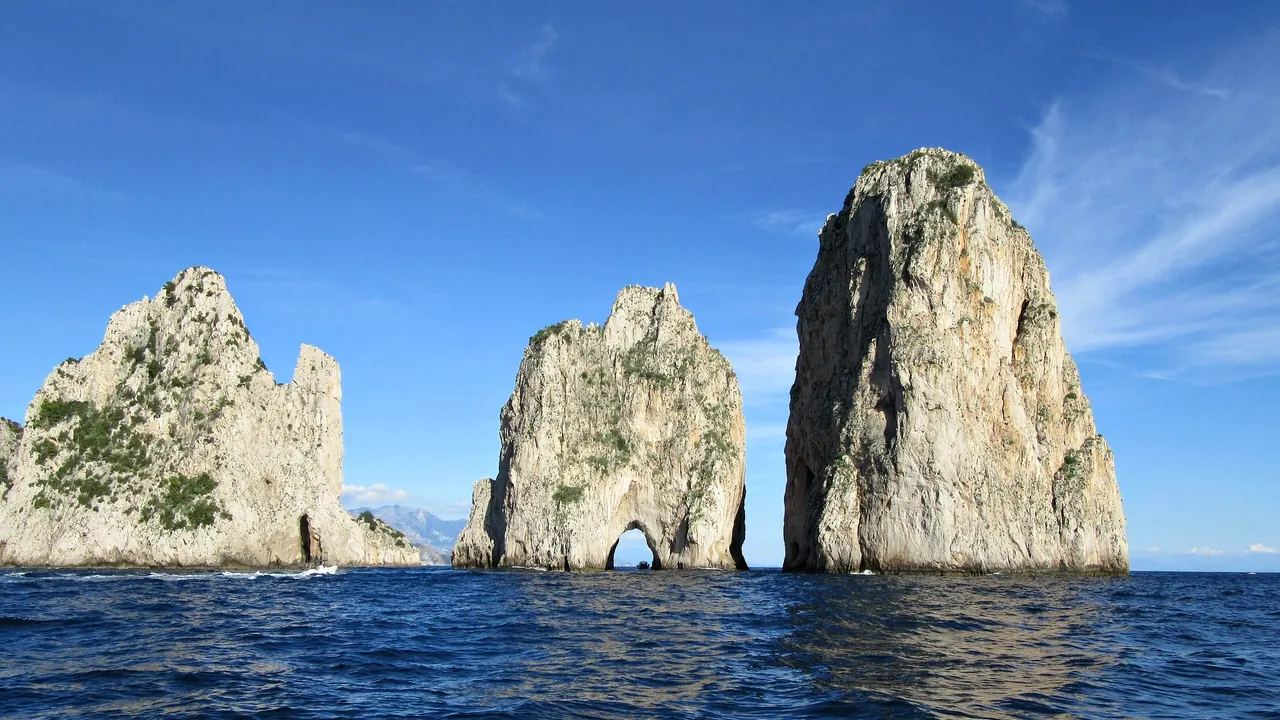
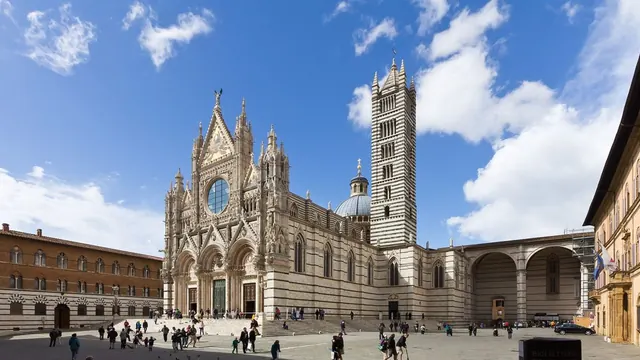
Photos: Capri by Sheeba Samuel, CC BY-SA 4.0, cropped.
Capri or Tuscany?
Our verdict in twelve categories, each scored against the same fixed benchmark cities, and the climate month by month, so you can choose for your trip.
Choose Capri for
Capri does not lead in any category we score.
Capri suits a short, polished stay built around the sea. You swim off rocks into very clear water, take a boat round the Faraglioni and the grottoes, and spend the evening at the Piazzetta once the ferries have gone. The island is small enough to see without a car in a few days, and its cliffs and views are hard to match anywhere. It suits couples and confident swimmers who are happy to pay heavily for the setting. It is no place for a long trip or for small children.
Choose Tuscany for
- culture and sights
- live music and the arts
- wellness
Tuscany is the better choice for almost any longer or broader vacation. Florence, Siena and the hill towns give you weeks of art and architecture. The food and wine run deep, and hot springs such as Saturnia and Bagno Vignoni make it a real place to unwind. Families do well with a farmhouse and a sandy beach, and it costs noticeably less than Capri. What you give up is the compactness. To get the most from it you need a car and a plan for which part of the region to base yourself in.
Scoreboard
Twelve categories on one fixed scale from 0 to 100. The shaded stretch is the gap between the two.
Your match
Pick a travel style or drag the sliders, and both match scores follow your weighting.
Has no clear advantage with the weighting you have chosen.
Wins on culture and sights and live music and the arts with your weighting.
What matters to you?
Category by category
What the scores mean for a trip.
Beaches & swimming
The swimming is about as good in both, but it is a very different experience. Capri has almost no sand. You swim from pebble coves at the marinas, from bathing-club platforms with ladders, off the rocks at Punta Carena or from a boat under the Faraglioni. The water is the deep, clear blue the island is famous for.
Tuscany has real beaches, though you have to pick your stretch of coast. Elba has sandy bays like Fetovaia, and the Maremma has strands backed by pine woods. Versilia has miles of sand lined with rows of umbrellas. From Florence, though, any of it is a long drive.
Food & drink
Capri's cooking is pleasant but quickly covered. There is the caprese salad, ravioli with caciotta, chocolate and almond torte and lemon everything. Many restaurants near the Piazzetta charge for the view, and the better meals are in Anacapri's trattorias.
Tuscany is a destination for eating in itself. Florence has lampredotto from street carts, the San Lorenzo and Sant'Ambrogio markets and the classics in Oltrarno. You can taste wine at the cellars of Chianti, Montalcino and Montepulciano, and eat pecorino in Pienza and truffles in San Miniato.
Culture & sights
This is where the two differ most. Capri has a handful of fine sites: Tiberius's Villa Jovis on its headland, Villa San Michele in Anacapri and the Certosa di San Giacomo. Add the Gardens of Augustus and you have seen them.
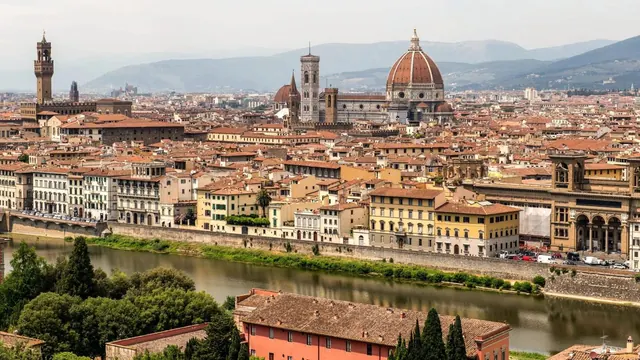
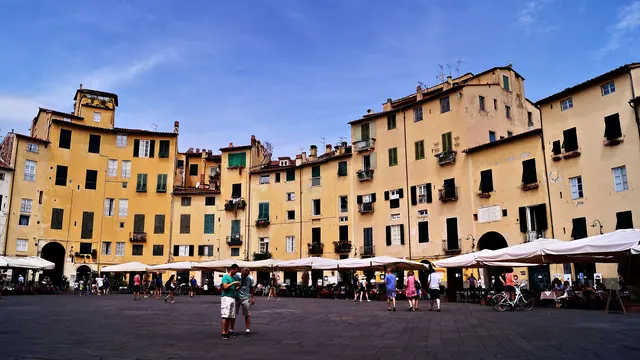
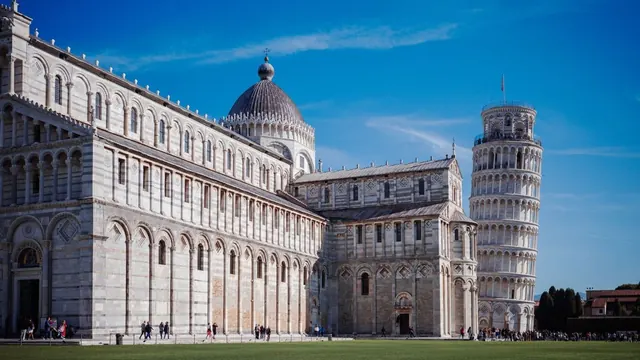
Tuscany is one of Europe's great regions for art and architecture. Florence alone has Brunelleschi's dome, the Uffizi and Michelangelo's David. Beyond it are Siena's Campo, Pisa's marble square, Lucca's walls and Piero della Francesca's frescoes in Arezzo, along with country abbeys like San Galgano.
Nightlife
Capri's night out is a dressed-up aperitivo at the Piazzetta tables. After that come piano taverns with Neapolitan song, and it is all over in a night or two. There are no clubs, and the island goes quiet outside summer.
Tuscany gives you more choice, if spread thinly. Florence has students on the steps of Santo Spirito and wine bars in Oltrarno. In summer the Versilia coast has beach clubs and dance halls that run until dawn.
Nature & outdoors
Capri's scenery is concentrated and dramatic. Limestone cliffs drop into the sea around the Faraglioni and the Arco Naturale, a chairlift climbs Monte Solaro, and the Sentiero dei Fortini runs along the wild west coast. Short distances mean you can cover it all in a few days.
Tuscany has much more ground and more variety. You can cycle the white roads through the Chianti and Val d'Orcia farmland, or take ridge hikes in the Apuan Alps above Carrara. There are beech forests in the Casentino, wild cattle in the Maremma park, and diving off Elba.
Day trips
From Capri, every outing is a boat across the Bay of Naples. You can go to Sorrento, Naples, Ischia, or in season Positano and Amalfi, and Pompeii makes a long day by ferry and train. All of it depends on the sea, because rough weather cancels sailings.
Tuscany has far more outings, and most go by road or rail. From Florence or a base in Chianti, Siena, Lucca, Pisa, San Gimignano and Volterra are all easy, and Bologna is under an hour by fast train. From southern Tuscany you can drive to Assisi and Orvieto, and from Pisa the Cinque Terre is about an hour by train. Only the ferries to Elba and Giglio depend on the sea.
Good for families
Capri is hard work with children. There are steps everywhere, there is no shallow sand, and nothing is designed for them. Only good swimmers old enough to enjoy the Blue Grotto and snorkelling really get much out of it.
Tuscany suits families far better. You can split the stay between a farmhouse with a pool and the shallow, lifeguarded beaches of Versilia, the Maremma or Elba. Add Collodi, the leaning tower and cycling on Lucca's walls, and children are welcome at dinner too.
Getting around
Both are manageable, in different ways. On Capri you never need a car. A funicular, small buses and open taxis link everything in minutes, but you face steep walking and summer queues.
In Tuscany, Florence is walkable, and trains along the Pisa, Lucca and Arezzo lines work well. Chianti, the Val d'Orcia and the Maremma really need a car, and you park outside the walls of each old town.
Shopping & style
Capri packs a lot of luxury into the lanes off the Piazzetta, Via Camerelle above all. Its own touches are sandals made to measure while you wait and perfumes made from the island's flowers. Beyond that there is little else.
Tuscany has more to discover, and it is rooted in craft. Florence has leather workshops around Santa Croce, goldsmiths on the Ponte Vecchio and bookbinders in Oltrarno. Elsewhere there is alabaster in Volterra, marble in Pietrasanta and ceramics in Montelupo, plus the large designer outlets in the Arno valley.
Affordability
Neither is a bargain, but Capri is in a league of its own. It has few rooms, summer rates among the highest in the Mediterranean, and prices set for a wealthy crowd. The cheap pleasures are the buses, the walks and Anacapri's bakeries.
Tuscany gives you more room to manage costs. Lucca, Arezzo, Pistoia and the Maremma are much easier on the budget than Florence or Forte dei Marmi. Trattoria meals and wine bought at the cellar door are fair value, though car hire adds up.
Live music & performing arts
Capri has almost nothing here beyond occasional summer concerts in the Certosa cloisters or at Villa San Michele, and late-night Neapolitan song in the taverns. For opera you take the boat to Naples.
Tuscany has a real musical life. Florence has the Maggio Musicale with its own opera house, and drama at the Teatro della Pergola. Puccini's operas are staged by the lake at Torre del Lago, and Siena's Accademia Chigiana holds summer concerts in palaces.
Wellness & relaxation
Capri's calm comes in the early morning and the evening, when the day-trippers leave and the lanes smell of lemon and jasmine. Otherwise you have the hotel spas. There are no springs, and for thermal bathing you cross to Ischia.
Tuscany sits on its own hot springs, from the grand pump rooms of Montecatini to the free open-air terraces of Saturnia. Bagno Vignoni's steaming square and Bagni San Filippo's white pools in the woods are quieter still. A slow farmhouse stay nearby completes the rest.
When should you go?
Pick your month. The climate figures are measured averages, not a forecast.
Capri in July
Tuscany in July
Daytime high, °C
Rainfall in the month, mm
Where the figures come from
Capri has no rain gauge within 25 km of the centre, so its rainfall comes from a gridded climate dataset read at the destination rather than from a gauge further away.
Capri's sunshine is measured 58 km from the centre, at Grazzanise.
Tuscany has no rain gauge within 25 km of the centre, so its rainfall comes from a gridded climate dataset read at the destination rather than from a gauge further away.
Tuscany's sunshine is measured 71 km from the centre, at Pisa / S. Giusto.
Temperature and rainfall are climate normals, averaged over the years shown. Capri: 2005-2025 (sunshine 1991-2020, rainfall 1991-2020) normals, Capri (3.6 km from centre). Tuscany: 1995-2020 (sunshine 1991-2020, rainfall 1991-2020) normals, Firenze / Peretola (5.6 km from centre).
Capri is at its best from June to early October. The sea warms to about 26°C in August, and July and August are the sunniest months. The island stays a few degrees cooler than inland Tuscany in high summer, so walking its steep lanes is still bearable. Rain arrives in autumn and becomes heavy by November, at around 146mm. Winter is mild but grey and wet, and it is not swimming weather.
Tuscany's figures come from the inland area where most visitors stay, and there July and August reach about 33°C. That is too hot for long afternoons in Florence or climbing up to the hill towns. May, June and September are the better months for the towns and countryside, warm and fairly dry. The coast is for swimming from June to late September. October and November bring the heaviest rain, and winter is cool but drier than on Capri.
Which traveller are you?
On a culture and arts trip, choose Tuscany. Capri's few sites make a pleasant break from the sea for a day or two. Tuscany is where the Renaissance began, and its cities and towns hold enough art to plan a whole trip around.
On a family trip with young children, Tuscany is far easier. Capri's terrain and deep-water swimming really suit only older children who swim well. Tuscany gives children space, gentle water and plenty to do, and Italians welcome them wherever they go.
For a relaxing and wellness trip, Tuscany is the better base. Capri only slows down once the day crowds have left, and you have to pay for its calm. Tuscany has a long tradition of taking the waters, with natural hot springs out in quiet countryside.
Before you go
| Measure | Capri | Tuscany |
|---|---|---|
| Official language | Italian | Italian |
| Currency | Euro (EUR) | Euro (EUR) |
| Sockets | CFL230 V, 50 Hz | CFL230 V, 50 Hz |
| Driving side | Right | Right |
| Time zone | UTC+1, UTC+2 in summer | UTC+1, UTC+2 in summer |
| Emergency number | 112 | 112 |
| Main airport | Naples International Airport (NAP)131 non-stop destinations | Florence Airport, Peretola (FLR)46 non-stop destinations |
| Public holidays this year | 13 days | 13 days |
By the numbers
| Measure | Capri | Tuscany |
|---|---|---|
| Population | 12,903 | 3,729,641 |
| People per km² | 1,241 | - |
| Swim season, months above 21 °C | 5 months | - |
Where else could you go?
Every comparison below shares a destination with this one, so you can follow Capri or Tuscany somewhere new.
- Positanovs Capri
- Amalfi Coastvs Capri
- Ischiavs Capri
- Umbriavs Tuscany
- Cinque Terrevs Tuscany
- Lake Gardavs Tuscany