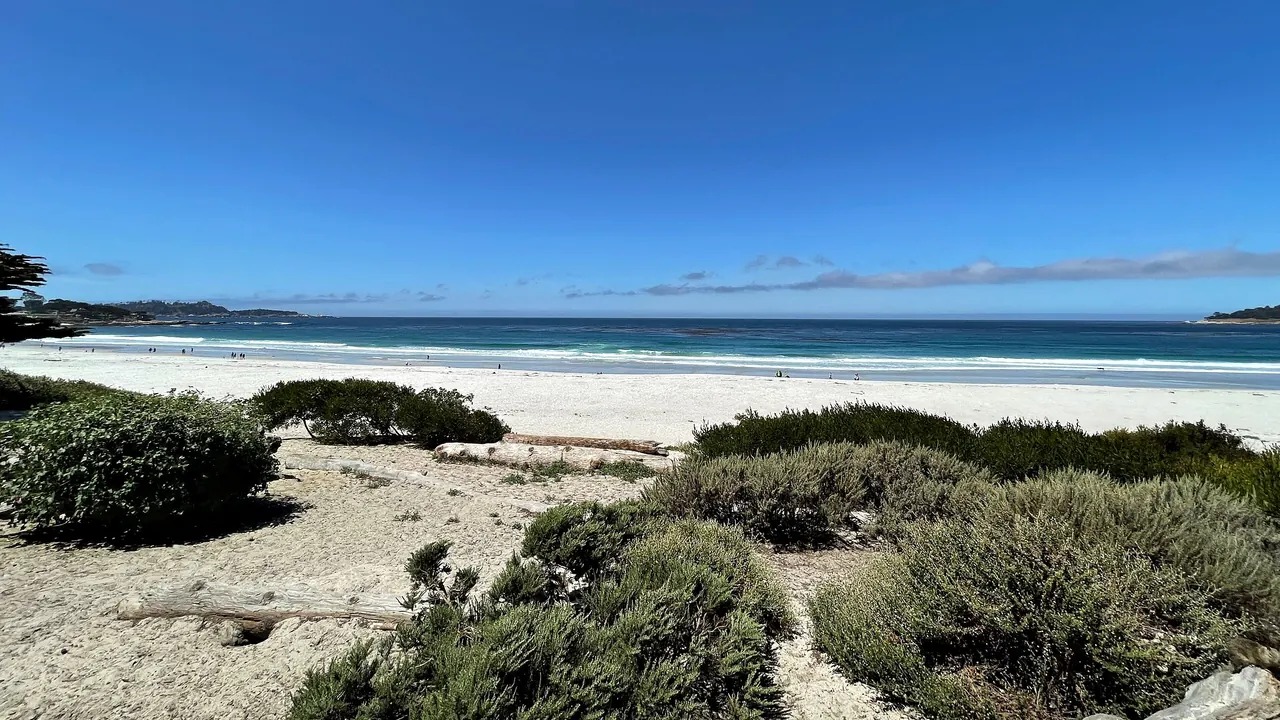
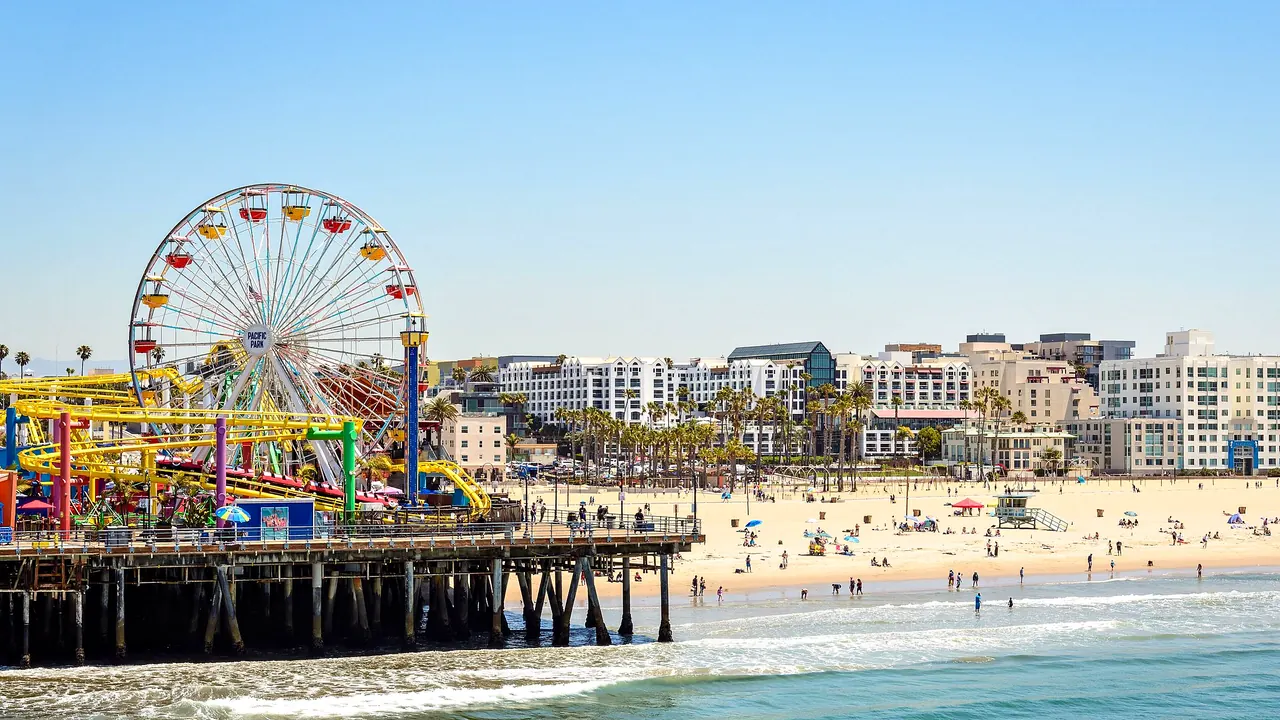
Photos: Carmel-by-the-Sea by Gregory Ford Henderson, CC BY-SA 4.0, cropped; Santa Monica by Domenico Convertini, CC BY-SA 2.0, cropped.
Carmel-by-the-Sea or Santa Monica?
Our verdict in twelve categories, each scored against the same fixed benchmark cities, and the climate month by month, so you can choose for your trip.
Choose Carmel-by-the-Sea for
- nature and the outdoors
- wellness
Carmel-by-the-Sea suits travellers who want the coast itself to be the point of the trip. Point Lobos is five minutes away and Big Sur starts just beyond it, so the days are for clifftop walks, otters and whales. The evenings are a long dinner in a cottage restaurant and then a dark, silent lane. Couples, walkers and anyone who wants a slow, quiet, scenic break will be happiest here, as long as they have a car and don't need much going on after dark.
Choose Santa Monica for
- beaches
- nightlife
- shopping
Santa Monica is the better choice for a livelier, easier beach stay. The sand is wide and lifeguarded, the water warms enough for a proper dip in late summer, and children have the pier's rides and a flat bike path. There are bars and rooftops for the evening, and the light rail reaches into Los Angeles. Families, first-time visitors to California and anyone who wants a town that works without a car will find it the easier of the two.
Scoreboard
Twelve categories on one fixed scale from 0 to 100. The shaded stretch is the gap between the two.
Your match
Pick a travel style or drag the sliders, and both match scores follow your weighting.
Wins on nature and the outdoors and wellness with your weighting.
Wins on beaches and nightlife with your weighting.
What matters to you?
Category by category
What the scores mean for a trip.
Beaches & swimming
These are two very different beaches. Carmel Beach is a beautiful curve of white sand under the cypresses, and it's best for sunset walks and dogs. The sea stays cold all year and the surf is strong. Monastery Beach and the river beach to the south are dangerous for swimming, so most visitors swim in a hotel pool.
Santa Monica is built around its beach. The sand is wide, there are lifeguard towers along its length, and Malibu's coves are close by. The Pacific is still cool, but it is noticeably warmer than at Carmel by late summer, so you can actually swim and not just look at the water.
Food & drink
Santa Monica offers more variety. The farmers market supplies kitchens that cook seasonal Californian food, Japanese and Italian, and Main Street, Montana Avenue and Venice add casual and more inventive places. The cheap immigrant cooking Los Angeles is known for is still a long drive east.
Carmel eats well for a village, with Dungeness crab, sand dabs, Castroville artichokes and local Pinot Noir in its tasting rooms. But nearly everything is refined, European-leaning and expensive, and it's served early. For anything casual or cheap you drive into Monterey.
Culture & sights
Neither town is a sightseeing destination, and the culture comes in different forms. Carmel's lies in its history and buildings: the 1771 mission where Junípero Serra is buried, the storybook cottages and the granite Tor House that Robinson Jeffers built by hand. It all fits into a morning or two.
Santa Monica has little history of its own beyond the pier and the end of Route 66. Its strength is that two serious museums are nearby: the Getty Center on its hilltop and the antiquities at the Getty Villa. Both are a short drive away.
Nightlife
There's not much to compare here. Carmel's evening ends with a tasting room before it closes and maybe a nightcap in a hotel lounge, and even Monterey's bars are modest. Santa Monica has a real choice of places to drink: rooftops near the Promenade, pubs on Main Street and a looser crowd in Venice. For clubs, though, you still take a long taxi ride to Hollywood.
Nature & outdoors
Both are good outdoor bases, but Carmel's surroundings are the more remarkable. Point Lobos has granite headlands, sea otters and seals, and Bixby Bridge and the Big Sur redwoods are within an hour. Kayaking and kelp diving in Monterey Bay add time on the water.
Santa Monica's outdoors is more active and easier to reach. There are chaparral trails in Topanga and Temescal Canyon behind the town, the 35km beach path is good for cycling, and surf lessons are on hand. The scenery is fine, but it rarely matches the drama of the Big Sur coast.
Day trips
Santa Monica has more range within reach. Santa Barbara's mission and wine country, Laguna Beach, the ferry to Catalina and the whole of Los Angeles, from the Huntington gardens to Hollywood, are all possible, though traffic decides how much you see.
Carmel's outings are gentler and closer to home. You can see Cannery Row and old Monterey, Pacific Grove's Victorian houses, Steinbeck country in Salinas and the boardwalk at Santa Cruz. San Francisco is too far to make an easy day.
Good for families
Santa Monica is the easier place with children. It has a lifeguarded beach for digging and paddling, a Ferris wheel and roller coaster on the pier, playgrounds along the sand and a flat path for family bike rides. The main drawback is the long drive to the theme parks.
Carmel can work for school-age children who love wildlife. The Monterey Bay Aquarium can fill a whole day, and the tide pools at Point Lobos are a treat. But the sea is too rough for small children, the restaurants suit adults, and every outing involves the car.
Getting around
Both towns are walkable at their core, but Santa Monica keeps going after that. Blue buses cover the town, the beach path suits bikes, and the E Line runs to downtown Los Angeles, although the Getty and Malibu still need a car or taxi.
In Carmel the walkable part is a single square mile on a steep hill, with dark, unlit lanes at night. Point Lobos, Big Sur, the wineries and the aquarium all need a car.
Shopping & style
Santa Monica has more to offer a keen shopper. There are chains and flagships along the Third Street Promenade, upmarket boutiques on Montana Avenue, surf shops on Main Street and design-led stores on Abbot Kinney. Rodeo Drive is a slow drive away for luxury labels.
Carmel is mostly for browsing. Its many galleries of plein-air painting and its courtyard shops selling cashmere and jewellery are charming, but you can see them all in an afternoon.
Affordability
Both towns are expensive, and the difference lies in where the money goes. In Carmel most of it goes on the village itself: a small number of inns priced as a retreat, and evenings of dinner and wine with nothing cheaper in town. On top of that comes a hire car, because the buses are too thin to reach Point Lobos, Big Sur or the aquarium. Once you are there, the beach and the coast walks cost nothing.
Santa Monica costs about as much, but it gives you more ways to cut the bill. The buses and light rail are cheap, so a stay built around the beach, the pier and the bike path can do without a hire car and the parking that goes with it. There are also far more rooms than in a village, and staying a little inland on the Westside brings the price down. Eating out is still dear once tax and tip are added.
Live music & performing arts
The two are close here, and both are at their best in summer, but in different ways. Carmel's highlights are festivals: Baroque concerts of the Bach Festival, which dates from 1935, plays among the pines at the Forest Theater, and the Monterey Jazz Festival each September. Out of season there is little on.
Santa Monica has a steadier year-round scene, with dance and chamber music at the Broad Stage, folk music in small rooms and free summer concerts on the pier. The Los Angeles Philharmonic and the Hollywood Bowl are also in reach, though they mean a long drive.
Wellness & relaxation
Neither town has thermal springs or public baths, so relaxing in both means a spa and a slower pace. Carmel's version is quieter: misty mornings, a fireside room and a spa day at a lodge in Pebble Beach or Carmel Valley, which suits couples.
Santa Monica's version is more active. There is yoga on the sand, morning runs along the ocean, juice bars and sunset over the bay, which suits people who unwind by keeping moving.
When should you go?
Pick your month. The climate figures are measured averages, not a forecast.
Carmel-by-the-Sea in July
Santa Monica in July
Daytime high, °C
Rainfall in the month, mm
Temperature and rainfall are climate normals, averaged over the years shown. Carmel-by-the-Sea: 1991-2020 normals, Monterey / Pacific Grove Acres (8.7 km from centre). Santa Monica: 1991-2020 normals, Los Angeles Airport (13.4 km from centre).
Both towns have a dry summer and a wet winter, but Carmel is the cooler of the two all year round. Its best weeks come late, from September into October, when afternoons reach about 23°C, the rain hasn't started and the coast walks are at their most pleasant. From December to March the rain arrives, peaking at about 86mm in January. Even then the days stay mild enough for walking, though they are often damp. The sea never really warms, staying in the low to mid teens all year, so swimming is not a season here at all.
Santa Monica runs a couple of degrees warmer in every month. It is dry from May to October, and July to September is the beach season, when highs reach about 25°C and the sea reaches about 20°C. That is still cool, but it's swimmable. Winter brings most of the rain, from December to February, but the days stay mild enough for the beach path and the hills. Neither town ever gets too hot for walking the streets.
Which traveller are you?
For a beach and sun trip, Santa Monica is the clear pick. Its wide, lifeguarded sand fills a whole day, and the sea is warm enough in late summer for a proper swim. Carmel's beach is lovely for a walk, but the cold, rough water rules out swimming.
On an outdoors trip, Carmel comes out ahead. Point Lobos, the Big Sur cliffs and the redwood canyons are all a short drive away, and the landscape is wilder and more dramatic. Santa Monica's mountain trails and beach cycling are good, but they feel more suburban.
On a food and nightlife trip, Santa Monica works much better. It has a wider range of restaurants built around the farmers market, bars and ocean-view rooftops downtown, and Venice next door. Carmel serves a fine, early dinner and then the village is quiet by ten.
Before you go
| Measure | Carmel-by-the-Sea | Santa Monica |
|---|---|---|
| Currency | US Dollar (USD) | US Dollar (USD) |
| Sockets | AB120 V, 60 Hz | AB120 V, 60 Hz |
| Driving side | Right | Right |
| Time zone | UTC-8, UTC-7 in summer | UTC-8, UTC-7 in summer |
| Emergency number | 911 | 911 |
| Elevation | 68 m | 32 m |
| Main airport | Monterey Regional Airport (MRY)8 km from centre11 non-stop destinations | Los Angeles International Airport (LAX)11 km from centre177 non-stop destinations |
| Public holidays this year | 13 days | 13 days |
By the numbers
| Measure | Carmel-by-the-Sea | Santa Monica |
|---|---|---|
| City population | 3,220 | 93,076 |
| People per km² | 1,150 | 4,270 |
| Museums within 10 km | 5 | 19 |
| UNESCO World Heritage sites within 50 km | 0 | 1 |
| Swim season, months above 21 °C | None | None |
Where else could you go?
Every comparison below shares a destination with this one, so you can follow Carmel-by-the-Sea or Santa Monica somewhere new.
- Montereyvs Carmel-by-the-Sea
- Los Angelesvs Santa Monica
- Huntington Beachvs Santa Monica
- Anaheimvs Santa Monica
- Newport Beachvs Santa Monica
- San Josevs Carmel-by-the-Sea