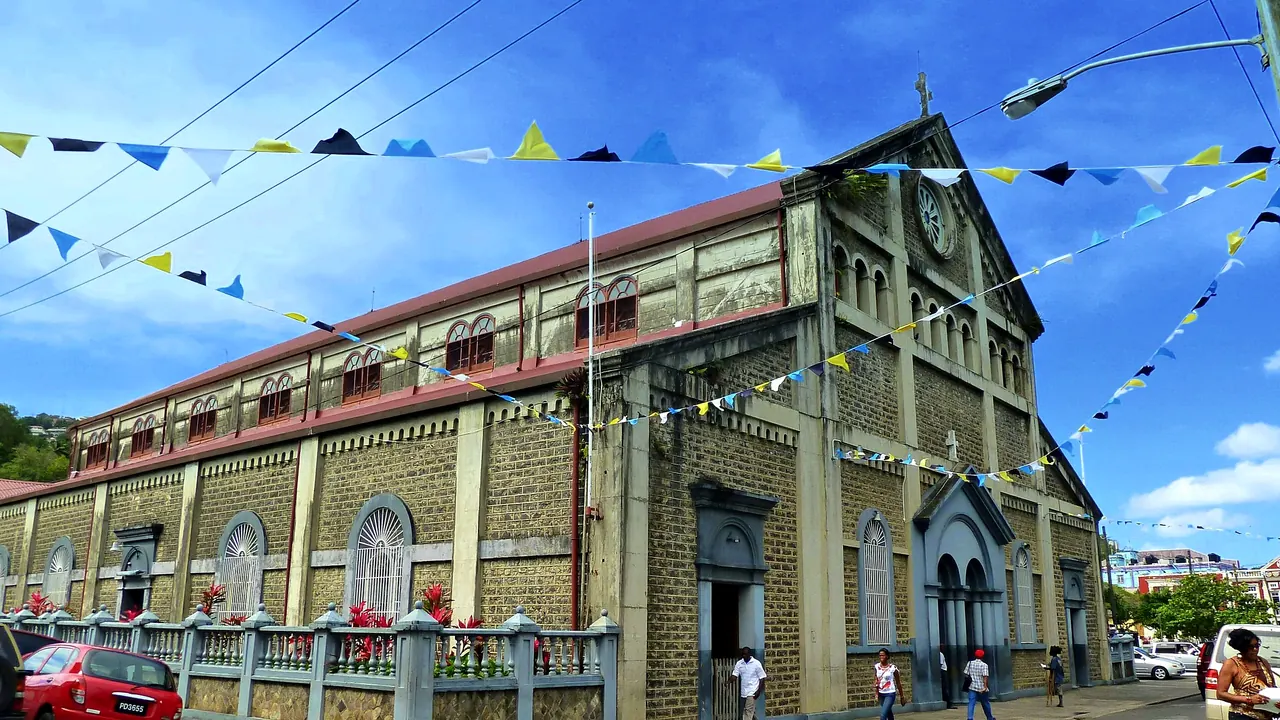
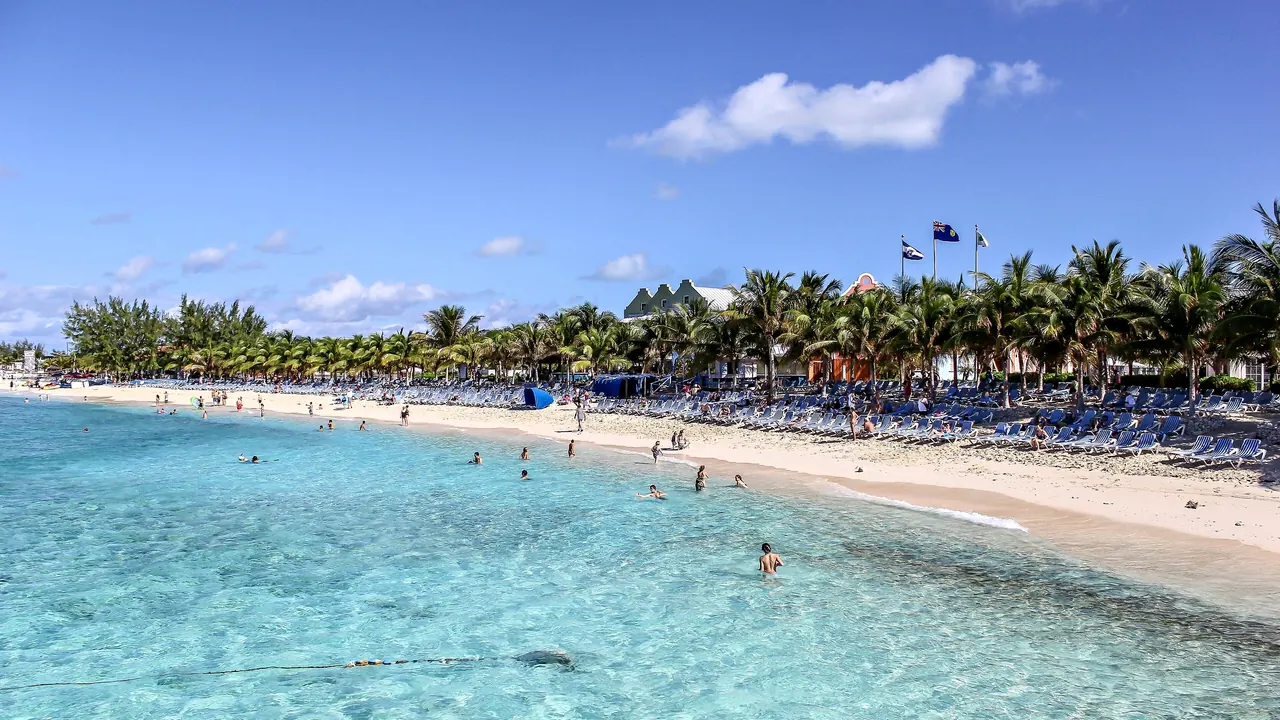
Photos: Castries by Edgar El, CC BY 3.0, cropped; Turks and Caicos by Jonathan Palombo, CC BY 2.0, cropped.
Castries or Turks and Caicos?
Our verdict in twelve categories, each scored against the same fixed benchmark cities, and the climate month by month, so you can choose for your trip.
Choose Castries for
- prices
- nature and the outdoors
- nightlife
Castries suits travellers who want an island with some height and noise to it. The Pitons, the rainforest trails of the central ridge and the drive down the west coast to Soufrière give you days that aren't spent on a sunlounger, and the Friday jump-up in Gros Islet adds a night out. Most people stay in Rodney Bay rather than in the port itself. You give up the very finest sand, but you get more to do and a local economy that softens the cost.
Choose Turks and Caicos for
- beaches
- families
- wellness
Turks and Caicos is the choice for a pure beach vacation. Grace Bay's reef-sheltered white sand, the shallow lagoons on the south side of Providenciales and a drier climate make it easy for families and for anyone who wants calm water and quiet evenings. In return there are no hills to climb, there's little after dinner, and the bill is higher at almost every turn.
Scoreboard
Twelve categories on one fixed scale from 0 to 100. The shaded stretch is the gap between the two.
Your match
Pick a travel style or drag the sliders, and both match scores follow your weighting.
Wins on prices and nature and the outdoors with your weighting.
Wins on beaches and families with your weighting.
What matters to you?
Category by category
What the scores mean for a trip.
Beaches & swimming
St Lucia's swimming is good. The west coast looks onto the calm Caribbean, and Reduit Beach in Rodney Bay is a long golden curve with gentle water. Pigeon Island and the snorkelling coves around Anse Cochon add variety. Castries itself is a cruise port, though, so beach time means heading north.
Turks and Caicos is in another league. Grace Bay's fine white sand sits behind an offshore reef that keeps the water clear and still. Taylor Bay and Sapodilla Bay are shallow enough to wade, and boats run out to uninhabited cays for sand you'll have nearly to yourself.
Food & drink
Both are modest places to eat, but the flavours differ. Castries has Creole cooking and a real market: green fig and saltfish, bouyon and roti, and the Central Market's spice stalls and lunch counters, with the Friday fish fry in Gros Islet on top.
Turks and Caicos has no market culture and leans on conch, which comes fried, in fritters, in chowder or as a raw lime salad at the shacks near Blue Hills. Away from those, meals mostly mean resort grills on Grace Bay serving international menus.
Culture & sights
Neither is a place to come for sights, but Castries is easier to fit a little history into. The cathedral's Dunstan St Omer murals, Derek Walcott Square and the old barracks on Morne Fortune are all close by, and the ruins of Fort Rodney sit on Pigeon Island to the north.
In Turks and Caicos, the heritage worth seeing is on Grand Turk, a flight away from where most visitors stay. That means Cockburn Town's Bermudian-style houses, the National Museum with its early Molasses Reef wreck, and the salt ponds that are still intact on Salt Cay.
Nightlife
Castries gives you more of an evening, even if it happens up the coast in Rodney Bay, where there are bars and a couple of clubs. The highlight is the Friday jump-up in Gros Islet, a street party with soca and dancehall that runs late. Carnival fetes add more in summer.
Turks and Caicos has no clubs at all. Nights on Providenciales are sunset drinks and the odd band at a Grace Bay beach bar, and things wind down early.
Nature & outdoors
St Lucia's landscape is the main draw. The Pitons rise straight out of the sea, rainforest trails cross the Edmund and Des Cartiers reserves, and the marine reserve below the peaks offers snorkelling and diving. A guided climb of Gros Piton is a full, demanding day.
Turks and Caicos keeps its nature in the water. Divers come for the reef wall off Grand Turk and Salt Cay, and humpback whales pass through in late winter. Chalk Sound is a turquoise lagoon for kayaking, and Long Bay is known for kiteboarding. On land the islands are low scrub and salt ponds, pleasant to look at but with nothing to climb.
Day trips
Castries has the better outings. The coast road south passes Marigot Bay and fishing villages on the way to Soufrière and its old cocoa estates, and the fast ferry to Martinique adds a French Caribbean town, an unusual extra for a Caribbean stay.
From Providenciales, day trips mean the other islands: a ferry and a causeway drive to Middle Caicos, or a small plane to Grand Turk. Both take planning, and the cay boat trips are really about the water rather than about places.
Good for families
Turks and Caicos is easier with children. The lagoons at Taylor Bay and Sapodilla Bay are shallow enough for toddlers, and at Bight Reef older children can snorkel straight from the beach to see fish and turtles. The Grace Bay resorts are set up for families, and short distances keep the days simple.
St Lucia works too, with Reduit Beach, kids' clubs and the drive-in volcano near Soufrière, but it suits older children better. The long winding drives south and a crowded port town on cruise days are hard work with small ones.
Getting around
Neither is easy without wheels, but Castries has one advantage: cheap private minibuses run regularly along the north road between the capital, Rodney Bay and Gros Islet. Further south the roads become steep and winding, so you'll need taxis, a hire car or tours.
Providenciales has no useful public transport, so you'll rely on taxis or a hire car, though the roads are quiet and distances short. Reaching the other islands means ferries and small planes. In both places traffic drives on the left.
Shopping & style
Castries has more worth taking home. The craft arcade at the Central Market sells spices, cocoa sticks and woven baskets, hand-dyed batik comes from a historic house on Morne Fortune, and the cruise piers add duty-free jewellery and liquor.
Grace Bay manages a few small plazas of resort wear, galleries and souvenirs, with no market at all. The best buys are palm-straw baskets from North and Middle Caicos and sea salt from the old salt islands.
Affordability
Neither is cheap, but St Lucia gives a careful traveller somewhere to save. Minibuses, market stalls, roadside fish fries and Piton beer in a rum shop all cost a fraction of resort prices, even though excursions and tourist taxi fares still add up.
Turks and Caicos is expensive almost without exception. Accommodation on Grace Bay is mostly upmarket, nearly all food is imported, and inter-island flights and boat trips quickly add to the bill. Sharing a villa, eating at conch shacks and avoiding the winter peak help a little.
Live music & performing arts
Castries has two big moments: the Saint Lucia Jazz and Arts Festival on Pigeon Island, and summer Carnival with calypso and steelpan bands in the streets. Outside those, there's steel band music at the Gros Islet Friday nights and resort entertainment.
Turks and Caicos has less still. Ripsaw bands play at fish fries and resorts, and the Maskanoo street parade comes at Christmas, but there are no theatres or concert halls.
Wellness & relaxation
St Lucia has the one thing Turks and Caicos lacks, a natural bathing tradition. You can coat yourself in volcanic mud and soak in the mineral pools at the Sulphur Springs near Soufrière, though they're a long drive from Castries. Otherwise, rest means a resort spa, and you'll find those all over the island, from Rodney Bay down to the south.
Turks and Caicos has no springs, so treatments are found only in the resorts on Grace Bay and on the private cays to the north, where a whole stay can be built around them. What the islands add is stillness. They're small and flat, with little to pull you away from the water, and the outer islands are slower still.
When should you go?
Pick your month. The climate figures are measured averages, not a forecast.
Castries in July
Turks and Caicos in July
Daytime high, °C
Rainfall in the month, mm
Where the figures come from
Castries's temperatures are measured 29 km from the centre, at Hewanorra International Airport.
Castries has no rain gauge within 25 km of the centre, so its rainfall comes from a gridded climate dataset read at the destination rather than from a gauge further away.
Castries's sunshine is measured 66 km from the centre, at Le Lamentin.
Turks and Caicos has no weather station within reach, so its figures come from a gridded climate model rather than a measured record, and read a broad area rather than one spot.
Temperature and rainfall are climate normals, averaged over the years shown. Castries: 2005-2020 (sunshine 1991-2020, rainfall 1991-2020) normals, Hewanorra International Airport (29.3 km from centre). Turks and Caicos: 2001-2020 normals, NASA POWER reanalysis grid, no weather station within 90 km.
Castries is hot all year, with daytime highs of 29°C to 31°C and a warm sea in every month, so the beach is never out of season. The difference is rain. February to April is the dry, sunniest stretch and the best time for climbing Gros Piton or walking the rainforest trails. From June the showers build, peaking at around 311mm in October, and paths turn muddy through late autumn.
Around Providenciales, Turks and Caicos is a few degrees cooler and much drier. Winter highs sit near 26°C, which makes walking pleasant, but the sea drops to about 25°C in February, fine for swimming though less warm than St Lucia's. Rain stays light all year. Even the wettest month, October, brings only about 83mm, so the islands are the safer bet in the months when Castries is at its wettest.
Which traveller are you?
On a beach and sun trip, Turks and Caicos is the clear pick. Grace Bay's calm, pale water and the empty cays a short boat ride away beat St Lucia's beaches, and the drier weather means fewer days lost to showers.
For an outdoors trip, Castries wins. St Lucia has volcanic peaks to climb, rainforest reserves with the island parrot, zip lines and reef snorkelling below the Pitons. Turks and Caicos is flat and dry on land and keeps its best nature underwater.
On a trip with a tight budget, Castries is the less painful choice. Minibuses, market lunch counters and rum shops let you live cheaply between the resorts. In Turks and Caicos, imported food and taxi fares keep even careful spending high.
Before you go
| Measure | Castries | Turks and Caicos |
|---|---|---|
| Official language | English | English |
| Currency | East Caribbean Dollar (XCD) | US Dollar (USD) |
| Sockets | G240 V, 50 Hz | AB120 V, 60 Hz |
| Driving side | Left | Left |
| Time zone | UTC-4 | UTC-5, UTC-4 in summer |
| Emergency number | Police 999, ambulance 911, fire 911 | 911 |
| Elevation | 2 m | - |
| Main airport | Hewanorra International Airport (UVF)31 km from centre13 non-stop destinations | Providenciales International Airport (PLS)30 non-stop destinations |
| Public holidays this year | 12 days | 12 days |
By the numbers
| Measure | Castries | Turks and Caicos |
|---|---|---|
| Population | 20,000 | 44,542 |
| People per km² | 253 | 107 |
| Museums within 10 km | 0 | - |
| UNESCO World Heritage sites within 50 km | 1 | - |
| Swim season, months above 21 °C | 12 months | 12 months |
Where else could you go?
Every comparison below shares a destination with this one, so you can follow Castries or Turks and Caicos somewhere new.
- Kingstownvs Castries
- Roseauvs Castries
- Bridgetownvs Castries
- St. George's, Grenadavs Castries
- St. John's, Antiguavs Castries
- Basseterrevs Castries