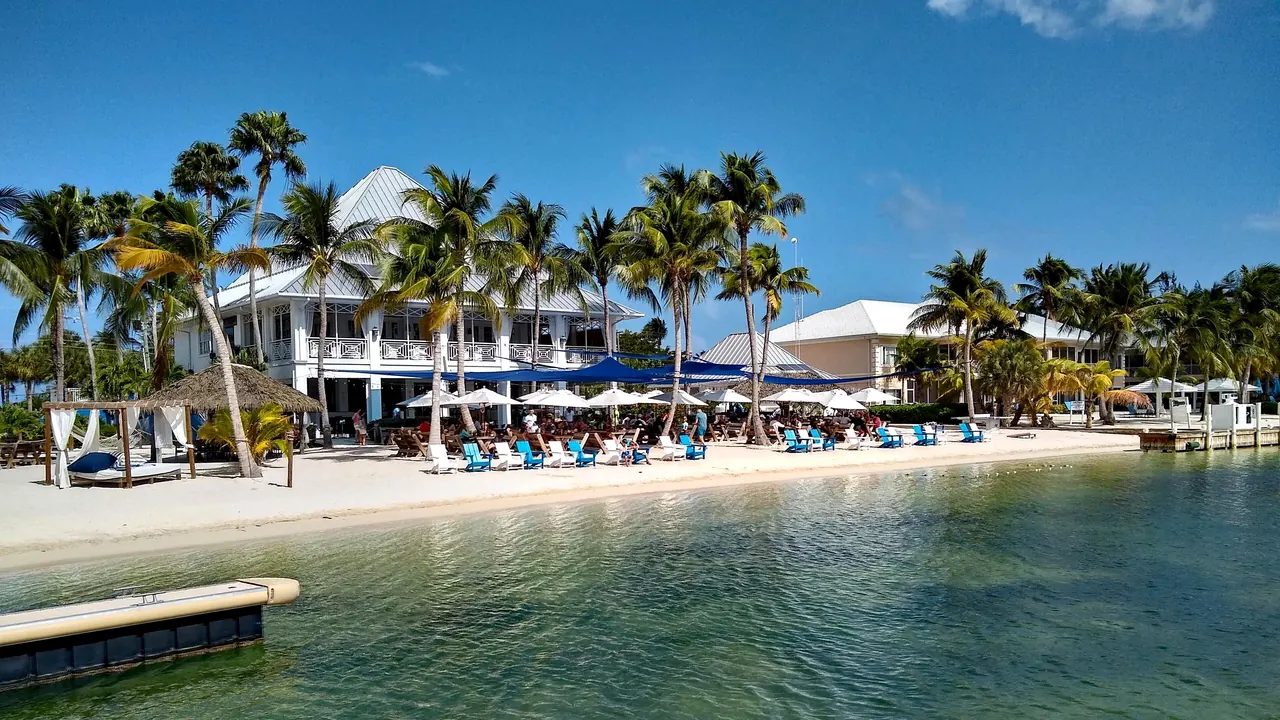
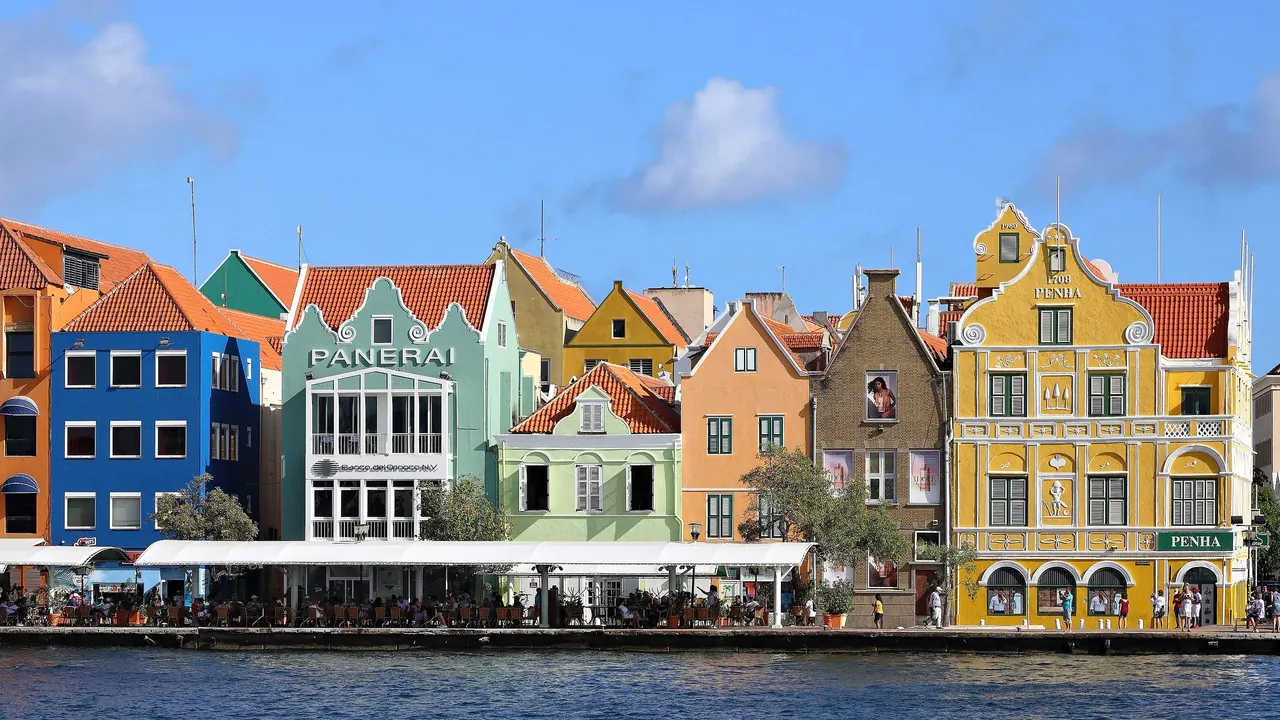
Photos: Cayman Islands by P. Hughes, CC BY-SA 4.0, cropped; Curaçao by Martin Falbisoner, CC BY-SA 4.0, cropped.
Cayman Islands or Curaçao?
Our verdict in twelve categories, each scored against the same fixed benchmark cities, and the climate month by month, so you can choose for your trip.
Choose Cayman Islands for
- food and drink
- families
- beaches
The Cayman Islands suit travellers who want the sea to be the whole point of the trip. You get one long, soft beach at Seven Mile Beach with calm water in front of the hotels, wall diving that people plan whole trips around, and shallow lagoons and Stingray City for children. The food is a notch better too. The cost is high, though, and there is very little to see on land, so choose the Caymans if you are happy to spend your days in the water or out on it.
Choose Curaçao for
- culture and sights
- prices
- nightlife
If you want a Caribbean island with a real town to explore, Curaçao is the better pick. Willemstad's harbour front, its old synagogue and the slave-trade museum give it a history Grand Cayman can't match. Pietermaai keeps evenings going later, and although Curaçao is still expensive, it is noticeably gentler on the budget. The trade-off is small cove beaches rather than one long stretch of sand, and you need a car for almost everything outside the city.
Scoreboard
Twelve categories on one fixed scale from 0 to 100. The shaded stretch is the gap between the two.
Your match
Pick a travel style or drag the sliders, and both match scores follow your weighting.
Wins on food and drink and families with your weighting.
Wins on culture and sights and prices with your weighting.
What matters to you?
Category by category
What the scores mean for a trip.
Beaches & swimming
Both islands have warm, clear, calm water on the sheltered side, but the beaches are shaped very differently. Grand Cayman's Seven Mile Beach is one long stretch of soft sand with the hotels right behind it, so you can swim and snorkel straight from your door. The glassy lagoons at Rum Point and Starfish Point add quieter water.
Curaçao gives you coves instead: small sandy bays cut into the limestone of the west and south coasts. The loveliest are around Westpunt, such as Grote Knip and Playa Lagun. Many charge for entry and the smallest fill up at weekends, so Curaçao suits driving from cove to cove more than stepping out of the hotel onto the sand.
Food & drink
Grand Cayman eats better, mostly because of its range. Along Seven Mile Beach and in Camana Bay there are polished international and seafood restaurants. At weekends, the fish fries and jerk stands of West Bay and the East End serve turtle stew, conch fritters and fish cooked Cayman style.
Curaçao's strength is narrower but distinctive: Antillean Creole cooking such as keshi yena and goat stobá, eaten at the long shared tables of the old Punda market hall, and big plates of grilled meat from roadside food trucks late at night. Beyond that the choice is limited, and much of it is aimed at tourists.
Culture & sights
This is Curaçao's clearest win. Willemstad has a UNESCO-listed old centre, with the coloured gabled houses of the Handelskade, the Queen Emma pontoon bridge, Fort Amsterdam and the Mikvé Israel-Emanuel synagogue with its sand floor. Together they make two or three days of real sightseeing, and Kura Hulanda and the old plantation houses add the history of slavery and plantation life.
The Cayman Islands have Pedro St James, the National Museum and National Gallery in George Town, and a scattering of old wooden cottages, which together fill about half a day.
Nightlife
Neither island is for dancing until dawn, but Curaçao has more going on. Pietermaai's bars and terraces, set in colonial mansions, fill up from Thursday to Saturday. Salsa and merengue nights draw locals as well as visitors, and the beach bars at Mambo Beach and Jan Thiel turn into parties at weekends.
On Grand Cayman, a night out means sunset drinks on Seven Mile Beach or rum punch on a waterfront deck in George Town. Licensing laws close things down around midnight or one, and earlier on Saturdays.
Nature & outdoors
Both are diving islands first, but the Caymans offer the more famous diving. Steep walls drop away just offshore, Bloody Bay Wall off Little Cayman is a Caribbean classic, and there are wrecks off Seven Mile Beach. Stingray City, the bioluminescent bay and the caves and seabird cliffs of Cayman Brac's bluff round it out.
Curaçao's reef is the easier one to reach. A fringing reef runs close to shore, and you can walk into the water at dozens of sites, with the Tugboat wreck as the best known. On land Curaçao has more to offer: the climb up Mount Christoffel, surf crashing into the sea caves at Shete Boka, and flamingos in the salt pans.
Day trips
On both islands there are hardly any day trips, and the island itself is the trip. The one real outing is different on each. From Grand Cayman it is a small-plane hop to Cayman Brac or Little Cayman, which most people turn into a few nights of diving. Curaçao's is a boat day out to the empty white beach of Klein Curaçao.
Good for families
The Caymans are the easier choice for families. Seven Mile Beach is usually calm along its whole length, and the lagoons at Starfish Point and Rum Point are shallow enough for toddlers. Stingray City, the turtle farm and the blue iguanas make memorable outings, all in an English-speaking place with good healthcare.
Curaçao also works for children. Its sheltered coves let them snorkel among fish close to the sand, and there are dolphin encounters near the Sea Aquarium and trips to the Hato caves. Shade on the coves is scarce, though, and a car is needed for nearly every outing.
Getting around
On both islands you will want a rental car once you leave the main area, but that area is different on each. On Grand Cayman it is the Seven Mile Beach strip, where minibuses run to George Town and West Bay. Driving is on the left, and the road into George Town slows at rush hour.
Curaçao's walkable heart is Willemstad itself, where the pontoon bridge and the free ferry join Punda and Otrobanda. Buses don't reach most of the coves, and the far west end is about an hour's drive away.
Shopping & style
Neither island is worth a trip for shopping, and both rely on duty-free jewellery and watch shops aimed at cruise passengers. The Caymans add Camana Bay, a tidy waterfront district of boutiques and bookshops, plus caymanite carvings and rum cake. Curaçao's souvenirs have more local character: hand-painted chichi dolls, the island's orange liqueur in its distinctive bottle, and Dutch cheese.
Affordability
The gap in cost is wide, and it favours Curaçao. In the Caymans nearly everything is shipped in, rooms on Seven Mile Beach are priced for wealthy visitors, and boat trips and car hire quickly add to the bill. Renting a condo with a kitchen and eating at roadside fish fries help a little, but they don't make the trip cheap.
Curaçao is far from a bargain either, and you can hardly avoid renting a car. It offers more ways to save, though: self-catering apartments in the west, lunch at the Punda market hall, free public coves instead of paid loungers, and shore diving that needs no boat.
Live music & performing arts
Curaçao has a little more to offer. Tumba music and its song contest sit at the heart of a long Carnival season, bars play live Latin and jazz, and an international jazz festival has drawn big names in some years.
The Caymans have local drama at the Harquail Theatre in George Town, cover bands and steel pan at the resorts, and the street parades of Batabano and Pirates Week. On either island, anyone hoping for concerts or theatre will find the evenings thin.
Wellness & relaxation
Both islands are better for rest than for treatments. On each, the spa offer is limited to resort spas, yoga and massage, so the real difference is where you go for quiet. In the Caymans that place is Little Cayman, a separate island reached by small plane. With little to do there beyond diving and reading, switching off happens almost on its own.
Curaçao's quiet corner is the west end. You reach it by car rather than by plane, and its small hotels and villas sit close to the coves. It is easier to reach and lets you mix lazy days with an evening in Willemstad, though on the hottest afternoons the breeze off the sea does more for you than any spa.
When should you go?
Pick your month. The climate figures are measured averages, not a forecast.
Cayman Islands in July
Curaçao in July
Daytime high, °C
Rainfall in the month, mm
Temperature and rainfall are climate normals, averaged over the years shown. Cayman Islands: 1971-2000 normals, Owen Roberts Airportgrand Cayman (6.8 km from centre). Curaçao: 1991-2020 normals, Hato Airport, Curacao (10.8 km from centre).
Grand Cayman is at its best from December to April, its dry spell. March gets only about 31mm of rain, and daytime highs in the high twenties keep a walk around George Town comfortable. From May the rain builds steadily, reaching 225mm in October, in the middle of the hurricane season, and the days climb into the low thirties. The sea is warm enough for swimming in every month.
Curaçao's year runs differently. It stays dry from February right through September, with May down to 16mm, long sunny days and a warm sea all year. The catch is the heat, up to 33°C in August and September, so Willemstad's streets are best walked early or late in the day. Its short wet season comes later, from October to December, peaking at 141mm in November, just as the Caymans are drying out.
Which traveller are you?
On a family trip with young children, the Cayman Islands make the days simpler. Toddlers can paddle in calm, shallow water a short walk from the room, and the animal outings are close at hand. On Curaçao, almost every beach day starts in the car.
For a culture and arts trip, Curaçao is the clear choice. A few days in Willemstad give you a real old port town to wander, with Dutch, Jewish and African history layered through its streets. In the Caymans, you would run out of sights by lunchtime.
On a tight budget, Curaçao is the one to pick. It still isn't cheap, but cooking for yourself and diving without a boat make the money go much further. However carefully you plan in the Caymans, the bill stays high.
Before you go
| Measure | Cayman Islands | Curaçao |
|---|---|---|
| Official language | English | English, Dutch, Papiamento |
| Currency | Cayman Islands Dollar (KYD) | Caribbean Guilder (XCG) |
| Sockets | AB120 V, 60 Hz | AB120 V, 55 Hz |
| Driving side | Left | Right |
| Time zone | UTC-5 | UTC-4 |
| Emergency number | 911 | 911 |
| Main airport | Owen Roberts International Airport (GCM)30 non-stop destinations | Hato International Airport (CUR)21 non-stop destinations |
| Public holidays this year | 11 days | 14 days |
By the numbers
| Measure | Cayman Islands | Curaçao |
|---|---|---|
| Population | 88,833 | 152,849 |
| People per km² | 339 | 344 |
| Swim season, months above 21 °C | 12 months | 12 months |
Where else could you go?
Every comparison below shares a destination with this one, so you can follow Cayman Islands or Curaçao somewhere new.
- Bonairevs Curaçao
- Arubavs Curaçao
- Cozumelvs Cayman Islands
- Turks and Caicosvs Cayman Islands
- Arubavs Cayman Islands
- Puerto Ricovs Cayman Islands