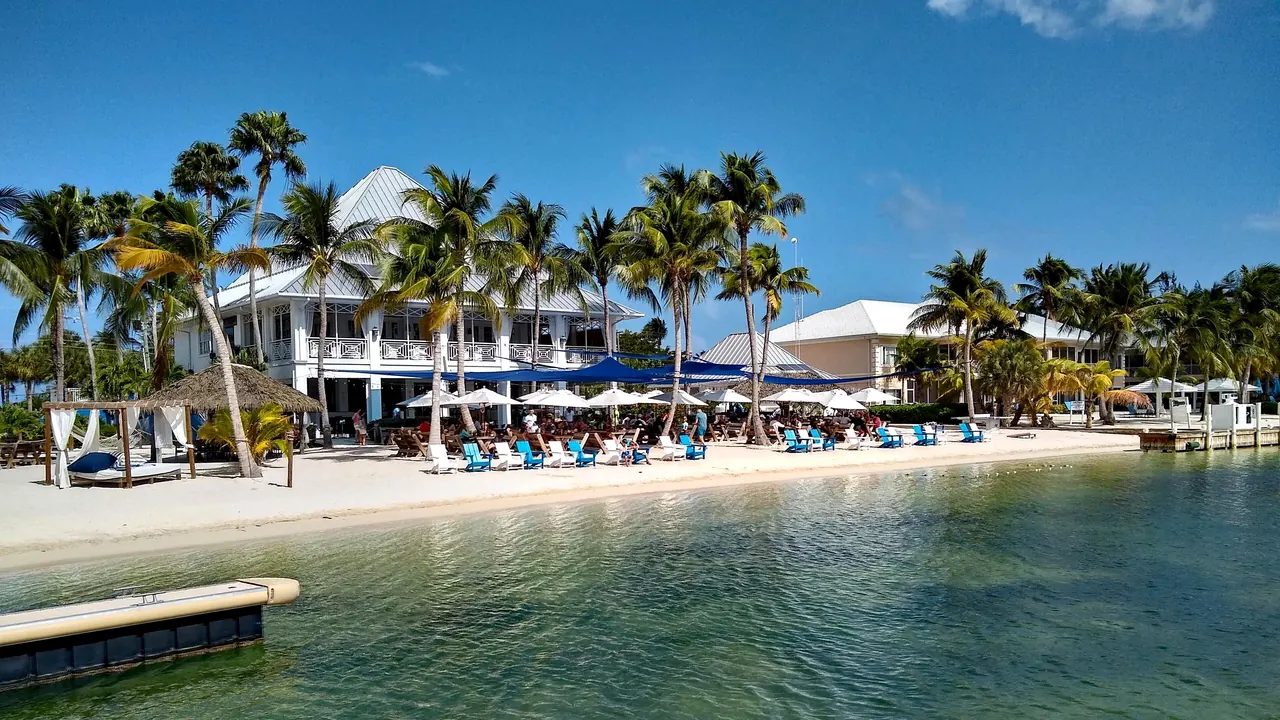
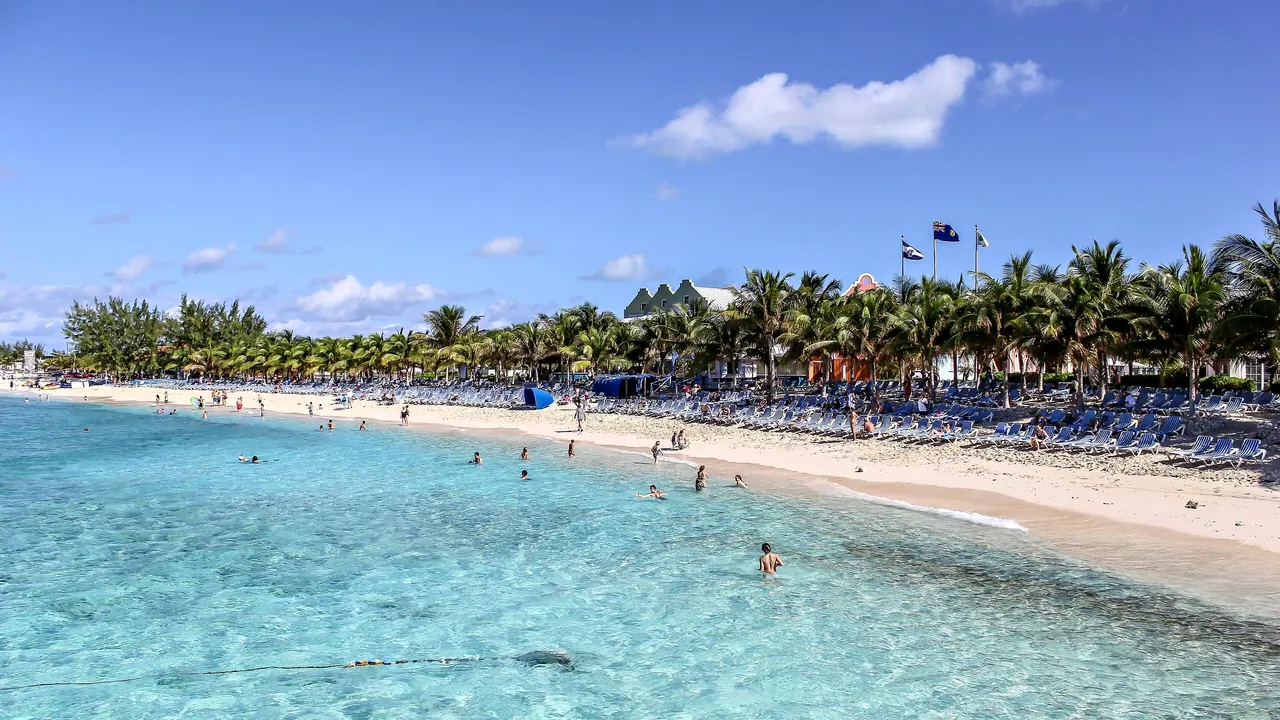
Photos: Cayman Islands by P. Hughes, CC BY-SA 4.0, cropped; Turks and Caicos by Jonathan Palombo, CC BY 2.0, cropped.
Cayman Islands or Turks and Caicos?
Our verdict in twelve categories, each scored against the same fixed benchmark cities, and the climate month by month, so you can choose for your trip.
Choose Cayman Islands for
- food and drink
- getting around
- nightlife
The Cayman Islands suit travellers who want a bit more around the beach. Grand Cayman eats better, from Cayman-style fish at roadside shacks to the polished seafood rooms of Seven Mile Beach, its evenings run later, and the wall diving off Little Cayman and the North Wall is among the best in the Caribbean. Minibuses along the main strip also make it easier to manage without a car every day.
Choose Turks and Caicos for
- day trips
- wellness
- culture and sights
Turks and Caicos is the quieter, simpler choice, for a trip built almost entirely around sand and pale, shallow water. Grace Bay and the glassy bays on the south side of Providenciales are the draw, and the ferry to North Caicos and the short flights to Grand Turk and Salt Cay give you more reason to move between islands. It's also drier through summer and autumn. In return you get less to eat and less to do after dark.
Scoreboard
Twelve categories on one fixed scale from 0 to 100. The shaded stretch is the gap between the two.
Your match
Pick a travel style or drag the sliders, and both match scores follow your weighting.
Wins on food and drink and getting around with your weighting.
Wins on day trips and wellness with your weighting.
What matters to you?
Category by category
What the scores mean for a trip.
Beaches & swimming
Both have superb white sand and clear, calm water, so the difference is in kind. Grand Cayman's beach life is concentrated on Seven Mile Beach, one long sheltered strand on the west side, where most hotels stand and you can snorkel straight from the sand at Cemetery Beach. For shallower, quieter water you drive to the lagoons at Rum Point and Starfish Point on the north side.
Turks and Caicos gives you more variety. Grace Bay is kept calm by its reef, Taylor Bay and Sapodilla Bay are shallow enough to wade far out, and Long Bay catches the wind. Boats run out to quiet cays such as Pine Cay and Fort George Cay, and Grand Turk and Salt Cay are emptier still.
Food & drink
Grand Cayman is clearly the better place to eat. Alongside the steakhouses, sushi and seafood rooms on Seven Mile Beach and in Camana Bay, there's a real local layer: turtle stew, fish cooked Cayman style with peppers and onion, cassava cake, and weekend shacks by the water in West Bay, Bodden Town and the East End.
Turks and Caicos eats more narrowly. Conch in its many forms and spiny lobster are the highlights, and the Blue Hills fish fry is the most local meal. Otherwise you'll eat at competent but international resort grills along Grace Bay.
Culture & sights
Neither is a culture destination, but the heritage sits in different places. On Grand Cayman it's all on the island you're staying on: the restored great house at Pedro St James, the National Museum in George Town's old courthouse and the National Gallery fit easily into half a day.
In Turks and Caicos the most atmospheric heritage means a flight to Grand Turk. There you'll find the Bermudian-style houses of Cockburn Town, the remains of the Molasses Reef wreck in the National Museum, and the salt ponds that also survive on Salt Cay. Providenciales itself has little beyond the Cheshire Hall ruins.
Nightlife
The Caymans offer more of a night out, though neither destination goes late. George Town's waterfront decks, the beach bars on Seven Mile Beach and a handful of small clubs draw an expat and local crowd on Fridays, and things run until around midnight or one.
Turks and Caicos has no clubs at all. Evenings mean sunset drinks in Grace Bay's resort lounges and beach bars, now and then with a local band, and most places wind down well before the small hours.
Nature & outdoors
Underwater, the Caymans lead. Bloody Bay Wall off Little Cayman is a Caribbean classic, Grand Cayman adds the North Wall, wrecks and many shore-dive entry points, and Stingray City and the bioluminescent bay are memorable away from the dives. On land you have the Mastic Trail's dry forest, the blue iguanas at the botanic park, and the caves and climbing on Cayman Brac's bluff.
Turks and Caicos has its own strengths: reef snorkelling off the Caicos Islands, a dive wall close to shore off Grand Turk, and humpback whales near Salt Cay from about January to April. Chalk Sound is good for kayaking and Long Bay for kiteboarding, but there's less to explore overall.
Day trips
Turks and Caicos gives you more reason to leave your base. A ferry to North Caicos and a drive over the causeway to Middle Caicos make a full day among quiet settlements and empty shores, and Grand Turk and Salt Cay are close enough by air for a day out.
From Grand Cayman, the East End and Rum Point are only half a day's drive. The sister islands are a flight away, and most people who go stay a few nights rather than return the same day.
Good for families
Both work well for a family beach vacation, but the Caymans give children more to do away from the sand. They can stand among stingrays in waist-deep water, visit the turtle farm in West Bay, see the blue iguanas or take a submarine ride. Starfish Point is perfect for toddlers, though summer is very hot.
Turks and Caicos relies more on the resorts. Large Grace Bay properties have kids' clubs and pools, and Smith's Reef and Bight Reef let older children snorkel with turtles right off the beach. Restless teenagers may run out of things to do sooner.
Getting around
Grand Cayman is the easier of the two. Minibuses link West Bay, Seven Mile Beach and George Town, and parts of the strip are walkable, although you'll want a hire car for the East End and the north side, and evening buses are thin.
Providenciales has no useful public transport, so you'll rely on taxis or a car to reach Chalk Sound, the south-side bays or the ferry dock. Going further means combining ferry, car and small plane, which is why many visitors simply stay on Grace Bay.
Shopping & style
George Town's duty-free waterfront gives the Caymans a little more to browse. Jewellery and watch shops line it for the cruise passengers, and Camana Bay adds bookshops, boutiques and galleries. Caymanite carvings, made from the islands' own banded stone, are the distinctive local buy.
On Grace Bay, shopping comes down to a few small open-air plazas with resortwear and galleries. The best things to take home are the straw baskets and hats woven on North and Middle Caicos, and sea salt from the old salt islands.
Affordability
Both are among the most expensive places in the Caribbean, with imported food, costly taxis and upmarket beachfront rooms, so neither is the cheaper option. The ways to save differ a little. In the Caymans it's a condo with a kitchen and meals at jerk stands. In Turks and Caicos it's a villa shared by a group and the local conch shacks, while inter-island flights push costs up further.
Live music & performing arts
Evenings of performance are thin in both places, and the highlights are street festivals. Grand Cayman at least has the Harquail Theatre for local drama and dance, plus Batabano carnival in spring and Pirates Week in autumn. Turks and Caicos has no theatre, but its ripsaw music, played on a carpenter's saw, is a genuine local sound, and Maskanoo brings a masked parade at Christmas.
Wellness & relaxation
Neither has a bathing tradition, and rest in both comes from a slow island pace and resort spas. Turks and Caicos goes slightly further thanks to its private island resorts on the cays north of Providenciales, such as Parrot Cay, where yoga and treatments are the whole point of the stay. In the Caymans the spas belong to the big Seven Mile Beach resorts, and the most restful corner is Little Cayman with its dive lodges and empty roads.
When should you go?
Pick your month. The climate figures are measured averages, not a forecast.
Cayman Islands in July
Turks and Caicos in July
Daytime high, °C
Rainfall in the month, mm
Where the figures come from
Turks and Caicos has no weather station within reach, so its figures come from a gridded climate model rather than a measured record, and read a broad area rather than one spot.
Temperature and rainfall are climate normals, averaged over the years shown. Cayman Islands: 1971-2000 normals, Owen Roberts Airportgrand Cayman (6.8 km from centre). Turks and Caicos: 2001-2020 normals, NASA POWER reanalysis grid, no weather station within 90 km.
Both are beach destinations all year, but the Caymans run hotter and wetter. Where most visitors stay on Grand Cayman, highs climb from 28°C in winter to 32°C through the summer. The rain builds from May and peaks in October at 225mm, in the heart of the hurricane season. December to April is the dry, settled stretch, and the sea stays warm enough for long swims every month.
Turks and Caicos is a few degrees cooler, with highs near 26°C from December to April. That's pleasant for walking around Grand Turk's old capital, though the sea feels a touch fresher in winter than it does in the Caymans. The rain is far lighter all year round, and even the wettest month, October, brings only about 83mm. That makes summer and early autumn a more realistic choice here, though both destinations share the hurricane season.
Which traveller are you?
On a food and nightlife trip, the Cayman Islands are the better pick. Fish fries and jerk stands in West Bay and Bodden Town, waterside dining in Camana Bay, and Friday bars and small clubs in George Town go well beyond the early nights on Grace Bay.
For an outdoors trip centred on the sea, the Caymans again lead. Bloody Bay Wall, the wrecks you can reach from shore and Stingray City are the headline, with the Mastic Trail and Cayman Brac's bluff on land, though Turks and Caicos offers humpback whales and kiteboarding.
On a beach and sun trip, Turks and Caicos has the edge. You can choose between reef-sheltered Grace Bay, the wading lagoons at Taylor Bay and Sapodilla Bay, and boat trips to empty cays, and the drier summers make it easier to time a sunny week.
Before you go
| Measure | Cayman Islands | Turks and Caicos |
|---|---|---|
| Official language | English | English |
| Currency | Cayman Islands Dollar (KYD) | US Dollar (USD) |
| Sockets | AB120 V, 60 Hz | AB120 V, 60 Hz |
| Driving side | Left | Left |
| Time zone | UTC-5 | UTC-5, UTC-4 in summer |
| Emergency number | 911 | 911 |
| Main airport | Owen Roberts International Airport (GCM)30 non-stop destinations | Providenciales International Airport (PLS)30 non-stop destinations |
| Public holidays this year | 11 days | 12 days |
By the numbers
| Measure | Cayman Islands | Turks and Caicos |
|---|---|---|
| Population | 88,833 | 44,542 |
| People per km² | 339 | 107 |
| Swim season, months above 21 °C | 12 months | 12 months |
Where else could you go?
Every comparison below shares a destination with this one, so you can follow Cayman Islands or Turks and Caicos somewhere new.
- Cozumelvs Cayman Islands
- Puerto Ricovs Turks and Caicos
- US Virgin Islandsvs Turks and Caicos
- British Virgin Islandsvs Turks and Caicos
- Anguillavs Turks and Caicos
- Arubavs Turks and Caicos