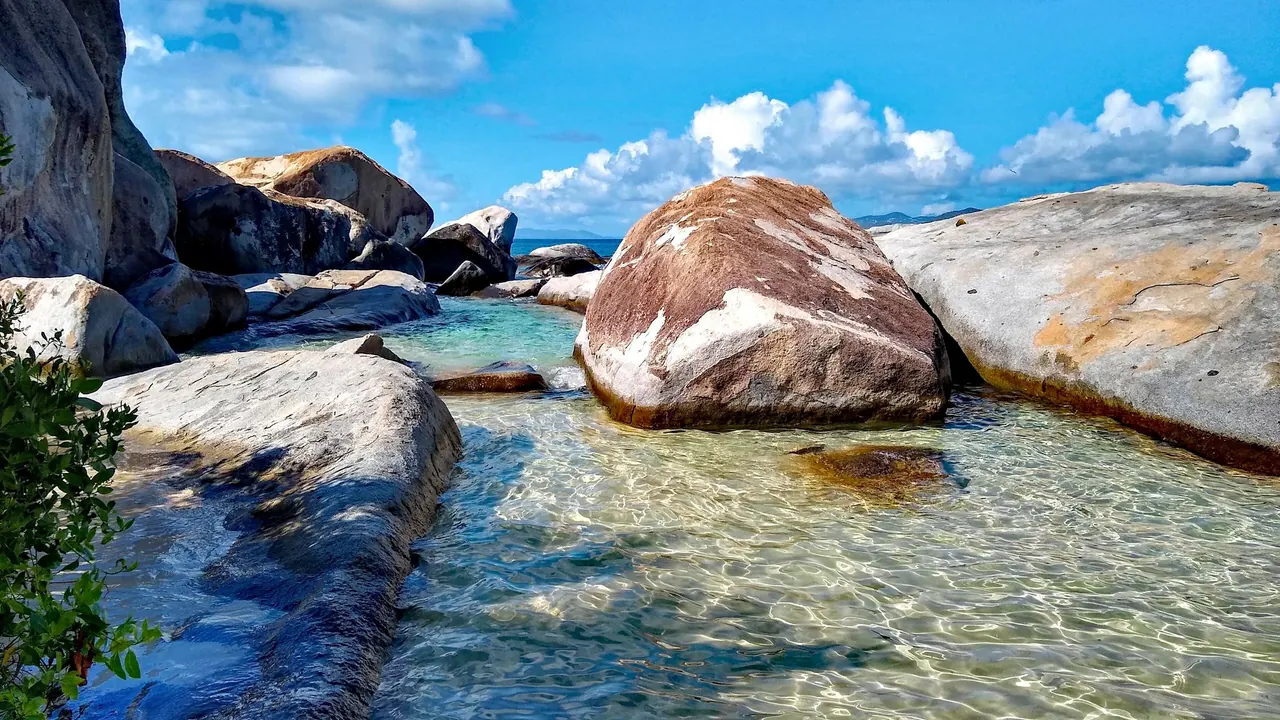
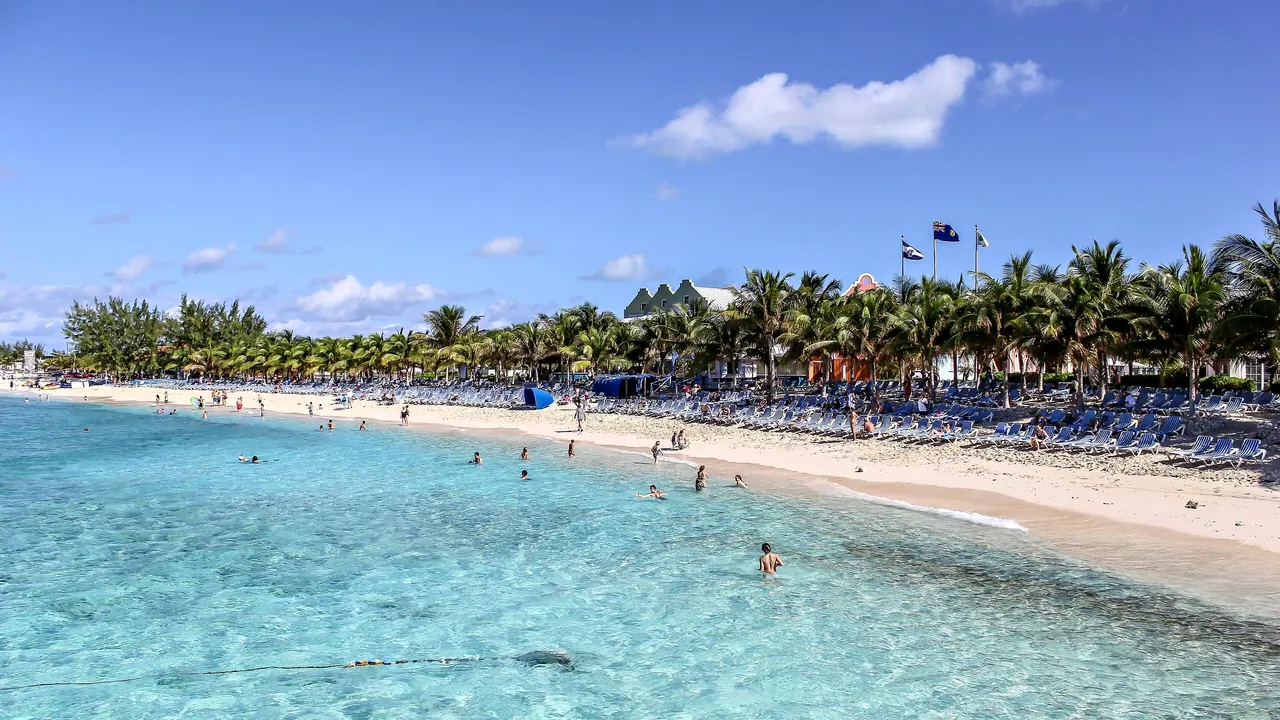
Photos: British Virgin Islands by P. Hughes, CC BY-SA 4.0, cropped; Turks and Caicos by Jonathan Palombo, CC BY 2.0, cropped.
British Virgin Islands or Turks and Caicos?
Our verdict in twelve categories, each scored against the same fixed benchmark cities, and the climate month by month, so you can choose for your trip.
Choose British Virgin Islands for
- nightlife
- getting around
- prices
The British Virgin Islands suit travellers who want to move about on the water. Dozens of small islands sit close together around a sheltered channel, so a charter yacht or a run of ferry hops turns the trip into a voyage between anchorages, beach bars and snorkelling spots. Evenings are livelier too, with the sailing crowd making the rounds at Jost Van Dyke and Norman Island. Choose it if you want variety from one day to the next and a social night after a day at sea.
Choose Turks and Caicos for
- families
- culture and sights
- shopping
Turks and Caicos is the stronger choice for a settled beach stay. Grace Bay gives you one long, calm stretch of white sand with resorts behind it, and there are shallow lagoons for small children and reef you can snorkel straight from the shore. It is drier and a touch less hot through the year, and nights end early. Families, and couples who want to unpack once and stay by the sea, will find it easier.
Scoreboard
Twelve categories on one fixed scale from 0 to 100. The shaded stretch is the gap between the two.
Your match
Pick a travel style or drag the sliders, and both match scores follow your weighting.
Too close to call, level with your weighting
Wins on nightlife and getting around with your weighting.
Wins on families and culture and sights with your weighting.
What matters to you?
Category by category
What the scores mean for a trip.
Beaches & swimming
Both have beaches good enough to build a trip around, and the sea is equally warm and clear. What differs is the shape of a beach day. Turks and Caicos centres on Grace Bay, one long, reef-sheltered sweep of fine sand on Providenciales where you can walk out of your resort and swim, with glassy shallows on the south side and quieter shores on Grand Turk and Salt Cay.
The British Virgin Islands spread their best sand across several islands: Cane Garden Bay on Tortola, the granite boulders and grottoes of The Baths on Virgin Gorda, White Bay on Jost Van Dyke and the empty reef beaches of Anegada. Many are best reached by boat, so the variety rewards anyone happy to keep moving.
Food & drink
Neither is a place to travel for food, and in both much of the produce is imported. The flavours differ a little: the British Virgin Islands have rotis and curried goat in Road Town, painkiller cocktails on Jost Van Dyke and spiny lobster grilled in oil drums on Anegada's beaches. In Turks and Caicos conch comes in every form, and the most local meal is a fish fry or conch shack near Blue Hills, while Grace Bay's resort restaurants serve international menus.
Culture & sights
Sightseeing is thin in both, but Turks and Caicos has a little more to see. Grand Turk's Cockburn Town keeps Bermudian-style houses on Front Street, a National Museum with the Molasses Reef wreck, and the salt ponds that shaped the islands, with Salt Cay preserving that landscape almost untouched.
The British Virgin Islands offer an afternoon's worth: the Old Government House Museum in Road Town, a working rum distillery at Cane Garden Bay and the Cornish engine house of the Copper Mine on Virgin Gorda. The Turks and Caicos heritage needs a flight to Grand Turk, though, so it takes more effort to reach.
Nightlife
The British Virgin Islands have the better evenings. The yachting crowd turns Great Harbour and White Bay on Jost Van Dyke and the Bight at Norman Island into a round of music and dinghy rides between bars. Trellis Bay's full-moon parties and New Year's Eve on Jost Van Dyke give the calendar some big nights.
Turks and Caicos stays quieter, with sunset drinks at Grace Bay beach bars and resort lounges, now and then a local band, and things over well before the small hours. Neither has clubs.
Nature & outdoors
Both are low, dry islands where the best of the outdoors is in the water, but each has its own highlights. The British Virgin Islands are made for sailing between closely packed islands, and below the surface there is the wreck of the RMS Rhone and the snorkelling at the Caves of Norman Island. On land there are short forest trails on Sage Mountain and a scramble through The Baths.
Turks and Caicos has the dramatic wall dive off Grand Turk and Salt Cay, humpback whales passing in winter, Chalk Sound's turquoise lagoon for paddling and bonefishing on the Caicos Bank flats. Inland it is flat, with flamingo ponds on North Caicos and caves on Middle Caicos.
Day trips
Day trips are limited in both and mostly mean another island. From Tortola, ferries reach Virgin Gorda and Jost Van Dyke, and the best outing crosses the border to Charlotte Amalie on St Thomas, with Danish warehouses and Fort Christian, so you need a passport. From Providenciales, the ferry and causeway lead to sleepy North and Middle Caicos, while a short flight reaches Grand Turk and Salt Cay for the old capital and the salt landscape.
Good for families
Turks and Caicos makes the easier family trip. Grace Bay is calm and shelving, the lagoons at Taylor Bay and Sapodilla Bay suit toddlers, and several resorts are built around children with kids' clubs and pools, so everything is close to hand.
The British Virgin Islands work for water-loving families too, and a charter can thrill older children. However, steep roads, boat transfers and a lack of resorts designed for children make them more work with small ones. Neither has zoos or attractions aimed at children.
Getting around
Neither has useful buses, and both drive on the left, but the British Virgin Islands are easier to explore. Regular ferries tie Tortola to Virgin Gorda and Jost Van Dyke, and a charter yacht makes the travel part of the fun, though Tortola's own roads are steep and twisting.
In Turks and Caicos, roads are quiet and the centre of Grace Bay can be walked, but reaching the other islands means combining ferries, hire cars and small planes. Most visitors stay put on Providenciales.
Shopping & style
Nobody goes to either to shop, though Turks and Caicos has a little more choice in the open-air plazas along Grace Bay, with duty-free watches, jewellery and galleries, plus palm-straw baskets and sea salt as local keepsakes. The British Virgin Islands offer a few shops on Road Town's Main Street and marina stores. Serious shoppers there take the ferry to Charlotte Amalie.
Affordability
Both are among the most expensive places in the Caribbean, with imported food, dear taxis and a market of upmarket resorts. The ways to save differ. In the British Virgin Islands, sharing a charter boat spreads the cost of beds and transport, and Tortola's guesthouses and Road Town food stands help a little. In Turks and Caicos, the main savings come from a shared self-catering villa, conch shacks and avoiding the winter peak, though boat trips and island flights soon add up.
Live music & performing arts
Neither has theatres or a concert life, but each has a folk sound of its own. The British Virgin Islands have fungi scratch bands playing washboards and gourds, along with the Emancipation Festival in Road Town and a beach music festival at Cane Garden Bay. Turks and Caicos has ripsaw music, played on a carpenter's saw, and the masked Maskanoo parade on Providenciales at Christmas.
Wellness & relaxation
Neither has hot springs or a spa tradition, so in both the treatments come from the resorts. The two are about level for rest, but the calm comes from different places. In the British Virgin Islands it comes from the setting. The resorts on Virgin Gorda's North Sound and the small private islands are often reached by boat and have almost no roads, so the quiet comes with the place. Morning yoga looks out over the water and a few good spas handle massages, though the area around Road Town on Tortola is less peaceful.
Turks and Caicos puts more into the spa itself. The large Grace Bay resorts on Providenciales run full treatment programmes, and on the cays to the north, Parrot Cay among them, the whole stay is planned around yoga, massage and healthy eating. It is the better choice for a structured retreat. If you simply want to switch off, Grand Turk, Salt Cay and the Caicos islands are slower still.
When should you go?
Pick your month. The climate figures are measured averages, not a forecast.
British Virgin Islands in July
Turks and Caicos in July
Daytime high, °C
Rainfall in the month, mm
Where the figures come from
British Virgin Islands's temperatures are measured 40 km from the centre, at C. Amalie / St. Thomas Airport.
British Virgin Islands has no rain gauge within 25 km of the centre, so its rainfall comes from a gridded climate dataset read at the destination rather than from a gauge further away.
Turks and Caicos has no weather station within reach, so its figures come from a gridded climate model rather than a measured record, and read a broad area rather than one spot.
Temperature and rainfall are climate normals, averaged over the years shown. British Virgin Islands: 1991-2020 normals, C. Amalie / St. Thomas Airport (39.7 km from centre). Turks and Caicos: 2001-2020 normals, NASA POWER reanalysis grid, no weather station within 90 km.
Both are warm enough to swim every month, and the sea runs at much the same temperature in each, from about 26°C in winter to 29°C in late summer. The difference is in the air and the rain. The British Virgin Islands are hotter, with afternoons reaching 32°C from June to September, and wetter, as the rain builds from August and stays heavy until December, peaking around 154mm in November. February and March are its driest, most comfortable months.
Turks and Caicos is milder and noticeably drier all year. Winter days sit around 26°C, which suits walking as well as lying on the beach, and from December to April rainfall stays very low. Its wettest month is October, and even then it gets far less rain than the British Virgin Islands do in late autumn. Winter and early spring are the best time in both, but Turks and Caicos holds its good weather longer into the summer.
Which traveller are you?
On a family trip with young children, Turks and Caicos asks far less of parents. You can settle into one resort on the sand, with calm, shallow water and children's facilities at the door, while the British Virgin Islands mean boat transfers and steep roads.
For a food and nightlife trip, the British Virgin Islands have the more sociable evenings, as sailors moving between anchorages fill the beach bars after dark. The eating, mostly grilled seafood and rum, is much the same in both, but Turks and Caicos goes quiet early.
For sailors, the British Virgin Islands are the clear choice. The islands sit close together on sheltered water with steady winds, so a charter can anchor somewhere different each night. Turks and Caicos is spread more widely and suits staying in one place.
Before you go
| Measure | British Virgin Islands | Turks and Caicos |
|---|---|---|
| Official language | English | English |
| Currency | US Dollar (USD) | US Dollar (USD) |
| Sockets | AB110 V, 60 Hz | AB120 V, 60 Hz |
| Driving side | Left | Left |
| Time zone | UTC-4 | UTC-5, UTC-4 in summer |
| Emergency number | 999 | 911 |
| Main airport | Terrance B. Lettsome International Airport (EIS)8 non-stop destinations | Providenciales International Airport (PLS)30 non-stop destinations |
| Public holidays this year | 14 days | 12 days |
By the numbers
| Measure | British Virgin Islands | Turks and Caicos |
|---|---|---|
| Population | 39,369 | 44,542 |
| People per km² | 257 | 107 |
| Swim season, months above 21 °C | 12 months | 12 months |
Where else could you go?
Every comparison below shares a destination with this one, so you can follow British Virgin Islands or Turks and Caicos somewhere new.
- St Johnvs British Virgin Islands
- St Thomasvs British Virgin Islands
- US Virgin Islandsvs British Virgin Islands
- Culebravs British Virgin Islands
- St Croixvs British Virgin Islands
- Viequesvs British Virgin Islands