
Photos: Cebu by xiquinhosilva, CC BY 2.0, cropped; Da Nang by Nghia Tran, Pexels License.
Cebu or Da Nang?
Our verdict in twelve categories, each scored against the same fixed benchmark cities, and the climate month by month, so you can choose for your trip.
Choose Cebu for
- live music and the arts
- shopping
- culture and sights
Cebu suits travellers who want warm, clear sea at any time of year and are happy to reach it by boat. Its draw is underwater and offshore: reef snorkelling around the Mactan islets, the sardine shoals and whale sharks further south, and Bohol a ferry ride away. It also suits anyone timing a trip for the Sinulog in January, or who simply wants a cheap tropical base where lechon is the local pride. Accept that the city itself is a hot, congested hub rather than somewhere to linger.
Choose Da Nang for
- day trips
- beaches
- families
Da Nang is the easier all-round choice for most trips, provided you avoid the autumn rains. The beach runs along the city itself, so a swim needs no transfer, the food on the street is more varied, and the surroundings are far richer: Hoi An's old town, the Cham ruins at My Son and imperial Hue are all within a day. Families, first-time visitors to the region and anyone who likes to combine sand with sightseeing will get more from it, and spend a little less doing so.
Scoreboard
Twelve categories on one fixed scale from 0 to 100. The shaded stretch is the gap between the two.
Your match
Pick a travel style or drag the sliders, and both match scores follow your weighting.
Wins on live music and the arts and shopping with your weighting.
Wins on day trips and beaches with your weighting.
What matters to you?
Category by category
What the scores mean for a trip.
Beaches & swimming
Da Nang has a real city beach: My Khe and Non Nuoc run for kilometres of wide, pale sand, a short ride or a walk from most hotels, with locals swimming at dawn. The catch is seasonal, as from about October to December red flags and heavy surf often keep everyone out of the water.
Cebu makes you work for it. The city faces a port, and the nearest sand is on Mactan, mostly small coral beaches behind resorts that charge for day passes. Its best swimming is offshore, on the white sandbars of Nalusuan, Hilutungan and Pandanon reached by outrigger, in water that stays warm and clear all year.
Food & drink
Cebu's signature is lechon, spit-roasted pig with crackling skin, backed by puso rice pouches, evening skewer grills and the sutukil fish restaurants on Mactan. It is satisfying, meaty food, but beyond those classics the choice quickly gives way to mall chains.
Da Nang offers more variety at street level. Mi Quang turmeric noodles, banh xeo pancakes and pork rolled at the table with herbs fill plastic-stool stalls from breakfast onwards, the seafood tanks behind the beach rival Mactan's, and strong iced coffee adds a daily ritual that Cebu lacks.
Culture & sights
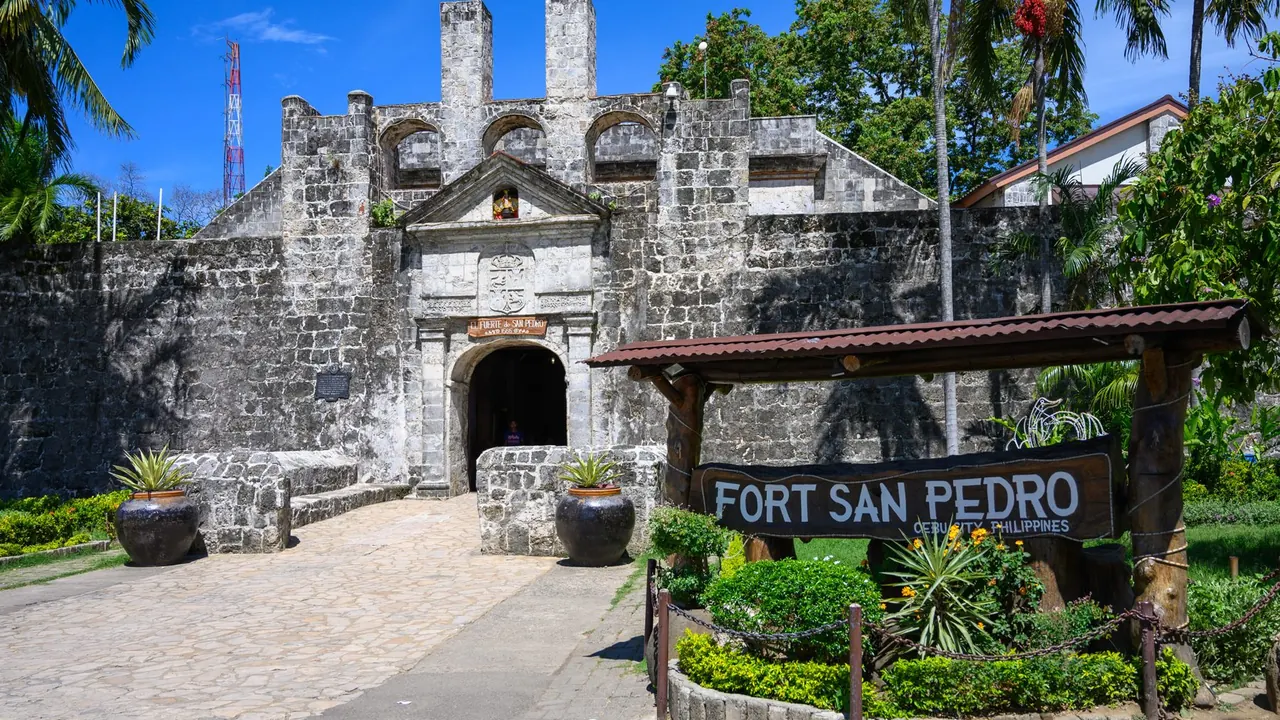
Both cities are largely modern and their own sights take a day or two, but the history they show is very different. Cebu's is Spanish and Catholic, compact around the old downtown: Magellan's Cross, the Basilica del Santo Niño packed with worshippers, Fort San Pedro and the colonial houses of the Parian.
Da Nang looks back further, to the Cham kingdom, whose sandstone carvings fill the Museum of Cham Sculpture, and to Buddhism, in the cave shrines of the Marble Mountains and the Lady Buddha on Son Tra. Cebu's heritage feels like living devotion, while Da Nang's feels more like a museum and a set of landscapes.
Nightlife
Neither city is a reason to travel for nightlife, and both run on cheap beer and grilled snacks. Cebu keeps later hours, because the call-centre crowd keeps IT Park's open-air bars busy into the early morning, and Mango Avenue has older, rougher clubs. Karaoke with friends is the local pastime.
Da Nang's evenings are gentler: a walk along the Han River to watch the bridges light up, rooftop bars, big beer halls, and craft beer and cocktails in the An Thuong blocks behind the beach. Much of the city winds down by midnight.
Nature & outdoors
Da Nang's landscapes are right on the doorstep. The forested Son Tra peninsula, home to red-shanked douc langurs, sits on the city's edge, the Hai Van Pass offers one of Vietnam's great coastal rides, and the Ba Na Hills and Bach Ma's rainforest trails are within easy reach.
Cebu's nearby options are milder, mostly the cool Busay and Sirao hills and the shorebirds of Olango. Its headline experiences, canyoneering to Kawasan Falls, Osmeña Peak and the whale sharks, lie about three hours south and are best done with a night away. Underwater, though, Cebu's reefs are the stronger side.
Day trips
This is where Da Nang pulls furthest ahead. Hoi An's preserved trading port and Japanese Covered Bridge are under an hour away and worth more than one visit, the brick Cham sanctuary of My Son is a comfortable morning out, and imperial Hue is reachable over the Hai Van Pass.
Cebu's best day out is a fast ferry to Bohol for Baclayon's stone church and the river towns. On the island, the colonial town of Carcar and the coral-stone churches of Argao and Boljoon are rewarding, but traffic can double journey times and none of them quite matches Hoi An or Hue.
Good for families
Da Nang is easier with children. The long beach gives room to spread out, many resorts have kids' clubs, and the cable car up to Ba Na Hills, with the Golden Bridge and an indoor amusement park, makes a memorable day. The riverside Ferris wheel and water parks fill other afternoons, as long as you avoid the rainy autumn.
Cebu works best from a Mactan resort pool with a calm boat day around the islets. The city's Ocean Park aquarium and air-conditioned malls help in the heat, but the streets, with few pavements and heavy traffic, are tiring with small children, and the safari park is two hours away.
Getting around
Cebu is the harder of the two to get around. With no rail, everything goes by road, and the bridges to Mactan and the airport are often gridlocked. Jeepney routes are hard for a visitor to make sense of, so metered taxis and ride-hailing apps do most of the work, slowly at rush hour. Walkable pockets such as IT Park and Ayala sit apart from each other, so allow plenty of time for any transfer to the beach.
Da Nang has no rail either, but it is much simpler. App-booked cars and motorbike taxis are everywhere, scooters are easy to hire, the river centre and the beach are a short ride apart, and a straight coastal road leads to the Marble Mountains and Hoi An. The river promenade and the beachfront are pleasant to walk, and the flat streets allow cycling in quieter hours.
Shopping & style
Both offer markets and malls rather than boutiques, but the things worth taking home differ. Cebu's huge malls, Ayala Center and SM Seaside, are the bigger retail draw, and Mactan's family workshops making guitars and ukuleles from local wood are a real speciality, along with dried mangoes and otap pastries.
Da Nang's Han and Con markets are more for everyday shopping than souvenirs, though the Non Nuoc stone-carvers by the Marble Mountains are worth a look. Its real asset is Hoi An nearby, where tailors make clothes to measure and craft shops sell lanterns and leather.
Affordability
Both are cheap places to spend a week, but in Cebu the savings stay in town. A downtown hotel, lechon at a local eatery and a taxi across the city hardly dent a budget, and the Spanish-era sights cost next to nothing. The spending starts when you head for the water: a stay on Mactan, an outrigger out to the islets and the long trips south to dive or meet the whale sharks soon add up.
Da Nang keeps more of the trip cheap because the sea is free. The sand runs along the city, so a modest hotel in the streets behind My Khe puts you a short walk from the water without paying resort rates. Street-stall breakfasts, iced coffee and a daily massage barely register, and the bigger costs are ones you can choose to skip, such as the cable car up to Ba Na Hills or a villa on Son Tra.
Live music & performing arts
Formal performance is thin in both, and what each offers is seasonal or local. Cebu's great show is the Sinulog in January, when costumed contingents dance the prayer step through the streets, and the rest of the year Filipino singers in bars are often excellent.
Da Nang has tuong, central Vietnam's painted-face classical theatre, though performances are irregular, plus the summer fireworks festival over the Han River. Hoi An adds staged river shows and bai choi singing games in the old town.
Wellness & relaxation
Da Nang is the more restful base. Foot and body massage parlours line the streets near the beach, herbal steam baths and resort spas on Son Tra are easy to find, and a hot springs park with mud baths lies about 30km out. The early swims and slow riverside evenings set an unhurried pace.
Cebu offers a good hilot warm-oil massage and full spas at the Mactan resorts, but rest there means staying inside the resort, as the city outside is loud and hot.
When should you go?
Pick your month. The climate figures are measured averages, not a forecast.
Cebu in July
Da Nang in July
Daytime high, °C
Rainfall in the month, mm
Temperature and rainfall are climate normals, averaged over the years shown. Cebu: 1991-2020 normals, Mactan (7.1 km from centre). Da Nang: 1991-2020 normals, Da Nang (4.9 km from centre).
Cebu barely changes temperature through the year. It is hot and humid every month, with daytime highs that hardly move, and the sea never drops below about 27°C, so a swim is always warm. The driest stretch runs from February to May, and April is the clearest month at around 50mm of rain. From June to December rain comes more often and more heavily, but it is spread through the season rather than arriving in one deluge. The later months also bring some risk of typhoons.
Da Nang has much sharper seasons. January to April is the time for walking the streets, mild at first and dry from February, though the sea is cool early in the year at around 24°C. From May to August the water is at its warmest and the days are the sunniest, which makes this the beach season, but the city reaches 35°C by day and sightseeing is hard work. Then the monsoon arrives. From September to December rain is very heavy, peaking at around 726mm in October, with rough surf that often closes the beach and dull, grey days into December. Da Nang suits a spring or summer trip, while Cebu is the safer choice for a winter escape.
Which traveller are you?
On a beach and sun trip from spring to late summer, Da Nang wins: wide sandy beach right by the city, calm warm sea, seafood behind the sand. Between October and January, when Da Nang's sea turns rough, Cebu's islets and warm water are the better choice.
For a culture and arts trip, Da Nang is the better base. Neither city's own sights fill more than a couple of days, but Hoi An's lantern-lit old town, the My Son temple ruins and imperial Hue all make easy day trips.
For divers and snorkellers, Cebu has the edge. Its reefs off Mactan, the sandbars of Nalusuan and Pandanon, the sardine shoals at Moalboal and the whale sharks at Oslob give it underwater variety that Da Nang's Cham Islands cannot match.
Before you go
| Measure | Cebu | Da Nang |
|---|---|---|
| Official language | English, Filipino, Taglish | Vietnamese |
| Currency | Philippine Peso (PHP) | Dong (VND) |
| Sockets | ABC220 V, 60 Hz | ACFG220 V, 50 Hz |
| Driving side | Right | Right |
| Time zone | UTC+8 | UTC+7 |
| Emergency number | 911 | Police 113, ambulance 115, fire 114 |
| Elevation | 135 m | 19 m |
| Main airport | Mactan Cebu International Airport (CEB)9 km from centre41 non-stop destinations | Da Nang International Airport (DAD)3 km from centre47 non-stop destinations |
| Public holidays this year | 18 days | - |
By the numbers
| Measure | Cebu | Da Nang |
|---|---|---|
| City population | 965,332 | 2,819,900 |
| People per km² | 3,065 | 238 |
| Museums within 10 km | 5 | 2 |
| UNESCO World Heritage sites within 50 km | 0 | 2 |
| Swim season, months above 21 °C | 12 months | 12 months |
Where else could you go?
Every comparison below shares a destination with this one, so you can follow Cebu or Da Nang somewhere new.