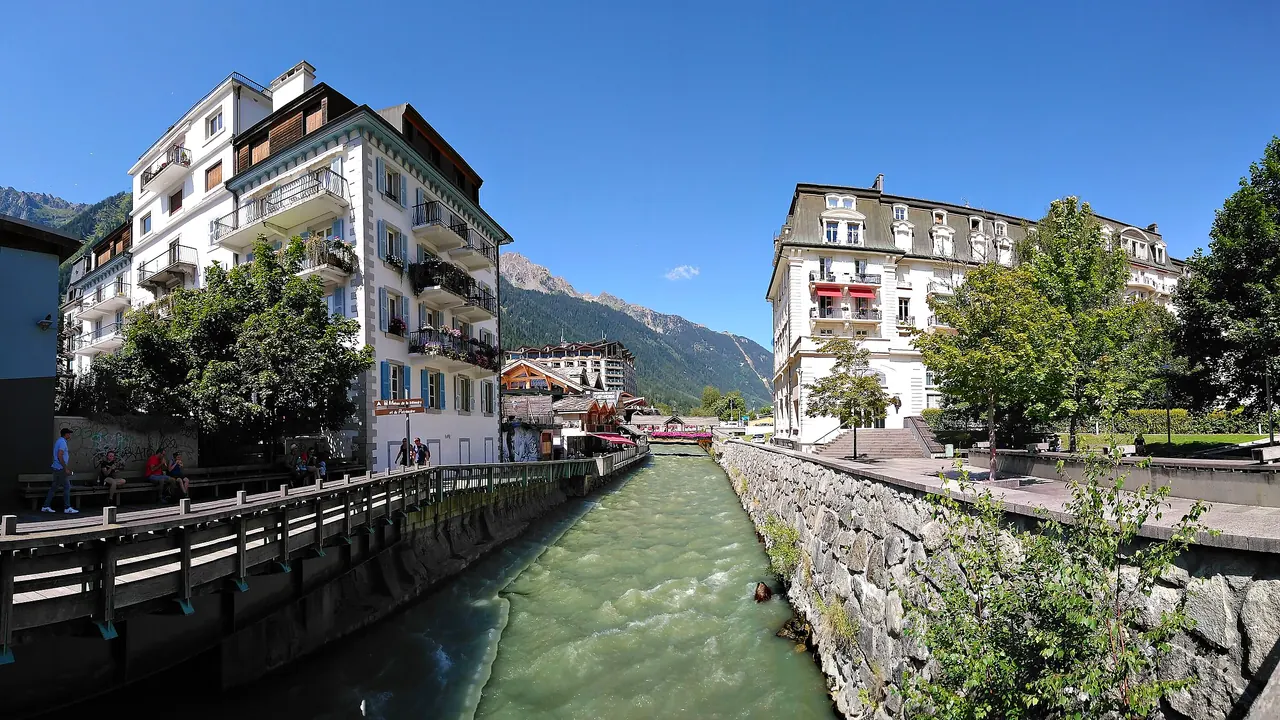
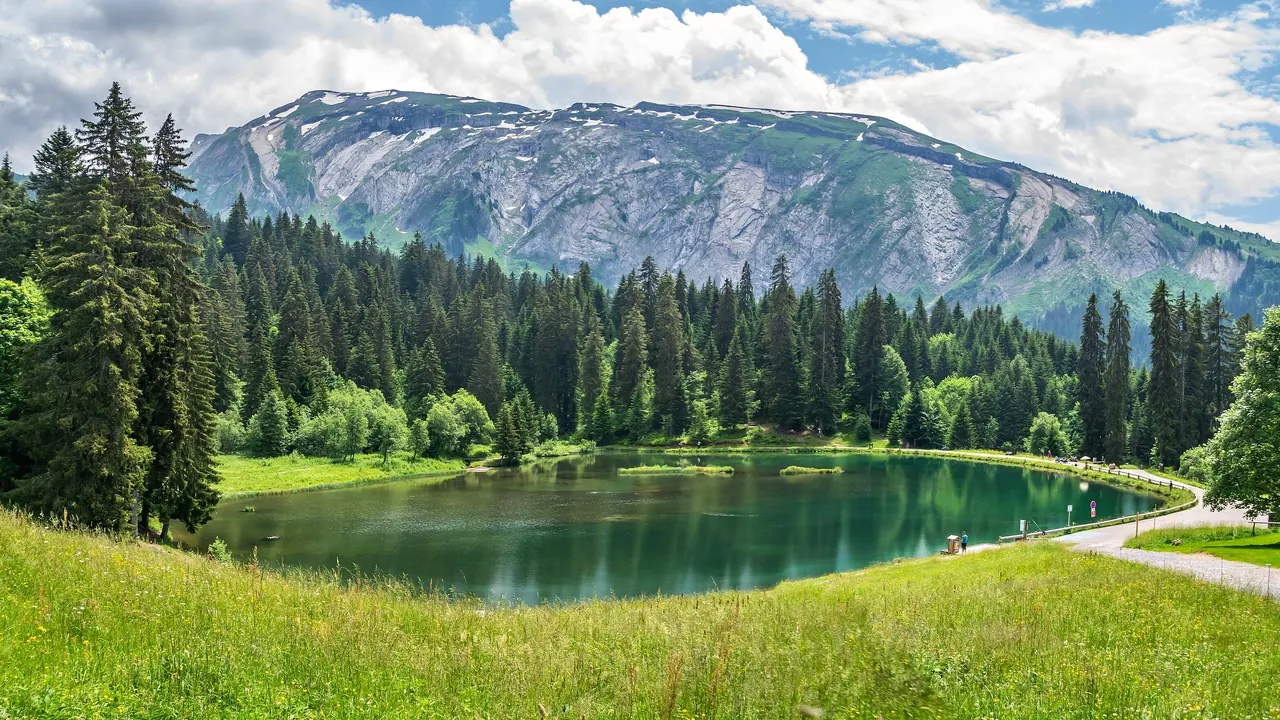
Photos: Chamonix by Tiia Monto, CC BY-SA 3.0, cropped; Morzine by Krzysztof Golik, CC BY-SA 4.0, cropped.
Chamonix or Morzine?
Our verdict in twelve categories, each scored against the same fixed benchmark cities, and the climate month by month, so you can choose for your trip.
Choose Chamonix for
- getting around
- shopping
- wellness
Chamonix is for travellers who want the high mountains themselves: glaciers, granite needles and the cable cars that reach them, with mountain guides, the Mer de Glace and the Vallée Blanche on the doorstep. It is also the fuller town. A train runs along the valley, there is a mountaineering history to explore, the choice of restaurants is wider, and a spa looks straight up at the ice.
Choose Morzine for
- beaches
- families
- prices
Pick Morzine for a ski or bike trip built around range rather than altitude. The whole Portes du Soleil is reached from the village, and in summer the same lifts serve some of Europe's best-known downhill trails. Families with small children will find it easier, the budget goes a little further, and Lake Geneva's bathing spots are close in high summer.
Scoreboard
Twelve categories on one fixed scale from 0 to 100. The shaded stretch is the gap between the two.
Your match
Pick a travel style or drag the sliders, and both match scores follow your weighting.
Wins on getting around and shopping with your weighting.
Wins on beaches and families with your weighting.
What matters to you?
Category by category
What the scores mean for a trip.
Beaches & swimming
Neither is a place for swimming, but Morzine has the easier water. Lac de Montriond is a few minutes up the road for a cool dip among the forests. The shores of Lake Geneva at Thonon and Evian are under an hour away and have proper bathing spots, where the water reaches about 22°C in high summer.
From Chamonix, the swimming options are little Lac de Passy down the Arve valley, with Mont Blanc in front of you, the town's outdoor pool, or a drive of over an hour to Lake Annecy. In both places a swim is something for a July or August afternoon, nothing more.
Food & drink
Both serve the same Savoyard food, tartiflette, fondue and raclette made with reblochon and Abondance, and in both the best meals are often in the restaurants up on the slopes. Chamonix has more beyond that: bistros, a few ambitious kitchens in the grand old hotels, and enough cheese shops, charcuteries and bakeries to put together a good picnic.
Morzine's choice is narrower and more aimed at skiers, many of whom eat in catered chalets, though its weekly market is worth a visit. In both, the choice shrinks outside winter and summer.
Culture & sights
Chamonix at least has a story to tell: it is where alpinism began and where the first Winter Olympics were held in 1924. The Musée Alpin tells that history, and the pioneers' statues, the old guides' quarter and the climbers' cemetery fill a pleasant half day.
Morzine has a baroque church, a few old farm chalets and a short heritage walk about its slate quarrying past. That is about all, and the region's real historic sights mean getting in the car.
Nightlife
Both go out more than you would expect for their size, and their nightlife is about the same scale. In Chamonix, the late evenings happen along a narrow old-town lane of pubs, where guides, seasonal workers and visitors mix, with a couple of small clubs afterwards. In summer, evenings there mean terrace drinks after a day on the hills.
Morzine is more of an après-ski party. A large British crowd fills the village-centre bars, with DJs and bands, and the scene mostly runs at weekends and in high season. In summer the mountain bikers keep a few bars busy. Spring and autumn are quiet in both.
Nature & outdoors
Both are first-rate mountain bases, but Chamonix has the bigger, wilder terrain. Cable cars lift you straight onto the glaciers and granite of the Mont Blanc massif, the Aiguille du Midi climbs to over 3,800m, and the valley is home to the oldest guiding company in the world, with the Vallée Blanche glacier descent and the Tour du Mont Blanc starting from town.
Morzine's strength is range rather than height. The huge linked Portes du Soleil ski area starts from the village, and in summer it is one of Europe's best-known places for downhill and enduro riding. Walkers get softer country of pastures, forests and waterfalls.
Day trips
Both have a good spread of outings, but they point in different directions. Chamonix looks across its borders: Courmayeur and the Roman town of Aosta are through the Mont Blanc Tunnel, and the Mont Blanc Express climbs over to Martigny in Switzerland. Annecy and Geneva are each a little over an hour away.
Morzine looks towards Lake Geneva. Evian, Thonon and medieval Yvoire are within about an hour, ferries cross to Lausanne, and the Abbey of Abondance with its painted cloister is in the next valley. Most of these need a car, whereas some of Chamonix's best trips can be done by train.
Good for families
Morzine is the easier choice with young children. Nursery slopes are close to the village, and Avoriaz above is largely car-free, with a children's ski village and a tropical indoor water park. In summer, goats wander among the chalets at Les Lindarets and there are pedal boats on Lac de Montriond.
Chamonix suits outdoor families too, especially with older children. The Merlet animal park, the little red train to the Mer de Glace and the treetop courses all go down well. The highest cable cars, though, go too high and too fast for small children, and on wet days there is little to do beyond the pool and the museums.
Getting around
Chamonix is much easier without a car. The centre is flat and compact, and the cable car stations are in town. Buses and the Mont Blanc Express train run the length of the valley, free with the guest card. The main drawback is the packed ski buses in winter.
Morzine is walkable but spread up a hillside, and its free shuttles mostly stop outside the winter and summer seasons. There is no train, so the lake towns and longer day trips really need a car, with snow chains and slow roads in winter.
Shopping & style
Chamonix is the place to buy mountain gear. Its pedestrian streets are lined with climbing, ski and outdoor shops, some going back generations, with technical stock good enough that climbers save their big purchases for a visit. Rock crystals from the massif and a few mountain chic boutiques add a little more.
Morzine's shops are practical rental and bike outlets, plus Savoyard cheese and charcuterie to take home. For fashion or department stores, both send you to Geneva or Annecy.
Affordability
Neither is cheap, but Morzine is the less costly of the two. It costs less than the most exclusive French resorts, and catered chalets and self-catering apartments help control costs. Summer and the quieter weeks of January and March are easier on the budget still.
Chamonix costs more. The big cable cars, mountain guides and paragliding flights are serious expenses, and the peak weeks are expensive. Free valley transport and trails that start from the valley floor without a lift take some of the edge off.
Live music & performing arts
Neither has a theatre or a concert season, so for opera or an orchestra you will need to go to Geneva from either.
What little there is differs in kind. Chamonix has a long-running summer jazz festival with some sets played high in the mountains, along with church concerts and mountain film evenings. In Morzine, live music mostly means cover bands and acoustic sets in the après-ski bars.
Wellness & relaxation
Chamonix has more for unwinding after effort. Its large day spa, built on the Italian thermal model, has hot outdoor pools that face the glaciers, and the thermal springs of Saint-Gervais lie in a wooded gorge about 25 minutes away.
Morzine relies on the saunas and hot tubs of its hotels and chalets, plus spa treatments in the village, with the baths at Evian under an hour's drive. For real calm, both are best outside the peak weeks, when Morzine in particular becomes very quiet.
When should you go?
Pick your month. The climate figures are measured averages, not a forecast.
Chamonix in July
Morzine in July
Daytime high, °C
Rainfall in the month, mm
Where the figures come from
Chamonix's temperatures are measured 35 km from the centre, at Bourg-St-Maurice.
Chamonix has no rain gauge within 25 km of the centre, so its rainfall comes from a gridded climate dataset read at the destination rather than from a gauge further away.
Morzine's temperatures are measured 63 km from the centre, at Bourg-St-Maurice.
Morzine has no rain gauge within 25 km of the centre, so its rainfall comes from a gridded climate dataset read at the destination rather than from a gauge further away.
Temperature and rainfall are climate normals, averaged over the years shown. Chamonix: 1999-2020 (rainfall 1991-2020) normals, Bourg-St-Maurice (34.9 km from centre). Morzine: 1999-2020 (rainfall 1991-2020) normals, Bourg-St-Maurice (62.7 km from centre).
The two valleys share almost exactly the same temperatures through the year, so the choice of season is the same for both. From June to September the valley floor is warm, peaking around 27°C in July, which is when the hiking, biking and lake swimming are at their best. Lakes are only warm enough to swim in during July and August. Winter highs fall to about 5°C in January, and that is the skiing season. April and October sit in the mid-teens, which is pleasant for walking low trails, but in both places many lifts and businesses close then.
Neither has a dry season. Rain falls steadily every month, and Chamonix is a little wetter, most noticeably in May, with 154mm against Morzine's 126mm. December is the wettest month in both, with Chamonix reaching about 169mm. In the high mountains above Chamonix the weather can change fast, so a summer trip there needs some flexible days.
Which traveller are you?
On a family trip with young children, Morzine is the safer bet. Chamonix suits older children who can cope with altitude and steep paths, while Morzine keeps the mountain at a small child's pace, in winter and summer alike.
For a relaxing and wellness trip, Chamonix is the better choice. After a day outdoors, few things beat hot water with a view of the ice. Morzine offers comfortable chalet saunas and real calm out of season, but less to build a stay around.
On a tight budget, Morzine is the kinder of two expensive places. In Chamonix the money goes on the high lifts and guides that are the reason for coming, whereas Morzine's mountains cost less to enjoy, especially outside the busiest weeks.
Before you go
| Measure | Chamonix | Morzine |
|---|---|---|
| Official language | French | French |
| Currency | Euro (EUR) | Euro (EUR) |
| Sockets | CE230 V, 50 Hz | CE230 V, 50 Hz |
| Driving side | Right | Right |
| Time zone | UTC+1, UTC+2 in summer | UTC+1, UTC+2 in summer |
| Emergency number | 112 | 112 |
| Elevation | 995 m | 890 m |
| Main airport | Geneva International Airport (GVA)68 km from centre150 non-stop destinations | Geneva International Airport (GVA)47 km from centre150 non-stop destinations |
| Public holidays this year | 11 days | 11 days |
By the numbers
| Measure | Chamonix | Morzine |
|---|---|---|
| Population | 8,705 | 2,658 |
| People per km² | 75 | 60 |
| Museums within 10 km | 3 | 1 |
| UNESCO World Heritage sites within 50 km | 0 | 3 |
Where else could you go?
Every comparison below shares a destination with this one, so you can follow Chamonix or Morzine somewhere new.
- Les Getsvs Morzine
- Avoriazvs Morzine
- Samoënsvs Morzine
- Saint-Gervais-les-Bainsvs Chamonix
- Châtelvs Morzine
- Flainevs Chamonix