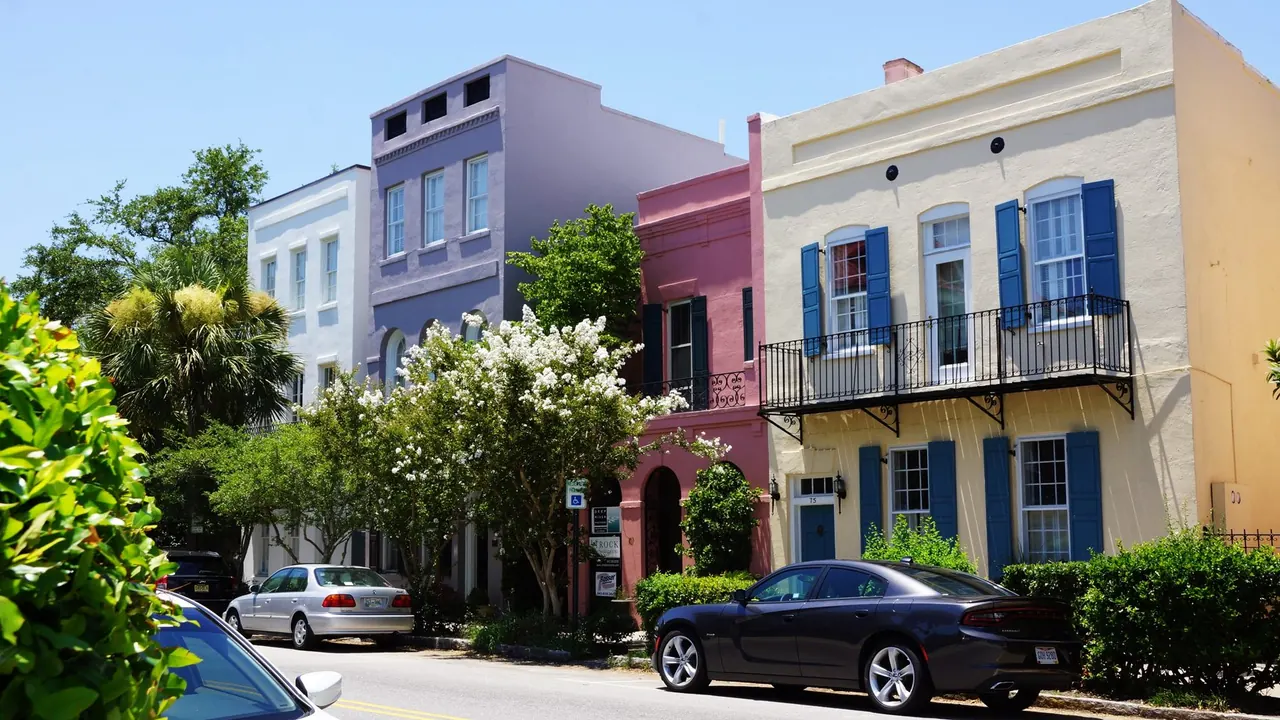
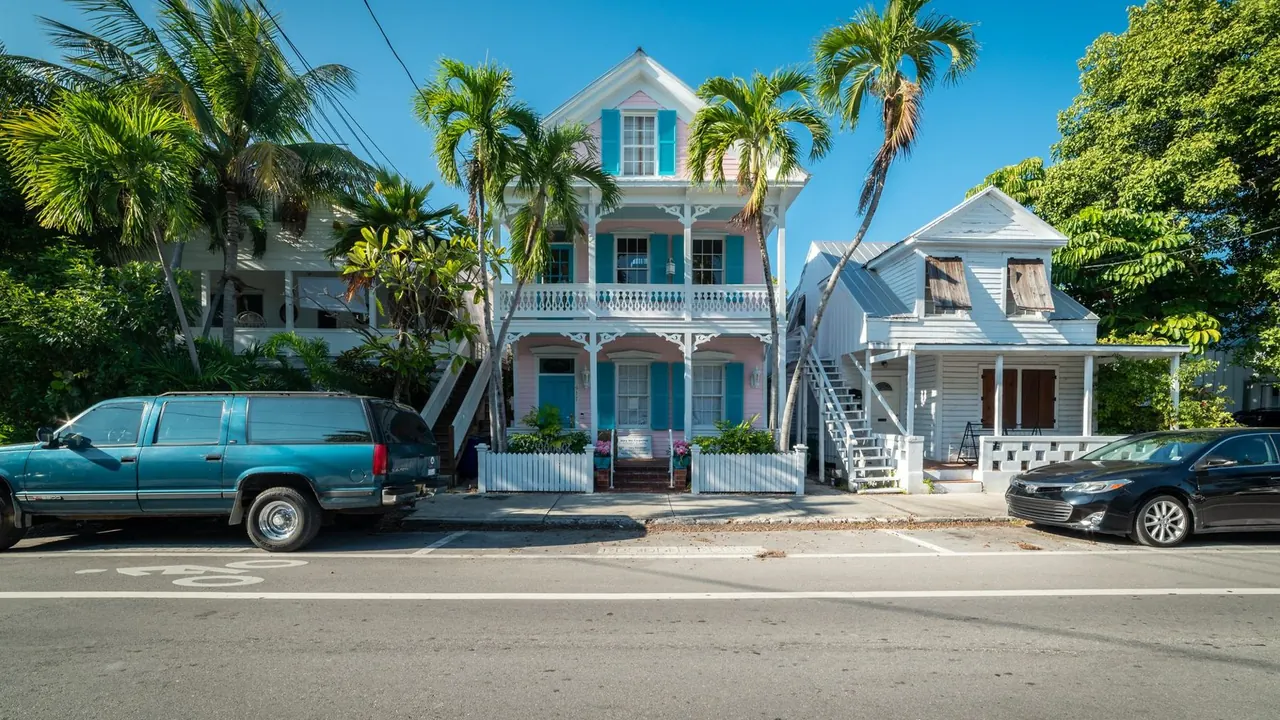
Photos: Charleston by NealVickers, CC BY-SA 4.0, cropped; Key West by Dominik Gryzbon, Pexels License.
Charleston or Key West?
Our verdict in twelve categories, each scored against the same fixed benchmark cities, and the climate month by month, so you can choose for your trip.
Choose Charleston for
- day trips
- food and drink
- shopping
Charleston is the better choice for a rounded trip built on history, food and beaches. Its old peninsula of antebellum houses and walled gardens, its serious Lowcountry kitchens, and the plantations, Beaufort and Savannah within driving range give a week more substance. Families also have more to do, and the barrier-island beaches add proper sand days if you have a car.
Choose Key West for
- nightlife
- getting around
- nature and the outdoors
Travellers who want warm, clear water, late nights and an island pace will be happier in Key West. The reef, the mangrove backcountry and the Dry Tortugas make it the place for snorkelling, fishing and days on boats. Duval Street keeps going long after most of Charleston has gone home, and you can cross the whole town by bicycle. It also stays warm right through the winter, which Charleston does not.
Scoreboard
Twelve categories on one fixed scale from 0 to 100. The shaded stretch is the gap between the two.
Your match
Pick a travel style or drag the sliders, and both match scores follow your weighting.
Wins on day trips and food and drink with your weighting.
Wins on nightlife and getting around with your weighting.
What matters to you?
Category by category
What the scores mean for a trip.
Beaches & swimming
Charleston has the better beaches in the usual sense. Folly Beach, Sullivan's Island, Isle of Palms and the long, quiet stretches of Kiawah and Seabrook offer wide sand and real surf, all within about half an hour of the old town by car. The water is greenish and tidal, though, and swimming is mostly a late-spring-to-October affair.
Key West is the other way round. Its sea is warmer, calmer and clearer for far more of the year, but the town beaches are small strips of imported sand or coral rubble, better for floating and snorkelling than for a long day on a towel. For soft sand you drive an hour to Bahia Honda.
Food & drink
Charleston is much the better place to eat. Lowcountry cooking with Gullah Geechee roots, from shrimp and grits and she-crab soup to winter oyster roasts and whole-hog barbecue, is taken seriously in restored townhouse dining rooms around King Street and the French Quarter. The best tables need booking ahead.
Key West's range is narrower: local seafood, conch fritters, Key lime pie, and Cuban sandwiches and coffee from takeaway windows. Its best meals are casual ones at dockside shacks around the Historic Seaport, and the bar food on Duval Street is the weak spot.
Culture & sights
Both are historic towns that are best seen on foot, but Charleston has more to see and more depth to it. South of Broad and along the Battery, Georgian and antebellum houses open as museums that show both the grand rooms and the enslaved people's quarters. Fort Sumter, the Old Slave Mart Museum and the International African American Museum make the history hard-hitting.
Key West's Old Town of wooden conch cottages and Victorian verandas is a lovely walk, but its sights are smaller and more about local stories: Hemingway's six-toed cats, Truman's Little White House and the shipwreck treasure collections. Two days is enough.
Nightlife
Key West is the one for a night out. Duval Street is a long run of open-sided bars and old saloons where you carry a drink from one to the next until the small hours. The evening starts with the sunset crowd on Mallory Square, and the upper end of Duval has a long-established gay scene. The mood is loud and boozy rather than stylish.
Charleston's evenings are tidier and end sooner. There are rooftop and cocktail bars on upper King Street, wine bars and old taverns in the French Quarter, and most places close around 2am. Neither town has much for anyone who wants to dance.
Nature & outdoors
Both are flat and both are best seen from the water, but Key West has more to offer. The Florida Reef is a short boat ride out, with clear-water snorkelling and diving among turtles and rays. The mangrove backcountry is made for kayaking and flats fishing, and the Dry Tortugas add remote islands and good birdwatching.
Charleston's Lowcountry is greener and its water murkier: tidal creeks and spartina marsh where kayak tours meet dolphins, live oaks hung with Spanish moss, and alligators along quiet trails in the Francis Marion National Forest and the ACE Basin. There is more to do on land than in Key West, but nothing to match the reef.
Day trips
Charleston has far more within a day's reach. The Ashley River plantations, Boone Hall and McLeod Plantation are about half an hour away. Beaufort and the Gullah sea islands are about an hour and a half, and Savannah, about two hours away, makes a full day. You need a car for all of them.
Key West sits at the end of the road, and its one standout outing is the ferry to Fort Jefferson in the Dry Tortugas. Beyond that, the Overseas Highway leads to Marathon and Islamorada, and the drive over the Seven Mile Bridge is a sight in itself.
Good for families
Charleston gives school-age children more to do. The boat out to Fort Sumter is an adventure in itself, and Charles Towne Landing has a replica ship to explore and a small wildlife area. Expect gaps, though. There is no theme park or major zoo, house tours soon bore small children, and summer afternoons are draining, so spring and autumn work best.
Key West's appeal for children is almost all water: glass-bottom boat trips, snorkelling over the reef, the calm shallows at Fort Zachary Taylor and the long ferry ride to the Dry Tortugas. On land there is less, mainly the butterfly conservatory, the shipwreck museum and the Hemingway cats, though trolley tours and the quiet residential streets make the town easy with younger ones. Fantasy Fest in late October is strictly for adults.
Getting around
Charleston's historic peninsula is flat, compact and a pleasure on foot, with most of downtown within about 3km, and pedicabs and a free shuttle bus fill the gaps. The beaches, plantations and day-trip towns are what need a car. City buses barely reach them, so most visitors drive or use ride-hailing, and parking downtown is tight.
Key West is simpler to manage. All of Old Town lies within a short walk or ride of Duval Street, bicycles are how locals get about, and rental bikes, electric carts and scooters are everywhere, so a car is more trouble than help. You only need wheels for Bahia Honda, Big Pine Key and the rest of the Keys.
Shopping & style
Charleston has much more for browsers. King Street changes along its length, from antiques and galleries on lower King to fashion brands in the middle and independent boutiques on upper King, and in the City Market Gullah artisans weave and sell sweetgrass baskets. Key West's Duval Street is mostly T-shirts and Key lime souvenirs, and the better finds are the Old Town art galleries, hand-rolled cigars and the sponge and shell shops by the harbour.
Affordability
Neither is cheap, but Charleston is the easier of the two on a budget. Inns on the peninsula and the well-known restaurants are expensive, but staying in Mount Pleasant or the suburbs saves real money. Free pleasures like the old streets, the Battery and the beaches go a long way.
Key West costs more. Limited land keeps rooms expensive, Duval Street charges resort prices, and boat trips, diving and the Dry Tortugas ferry soon add up. Cycling everywhere, the free sunset on Mallory Square and the Cuban takeaway windows help, and late summer is the cheapest season.
Live music & performing arts
Neither town has a big formal arts scene, but they offer different kinds of performance. Charleston's year peaks in late spring, when Spoleto Festival USA and Piccolo Spoleto bring opera, chamber music, dance and theatre. At other times the Dock Street Theatre and the Gaillard Center have a modest programme, and Gullah storytelling and song are worth looking out for.
Key West's performances are more informal and happen every night: singer-songwriters and cover bands in the Duval Street bars, drag cabaret, and the jugglers and musicians at the Mallory Square sunset. The Tennessee Williams Theatre and a winter symphony season cover the formal side.
Wellness & relaxation
Neither town has a bathing tradition, and in both, spa time means hotel or resort spas, on Kiawah Island in Charleston's case. The difference is the kind of calm. Charleston's comes from shaded gardens, quiet church courtyards, porches and long evenings at White Point Garden.
Key West offers guesthouses built around small pools and gardens, easy-to-find yoga and massage, and the daily pause for sunset. The party on Duval is never far off, though, so a quiet stay means a residential street and avoiding winter weekends and festivals.
When should you go?
Pick your month. The climate figures are measured averages, not a forecast.
Charleston in July
Key West in July
Daytime high, °C
Rainfall in the month, mm
Where the figures come from
Key West's temperatures are measured 69 km from the centre, at Key West Airport.
Key West has no rain gauge within 25 km of the centre, so its rainfall comes from a gridded climate dataset read at the city rather than from a gauge further away.
Temperature and rainfall are climate normals, averaged over the years shown. Charleston: 1991-2020 normals, Charleston Airport (16.1 km from centre). Key West: 1991-2020 normals, Key West Airport (69.1 km from centre).
Charleston has real seasons. Summer is hot and sticky, with highs around 33°C in July, and June to September is the wettest stretch, with thunderstorms bringing about 170mm a month. The sea is warm enough for swimming from late May into October. Winter highs sit in the mid-teens, which is fine for walking the old streets but too cool for the beach. April, May and October are the best months for combining sightseeing with sand.
Key West stays warm all year. January highs are around 24°C, and the sea rarely drops below 23°C, so a winter beach trip works here but not in Charleston. The dry season runs from November to April. From May to October the rain picks up and the midday heat makes walking tiring, and September and October are still wet.
Which traveller are you?
On a culture and arts trip, Charleston is the clear pick. Its antebellum peninsula, house museums, Fort Sumter and frank museums on the slave trade fill two or three days, and a late-spring visit adds Spoleto's opera, dance and theatre.
On a family trip with children, Charleston is the easier choice. The waterfront aquarium, the children's museum, the aircraft carrier at Patriots Point and wide barrier beaches keep a range of ages busy, and there is no equivalent of Key West's drinking strip a few streets away.
On an outdoors trip, Key West wins if you want to be on the water. Snorkelling and diving on the Florida Reef, kayaking and flats fishing in the mangroves, and the Dry Tortugas ferry beat Charleston's gentler marsh paddling and woodland trails.
Before you go
| Measure | Charleston | Key West |
|---|---|---|
| Currency | US Dollar (USD) | US Dollar (USD) |
| Sockets | AB120 V, 60 Hz | AB120 V, 60 Hz |
| Driving side | Right | Right |
| Time zone | UTC-5, UTC-4 in summer | UTC-5, UTC-4 in summer |
| Emergency number | 911 | 911 |
| Elevation | 6 m | 4 m |
| Main airport | Charleston International Airport (CHS)16 km from centre56 non-stop destinations | Key West International Airport (EYW)2 km from centre24 non-stop destinations |
| Public holidays this year | 12 days | 11 days |
By the numbers
| Measure | Charleston | Key West |
|---|---|---|
| City population | 150,227 | 26,444 |
| People per km² | 532 | 1,407 |
| Museums within 10 km | 19 | 7 |
| UNESCO World Heritage sites within 50 km | 0 | 0 |
| Swim season, months above 21 °C | 6 months | 12 months |
Where else could you go?
Every comparison below shares a destination with this one, so you can follow Charleston or Key West somewhere new.