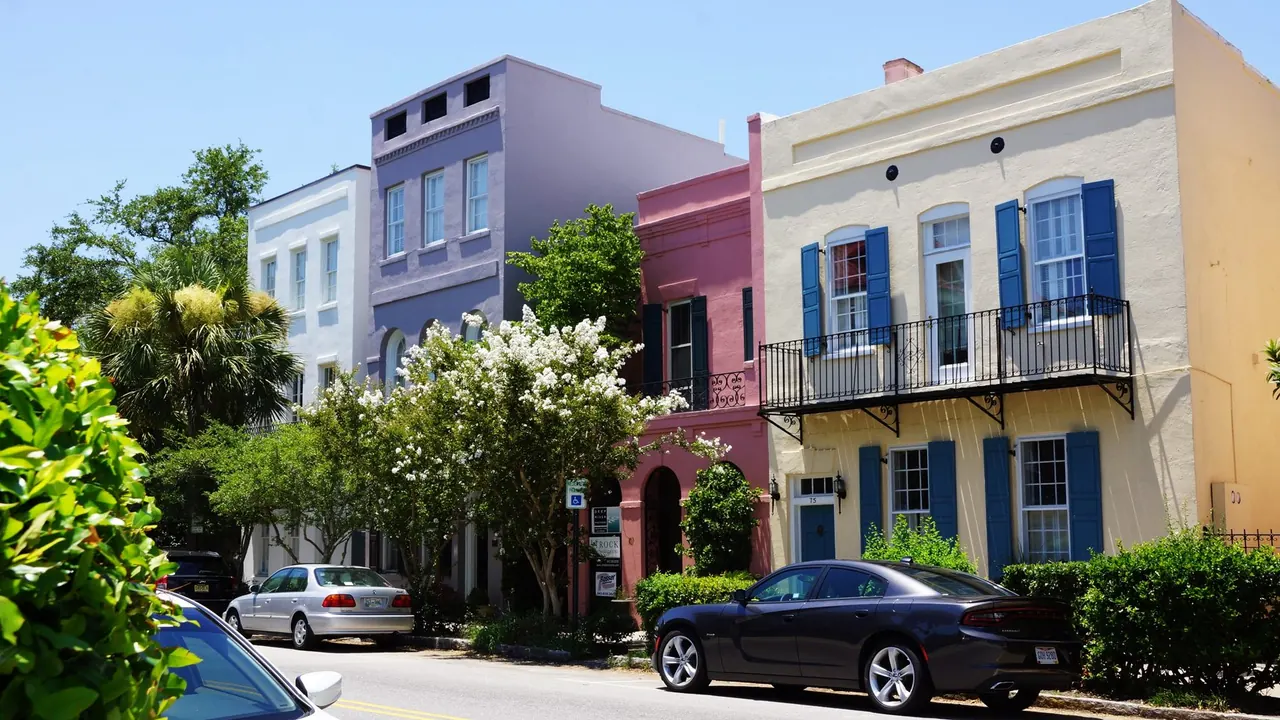
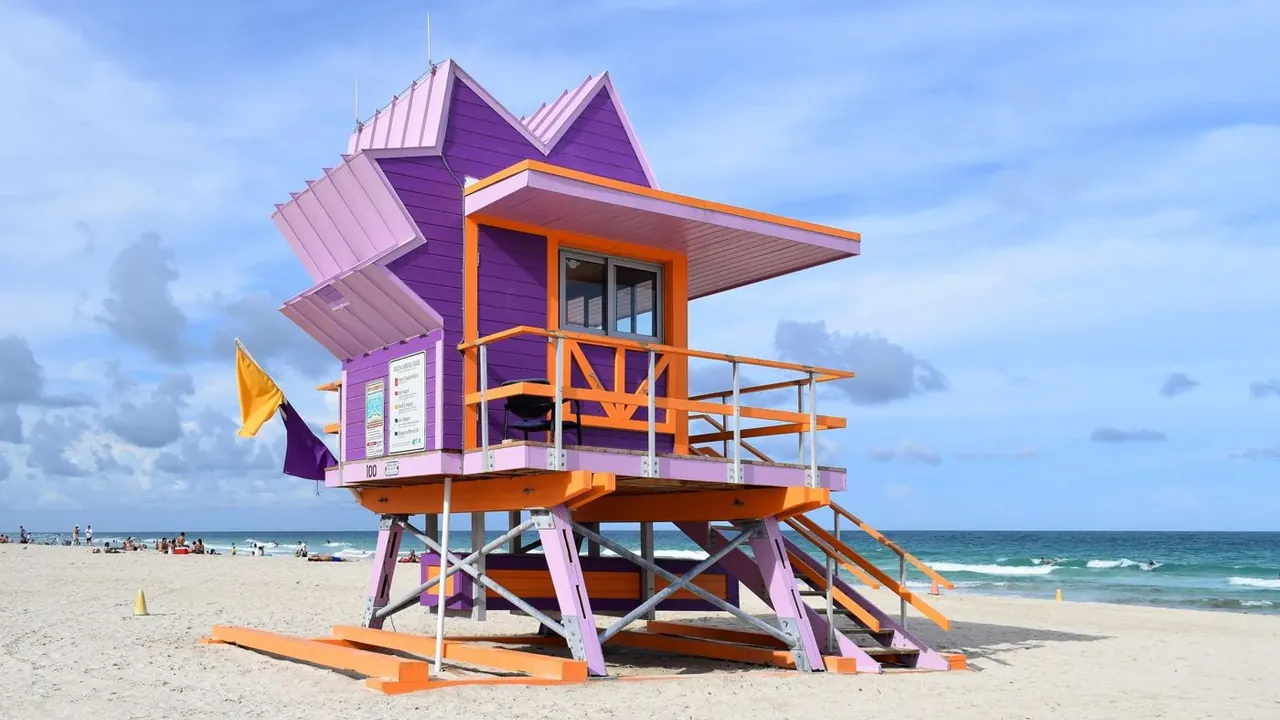
Photos: Charleston by NealVickers, CC BY-SA 4.0, cropped; Miami by Radomianin, CC BY-SA 4.0, cropped.
Charleston or Miami?
Our verdict in twelve categories, each scored against the same fixed benchmark cities, and the climate month by month, so you can choose for your trip.
Choose Charleston for
- day trips
- getting around
- culture and sights
Charleston suits travellers who want history they can walk through. The flat old peninsula of Georgian houses, church steeples and walled gardens is easy to cover on foot, the Lowcountry cooking is a reason to come in its own right, and plantations, Beaufort and Savannah are all within a drive. It is the slower, gentler choice, better for strolling and long dinners than for late nights or a week spent on the sand.
Choose Miami for
- nightlife
- beaches
- shopping
Pick Miami when the beach and the evenings matter most. The sea is warm enough to swim in every month, the clubs run until dawn, and the Everglades, the reefs and the luxury shopping have no counterpart up the coast in Charleston. In return you give up walkability, because most outings mean a car or ride-hailing, and it costs every bit as much as Charleston.
Scoreboard
Twelve categories on one fixed scale from 0 to 100. The shaded stretch is the gap between the two.
Your match
Pick a travel style or drag the sliders, and both match scores follow your weighting.
Wins on day trips and getting around with your weighting.
Wins on nightlife and beaches with your weighting.
What matters to you?
Category by category
What the scores mean for a trip.
Beaches & swimming
Both cities sit behind Atlantic barrier islands, but in Miami the beach is the main event and in Charleston it is half the trip. Folly Beach, Sullivan's Island and Isle of Palms each have their own character, from surfy to residential to resort-like, but they lie a drive from the old town, the water is greenish and tidal, and the swimming season runs only from late spring into October.
Miami Beach is one unbroken stretch of pale sand from the Art Deco blocks of South Beach up to Surfside, often a short walk from your hotel, and the sea stays warm enough to swim even in midwinter. Key Biscayne adds calmer, shallower water. The setting is built-up rather than wild, and seaweed can wash in during the warmer months.
Food & drink
The two eat equally well in very different ways. Charleston's table is Southern and Lowcountry: shrimp and grits, she-crab soup, roasted oysters and whole-hog barbecue, served in restored townhouses on King Street and in the French Quarter, with biscuits and fried chicken at breakfast.
Miami cooks like a Latin American capital, with Cuban coffee windows and sandwiches in Little Havana, arepas, ceviche and Haitian griot, plus stone crab in season. It is also the place for a cheap, filling lunch, which Charleston largely lacks, though South Beach's main strips are best avoided.
Culture & sights
Charleston has the deeper history. Its streets of Georgian and antebellum houses south of Broad, Fort Sumter out in the harbour and the museums that face the slave trade head-on give it a story stretching back centuries, told in the places where it happened.
Miami's heritage is barely a century old, though its 1930s Art Deco district is a sight of real distinction and Vizcaya's villa and gardens are memorable. The Perez Art Museum and Wynwood's murals lean contemporary. Either city is covered in two or three days.
Nightlife
Here Miami is in another league. Its South Beach and downtown clubs bring in international DJs and keep going until dawn, and around them sit Wynwood's warehouse bars, Brickell's rooftops and salsa nights in Little Havana.
Charleston offers a pleasant evening rather than a night out: cocktail rooms, oyster bars and sports pubs on upper King Street, quieter wine bars in the French Quarter, and almost nothing to dance to after 2am.
Nature & outdoors
Both are flat, watery coasts, but Miami has the bigger draws. The Everglades are within an hour for airboats, alligators and the Anhinga Trail boardwalks, and Biscayne National Park and the Key Largo reefs add snorkelling that Charleston cannot offer.
Charleston's Lowcountry is quieter and more intimate: kayaking through spartina marsh creeks with dolphins, live oaks hung with moss, and trails in the Francis Marion forest. Charleston's outdoors is best in spring and autumn, Miami's in winter.
Day trips
Charleston has much more within reach. The Ashley River plantations and McLeod Plantation are half an hour away, Beaufort and its Gullah sea islands make a quiet day out, and Savannah's squares are a two-hour drive.
From Miami the nearby options are Fort Lauderdale's canals, Palm Beach's mansions and the seafood towns of the Upper Keys, all pleasant but not memorable. Key West is too far for a day. In both cities you will need a car.
Good for families
Both work for children in roughly equal measure, in different ways. Charleston is calm and easy to manage, with the aquarium and children's museum on the downtown waterfront, an aircraft carrier to climb at Patriots Point and a boat ride out to Fort Sumter.
Miami has warmer, gentler water, a large open-air zoo, a science museum with a planetarium and plenty of hotels built around pools. The cost is long drives, punishing summers and a party scene in South Beach that most parents will steer around.
Getting around
Charleston is the easier place to be without a car, as long as you stay on the peninsula. The old town is flat and compact, with pedicabs and a free shuttle bus to fill the gaps, though the beaches and plantations still mean driving or ride-hailing.
Miami is spread out and built for cars. The free Metromover links downtown and Brickell and the Metrorail reaches the airport, but neither crosses to Miami Beach, so visitors walk locally and ride-hail everywhere else through heavy traffic.
Shopping & style
Miami is the place for serious shopping. The Design District's fashion-house flagships, the exclusive open-air mall at Bal Harbour, the enormous Aventura Mall and the outlets on the western edge cover everything from luxury to bargains.
Charleston is smaller and more about browsing: antiques and galleries on lower King Street, independent boutiques further up, and sweetgrass baskets woven by Gullah artisans at City Market, a local craft Miami has no equivalent for.
Affordability
Neither is cheap, and the costs land in similar places: hotels, restaurant bills and getting around. In Charleston the peninsula inns and paid house and plantation tours mount up, and staying in Mount Pleasant saves money only if you drive in each day.
Miami adds resort fees and costly club drinks, but its Cuban lunch counters and bakeries are a genuinely cheap way to eat, the Metromover is free, and summer brings lower room rates if you can take the heat.
Live music & performing arts
Miami has more on through the year. Its season, which peaks in winter, runs from opera and touring shows at the Arsht Center to Miami City Ballet and the New World Symphony in its Frank Gehry hall, alongside live salsa and Afro-Cuban bands in Little Havana.
Charleston comes alive mainly in late spring, when Spoleto Festival USA fills the city with opera, dance and jazz for over two weeks. The rest of the year brings plays at the Dock Street Theatre, the symphony and Gullah storytelling and song.
Wellness & relaxation
Neither city has a real bathing tradition, and both offer roughly the same amount of rest in different forms. Charleston's calm comes from its pace: shaded gardens, church courtyards and evenings at White Point Garden, with resort spas out on Kiawah.
Miami has larger hotel spas, sunrise yoga on the sand and a long-standing Russian and Turkish bath house. Its noise and late nights work against relaxing, so the calm is found on Key Biscayne or around Surfside.
When should you go?
Pick your month. The climate figures are measured averages, not a forecast.
Charleston in July
Miami in July
Daytime high, °C
Rainfall in the month, mm
Temperature and rainfall are climate normals, averaged over the years shown. Charleston: 1991-2020 normals, Charleston Airport (16.1 km from centre). Miami: 1991-2020 normals, Miami International Airport (10 km from centre).
The two cities run on almost opposite calendars. Charleston has real seasons: winter days are cool at around 16°C in January, which suits walking the old streets but is far too cold for the beach. The sea warms enough for swimming from May, peaks at about 28°C in July and August and stays pleasant into October. Summer brings 32°C to 33°C heat and the wettest months, June to September, so April, May and October are the sweet spot for combining sightseeing with time on the sand.
Miami is warm all year, with winter highs of about 25°C and a sea that never really cools, which makes December to April its best stretch: dry, sunny-feeling and comfortable for walking. From May the rain sets in hard, peaking at around 267mm in June, and the heat and humidity last into October. If you can only travel in winter, Miami is the clear choice; in late spring or autumn, Charleston comes into its own.
Which traveller are you?
For a beach and sun trip, Miami wins easily. Its long strip of pale sand runs right past the hotels, the water is warm and gentle in every month, and Key Biscayne adds calm, shallow bays, while Charleston's beaches need a car.
On a food and nightlife trip, Miami is the stronger pick. Both cities eat well, but Miami pairs Cuban and Latin cooking with clubs that run until dawn, rooftop bars in Brickell and salsa nights on Calle Ocho, while Charleston winds down around 2am.
For a short city break, Charleston is the better fit. The historic peninsula is compact and flat, so a few days on foot covers the old houses, the Battery and Fort Sumter, with Lowcountry dinners in between and no car needed.
Before you go
| Measure | Charleston | Miami |
|---|---|---|
| Currency | US Dollar (USD) | US Dollar (USD) |
| Sockets | AB120 V, 60 Hz | AB120 V, 60 Hz |
| Driving side | Right | Right |
| Time zone | UTC-5, UTC-4 in summer | UTC-5, UTC-4 in summer |
| Emergency number | 911 | 911 |
| Elevation | 6 m | 2 m |
| Main airport | Charleston International Airport (CHS)16 km from centre56 non-stop destinations | Miami International Airport (MIA)7 km from centre198 non-stop destinations |
| Public holidays this year | 12 days | 11 days |
By the numbers
| Measure | Charleston | Miami |
|---|---|---|
| City population | 150,227 | 442,241 |
| People per km² | 532 | 3,046 |
| Museums within 10 km | 19 | 17 |
| UNESCO World Heritage sites within 50 km | 0 | 0 |
| Swim season, months above 21 °C | 6 months | 12 months |
Where else could you go?
Every comparison below shares a destination with this one, so you can follow Charleston or Miami somewhere new.