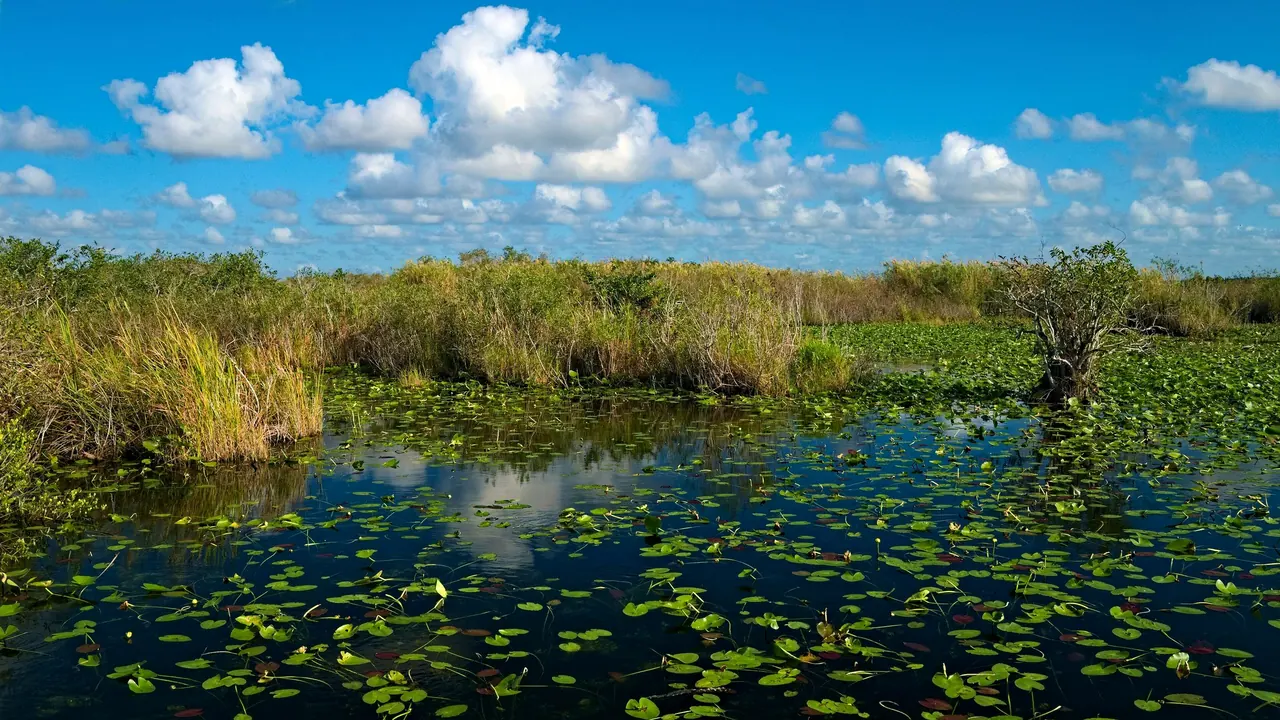
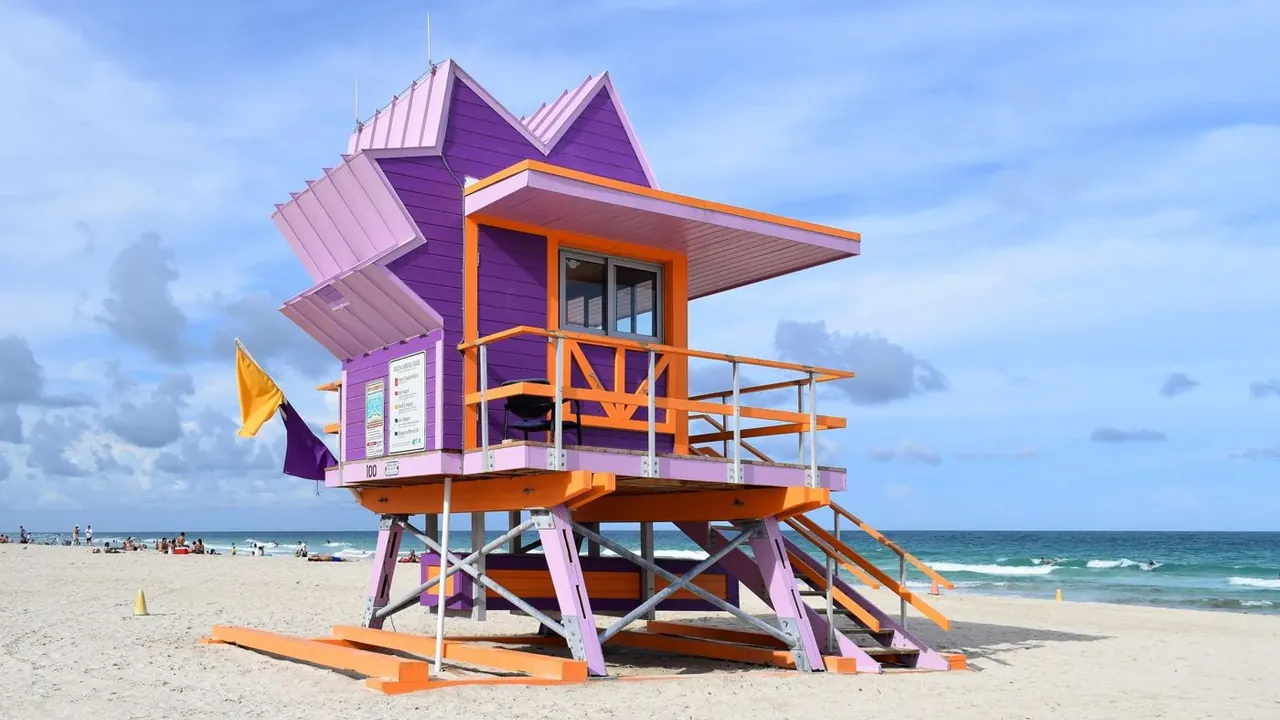
Photos: Everglades by Daniel Kraft, CC BY-SA 3.0, cropped; Miami by Rob Olivera, CC BY 2.0, cropped.
Everglades or Miami?
Our verdict in twelve categories, each scored against the same fixed benchmark cities, and the climate month by month, so you can choose for your trip.
Choose Everglades for
- nature and the outdoors
- day trips
- prices
Choose the Everglades if the trip is about wildlife and wild country. Alligators beside the boardwalks, spoonbills in Florida Bay and canoe routes through the Ten Thousand Islands are the point, and the evenings are quiet. You give up beaches, restaurants and any night out, and you need a car and an early start every day, but the motels of Homestead and Florida City keep the bill lower.
Choose Miami for
- nightlife
- beaches
- shopping
Miami suits travellers who want a city with a beach attached. It has warm Atlantic sand, Cuban lunch counters, Art Deco streets and clubs that run until dawn, and the luxury shopping goes with all of that. It costs more and asks for stamina, but the swamp is still close enough for a day of airboats and boardwalks.
Scoreboard
Twelve categories on one fixed scale from 0 to 100. The shaded stretch is the gap between the two.
Your match
Pick a travel style or drag the sliders, and both match scores follow your weighting.
Wins on nature and the outdoors and day trips with your weighting.
Wins on nightlife and beaches with your weighting.
What matters to you?
Category by category
What the scores mean for a trip.
Beaches & swimming
The Everglades has no beach to speak of. Its coast is marl and mangrove, and the shallow, murky waters of Florida Bay hold alligators and crocodiles. The sandy keys in the Ten Thousand Islands are wild boat landings rather than places to spend the day, and a proper swim means driving to Marco Island or the Upper Keys.
Miami is built around its beach. One long strip of sand runs from South Beach to Surfside, Key Biscayne adds shallower family water, and Haulover is broader and wilder. The setting is flat and built-up, and sargassum can arrive in the warm months, but it is a beach you can swim from all year.
Food & drink
In the Everglades you eat simply. There is stone crab, grouper, gator tail and frog legs at the waterside seafood houses around Everglades City and Chokoloskee, and fry bread along the Tamiami Trail. Homestead adds Mexican and Central American cooking, and the Redland stands sell tropical fruit and milkshakes. For a serious meal you drive to Miami.
Miami has the range the swamp lacks. Cuban food runs through Little Havana, and Venezuelan, Peruvian, Haitian and Nicaraguan kitchens spread across the city. Brickell and the Design District have chef-led restaurants. The same stone crab season links the two, but only Miami turns it into a night out.
Culture & sights
The Everglades' sights are small curiosities: the Museum of the Everglades, the stilted Smallwood Store on Chokoloskee, the Miccosukee Indian Village, a Cold War missile site and the hand-carved Coral Castle. Each fills an afternoon, but none is a reason to come.
Miami gives you more to plan around. The Art Deco Historic District is best seen on foot along Ocean Drive, Vizcaya sits on the bay with its formal gardens, and the Perez Art Museum, the Wolfsonian and the Wynwood murals cover several days. It is not an old city either, but it has far more to see.
Nightlife
After dark the Everglades offers stars over Flamingo, frogs in the sawgrass and perhaps a taproom in Homestead. Miami is the opposite. It has big South Beach clubs with dress codes, downtown rooms open until dawn, Wynwood's warehouse bars, Brickell rooftops and salsa nights on Calle Ocho. Anyone staying in the swamp who wants a night out is driving an hour into the city.
Nature & outdoors
Both share the same wilderness, but the Everglades lets you live inside it. You can stay at Flamingo among crocodiles and manatees, paddle the mangrove maze from Everglades City, walk the cypress domes of Big Cypress or spend days on the Wilderness Waterway by canoe.
Miami reaches the Anhinga Trail and Shark Valley as day outings, and it adds things of its own: snorkelling and kayaking in Biscayne National Park, kitesurfing on the bay and cycling over the Rickenbacker Causeway. It has the better water sports, while the swamp has the deeper wilderness.
Day trips
The Everglades sits between better destinations, which makes it a good base for outings. Miami's Little Havana and Art Deco Miami Beach are an hour north of Homestead, Key Largo and Islamorada are under an hour south, and from Everglades City you can drive up the Gulf coast to Naples.
Miami's own range is thinner. Fort Lauderdale's canals, Palm Beach's mansions and the Flagler Museum, and the Upper Keys make pleasant days, and Key West is too far from either base for a comfortable return trip. Most Miami visitors spend their spare day in the swamp itself.
Good for families
School-age children love the Everglades' alligators, the Shark Valley tram and the junior ranger programme. Yet long distances, little shade and facilities spread thinly through the park make it a demanding trip, best done in winter with a pool hotel to come back to.
Miami is easier with children. Calm water at Key Biscayne and North Beach, the Frost Science Museum's aquarium, the Venetian Pool and child-friendly beach hotels fill the days, and the airboats and Zoo Miami are within reach of both. It still needs a car, and South Beach's party side is best avoided.
Getting around
Both need a car, and both struggle on public transport. In the Everglades the roads are empty and easy, but the two sides of the park are two hours apart and the backcountry is reached only by boat or kayak.
Miami's trouble is traffic rather than distance. South Beach is walkable and the free Metromover links downtown and Brickell, but the Metrorail misses the beach, so most visitors walk locally and use ride-hailing.
Shopping & style
There is almost nothing to buy in the Everglades beyond Miccosukee patchwork and beadwork, good field guides at the visitor centres and the outlet centre at Florida City. Miami is a luxury shopping city. It has fashion flagships in the Design District, the exclusive open-air mall at Bal Harbour, huge Aventura Mall and Lincoln Road's mainstream brands, with guayaberas and cigars for local character in Little Havana.
Affordability
Neither is cheap, but the Everglades is easier on the budget. The chain motels of Homestead and Florida City cost far less than Miami's beachfront hotels, even in winter. The money goes on the park fee, guided airboat and boat trips, and the car you need throughout.
Miami adds resort fees, parking, tax and tipping on dinners, and some of the costliest club drinks anywhere. Free beaches, cheap Cuban bakeries and staying in the mainland neighbourhoods soften it, but it remains the dearer stay.
Live music & performing arts
The Everglades has no stage, only an alligator demonstration or an occasional festival on Miccosukee land. Miami has a real season. The Adrienne Arsht Center hosts Florida Grand Opera and touring shows, Miami City Ballet has real standing, and the New World Symphony plays in its Gehry building in Miami Beach. Little Havana's salsa and timba bands are the most local sound of all.
Wellness & relaxation
Rest in the Everglades means silence rather than treatment. Days on Chokoloskee follow the tides and sunset over the mangroves is the main event, but beyond a motel pool there is nowhere to soak or be pampered.
Miami has the facilities: resort spa floors with ocean views, sunrise yoga on the sand and a long-established Russian and Turkish bath house. The noise of South Beach works against them, so Key Biscayne or Surfside is the place to stay for calm.
When should you go?
Pick your month. The climate figures are measured averages, not a forecast.
Everglades in July
Miami in July
Daytime high, °C
Rainfall in the month, mm
Where the figures come from
Everglades has no rain gauge within 25 km of the centre, so its rainfall comes from a gridded climate dataset read at the destination rather than from a gauge further away.
Everglades's sunshine is measured 51 km from the centre, at Miami International Airport.
Temperature and rainfall are climate normals, averaged over the years shown. Everglades: 1971-2000 (sunshine 1981-2010, rainfall 1991-2020) normals, Homestead / Homestead Base (22.5 km from centre). Miami: 1991-2020 (sunshine 1981-2010) normals, Miami International Airport (10 km from centre).
Both are at their best from December to April, the dry season, when afternoons are warm rather than oppressive and rain is light. Around the park's bases the days run at about 24°C in midwinter, which is ideal for walking trails and paddling, and this is also when the birds gather and the mosquitoes ease off. Miami is a degree or two warmer through the year, and the Atlantic stays around 25°C in winter, so a beach day works even in January.
From May the wet season sets in for both, with heavy afternoon storms peaking at around 240mm in June in the Everglades and more in Miami. Midsummer highs reach 33°C in Miami, which makes street walking hard work at midday. In the swamp, summer heat and insects can end a walk in minutes. The sea is warmest in August, but that only matters on the Miami side, because the Everglades waters are not for swimming.
Which traveller are you?
On a beach and sun trip, Miami wins easily. The long pale strip of Miami Beach, the calmer water at Crandon Park and warm Atlantic swimming in every month have no counterpart in the Everglades, where the shore is mangrove and mudflat.
For an outdoors trip, the Everglades is the better base. Staying inside the region puts the Anhinga Trail, the Shark Valley loop, the crocodiles at Flamingo and multi-day canoeing in the Ten Thousand Islands at your door, rather than a drive out of the city.
On a food and nightlife trip, Miami is the clear choice. Cuban cafecito windows on Calle Ocho, Peruvian and Haitian cooking and the clubs of South Beach and Park West fill the nights, while the swamp's towns close early over seafood and a dock bar.
Before you go
| Measure | Everglades | Miami |
|---|---|---|
| Currency | US Dollar (USD) | US Dollar (USD) |
| Sockets | AB120 V, 60 Hz | AB120 V, 60 Hz |
| Driving side | Right | Right |
| Time zone | UTC-5, UTC-4 in summer | UTC-5, UTC-4 in summer |
| Emergency number | 911 | 911 |
| Elevation | - | 2 m |
| Main airport | Miami International Airport (MIA)198 non-stop destinations | Miami International Airport (MIA)7 km from centre198 non-stop destinations |
| Public holidays this year | 11 days | 11 days |
By the numbers
| Measure | Everglades | Miami |
|---|---|---|
| Population | - | 442,241 |
| People per km² | - | 3,046 |
| Museums within 10 km | - | 17 |
| UNESCO World Heritage sites within 50 km | - | 0 |
| Swim season, months above 21 °C | 12 months | 12 months |
Where else could you go?
Every comparison below shares a destination with this one, so you can follow Everglades or Miami somewhere new.
- Miami Beachvs Miami
- Key Largovs Everglades
- Fort Lauderdalevs Miami
- Islamoradavs Everglades
- Boca Ratonvs Miami
- Marathonvs Everglades