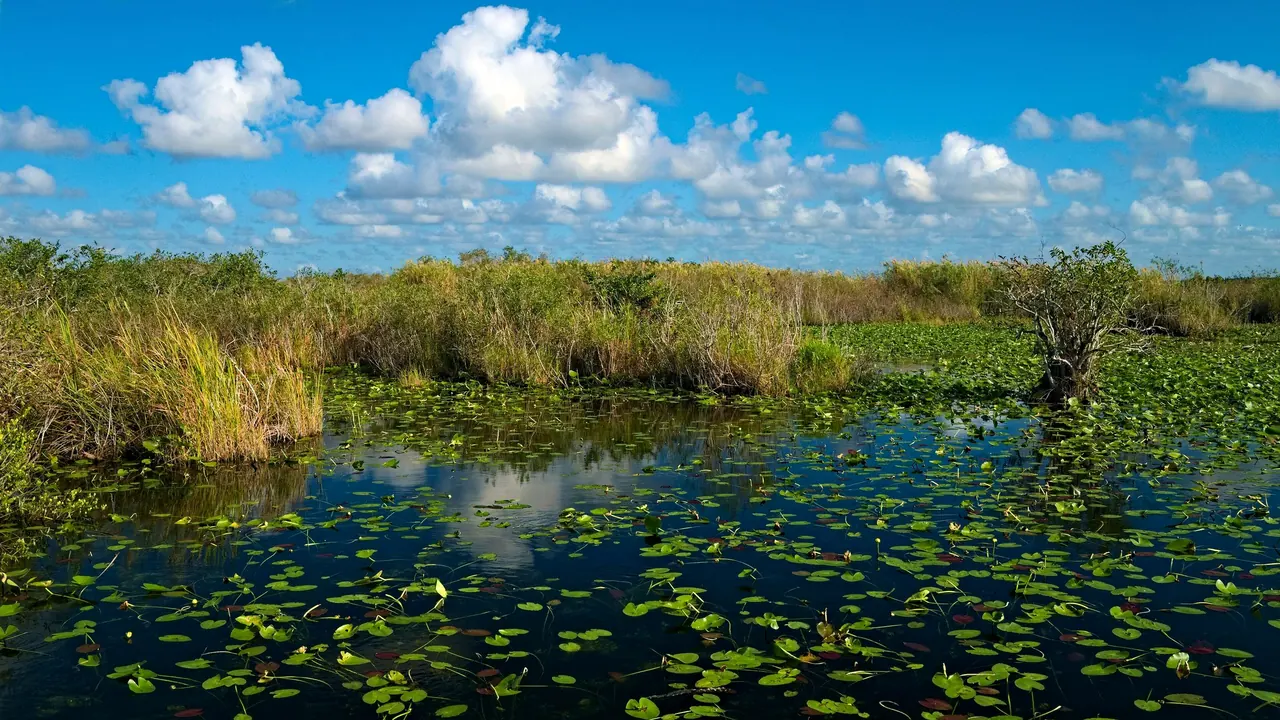
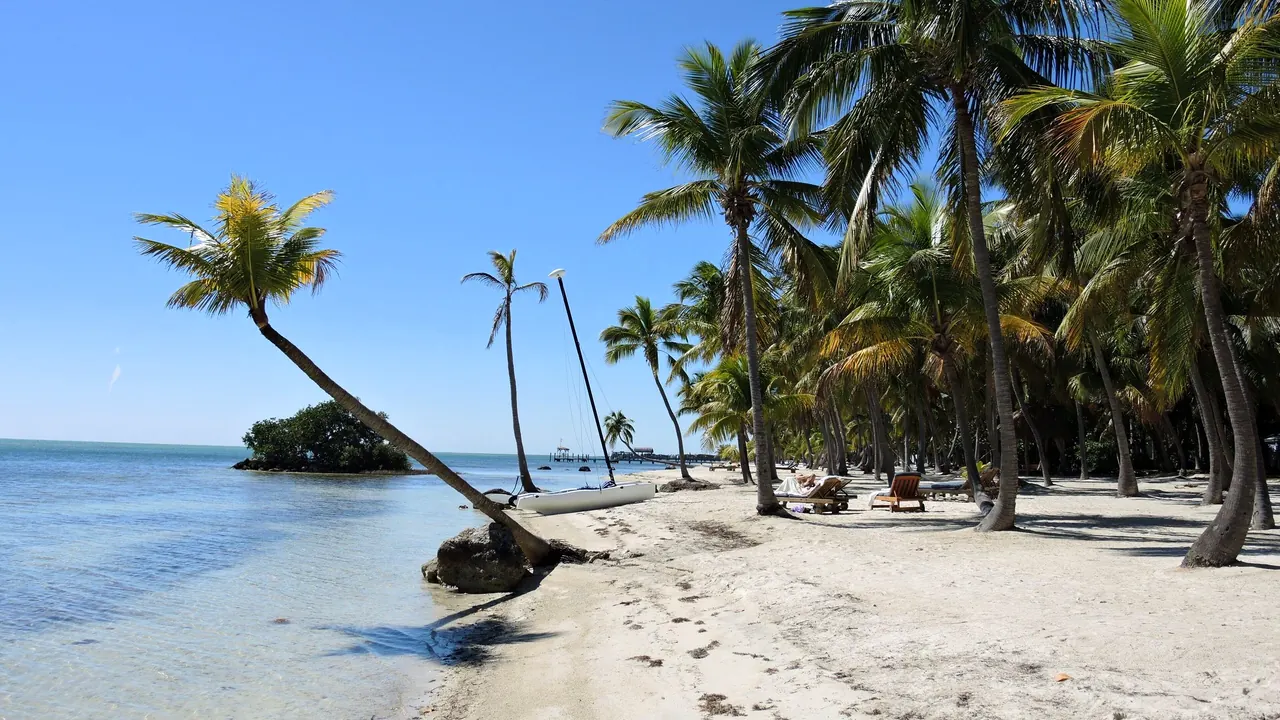
Photos: Everglades by Daniel Kraft, CC BY-SA 3.0, cropped; Islamorada by Pietro Valocchi, CC BY 3.0, cropped.
Everglades or Islamorada?
Our verdict in twelve categories, each scored against the same fixed benchmark cities, and the climate month by month, so you can choose for your trip.
Choose Everglades for
- prices
- nature and the outdoors
- day trips
Choose the Everglades if the point of the trip is wildlife and wild country. Alligators beside the Anhinga Trail, the long sawgrass views from Shark Valley, crocodiles and spoonbills at Flamingo and canoe routes through the Ten Thousand Islands give it the deeper nature experience of the two. Plain motels in Homestead and Florida City keep the cost down. What you give up is any beach, any real evening and much comfort, and the days are long drives.
Choose Islamorada for
- beaches
- wellness
- nightlife
Islamorada suits a vacation spent on and in the water. Bonefish flats, offshore sportfishing, reef snorkelling, the sandbar off Whale Harbor and sunset decks over Florida Bay make up a softer, more sociable trip, with resort spas and pools to fall back on. It costs a good deal more, its nature is mostly the sea rather than the swamp, and it lacks the Everglades' sense of scale.
Scoreboard
Twelve categories on one fixed scale from 0 to 100. The shaded stretch is the gap between the two.
Your match
Pick a travel style or drag the sliders, and both match scores follow your weighting.
Wins on prices and nature and the outdoors with your weighting.
Wins on beaches and wellness with your weighting.
What matters to you?
Category by category
What the scores mean for a trip.
Beaches & swimming
Neither is a sandy-beach destination, but in the Everglades swimming simply isn't on the menu. Its shore is mangrove and mudflat, and the water at Flamingo is shallow, murky and shared with alligators and crocodiles. The only sand is on wild keys in the Ten Thousand Islands, reached by boat or kayak, or a drive away at Marco Island.
Islamorada at least lets you get in the water. Anne's Beach and the roadside parks are thin strips where you wade a long way out over seagrass, and the real social swim is standing waist-deep at the sandbar off Whale Harbor. For proper sand, Bahia Honda is about an hour south.
Food & drink
Both cook what comes from the water, and stone crab claws turn up on menus in both places in winter. The Everglades' food is plainer and more of the swamp. The seafood houses of Everglades City and Chokoloskee serve grouper, gator tail and frog legs, the Tamiami Trail has fry bread and airboat-shack lunches, Homestead has Mexican and Central American cooking, and the Redland farm stands sell mangoes, lychees and fruit milkshakes. Choice is thin, and a serious meal means driving to Miami.
Islamorada eats better. The snapper, mahi-mahi and hogfish come off the boats the same day, and kitchens will often cook your own charter catch, served on open decks over the bay with conch fritters, smoked fish dip and key lime pie. Raw bars and a few local breweries round it out. The range stays narrow, though, and a week of it is mostly fried and grilled fish.
Culture & sights
These two are about level, and in both places the sights fill an afternoon rather than justify the trip. The Everglades' heritage is frontier and Native American: the Museum of the Everglades, the stilted Smallwood Store on Chokoloskee and the Miccosukee Indian Village. It adds two oddities, a Cold War missile site and the hand-carved Coral Castle, but they lie far apart along long roads.
Islamorada's sights cluster around the sea and its disasters. There is the History of Diving Museum and the monument to the 1935 Labor Day hurricane, and the ruins of the wrecking settlement on Indian Key make a short kayak trip.
Nightlife
Islamorada at least has a sunset crowd. Tiki bars and dockside decks along the highway fill with rum drinks and charter crews as the sun goes down, and weekends get louder with boaters, though everything is quiet early and there are no clubs. In the Everglades the evening is a few sports bars in Homestead, a dock bar in Everglades City, or the stars over Flamingo and the frogs in the sawgrass.
Nature & outdoors
The Everglades is the bigger wilderness and the richer experience on land. Its river of sawgrass runs south to the mangroves, with alligators and anhingas along the Anhinga Trail, a 24km loop across open prairie at Shark Valley, crocodiles and manatees at Flamingo, and the Wilderness Waterway for canoeists through the Ten Thousand Islands.
Islamorada's nature is underwater and offshore. It has some of the most famous bonefish and tarpon flats anywhere, Gulf Stream sportfishing, and snorkelling on Alligator Reef. Paddling the mangrove channels is easy, but the low keys offer little walking. Boats from its bay side head into the same Everglades backcountry.
Day trips
The Everglades has slightly better outings because it sits between two worlds. From Homestead, Miami's Little Havana and Art Deco Miami Beach are about an hour north, and Key Largo and Islamorada are under an hour south. A base in Everglades City puts the gallery streets of Naples within reach instead.
Islamorada lies in the middle of a single long highway. Key West is about two hours south, past the Turtle Hospital in Marathon and the old railway bridges, and Miami is about two hours north, so realistically you get one long day out in each direction.
Good for families
Islamorada is the easier family base. Small children can paddle on the warm, shallow flats, Theater of the Sea has sea lion and dolphin shows, feeding the tarpon at the docks rarely fails, and resort pools fill the gaps. Its boat days suit older children better than toddlers.
The Everglades thrills school-age kids, with the Shark Valley tram, airboat rides, the junior ranger programme and alligators beside the boardwalk. But the distances are long, there is little shade and facilities are far apart, and the summer mosquitoes can cut a walk short, so it works best as a winter visit with an early start.
Getting around
Both need a car, and in both the best of it is reached by boat, but the driving is different. In the Everglades the distances are long: about 60km from the Homestead entrance down to Flamingo, and around two hours between the eastern and Gulf sides, so you pick a base or split the stay. Islamorada is a 30km strip of short hops along one road that jams at weekends, with the Overseas Heritage Trail for cycling alongside.
Shopping & style
Islamorada has a little more to browse, though neither is a place to shop. It has a landmark fishing outfitter, galleries of marine art and a roadside village of craft studios. The Everglades offers Miccosukee patchwork and beadwork, good field guides at the visitor centres and an outlet centre in Florida City.
Affordability
The Everglades is clearly the cheaper trip. Homestead and Florida City are full of plain chain motels at well below Keys rates, even in the dry winter season. The costs come from the park entry fee, airboat and boat tours, and the car.
Islamorada is expensive in exactly the winter and spring months when most people come. Waterfront resorts and simple motels both charge high rates, eating out is priced for the resort coast, and fishing charters and dive trips add a lot more. Self-catering and a summer visit help, but not by much.
Live music & performing arts
Both are effectively blank for performing arts. Islamorada's live music is a cover guitarist on a tiki deck at sunset. The Everglades' nearest thing to a show is an alligator demonstration or an occasional festival on Miccosukee land. For concerts or theatre, both mean a drive to Miami.
Wellness & relaxation
Islamorada is the more restful stay. Several waterfront resorts have full spas with massages in open-air cabanas and sunrise yoga on the docks, and the slow sunset-to-dawn rhythm does the rest. The Everglades has no spa at all and nothing to soak in beyond a motel pool. Its calm comes from the tide-paced days of Chokoloskee and sunsets over the mangroves.
When should you go?
Pick your month. The climate figures are measured averages, not a forecast.
Everglades in July
Islamorada in July
Daytime high, °C
Rainfall in the month, mm
Where the figures come from
Everglades has no rain gauge within 25 km of the centre, so its rainfall comes from a gridded climate dataset read at the destination rather than from a gauge further away.
Everglades's sunshine is measured 51 km from the centre, at Miami International Airport.
Islamorada's temperatures are measured 63 km from the centre, at Key West Airport.
Islamorada has no rain gauge within 25 km of the centre, so its rainfall comes from a gridded climate dataset read at the destination rather than from a gauge further away.
Temperature and rainfall are climate normals, averaged over the years shown. Everglades: 1971-2000 (sunshine 1981-2010, rainfall 1991-2020) normals, Homestead / Homestead Base (22.5 km from centre). Islamorada: 1991-2020 (sunshine 1981-2010) normals, Key West Airport (63.3 km from centre).
Both share the same South Florida pattern. December to April is dry, with daytime highs in the mid-20s, and this is the comfortable season for walking boardwalks in the Everglades or spending long days on boats around Islamorada. From May the rains arrive and the heat climbs past 30°C. In the Everglades the wet months are heavier, with June bringing around 240mm, and the rain, storms and insects make summer hard work inland.
Islamorada's summer is a little gentler. Rain is lighter, with a noticeable lull in July, and it gets more sunshine all year. The sea there stays near 24°C even in midwinter and rises to about 30°C in August, so swimming works in every season. The Everglades has similarly warm water offshore, but there is no swimming to be had in the park itself, so its sea temperature matters only to people driving out to the coast.
Which traveller are you?
On a beach and sun trip, Islamorada is the better choice. Its beaches are narrow, but you can wade the shallow flats, stand in the Whale Harbor sandbar and drive to Bahia Honda. In the Everglades the water is murky and has crocodiles in it, so a swim means leaving the region.
For a trip on a tight budget, the Everglades is far easier. Homestead and Florida City have plenty of plain chain motels that cost much less than the Keys. In Islamorada even simple motels charge high-season rates, and the charters and dive trips that fill a stay are costly.
For an outdoors trip centred on wildlife, the Everglades has more to give. You get alligators a few metres from the boardwalk, cycling at Shark Valley, crocodiles at Flamingo and multi-day canoe routes. Islamorada is better only for anglers and snorkellers, because on land there is little more than short trails.
Before you go
| Measure | Everglades | Islamorada |
|---|---|---|
| Currency | US Dollar (USD) | US Dollar (USD) |
| Sockets | AB120 V, 60 Hz | AB120 V, 60 Hz |
| Driving side | Right | Right |
| Time zone | UTC-5, UTC-4 in summer | UTC-5, UTC-4 in summer |
| Emergency number | 911 | 911 |
| Main airport | Miami International Airport (MIA)198 non-stop destinations | Miami International Airport (MIA)198 non-stop destinations |
| Public holidays this year | 11 days | 11 days |
By the numbers
| Measure | Everglades | Islamorada |
|---|---|---|
| Population | - | 7,107 |
| People per km² | - | 418 |
| Swim season, months above 21 °C | 12 months | 12 months |
Where else could you go?
Every comparison below shares a destination with this one, so you can follow Everglades or Islamorada somewhere new.
- Key Largovs Islamorada
- Key Largovs Everglades
- Marathonvs Islamorada
- Miamivs Everglades
- Marathonvs Everglades
- Florida Keysvs Everglades