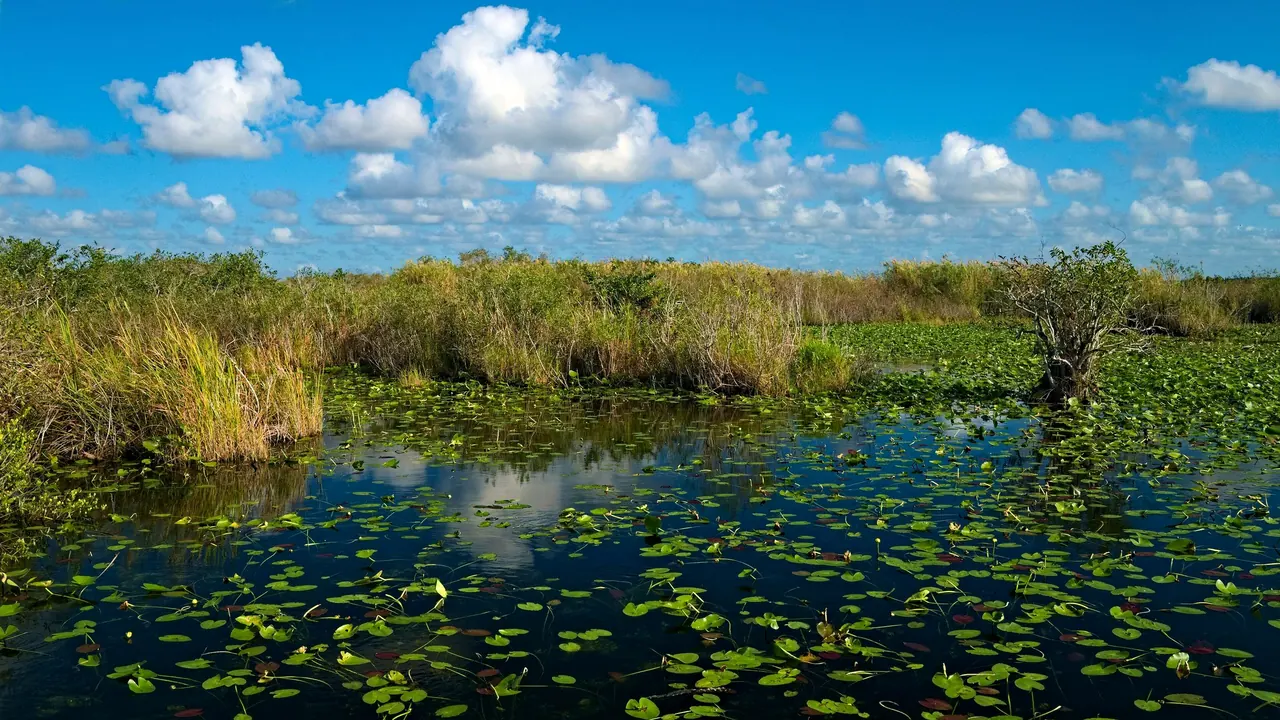
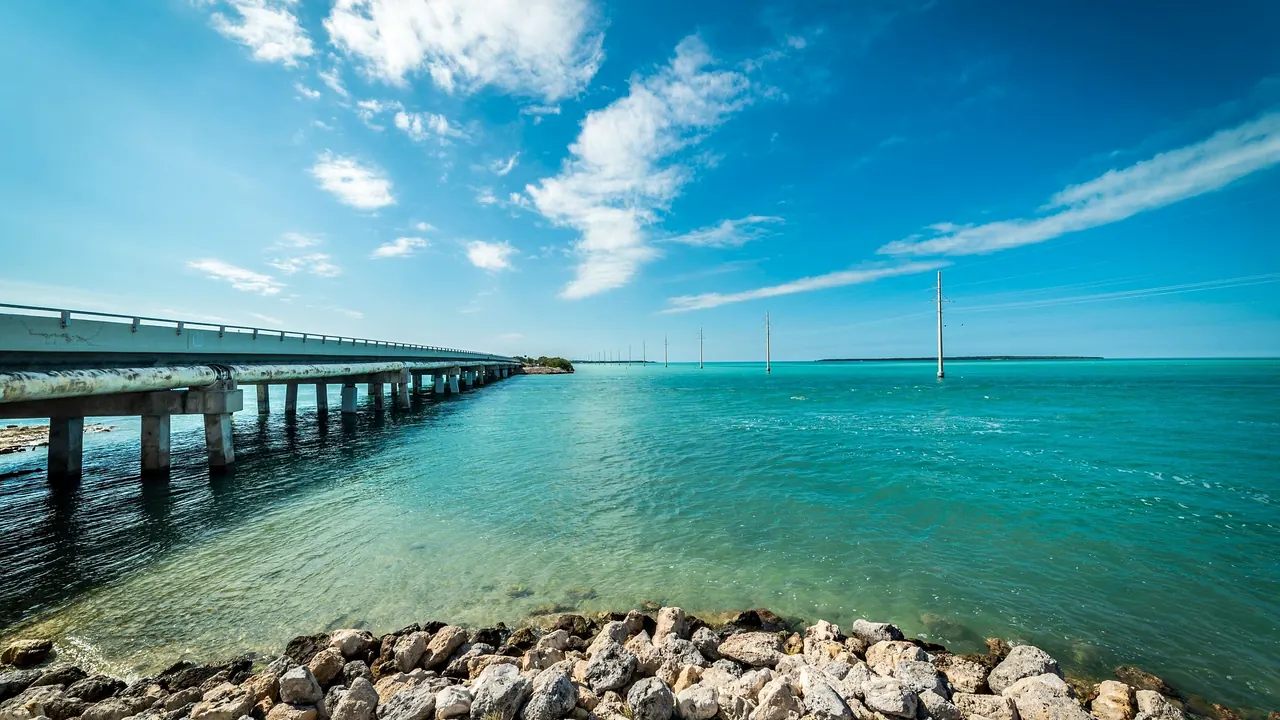
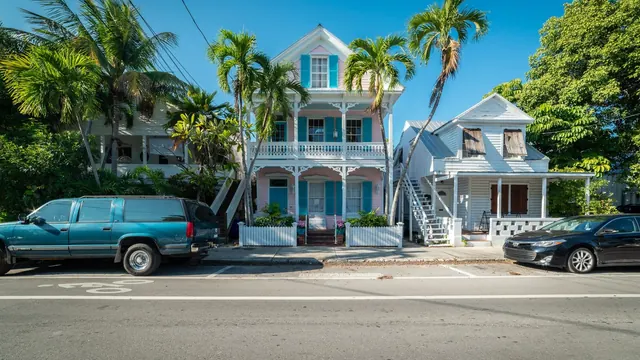
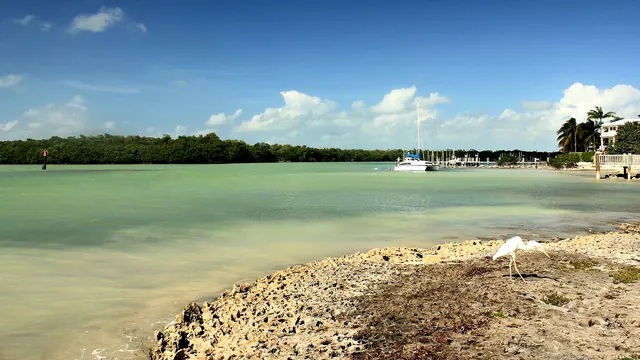
Photos: Everglades by Daniel Kraft, CC BY-SA 3.0, cropped; Florida Keys by Dominik Gryzbon, Pexels License.
Everglades or Florida Keys?
Our verdict in twelve categories, each scored against the same fixed benchmark cities, and the climate month by month, so you can choose for your trip.
Choose Everglades for
- prices
- day trips
- nature and the outdoors
The Everglades is for travellers who come to watch wildlife and are happy to give up the beach, the bars and the restaurants to do it. Alligators beside the boardwalks, spoonbills in Florida Bay and canoe routes through the Ten Thousand Islands are the whole point, and a cheap motel base in Homestead or Florida City keeps the cost down. It also works well as a base for outings, with Miami, Naples and the Upper Keys all within easy driving distance.
Choose Florida Keys for
- nightlife
- beaches
- live music and the arts
Choose the Keys if you want the water to be the centre of the trip and a town to come back to in the evening. Reef snorkelling, backcountry fishing and a few good swimming beaches fill the days, and Key West adds Old Town's history, Cuban food and a long night on Duval Street. You pay much more for it, and the wildlife is mostly under the water rather than on show from a trail.
Scoreboard
Twelve categories on one fixed scale from 0 to 100. The shaded stretch is the gap between the two.
Your match
Pick a travel style or drag the sliders, and both match scores follow your weighting.
Wins on prices and day trips with your weighting.
Wins on nightlife and beaches with your weighting.
What matters to you?
Category by category
What the scores mean for a trip.
Beaches & swimming
Swimming is simply not part of an Everglades visit. The shore is mangrove, mudflat and marl, and alligators and crocodiles live in the water. The small sandy keys of the Ten Thousand Islands are places to land a kayak rather than spend a day, so the nearest real beach is Marco Island or the Upper Keys.
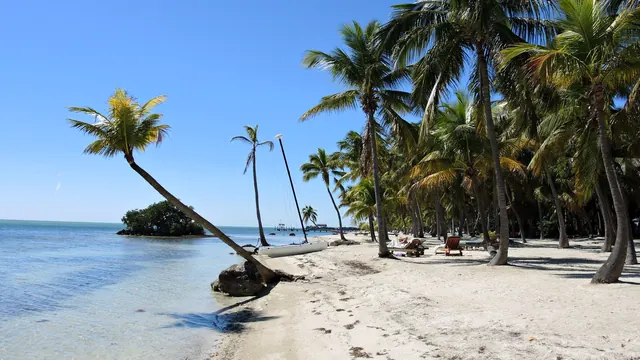
The Keys are no sandy paradise either, because the reef stops the waves that build beaches and much of the shore is rock or seagrass flats. Still, Bahia Honda's sand and clear channels, the calm shallows at Sombrero Beach and the snorkelling shore at Fort Zachary Taylor give you somewhere to swim every day, along with the docks and boats where most visitors get into the water.
Food & drink
Both regions serve stone crab claws in winter, but the Everglades stops at the basics. You get grouper, gator tail and frog legs at the seafood houses of Everglades City and Chokoloskee, fry bread along the Tamiami Trail, and Mexican cooking and Redland fruit stands around Homestead. Anything more ambitious means driving to Miami.
The Keys give you more to choose from. Yellowtail snapper, hogfish and spiny lobster come straight off the boats, conch fritters and Key lime pie are on every menu, and in Key West you add Cuban coffee, Cuban sandwiches and a handful of proper Old Town dining rooms.
Culture & sights
The Everglades' sights are scattered curiosities: the Museum of the Everglades, the stilted Smallwood Store on Chokoloskee, the Miccosukee Indian Village, a Cold War missile site and Coral Castle near Homestead. Each one fills an afternoon, and none of them is a reason to come.
The Keys have a real historic town in Key West. You can walk Old Town's conch houses and Victorian porches and visit the Hemingway Home and the Truman Little White House. The ferry or seaplane out to Fort Jefferson in the Dry Tortugas is the region's most striking sight, though there is little history beyond Key West.
Nightlife
In the Everglades, an evening out means a sports bar in Homestead or a fishing-dock bar in Everglades City, or else stars over Flamingo and frogs calling in the sawgrass. Miami is the nearest place for a proper night out.
Key West is one of the liveliest bar towns in Florida. The night starts with the sunset crowd at Mallory Square and carries on along Duval Street, with open-sided bars, live bands, drag cabaret and drinking in the street until very late. It is a bar-hopping scene rather than a club scene, and up the chain the tiki bars wind down early.
Nature & outdoors
Both regions are about wild water, but the Everglades puts its wildlife right in front of you. Alligators and anhingas sit a few metres from the Anhinga Trail, crocodiles and manatees share the marina at Flamingo, and the sawgrass prairie at Shark Valley and the canoe routes through the Ten Thousand Islands give it a sense of scale that the Keys lack.
The Keys' strength lies offshore. There is snorkelling and diving at John Pennekamp, Looe Key and the Dry Tortugas, and some of the world's most famous bonefish and tarpon fishing out of Islamorada. Much of the coral is heat-stressed, though, and on land the islands offer little beyond Key deer, mangrove paddles and wading birds.
Day trips
The Everglades sits between two coasts, which makes it a good base for outings. From Homestead you are about an hour from Coral Gables, Little Havana and Miami Beach, and Key Largo and Islamorada are even closer. From Everglades City, Naples and Marco Island are an easy drive up the Gulf coast.
The Keys are strung along one road, so most outings are drives to towns that look much like the one you left. The Dry Tortugas boat from Key West is the standout day out. Miami is further from Key Largo than it is from Homestead.
Good for families
Both work for families, but in different ways. The Everglades is a wildlife outing: alligators along the boardwalk, the Shark Valley tram, airboat rides and the junior ranger programme, with Zoo Miami close by. Long distances, little shade and summer mosquitoes make an early winter start and a pool hotel in Florida City the way to do it.
The Keys give children more time in the water. Marathon has the sea turtle hospital and Sombrero Beach, Islamorada and Grassy Key have the dolphin parks, and John Pennekamp has glass-bottom boats. Bahia Honda has the best family beach, while Key West and its drinking streets suit families less well.
Getting around
You need a car in both, and in both the real exploring is done by boat. The Everglades has two sides about two hours apart by road, so you either pick a base or split the stay. Its mangrove backcountry can only be reached by canoe or guided boat.
In the Keys, everything runs along the single Overseas Highway, where a hold-up on a bridge stops all traffic. The one advantage is Key West, whose flat, compact Old Town you can explore on foot or by bicycle.
Shopping & style
Neither region is worth visiting for shopping. In the Everglades the finds are Miccosukee patchwork and beadwork along the Tamiami Trail and good field guides at the visitor centres, plus the outlet centre in Florida City.
Key West gives you a little more to browse. Old Town's side streets have galleries, local photography, handmade sandals and sea-glass jewellery, a step up from the T-shirt and hot sauce shops on Duval Street.
Affordability
The Everglades costs noticeably less. Plain chain motels in Homestead and Florida City are much cheaper than anything in the Keys, even in the winter dry season. Most of the money goes on airboat rides, boat tours and kayak outfitters, on top of the park fee.
In the Keys, everything costs more. Rooms in Key West and Islamorada in winter are among the dearest in the country, and dive trips, charters and waterfront dinners add up quickly. Marathon, the Lower Keys and the hot summer months take some of the edge off, and some visitors stay in Florida City and drive down to the Upper Keys.
Live music & performing arts
The Everglades has nothing that could be called a stage. The closest you get is an alligator demonstration at a roadside attraction or an occasional festival on Miccosukee land.
Key West at least has a small-town arts life. The Tennessee Williams Theatre and a few small playhouses stage shows in winter, a local symphony gives a short season, and singer-songwriters, cover bands and drag cabaret play the Duval Street bars every day. It is modest, but it is there.
Wellness & relaxation
The Everglades has no spa or hotel pampering beyond a pool in Homestead. Its calm comes from the tide-driven days of Everglades City and Chokoloskee and from sunsets over the mangroves.
The Keys make switching off easier. There are resort spas on private islands and waterfront properties around Islamorada and the Lower Keys, plenty of massage and yoga, and small cottages on the water in the quieter Middle and Lower Keys where days pass on boats and docks.
When should you go?
Pick your month. The climate figures are measured averages, not a forecast.
Everglades in July
Florida Keys in July
Daytime high, °C
Rainfall in the month, mm
Where the figures come from
Everglades has no rain gauge within 25 km of the centre, so its rainfall comes from a gridded climate dataset read at the destination rather than from a gauge further away.
Everglades's sunshine is measured 51 km from the centre, at Miami International Airport.
Florida Keys's temperatures are measured 69 km from the centre, at Key West Airport.
Florida Keys has no rain gauge within 25 km of the centre, so its rainfall comes from a gridded climate dataset read at the destination rather than from a gauge further away.
Temperature and rainfall are climate normals, averaged over the years shown. Everglades: 1971-2000 (sunshine 1981-2010, rainfall 1991-2020) normals, Homestead / Homestead Base (22.5 km from centre). Florida Keys: 1991-2020 (sunshine 1981-2010) normals, Key West Airport (68.8 km from centre).
Both regions follow the same subtropical pattern. Winter and spring are warm, dry and pleasant for being outdoors, and summer is hot, humid and stormy. December to April is clearly the time for the Everglades. Rain is light, the days are warm without being hot, birds gather at the shrinking waterholes and the trails are comfortable. From May the wet season arrives in earnest, with rain reaching about 240mm in June. The heat, storms and mosquitoes make long walks hard going until October.
The Keys get far less rain over the same summer months, peaking near 139mm in August, and they get more sunshine, especially from April to July. The sea around both regions reaches about 30°C in high summer and stays near 23°C in winter. In the Keys you can swim and snorkel all year, though the water feels fresh in winter and June to October is hurricane season. April is the Keys' best month: the sea is warming, the sun is strong and rain is still only about 56mm. The showers pick up from May. In the Everglades, nothing beats the dry winter months.
Which traveller are you?
For an outdoors trip, the Everglades wins on land and in the mangroves. You can watch alligators and herons from the Anhinga Trail, cycle the Shark Valley loop and canoe the Wilderness Waterway. The Keys' outdoor life is mostly snorkelling and fishing.
For a food and nightlife trip, go to the Keys. Key West brings Cuban bakeries, fish caught that morning, a few serious Old Town dining rooms and a late bar crawl along Duval Street. In the Everglades the seafood houses and dock bars close early.
On a trip on a tight budget, the Everglades is far easier on the wallet. Plain chain motels in Homestead and Florida City cost much less than rooms in the Keys, and boardwalk trails need nothing but the park entry fee and a car.
Before you go
| Measure | Everglades | Florida Keys |
|---|---|---|
| Currency | US Dollar (USD) | US Dollar (USD) |
| Sockets | AB120 V, 60 Hz | AB120 V, 60 Hz |
| Driving side | Right | Right |
| Time zone | UTC-5, UTC-4 in summer | UTC-5, UTC-4 in summer |
| Emergency number | 911 | 911 |
| Main airport | Miami International Airport (MIA)198 non-stop destinations | Key West International Airport (EYW)24 non-stop destinations |
| Public holidays this year | 11 days | 11 days |
By the numbers
| Measure | Everglades | Florida Keys |
|---|---|---|
| Swim season, months above 21 °C | 12 months | 12 months |
Where else could you go?
Every comparison below shares a destination with this one, so you can follow Everglades or Florida Keys somewhere new.
- Key Largovs Everglades
- Islamoradavs Everglades
- Miamivs Everglades
- Marathonvs Everglades
- Sanibelvs Everglades
- Sanibelvs Florida Keys