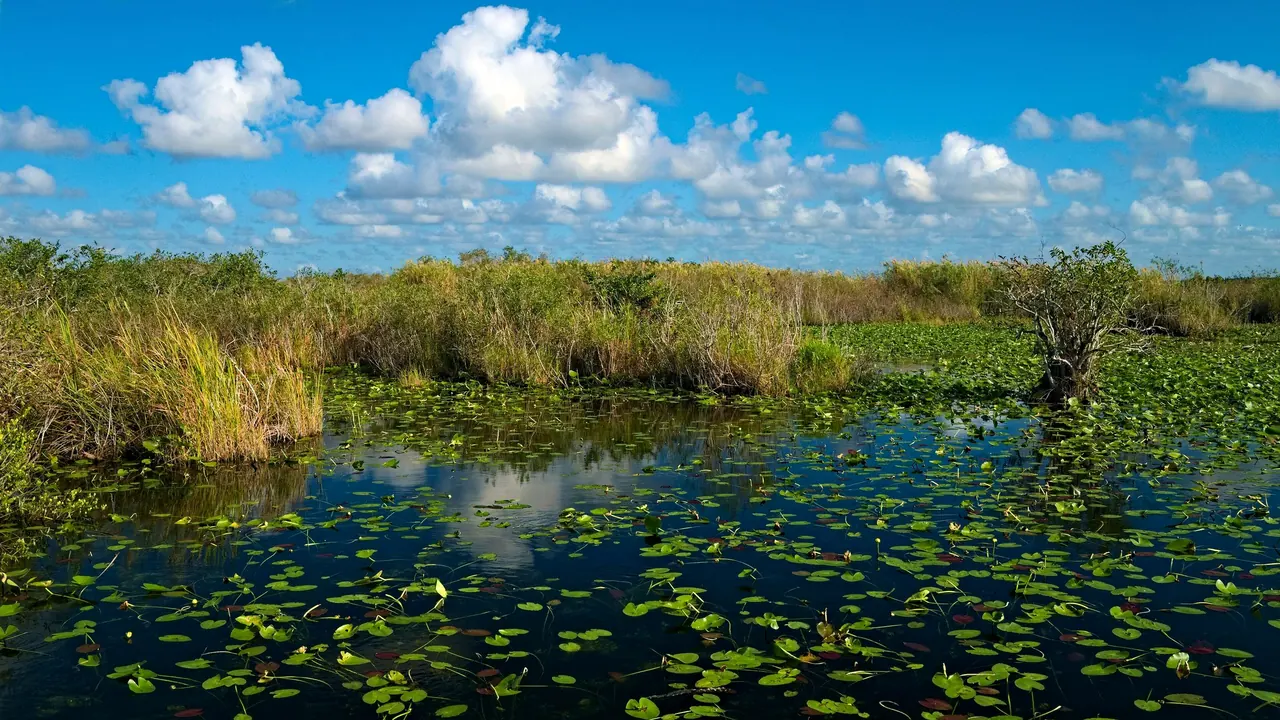
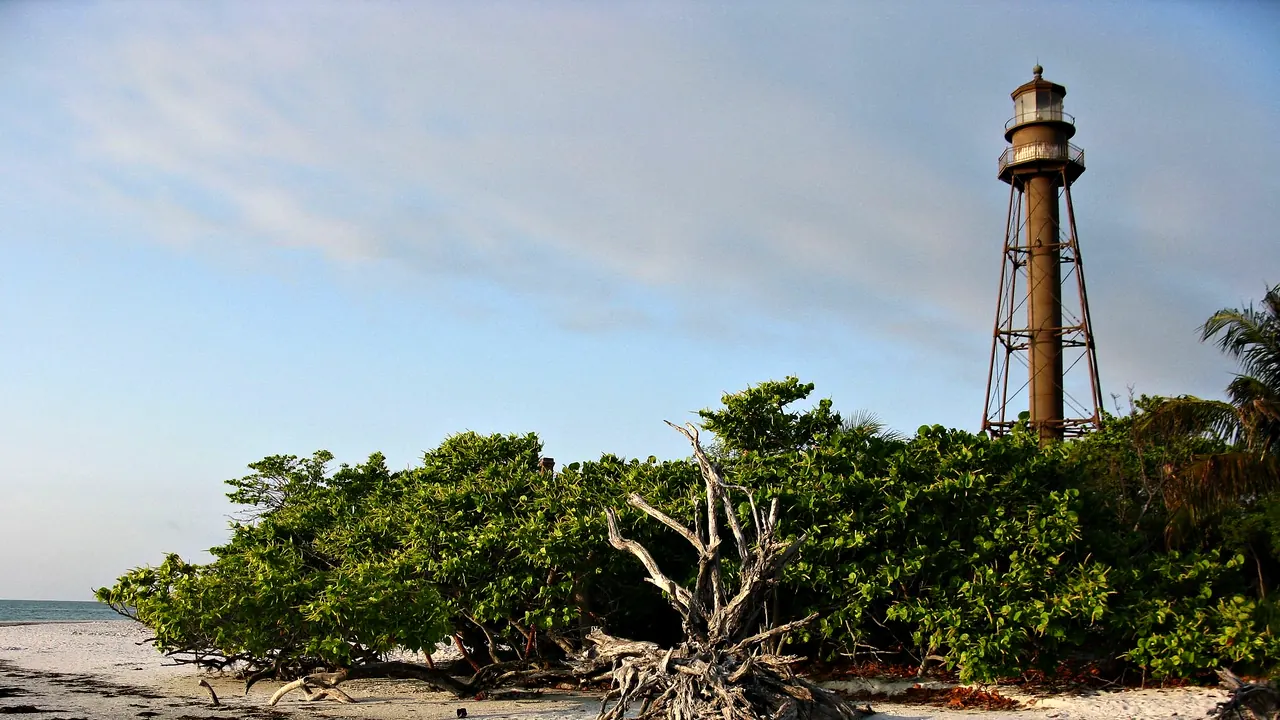
Photos: Everglades by Daniel Kraft, CC BY-SA 3.0, cropped; Sanibel by Eeviann, CC BY-SA 3.0, cropped.
Everglades or Sanibel?
Our verdict in twelve categories, each scored against the same fixed benchmark cities, and the climate month by month, so you can choose for your trip.
Choose Everglades for
- nature and the outdoors
- prices
- day trips
The Everglades is for travellers who come for wildlife and wilderness on a big scale: alligators beside the Anhinga Trail, crocodiles and spoonbills at Flamingo, and days paddling the Ten Thousand Islands. You need a car and some patience with long drives, plain motels and simple food. In return, rooms in Homestead and Florida City cost far less, and Miami and the Upper Keys are close enough for a day out.
Choose Sanibel for
- beaches
- wellness
- families
Choose Sanibel for a slow beach vacation, with soft sand along the Gulf shore, shelling at low tide, calm shallow water for children and bike paths between the beaches and the Ding Darling refuge. Its wildlife is gentler and easier to reach than the swamp's, and it makes the more restful and family-friendly base. It costs a good deal more, though, and there is little to do once the sun has set.
Scoreboard
Twelve categories on one fixed scale from 0 to 100. The shaded stretch is the gap between the two.
Your match
Pick a travel style or drag the sliders, and both match scores follow your weighting.
Wins on nature and the outdoors and prices with your weighting.
Wins on beaches and wellness with your weighting.
What matters to you?
Category by category
What the scores mean for a trip.
Beaches & swimming
On the beach, the two could hardly be further apart. In the Everglades the coast is something you watch from a boardwalk or a boat. The water off Flamingo is shallow and cloudy, and it belongs to crocodiles and alligators. The only sand is on the small keys of the Ten Thousand Islands, which you reach by kayak or on a tour and leave again the same day.
Sanibel is the opposite. Sand runs along nearly all of its Gulf side, so getting to the water is easy, and where the swamp's water is murky and wild, the sea here is clear and gentle and shallow enough for small children to wade, though greener than the Caribbean. It suits families, shell collectors and anyone after a quieter stretch of shore, with Bowman's at the western end the least developed and the Captiva beaches the pick at sunset. The one caveat is red tide, which in some years shuts the shore for a spell.
Food & drink
Neither is a place to eat well, and the menus overlap: both serve grouper, and stone crab claws in season. The real difference is in character.
The Everglades side is rougher and more mixed, with gator tail and frog legs in Everglades City, Miccosukee fry bread on the Tamiami Trail, Mexican and Central American cooking in Homestead, and fruit milkshakes from the Redland farm stands. Sanibel's seafood comes in porch restaurants and breakfast spots along Periwinkle Way, relaxed but much alike. For a serious meal you drive to Miami from one and to Fort Myers or Naples from the other.
Culture & sights
For an afternoon of sightseeing, Sanibel is the easier choice, because its few sights sit close together and suit the island. The Everglades has its handful spread along long roads: the Museum of the Everglades and the stilted Smallwood Store on the Gulf side, the Miccosukee Indian Village on the Tamiami Trail, a Cold War missile site deep in the park and the hand-carved Coral Castle near Homestead. They are odd and interesting, but none of them is worth the drive on its own.
On Sanibel, the Bailey-Matthews National Shell Museum is the only museum of its kind in the country. The 1884 iron lighthouse and the pioneer cottages, schoolhouse and post office of the historical village are a short ride away. All of it fits into a morning, which leaves the rest of the day for the beach.
Nightlife
Both go quiet early, so neither suits a night out. In the Everglades the choice is a sports bar or taproom in Homestead, a dock bar in Everglades City, or stars and frog calls at Flamingo. On Sanibel the evening is sunset and then dinner, perhaps with a guitarist in a Captiva restaurant bar in winter. Miami is about an hour from the Everglades, while Sanibel's nearest late nights are at Fort Myers Beach.
Nature & outdoors
The Everglades gives you wilderness on a scale Sanibel cannot approach. Sawgrass plains drain slowly south towards the mangroves of Florida Bay, so far that you measure the distances in hours of driving. The animals are close and plentiful: alligators and anhingas a few metres from the Anhinga Trail boardwalk, the 24km Shark Valley loop across open prairie, crocodiles and manatees in the Flamingo marina, and canoe routes through the Ten Thousand Islands that take several days.
On Sanibel, nature is mostly the refuge. Ding Darling's Wildlife Drive brings spoonbills, white pelicans and alligators into view on a winter morning, and Tarpon Bay has mangrove tunnels for a kayak or paddleboard. It is easy and rewarding, but it fills a morning rather than a week. Beyond it the island offers flat bike paths and fishing in the passes.
Day trips
The Everglades sits between two big draws. Miami, with Little Havana, Coral Gables and the Art Deco streets of Miami Beach, is about an hour north of Homestead, and Key Largo and Islamorada are under an hour south. From the Gulf side, Naples and Marco Island are close by.
Sanibel's outings are gentler. Captiva is just over a bridge and Fort Myers has the Edison and Ford Winter Estates. The best days are the boat trips to Cabbage Key, Cayo Costa and Boca Grande, though they are pleasant rather than memorable.
Good for families
The Everglades thrills school-age children with alligators, the Shark Valley tram and airboat rides. Long distances, scarce shade and summer mosquitoes make it harder going, though, and toddlers manage only the short boardwalks.
Sanibel is the easier family base. The water is shallow and gentle, shelling keeps small children busy for hours, the flat bike paths are safe, the shell museum has touch tanks, and cottages and condos give room to spread out. Teenagers may get bored after a few days, since there is nothing built for entertainment.
Getting around
You need a car in both, but you use it differently. In the Everglades the drives are long: about 60km from the Homestead entrance to Flamingo, and two hours between the eastern and Gulf sides. The backcountry is reached only by boat or kayak.
On Sanibel the car is mainly for crossing the causeway. Once you are there, the flat shared paths make cycling the best way between the beaches and the refuge, though winter traffic clogs Periwinkle Way.
Shopping & style
Sanibel gives a browser a little more to do, though still not much. In the Everglades, the buys worth having are Miccosukee patchwork and beadwork from the Tamiami Trail and field guides from the visitor centres. There is also an outlet centre in Florida City, and beyond that it is gator souvenirs and fishing supplies.
On Sanibel, the small plazas along Periwinkle Way and in Captiva village have shell shops, resort-wear boutiques and galleries of coastal paintings, photography and jewellery, enough for an hour on a rainy afternoon. For anything more, people go to the malls on the mainland.
Affordability
The Everglades is the cheaper stay, mainly because Homestead and Florida City have plenty of plain chain motels that cost less than Miami or the Keys, even in winter. Most of your spending goes on park entry and guided airboat or boat trips.
Sanibel is costly from January to April. There are no budget hotels, cottages go at high-season rates and meals are at resort prices. A rental with a kitchen or a base in Fort Myers helps, and the beaches and bike paths themselves cost little.
Live music & performing arts
Sanibel has a small winter season of chamber concerts, talks and touring theatre, a few restaurants with acoustic players, and the Fort Myers performing arts hall across the causeway. The Everglades has almost nothing beyond an alligator show or the odd festival on Miccosukee land, so any concert means a drive to Miami.
Wellness & relaxation
Sanibel is the more restful of the two. There are no high-rises, the roads are slow, the days follow the tide and the sunset, and the larger resorts on Sanibel and Captiva have full-service spas. The Everglades has no spa and nothing to soak in beyond a motel pool, though an evening over the mangroves at Chokoloskee has a calm of its own. For proper treatments from there, you go to Naples or the Keys.
When should you go?
Pick your month. The climate figures are measured averages, not a forecast.
Everglades in July
Sanibel in July
Daytime high, °C
Rainfall in the month, mm
Where the figures come from
Everglades has no rain gauge within 25 km of the centre, so its rainfall comes from a gridded climate dataset read at the destination rather than from a gauge further away.
Everglades's sunshine is measured 51 km from the centre, at Miami International Airport.
Sanibel has no rain gauge within 25 km of the centre, so its rainfall comes from a gridded climate dataset read at the destination rather than from a gauge further away.
Temperature and rainfall are climate normals, averaged over the years shown. Everglades: 1971-2000 (sunshine 1981-2010, rainfall 1991-2020) normals, Homestead / Homestead Base (22.5 km from centre). Sanibel: 1991-2020 normals, Fort Myers / Page Park (22.5 km from centre).
Both are at their best in the dry winter months from December to April, when highs sit in the mid-twenties and rain is light. The Everglades turns wet sooner. Rain picks up in May and peaks at around 240mm in June, and the storms and mosquitoes that come with it make swamp walks hard work, although sunshine stays generous all year. Sanibel stays dry through May, and its wet season then runs from June to September.
For swimming the two pull in opposite directions. Sanibel's winter sea is only about 20°C, refreshing rather than warm. It reaches 30°C from June to September, when afternoons climb to 33°C and outdoor plans move to the early morning. The Everglades has no beach to swim from, so its sea temperature matters only on a drive to the Keys. Its best time is the dry winter, when birds gather at the shrinking waterholes.
Which traveller are you?
For a beach and sun trip, Sanibel wins outright. Its Gulf shore is soft sand and calm water, with shelling and sunsets at Bowman's Beach and Blind Pass. The Everglades has mangrove and mudflat, so swimmers have to drive to the Keys.
On an outdoors trip, the Everglades is the choice. You get alligators on the Anhinga Trail, the Shark Valley bike loop, crocodiles at Flamingo and canoe routes through the Ten Thousand Islands, days of wilderness that Sanibel's refuge only samples in a morning.
On a tight budget, the Everglades goes further. Chain motels in Homestead and Florida City cost far less than Sanibel's high-season cottages and condos, and the island has no budget hotels. Guided boat and airboat trips do add up quickly, though.
Before you go
| Measure | Everglades | Sanibel |
|---|---|---|
| Currency | US Dollar (USD) | US Dollar (USD) |
| Sockets | AB120 V, 60 Hz | AB120 V, 60 Hz |
| Driving side | Right | Right |
| Time zone | UTC-5, UTC-4 in summer | UTC-5, UTC-4 in summer |
| Emergency number | 911 | 911 |
| Main airport | Miami International Airport (MIA)198 non-stop destinations | Southwest Florida International Airport (RSW)79 non-stop destinations |
| Public holidays this year | 11 days | 11 days |
By the numbers
| Measure | Everglades | Sanibel |
|---|---|---|
| Swim season, months above 21 °C | 12 months | 10 months |
Where else could you go?
Every comparison below shares a destination with this one, so you can follow Everglades or Sanibel somewhere new.
- Key Largovs Everglades
- Islamoradavs Everglades
- Miamivs Everglades
- Marco Islandvs Sanibel
- Marathonvs Everglades
- Siesta Keyvs Sanibel