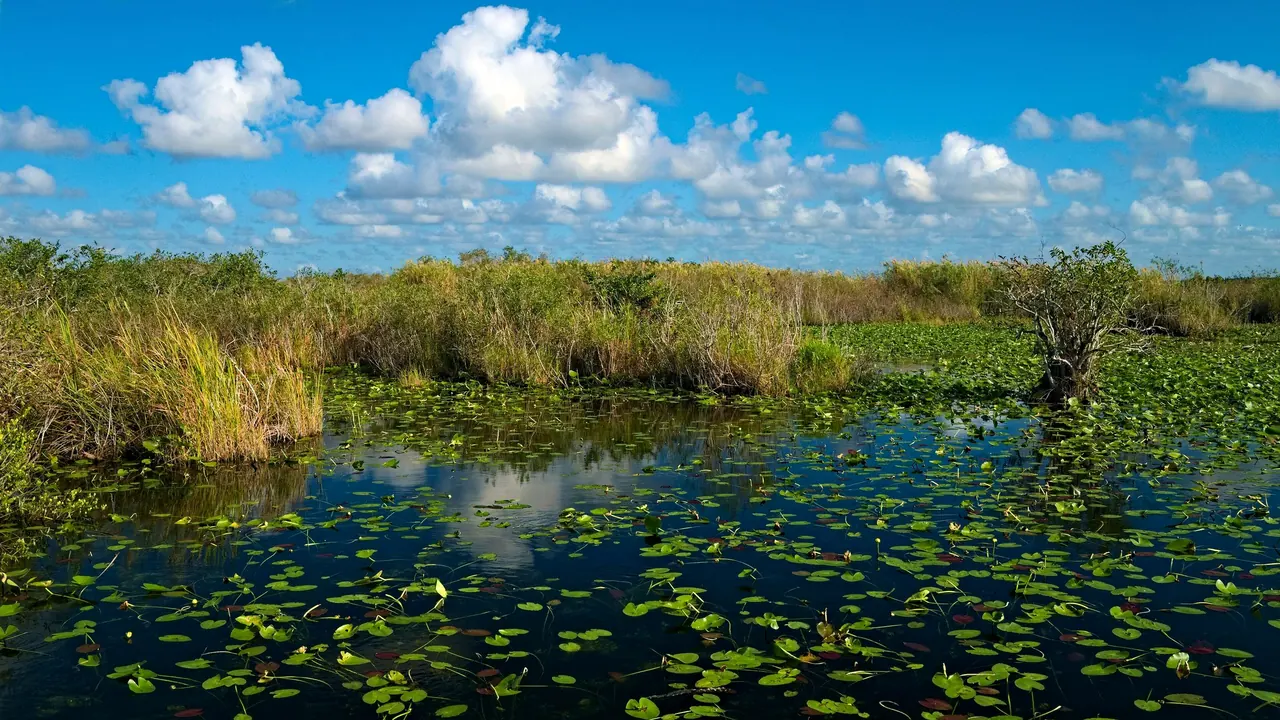
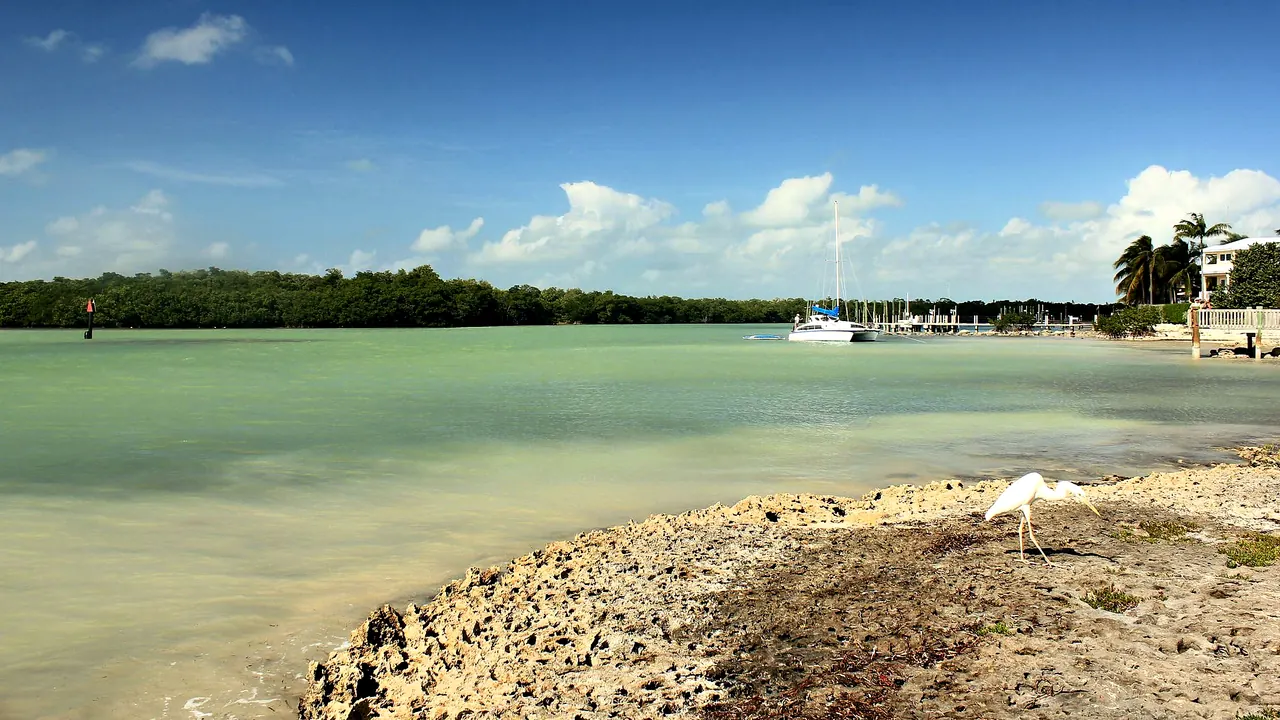
Photos: Everglades by Daniel Kraft, CC BY-SA 3.0, cropped; Marathon by Yinan Chen, Public domain.
Everglades or Marathon?
Our verdict in twelve categories, each scored against the same fixed benchmark cities, and the climate month by month, so you can choose for your trip.
Choose Everglades for
- nature and the outdoors
- day trips
- prices
The Everglades is for travellers who come to see wild country up close: alligators a few metres from the Anhinga Trail boardwalk, spoonbills feeding off Flamingo, a canoe or kayak among the mangrove keys of the Ten Thousand Islands. It is also the cheaper base, with plain motels in Homestead and Florida City, and Miami and the Upper Keys are both close enough for a day out. In return you get no real beach, very quiet evenings and long drives in the heat.
Choose Marathon for
- beaches
- wellness
- nightlife
Marathon suits a slower trip built around the water. You can swim from Sombrero Beach, cross the Seven Mile Bridge to Bahia Honda, snorkel over Sombrero Reef and fish the flats for bonefish and tarpon. Families with animal-mad children, people who unwind at sunset bars and anyone who wants calm sea every day will be happier here, as long as they accept Keys prices and a short list of outings.
Scoreboard
Twelve categories on one fixed scale from 0 to 100. The shaded stretch is the gap between the two.
Your match
Pick a travel style or drag the sliders, and both match scores follow your weighting.
Wins on nature and the outdoors and day trips with your weighting.
Wins on beaches and wellness with your weighting.
What matters to you?
Category by category
What the scores mean for a trip.
Beaches & swimming
Marathon wins easily. It has no long surf beaches, but Sombrero Beach offers palms, shade and gentle clear water, and Bahia Honda across the Seven Mile Bridge has the pale sand and properly clear sea that people picture when they think of the Keys. A boat trip out to the reef is many visitors' best swim.
The Everglades shore is mangrove, marl and murky shallows that alligators and crocodiles share, so nobody swims there. Boats reach small sandy keys in the Ten Thousand Islands, but for an actual beach day you drive to Marco Island or down to the Upper Keys.
Food & drink
Both eat simply and from the water, but Marathon does it more reliably. Fish comes straight off the boats to waterfront tables: blackened mahi, conch fritters, Keys pink shrimp, spiny lobster in season and key lime pie, and some fish markets will cook what you caught yourself.
The Everglades is rougher at the edges and more scattered. Stone crab and gator tail in Everglades City, frog legs and fry bread along the Tamiami Trail, and Mexican cooking and Redland fruit stands around Homestead give it a different range, though for a serious dinner you head to Miami.
Culture & sights
Neither is a place for sightseeing, and each has about an afternoon's worth. The Everglades' sights tell the story of the frontier and the tribes: the Museum of the Everglades, the stilted Smallwood Store on Chokoloskee, the Miccosukee Indian Village, plus oddities such as a Cold War missile site and the hand-carved Coral Castle near Homestead.
Marathon has one story, Henry Flagler's Overseas Railroad, told through the workers' cottages on Pigeon Key and the old Seven Mile Bridge, with Crane Point covering natural history and early settlement. The Everglades sights are spread far apart, while Marathon's sit close together along one road.
Nightlife
Marathon has a social evening, which the Everglades mostly lacks. Crowds gather at open-air waterfront and tiki bars to watch the sun set over the Gulf, though the anglers drift off early. In the Everglades a sports bar in Homestead or a dock bar in Everglades City is about all there is, and the real pleasure is the starry sky over Flamingo. A true night out means Miami from one and Duval Street in Key West from the other.
Nature & outdoors
The Everglades is the stronger wilderness. A river of sawgrass flows south to the mangroves, wildlife sits right beside the Anhinga Trail, there is a 24km loop across open prairie at Shark Valley, crocodiles and manatees share the Flamingo marina, and the Ten Thousand Islands and Big Cypress offer days of paddling and swamp walks.
Marathon's nature is almost all at sea: turquoise flats, Sombrero Reef in the marine sanctuary, world-class bonefish and tarpon fishing, and mangrove kayaking at Curry Hammock. On land there is little beyond the Overseas Heritage Trail and the Key deer on Big Pine Key.
Day trips
The Everglades has more choice because it sits between two coasts. From Homestead, Miami is about an hour north, with Coral Gables, Little Havana and the Art Deco streets of Miami Beach, and Key Largo and Islamorada lie south. From Everglades City, Naples and Marco Island are up the Gulf shore.
Marathon is tied to a single road. Key West, with its conch houses, Hemingway's home and the sunset at Mallory Square, is the big outing, and Islamorada is the other. Beyond those, the mainland is too far for a comfortable day.
Good for families
Marathon is the easier choice with children. The Turtle Hospital and the Dolphin Research Center are made for animal-loving kids, Sombrero Beach has shallow, shaded water, and glass-bottom boats and easy fishing fill the gaps, all within short drives.
The Everglades can be more thrilling, with alligators by the boardwalk, an airboat across the sawgrass, the Shark Valley tram and the junior ranger programme, and Zoo Miami is nearby. But the distances are long, shade and toilets are scarce, and summer mosquitoes can cut a walk short, so it works best for school-age children in winter.
Getting around
Both need a car, and Marathon is the slightly simpler of the two. Everything lies on the Overseas Highway along a ten-mile strip with a bike path, although the drive down from Miami is long and one accident can block it.
The Everglades is split in two. Its eastern and Gulf sides are around two hours apart by road, so you either choose one base or divide the stay. In both places the best parts, the mangrove backcountry in one and the reef and flats in the other, are reached by boat.
Shopping & style
Neither is worth a shopping trip. The Everglades has the more distinctive things to bring home, in the Miccosukee patchwork and beadwork sold along the Tamiami Trail, along with good field guides and an outlet centre in Florida City. Marathon's shops are practical, mostly tackle, dive gear, beachwear and a few local art galleries along the highway.
Affordability
The Everglades is clearly easier on the wallet. Chain motels in Homestead and Florida City stay reasonable even in the winter dry season, though there is a park entry fee and guided airboat, boat and kayak trips add up.
Marathon carries Keys pricing. Waterfront hotels and rentals are expensive and book up from December to April, seafood comes at resort prices, and charters and dive trips are the main spend. A self-catering rental and the free beaches and parks help, and summer is cheaper but hot and inside the hurricane season.
Live music & performing arts
Both have almost nothing on stage. In the Everglades the nearest thing to a show is an alligator demonstration or an occasional festival on Miccosukee land. Marathon at least has a small community theatre and guitarists playing to the sunset crowds. For anything more, it is Miami from the swamp and Key West from the Keys.
Wellness & relaxation
Marathon is the better place to unwind. The larger waterfront resorts and a few day spas offer massages, and the days run on tides and sunsets with nothing far away.
The Everglades has nothing to soak in beyond a hotel pool, and its waters are not for bathing. Its calm is a different kind, the tide-paced quiet of Chokoloskee and sunsets over the mangroves, and anyone wanting a spa is pointed to Naples or the Keys.
When should you go?
Pick your month. The climate figures are measured averages, not a forecast.
Everglades in July
Marathon in July
Daytime high, °C
Rainfall in the month, mm
Where the figures come from
Everglades has no rain gauge within 25 km of the centre, so its rainfall comes from a gridded climate dataset read at the destination rather than from a gauge further away.
Everglades's sunshine is measured 51 km from the centre, at Miami International Airport.
Temperature and rainfall are climate normals, averaged over the years shown. Everglades: 1971-2000 (sunshine 1981-2010, rainfall 1991-2020) normals, Homestead / Homestead Base (22.5 km from centre). Marathon: 2006-2020 (sunshine 1981-2010, rainfall 1991-2020) normals, Marathon / Marathon Shores (4.2 km from centre).
Both are at their best from December to April, when days are warm rather than hot and rain is light. That is also the Everglades' dry season, when birds crowd the shrinking waterholes and the mosquitoes ease off. In Marathon the sea is around 24°C then, fine for swimming and snorkelling if a little fresh for some.
The two part ways in summer. In the Everglades the rains set in from May and stay heavy to October, with around 240mm in June, and the heat, storms and insects make long walks hard going. Marathon gets less rain early in the summer and more sunshine, but it gets hotter, up to 33°C in July and August, and the wettest weeks come later, from August into October. Summer is when the Keys' water is at its warmest, close to 30°C, so beach days still work there long after the swamp trails have become a trial.
Which traveller are you?
On a beach and sun trip, Marathon is the clear pick. Sombrero Beach and Bahia Honda give calm, clear water and the reef sits offshore, while the Everglades coast is mangrove and mudflat, so any swim there means driving out of the region.
For an outdoors trip, choose the Everglades. The Anhinga Trail, the Shark Valley loop, Big Cypress and the Wilderness Waterway by canoe add up to wilderness on a scale Marathon lacks, though Marathon is the better choice if the trip is about fishing or snorkelling.
On a trip on a tight budget, the Everglades goes further. Chain motels in Homestead and Florida City cost far less than Keys rooms, which are expensive in high season, and both the park trails and the drives to Miami cost little apart from fuel.
Before you go
| Measure | Everglades | Marathon |
|---|---|---|
| Currency | US Dollar (USD) | US Dollar (USD) |
| Sockets | AB120 V, 60 Hz | AB120 V, 60 Hz |
| Driving side | Right | Right |
| Time zone | UTC-5, UTC-4 in summer | UTC-5, UTC-4 in summer |
| Emergency number | 911 | 911 |
| Main airport | Miami International Airport (MIA)198 non-stop destinations | Miami International Airport (MIA)198 non-stop destinations |
| Public holidays this year | 11 days | 11 days |
By the numbers
| Measure | Everglades | Marathon |
|---|---|---|
| Population | - | 9,689 |
| People per km² | - | 404 |
| Swim season, months above 21 °C | 12 months | 12 months |
Where else could you go?
Every comparison below shares a destination with this one, so you can follow Everglades or Marathon somewhere new.
- Key Largovs Everglades
- Islamoradavs Marathon
- Islamoradavs Everglades
- Miamivs Everglades
- Key Largovs Marathon
- Florida Keysvs Everglades