United States
Everglades
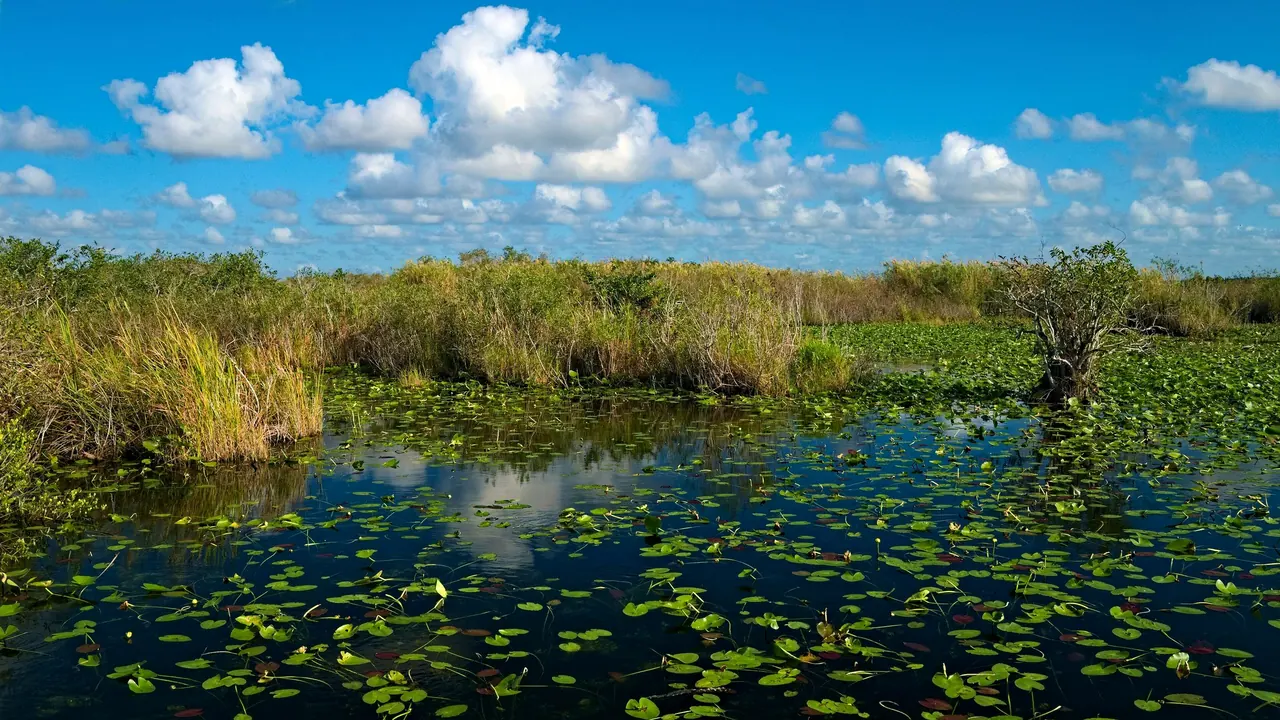
Water lilies and sawgrass on the Anhinga Trail
- Nature & outdoors85
- Day trips58
- Families48
Photo: Daniel Kraft, CC BY-SA 3.0, cropped
Everglades lies in Florida, which has its own page.
Match
33
Every category weighted equally
- Beach & sun34
- Culture & arts29
- Food & nightlife25
- Family trip40
- Outdoors45
- Relax & unwind35
- Shopping & style27
- On a budget34
Everglades in twelve categories
Our verdict on each, scored 0 to 100 against the same fixed benchmark cities, so a score means the same thing on every page.
Beaches & swimming. Scores 28 out of 100.
Food & drink. Scores 30 out of 100.
Culture & sights. Scores 20 out of 100.
Nightlife. Scores 6 out of 100.
Nature & outdoors. Scores 85 out of 100.
Day trips. Scores 58 out of 100.
Good for families. Scores 48 out of 100.
Getting around. Scores 40 out of 100.
Shopping & style. Scores 12 out of 100.
Affordability. Scores 40 out of 100.
Live music & performing arts. Scores 6 out of 100.
Wellness & relaxation. Scores 20 out of 100.
Everglades category by category
Beaches & swimming
28The Everglades is not a beach destination. Its shore is mangrove, mudflat and marl, and the water around Flamingo and Florida Bay is shallow, murky and home to alligators and crocodiles, so swimming is not part of a visit. In the Ten Thousand Islands off Everglades City, boat trips and kayakers reach small sandy keys on warm Gulf water, but these are wild landings rather than beaches to spend a day on.
For a real swim, visitors drive out of the region. From Everglades City, the wide Gulf beaches of Marco Island are about forty minutes away, and from Homestead the Upper Keys are under an hour south, with small, calm beaches on water near 29°C in summer.
Food & drink
30Eating here is local and simple. Around Everglades City and Chokoloskee, waterside seafood houses serve stone crab claws in the autumn and winter season, plus grouper, gator tail and frog legs, the classic fare of the swamp's edge. Along the Tamiami Trail, roadside stops and the Miccosukee lands add fry bread and airboat-shack lunches.
On the eastern side, Homestead and Florida City have the most choice. Mexican and Central American cooking reflects the farmworker community, and the Redland farm district sells mangoes, lychees, avocados and fresh fruit milkshakes from roadside stands. You won't find fine dining, a wine or coffee culture, or much variety, so for a serious meal you drive into Miami.
Culture & sights
20The Everglades is about landscape, and its built heritage is small but interesting. In Everglades City, the Museum of the Everglades tells the story of the frontier town that grew around the swamp, and on Chokoloskee the stilted Smallwood Store keeps its old trading-post shelves and the memory of the pioneers who traded with the Seminole.
Along the Tamiami Trail, the Miccosukee Indian Village presents the culture of the tribe that still lives in the swamp. Deep in the park, the Cold War Nike missile site near Long Pine Key is an unexpected relic. Near Homestead, Coral Castle, a limestone garden one man carved by hand, is the region's oddest sight. All of these fill an afternoon. None of them is a reason to come.
Nightlife
6Evenings here end early. Outside a few sports bars and taprooms in Homestead and a fishing-dock bar or two in Everglades City, there is nowhere to go out. The best night-time activity is quiet: stars over Flamingo and frogs calling from the sawgrass. For a real night out, Miami is about an hour away.
Nature & outdoors
85This is the largest subtropical wilderness in the country, a slow river of sawgrass flowing south to the mangroves and Florida Bay. There are no hills, so the drama is in the wildlife and the scale. On the Anhinga Trail near the Homestead entrance, alligators, herons and anhingas sit a few metres from the boardwalk. At Shark Valley, a flat 24km loop by bike or tram crosses open prairie to an observation tower. Out at Flamingo, American crocodiles and manatees share the marina, and roseate spoonbills feed in the bay.
On the Gulf side, Everglades City opens onto the Ten Thousand Islands, a maze of mangrove keys for kayaking, fishing and the multi-day Wilderness Waterway by canoe. Big Cypress, to the north, adds cypress domes and swamp walks. The dry season from December to April is the time to come. Birds gather at shrinking waterholes and the mosquitoes ease off, whereas summer brings heat, storms and insects.
Day trips
58The best day trips lie just outside the swamp. From a base in Homestead or Florida City, Miami is about an hour north, with Coral Gables, Little Havana and the Art Deco streets of Miami Beach. South along the Overseas Highway, Key Largo and Islamorada are under an hour away, island towns built around fishing, diving and the reef.
From Everglades City, the drive goes the other way, to Naples, about an hour up the Gulf coast, with its old pier and gallery streets, and to Marco Island. Key West is too far for a comfortable day. Beyond these, the region offers few towns or heritage sites, so the list of outings is short.
Good for families
48Children tend to love the wildlife. Alligators sunning beside the Anhinga Trail boardwalk, the open-air tram at Shark Valley, an airboat ride across the sawgrass and the junior ranger programme all work well for school-age kids. Around Homestead there are roadside wildlife attractions, and the large Zoo Miami is a short drive north.
It asks a lot of families, though. Distances are long, shade is scarce, food and toilets are far apart inside the park, and in summer the heat and mosquitoes can end a walk in minutes. Winter visits with an early start and a pool hotel in Florida City are the easiest way to do it. Toddlers do best with the short boardwalks.
Getting around
40You need a car. The roads are good and quiet. The main park road runs about 60km from the Homestead entrance to Flamingo, and the Tamiami Trail crosses the swamp straight to Shark Valley and Everglades City. Driving between the eastern and Gulf sides of the park takes around two hours, so most visitors pick one base or split the stay.
There is almost no public transport, and the towns are not places to walk around much. The heart of the region, the mangrove backcountry and the Ten Thousand Islands, is reached only by boat, canoe or kayak, so guided trips do much of the real moving around.
Shopping & style
12There is little to shop for. Miccosukee patchwork and beadwork are sold along the Tamiami Trail, the visitor centres stock good field guides and nature books, and Florida City has an outlet centre near the entrance to the Keys. Everything else is gator souvenirs and fishing supplies.
Affordability
40The Everglades costs a moderate amount by American standards. You don't save on the park itself. It charges an entry fee, and visitors from abroad should check what they will pay before they go. Rooms are the easy part. Homestead and Florida City have plenty of plain chain motels that cost much less than Miami or the Keys, even in the busy winter dry season.
The real costs come from what you do. Guided airboat rides, boat tours into Florida Bay and the Ten Thousand Islands, and kayak or canoe outfitters all add up. The few places to stay inside the park and around Everglades City charge for their location. Eating out is at ordinary American prices, with tipping on top, and you will need a car for the whole stay.
Live music & performing arts
6There is essentially no performing arts scene. The nearest thing to a show is an alligator demonstration at a roadside attraction or the occasional craft and music festival on Miccosukee land or in Everglades City. For concerts, theatre or live music, visitors drive into Miami.
Wellness & relaxation
20There is no spa or bathing culture here. Beyond a hotel pool in Homestead, you will find nothing to soak in, and the swamp's waters are not for bathing. What the region does have is quiet. In Everglades City and on Chokoloskee, days follow the tides and the fishing boats, and an evening watching the sun go down over the mangroves is truly calming. For massages or a proper spa, it is better to stay in Naples or the Keys.
Where to stay in Everglades
Most visitors stay on the eastern side, in Homestead or Florida City. They are plain, practical towns with plenty of chain motels, Mexican and Central American cooking and the fruit stands of the Redland, and they sit beside the main park entrance. The Anhinga Trail is a short drive away, the road to Flamingo runs about 60km south, and Miami and the Upper Keys are both within an hour. This is the base for a first visit, for families who want a pool to come back to, and for anyone exploring by car.
Everglades City and neighbouring Chokoloskee, on the Gulf side, are the quieter choice. Days follow the tides and the fishing boats, evenings mean stone crab and a sunset over the mangroves, and the Ten Thousand Islands start at the dock. They suit kayakers, anglers and couples who want a slow stay, and they make a good second visit. Marco Island's beaches are about forty minutes away and Naples about an hour.
Flamingo, at the end of the park road, has the park's few places to stay, with crocodiles in the marina and dark skies at night, though rooms there cost more for the location. The two sides are around two hours apart by car, so a short trip needs only one base. On a longer stay you can split your time between them and stop at Shark Valley on the Tamiami Trail as you cross.
When should you go?
Pick a month to see what it is like. The climate figures are measured averages, not a forecast.
Everglades in July
Daytime high, °C
Rainfall in the month, mm
The whole year
Shaded against this destination’s own year: the deepest cell is its best month for that figure and the palest its weakest.
Where the figures come from
Everglades has no rain gauge within 25 km of the centre, so its rainfall comes from a gridded climate dataset read at the destination rather than from a gauge further away.
Everglades's sunshine is measured 51 km from the centre, at Miami International Airport.
Temperature and rainfall are climate normals, averaged over the years shown. Everglades: 1971-2000 (sunshine 1981-2010, rainfall 1991-2020) normals, Homestead / Homestead Base (22.5 km from centre).
Before you go
| Measure | Everglades |
|---|---|
| Currency | US Dollar (USD) |
| Sockets | AB120 V, 60 Hz |
| Driving side | Right |
| Time zone | UTC-5, UTC-4 in summer |
| Emergency number | 911 |
| Main airport | Miami International Airport (MIA)198 non-stop destinations |
| Public holidays this year | 11 days |
By the numbers
| Measure | Everglades |
|---|---|
| Swim season, months above 21 °C | 12 months |
Compare Everglades with
Every comparison with a written verdict behind it.