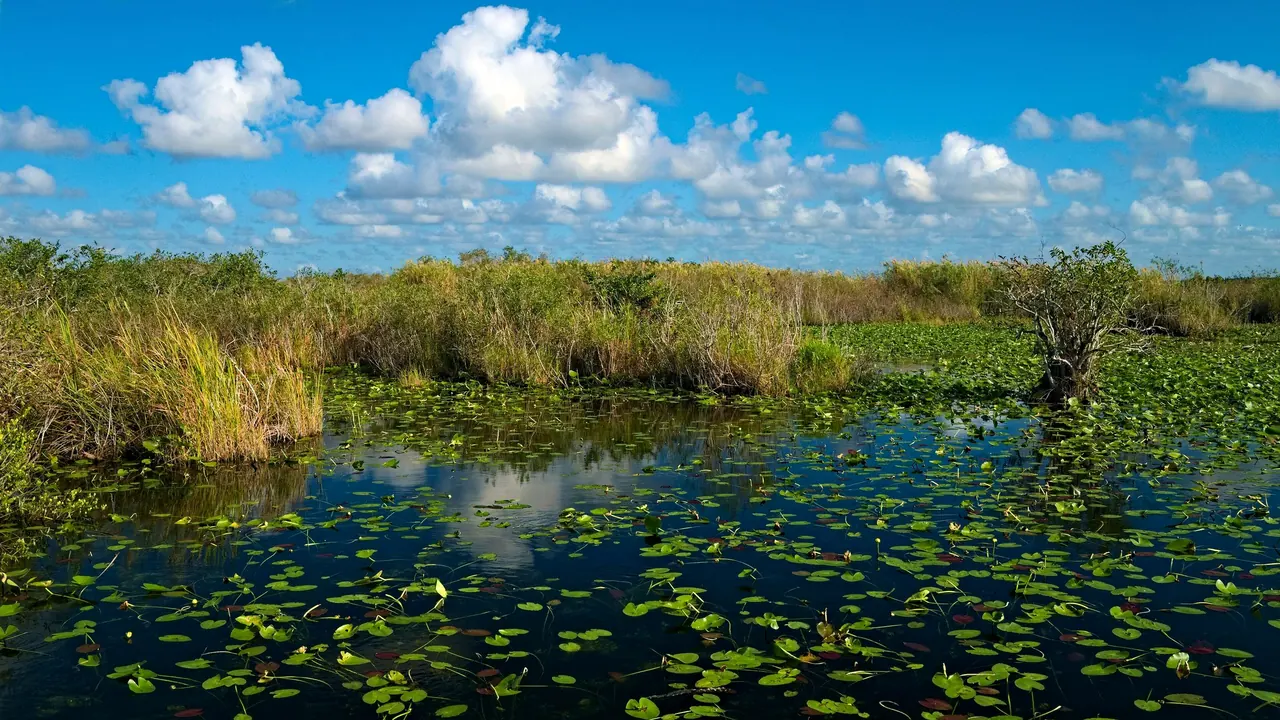
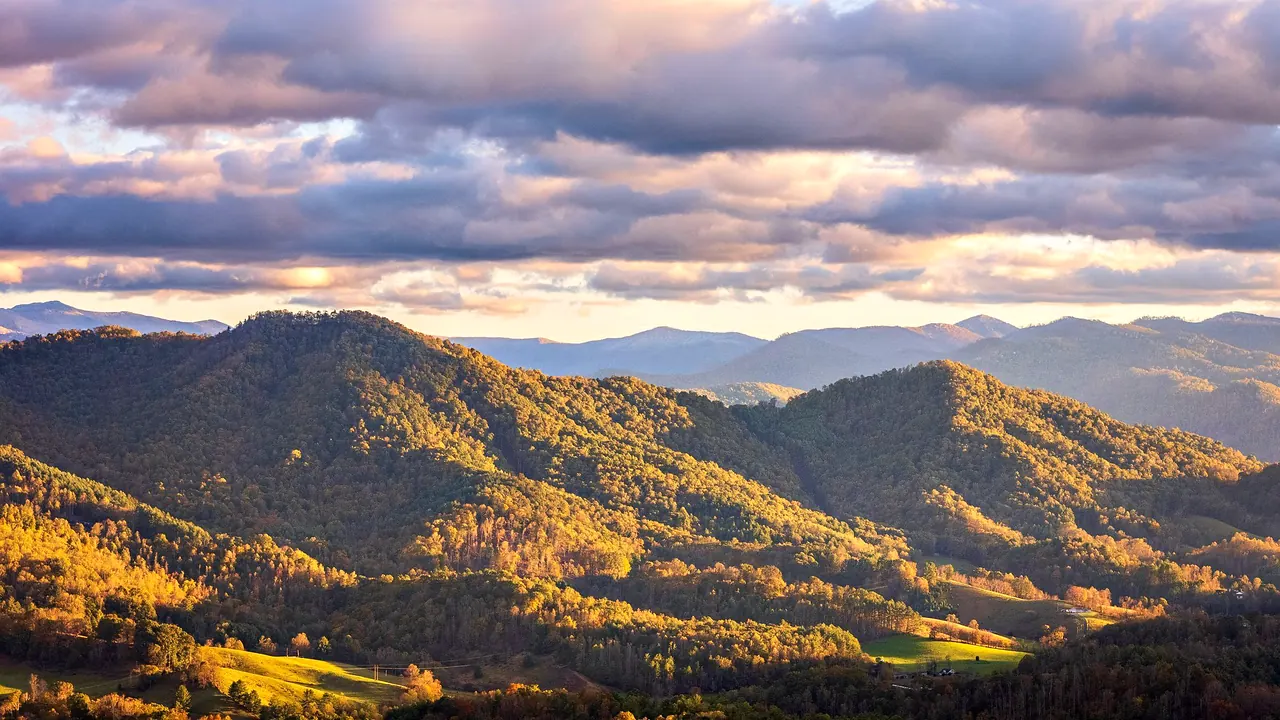
Photos: Everglades by Daniel Kraft, CC BY-SA 3.0, cropped; Great Smoky Mountains by Mark Stebnicki, Pexels License.
Everglades or Great Smoky Mountains?
Our verdict in twelve categories, each scored against the same fixed benchmark cities, and the climate month by month, so you can choose for your trip.
Choose Everglades for
- beaches
- getting around
- day trips
The Everglades suits a winter trip built around wildlife at close range: alligators beside the Anhinga Trail boardwalk, spoonbills and crocodiles at Flamingo, and kayaking through the mangrove keys of the Ten Thousand Islands. Its dry season is warm and sunny while the Smokies are cold and grey, and the Keys and the Gulf beaches near Marco Island are close enough to add sea days. You give up almost everything else. Evenings, culture and shopping are thin, so Miami, an hour away, has to cover them.
Choose Great Smoky Mountains for
- families
- live music and the arts
- shopping
Families, groups sharing a cabin and anyone who wants hiking plus a full programme should pick the Great Smoky Mountains. Waterfall trails, bears in Cades Cove and the high ridges fill the days, and Dollywood, the Pigeon Forge attractions and the country music shows fill the evenings. Cherokee and the pioneer valleys also give the region more heritage than the swamp has. What it costs you is traffic and crowds in summer and October, and a winter that is no time to come.
Scoreboard
Twelve categories on one fixed scale from 0 to 100. The shaded stretch is the gap between the two.
Your match
Pick a travel style or drag the sliders, and both match scores follow your weighting.
Wins on beaches and getting around with your weighting.
Wins on families and live music and the arts with your weighting.
What matters to you?
Category by category
What the scores mean for a trip.
Beaches & swimming
Neither region is a beach vacation, but the Everglades gets you much closer to the sea. Its own shore is mangrove and mudflat with alligators in the water, so you swim elsewhere. Boat trips reach wild sandy keys in the Ten Thousand Islands, Marco Island's wide Gulf beaches are about forty minutes from Everglades City, and the Upper Keys are under an hour from Homestead.
In the Smokies, summer swimming means tubing the Little River near Townsend or wading in cold mountain pools at Deep Creek. Fontana and Douglas lakes are mostly for boating, so the cabin or hotel pool ends up doing most of the work.
Food & drink
Seafood from the Gulf against hearty mountain cooking is the real choice here. Around Everglades City and Chokoloskee, the waterside houses serve stone crab claws in the autumn and winter season, along with grouper, gator tail and frog legs. On the eastern side, Homestead adds Mexican and Central American cooking, and the Redland farm stands sell mangoes, lychees and fruit milkshakes.
The Smokies feed you for a long day on the trails, with pancake houses on the Parkway, barbecue, biscuits and gravy, stream trout, cobblers and moonshine tastings in Gatlinburg. Chains and themed restaurants line the main strips, so the more relaxed meals are in Bryson City and Waynesville. For anything ambitious, you drive to Miami from the swamp and to Knoxville from the mountains.
Culture & sights
The Smokies have more history to visit, and much of it sits in the park itself. The log cabins, churches and cemeteries of Cades Cove, the Mountain Farm Museum and Mingus Mill tell the story of mountain farm life. Cherokee's history museum and the Oconaluftee Indian Village are the strongest single visit in either region.
The Everglades has odder, smaller sights: the Smallwood Store on Chokoloskee, the Museum of the Everglades, the Miccosukee Indian Village, a Cold War missile site and Coral Castle near Homestead. Each fills an afternoon at most.
Nightlife
After dark the Everglades goes almost silent. A sports bar or taproom in Homestead or a dock bar in Everglades City is about the limit. The real evening show is the stars over Flamingo and the frogs calling in the sawgrass.
The Smokies at least give you somewhere to go after dinner. Gatlinburg's main street stays lively with moonshine rooms, a few breweries and people strolling among the attractions, though it winds down before midnight, and the casino resort in Cherokee runs late. For clubs or a proper bar district, Miami and Knoxville are each roughly an hour's drive away.
Nature & outdoors
The Everglades is flat water and sawgrass, and you come for wildlife at close range rather than for any climb. Alligators and anhingas sit beside the Anhinga Trail boardwalk, the 24km Shark Valley loop crosses open prairie by bike or tram, crocodiles and manatees share the marina at Flamingo, and the Ten Thousand Islands make a mangrove maze for kayaks and canoes.
The Smokies are forest and trails. Well over 1,000km of paths climb through old-growth woods to waterfalls, Mount LeConte, Kuwohi and the Appalachian Trail, and you will often see bears in Cades Cove and elk at Cataloochee. The swamp is at its best in the dry winter, while the mountains are best for spring wildflowers, the Elkmont fireflies and the October colour.
Day trips
The Everglades has the stronger list because its neighbours are so different from the swamp. Miami's Little Havana, Coral Gables and the Art Deco streets of Miami Beach are about an hour north of Homestead, Key Largo and Islamorada are close to the south, and Naples sits up the Gulf from Everglades City.
From the Smokies, Asheville and the Biltmore Estate make the standout outing, though it is an easier drive from Cherokee than from the Tennessee side. Beyond Knoxville, the Bryson City railway and the Blue Ridge Parkway, outings are mostly small towns and scenery.
Good for families
The Smokies are made for family vacations in a way the swamp is not. Dollywood and its water park, the go-karts, mountain coasters and aquarium of Pigeon Forge and Gatlinburg, and big cabins for several children cover any weather. The park adds short waterfall walks and tubing near Townsend.
The Everglades thrills school-age children with alligators, airboats and the Shark Valley tram. But shade, food and toilets are far apart, and summer heat and mosquitoes cut walks short, so it works best as a winter trip with early starts.
Getting around
You need a car in both, but driving is far easier in the Everglades. Its roads are flat and quiet, and the run to Flamingo is about 60km. The real catch is the two-hour drive between the eastern and Gulf sides, and the backcountry is reached only by boat or kayak.
In the Smokies the roads wind and jam. The Parkway through Pigeon Forge crawls in summer and leaf season, Newfound Gap is slow and can close in winter, and a bear sighting stops the Cades Cove loop. Only Gatlinburg's centre, with its trolleys, works on foot.
Shopping & style
The Smokies give you real things to bring home. The craft community on its loop road outside Gatlinburg sells pottery, quilts, brooms and woodwork from the studios, and the Cherokee cooperative sells baskets and carvings. Outlet malls line the Parkway too.
In the Everglades, shopping comes down to Miccosukee patchwork and beadwork on the Tamiami Trail, good field guides at the visitor centres and an outlet centre in Florida City.
Affordability
The Everglades charges an entry fee at the park gate, while the Smokies charge nothing to enter and ask only for a parking tag, which helps make the mountains a little cheaper. In the swamp, the plain chain motels of Homestead and Florida City stay good value even in the winter dry season. The money goes on guided airboat rides and on boat or kayak trips into Florida Bay and the Ten Thousand Islands, which are hard to skip if you want to see the place properly.
In the Smokies, a shared cabin in Pigeon Forge or Sevierville brings the cost per person right down, so large groups do well. Dollywood and the other paid attractions are where the bill climbs, and cabin rates jump in summer and October.
Live music & performing arts
Here the Smokies are far ahead. Pigeon Forge has a row of theatres staging country revues and dinner shows, Dollywood has bluegrass and gospel on its stages all day, and Cherokee's outdoor drama Unto These Hills has played every summer since 1950.
In the Everglades the nearest thing to a show is an alligator demonstration or an occasional festival on Miccosukee land, so for any concert you drive to Miami.
Wellness & relaxation
In the Everglades, calm is slow and unplanned. On Chokoloskee and in Everglades City the day follows the tides and the fishing boats. Beyond a hotel pool in Homestead there is nothing to soak in, and the swamp's waters are no place to bathe, so anyone after pampering ends up in the Keys.
The Smokies do this better, and much of it comes down to where you stay. Traffic and crowds on the strips of Pigeon Forge and Gatlinburg undo the point, so a quiet base on the North Carolina side, with nothing planned until breakfast, does more than any treatment. For a more polished stay, the upscale retreats in the Tennessee foothills add the pampering that the few resort and hotel spas offer only in part.
When should you go?
Pick your month. The climate figures are measured averages, not a forecast.
Everglades in July
Great Smoky Mountains in July
Daytime high, °C
Rainfall in the month, mm
Where the figures come from
Everglades has no rain gauge within 25 km of the centre, so its rainfall comes from a gridded climate dataset read at the destination rather than from a gauge further away.
Everglades's sunshine is measured 51 km from the centre, at Miami International Airport.
Great Smoky Mountains's temperatures are measured 43 km from the centre, at McGhee Tyson Airport.
Great Smoky Mountains's station stands 151 m below the place it is measured for, so that place is likely a little cooler than the figures say.
Great Smoky Mountains has no rain gauge within 25 km of the centre, so its rainfall comes from a gridded climate dataset read at the destination rather than from a gauge further away.
Temperature and rainfall are climate normals, averaged over the years shown. Everglades: 1971-2000 (sunshine 1981-2010, rainfall 1991-2020) normals, Homestead / Homestead Base (22.5 km from centre). Great Smoky Mountains: 1991-2020 (sunshine 1981-2010) normals, McGhee Tyson Airport (42.9 km from centre).
The two run on opposite calendars. Around the Everglades the good months are December to April, when it is dry and sunny and highs sit around 24°C in January, which is ideal for boardwalks and paddling. The sea off the Keys is warm enough to swim in all year, and warmest in late summer. From May the rains arrive, with about 240mm in June, and the summer pairs heat with storms and mosquitoes that make long walks hard work.
In the valleys of the Smokies, winter is cold and dull, with January highs around 9°C, and snow can close the high roads. Spring and autumn are the times to come. May is mild and bright, and October is the driest month at about 72mm, with the colour on the ridges. Rain is spread through the year. Summer reaches 31°C in the lower towns, though it is cooler on the summits.
Which traveller are you?
On a family trip with children, the Great Smoky Mountains is the easy choice. Dollywood, mountain coasters, the aquarium and cabins with games rooms sit alongside short waterfall trails and bear-spotting from the car, whereas the Everglades asks children to cope with heat, distances and mosquitoes.
For a beach and sun trip, the Everglades wins, though the swimming lies just outside it. The calm beaches of the Upper Keys and Marco Island are under an hour away on warm water, and the dry winter is sunny. The Smokies only offer cold rivers and lakes.
On a relaxing and wellness trip, the Great Smoky Mountains is better. A ridge cabin with a hot tub on the deck in Townsend or Wears Valley, plus a few resort spas, beats the Everglades, where calm means mangrove sunsets on Chokoloskee and a spa means driving to Naples.
Before you go
| Measure | Everglades | Great Smoky Mountains |
|---|---|---|
| Currency | US Dollar (USD) | US Dollar (USD) |
| Sockets | AB120 V, 60 Hz | AB120 V, 60 Hz |
| Driving side | Right | Right |
| Time zone | UTC-5, UTC-4 in summer | UTC-5, UTC-4 in summer |
| Emergency number | 911 | 911 |
| Main airport | Miami International Airport (MIA)198 non-stop destinations | McGhee Tyson Airport (TYS)34 non-stop destinations |
| Public holidays this year | 11 days | 13 days |
By the numbers
| Measure | Everglades | Great Smoky Mountains |
|---|---|---|
| Swim season, months above 21 °C | 12 months | - |
Where else could you go?
Every comparison below shares a destination with this one, so you can follow Everglades or Great Smoky Mountains somewhere new.
- Key Largovs Everglades
- Islamoradavs Everglades
- Miamivs Everglades
- Marathonvs Everglades
- Florida Keysvs Everglades
- Sanibelvs Everglades