United States
Great Smoky Mountains
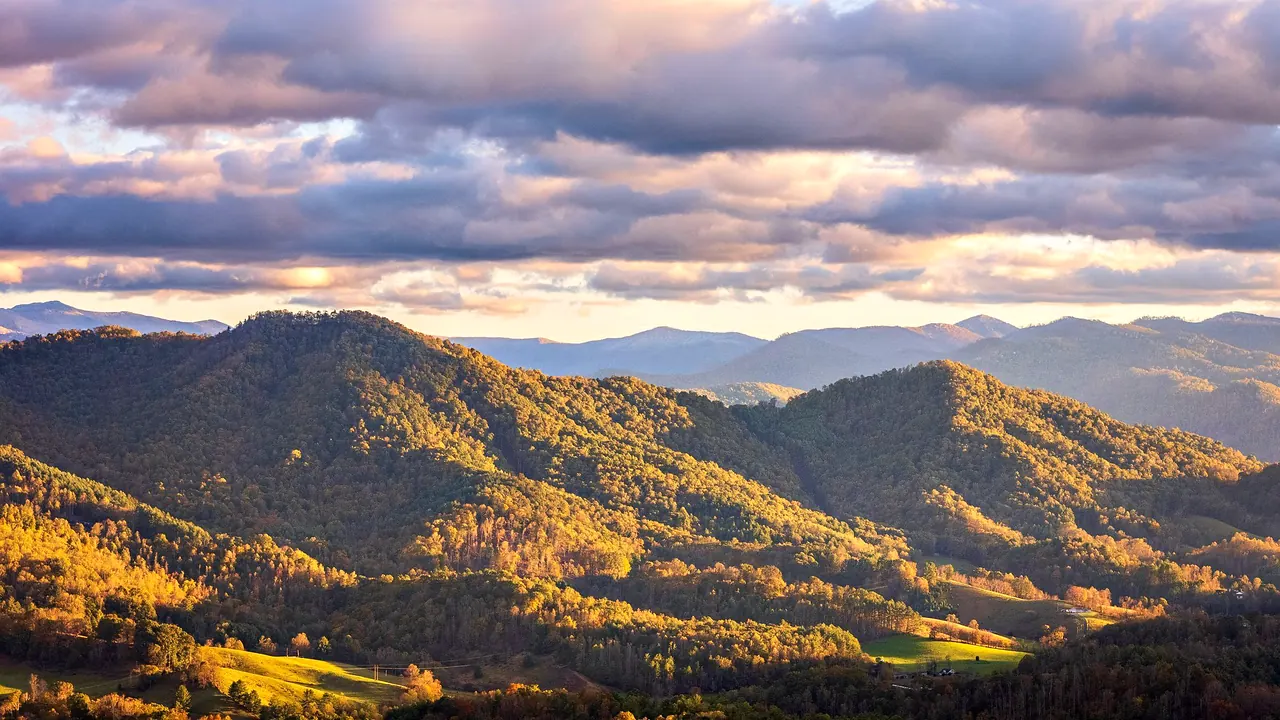
Autumn ridges of the Great Smoky Mountains at sunset
- Nature & outdoors88
- Families82
- Day trips50
Photo: Mark Stebnicki, Pexels License
Match
41
Every category weighted equally
- Beach & sun39
- Culture & arts37
- Food & nightlife32
- Family trip47
- Outdoors49
- Relax & unwind41
- Shopping & style37
- On a budget42
Great Smoky Mountains in twelve categories
Our verdict on each, scored 0 to 100 against the same fixed benchmark cities, so a score means the same thing on every page.
Beaches & swimming. Scores 10 out of 100.
Food & drink. Scores 35 out of 100.
Culture & sights. Scores 30 out of 100.
Nightlife. Scores 18 out of 100.
Nature & outdoors. Scores 88 out of 100.
Day trips. Scores 50 out of 100.
Good for families. Scores 82 out of 100.
Getting around. Scores 22 out of 100.
Shopping & style. Scores 40 out of 100.
Affordability. Scores 45 out of 100.
Live music & performing arts. Scores 40 out of 100.
Wellness & relaxation. Scores 33 out of 100.
Great Smoky Mountains category by category
Beaches & swimming
10There is no sea anywhere near the Smokies, and beach life plays no part in a stay. In summer, swimming means mountain rivers. Visitors tube down the Little River near Townsend or the Deep Creek area outside Bryson City, and wade at swimming holes in shallow pools where the water is cold even in July. Reservoirs such as Fontana Lake and Douglas Lake have boat ramps and a few small beaches, but people go there for the boating more than the swimming. For a proper swim, most families rely on the pool at their cabin or hotel.
Food & drink
35Eating here is hearty Southern mountain food made for people who have been hiking or driving all day. There are pancake houses along the Parkway in Pigeon Forge and Gatlinburg, plus barbecue, fried chicken, biscuits and gravy, country ham, trout from the mountain streams and fruit cobblers. Moonshine tasting rooms in Gatlinburg, where visitors sample flavoured corn liquor, are a local habit. On the North Carolina side, Bryson City and Waynesville have smaller, more relaxed places to eat.
The main tourist strips are lined with chains and themed restaurants, and good cooking is spread thin. Visitors who want serious restaurants, craft beer or a farm-to-table meal will find them in Knoxville, or in the mountain towns just beyond the park.
Culture & sights
30The region's heritage is rural and modest, and much of it sits inside the national park. In Cades Cove, a loop road passes log cabins, frame churches and pioneer cemeteries left behind when the valley's farming community moved out to make way for the park. The Mountain Farm Museum at Oconaluftee and the water-powered Mingus Mill show how mountain families lived. The abandoned cabins of Elkmont recall an old resort colony.
On the North Carolina side, the town of Cherokee is the home of the Eastern Band of Cherokee. It has a museum of Cherokee history and the Oconaluftee Indian Village, a living-history site, and together they are the strongest cultural visit in the region. Gatlinburg and Pigeon Forge mostly offer commercial attractions rather than history.
Nightlife
18Evenings in the Smokies are built around families, and there is little going-out culture. Gatlinburg's main street stays busy after dark, with moonshine tasting rooms, a few bars and breweries, and crowds wandering among the attractions. Most of it winds down well before midnight. The casino resort in Cherokee is the one place that runs late. Many visitors spend the night on a cabin deck instead, and anyone looking for clubs or a real bar district will need to drive to Knoxville.
Nature & outdoors
88This is one of the great forest landscapes of the world. Ridge after ridge of rounded, blue-hazed mountains rise past 2,000m at Kuwohi, formerly Clingmans Dome, the highest summit. They are covered in old-growth cove forest, rhododendron thickets and spruce-fir woods at the summits. The park has well over 1,000km of trails. They range from waterfall walks such as Laurel Falls and Grotto Falls to the climb up Mount LeConte and a long stretch of the Appalachian Trail along the state line. Black bears are a common sight in Cades Cove, and elk graze the meadows at Cataloochee and Oconaluftee.
The seasons change the place completely. Spring brings wildflowers in huge variety, and in early summer synchronous fireflies flash in the woods at Elkmont. October colour spreads down from the high ridges and draws the biggest crowds of the year. Winter can close the high roads with snow. For a quieter trip, stay on the North Carolina side, or in Townsend at the park's western edge.
Day trips
50The best day out is Asheville, roughly an hour from Cherokee and longer from the Tennessee side. It is a mountain city of Art Deco streets, galleries and breweries, with the Biltmore Estate, a vast Gilded Age château, on its edge. Knoxville is about an hour from Gatlinburg and has a pleasant old market square and the University of Tennessee campus.
Closer in are small mountain towns that fill a relaxed afternoon. These include Bryson City, where a heritage railway runs through the Nantahala gorge, Dillsboro and Waynesville in North Carolina, and Townsend and Dandridge in Tennessee. Beyond these, most outings head for scenery rather than towns, such as the Blue Ridge Parkway.
Good for families
82The Smokies are built around family vacations. Dollywood in Pigeon Forge is a full-scale theme park with mountain-themed rides, craft demonstrations and music shows, and it has a water park next door. Along the Parkway in Pigeon Forge and in Gatlinburg there are go-kart tracks, mountain coasters, mini golf, a large aquarium, a ridge-top treetop walk and a seemingly endless run of other attractions. Cabin rentals with games rooms make it easy for large groups and families with several children to stay together.
The national park adds the outdoor side, with short waterfall trails, bear-spotting from the car in Cades Cove, tubing near Townsend and junior ranger programmes. The weak points are traffic on the main strips, crowds in summer and October, and a car being needed for almost everything.
Getting around
22A car is effectively required here. Gatlinburg's compact centre can be walked, and trolleys link it with nearby hotels, but the national park has no public transport. The trailheads, Cades Cove and the North Carolina side are all reached on winding mountain roads. The main crossing over Newfound Gap is beautiful but slow, and it can close in winter weather. The Parkway through Pigeon Forge and Sevierville is a long strip that gets badly jammed in summer and in leaf season. Cades Cove's one-way loop can crawl when a bear comes into view. To make it easier, choose a base on the side of the park you plan to explore and start early in the day.
Shopping & style
40The shopping worth seeking out is Appalachian craft. On a long loop road outside Gatlinburg, an arts and crafts community of studios has worked for generations. Its members sell pottery, brooms, quilts, woodwork, leather and paintings straight from their workshops. In Cherokee, a long-standing artists' cooperative sells baskets, carvings, beadwork and pottery by Cherokee makers.
Otherwise, the shopping is mainly outlet malls along the Parkway in Pigeon Forge and Sevierville, plus a great many shops selling souvenirs, candy, fudge and novelty T-shirts. There is no luxury or fashion shopping to speak of.
Affordability
45The Smokies are an affordable drive-to vacation by American standards. The biggest draw costs little: the national park has no entrance fee, though parking inside it has to be paid for, so a vehicle tag is part of the budget. Motels and cabin rentals in Pigeon Forge and Sevierville cost less than resort areas on the coast, and big groups sharing a cabin keep the cost per person down. The bill rises with paid attractions, Dollywood above all. Restaurant meals carry the usual American prices and tips, and cabin rates jump in summer and October. Gatlinburg's central hotels and the upscale mountain retreats cost noticeably more.
Live music & performing arts
40Live entertainment here means country, bluegrass and gospel. Pigeon Forge has a long row of theatres putting on variety and music shows, dinner shows with horses or comedy, and Opry-style country revues nightly through the main season. Dollywood fills its stages with bluegrass bands and Southern gospel all day. On the North Carolina side, Cherokee stages Unto These Hills, an outdoor drama about Cherokee history that has run every summer since 1950.
The shows are polished but made for tourists. Visitors after fiddle music in a more traditional setting should look for jam sessions and summer festivals in the small mountain towns. For classical concerts or theatre, Knoxville's historic downtown theatres are the place to go.
Wellness & relaxation
33The Smokies have no bathing tradition, and spa options are limited to a few resort and hotel spas. The rest comes from the setting. The classic restful stay is a cabin on a wooded ridge with a hot tub on the deck, a view across layered mountains and nothing planned until breakfast. To find that calm, stay outside the busy strips of Pigeon Forge and Gatlinburg, in quieter places such as Townsend, Wears Valley or the North Carolina side. Upscale mountain retreats in the Tennessee foothills offer more polished pampering.
Where to stay in Great Smoky Mountains
Gatlinburg sits right at the park entrance. Its compact centre can be walked, and trolleys run out to nearby hotels. It suits a first visit with trailheads close by and evenings strolling past moonshine tasting rooms, though central hotels cost more and the main street is crowded in summer and October. Pigeon Forge and Sevierville, further out along the Parkway, are the family base. Dollywood, the music theatres and the outlet malls are on the doorstep, and motels and large cabin rentals cost less. The drawback is the traffic on the strip.
For a quieter stay, Townsend and Wears Valley on the park's western edge are close to Cades Cove and tubing on the Little River. Wooded cabins and calm evenings make them a good fit for walkers, and for couples who want a hot tub and a mountain view more than attractions.
On the North Carolina side, Bryson City and Cherokee make a relaxed base for Oconaluftee, the elk at Cataloochee, Cherokee history and a day in Asheville. Crossing Newfound Gap is slow and can close in winter, so most visitors stay on one side. A first trip usually starts in Tennessee, with North Carolina saved for a second visit or the second half of a longer stay.
When should you go?
Pick a month to see what it is like. The climate figures are measured averages, not a forecast.
Great Smoky Mountains in July
Daytime high, °C
Rainfall in the month, mm
The whole year
Shaded against this destination’s own year: the deepest cell is its best month for that figure and the palest its weakest.
Where the figures come from
Great Smoky Mountains's temperatures are measured 43 km from the centre, at McGhee Tyson Airport.
Great Smoky Mountains's station stands 151 m below the place it is measured for, so that place is likely a little cooler than the figures say.
Great Smoky Mountains has no rain gauge within 25 km of the centre, so its rainfall comes from a gridded climate dataset read at the destination rather than from a gauge further away.
Temperature and rainfall are climate normals, averaged over the years shown. Great Smoky Mountains: 1991-2020 (sunshine 1981-2010) normals, McGhee Tyson Airport (42.9 km from centre).
Before you go
| Measure | Great Smoky Mountains |
|---|---|
| Currency | US Dollar (USD) |
| Sockets | AB120 V, 60 Hz |
| Driving side | Right |
| Time zone | UTC-5, UTC-4 in summer |
| Emergency number | 911 |
| Main airport | McGhee Tyson Airport (TYS)34 non-stop destinations |
| Public holidays this year | 13 days |
Compare Great Smoky Mountains with
Every comparison with a written verdict behind it.