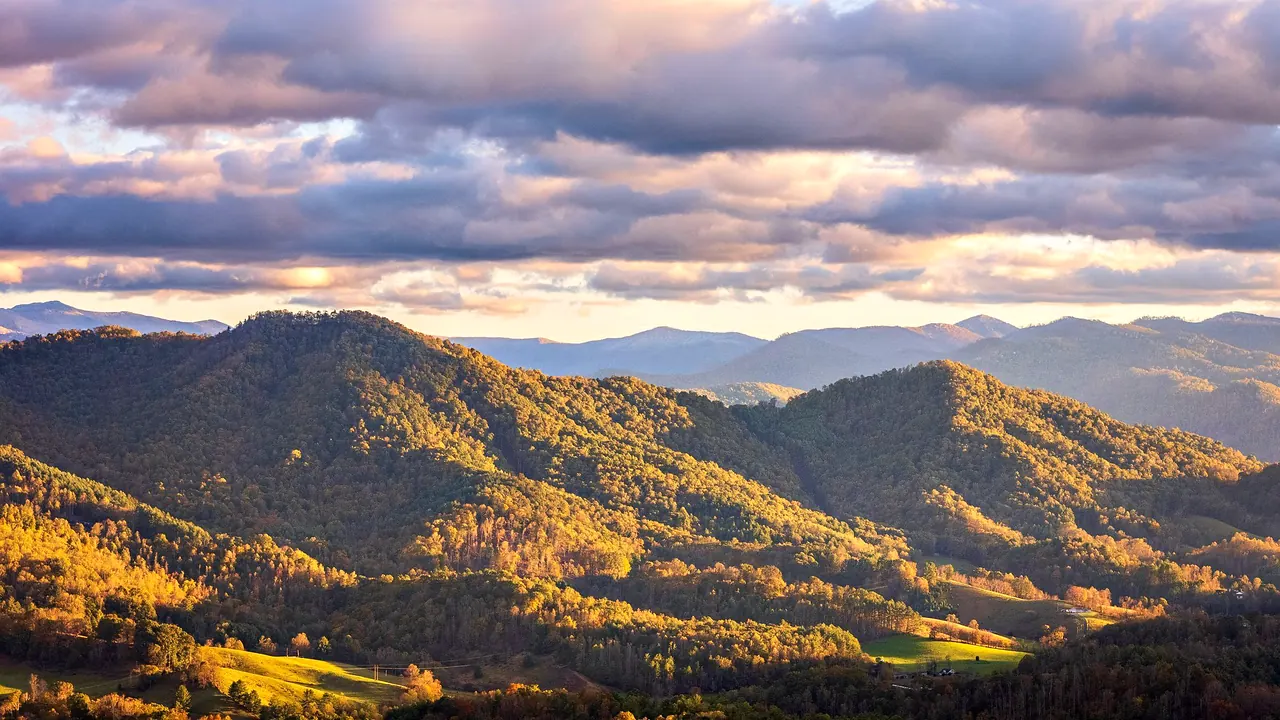
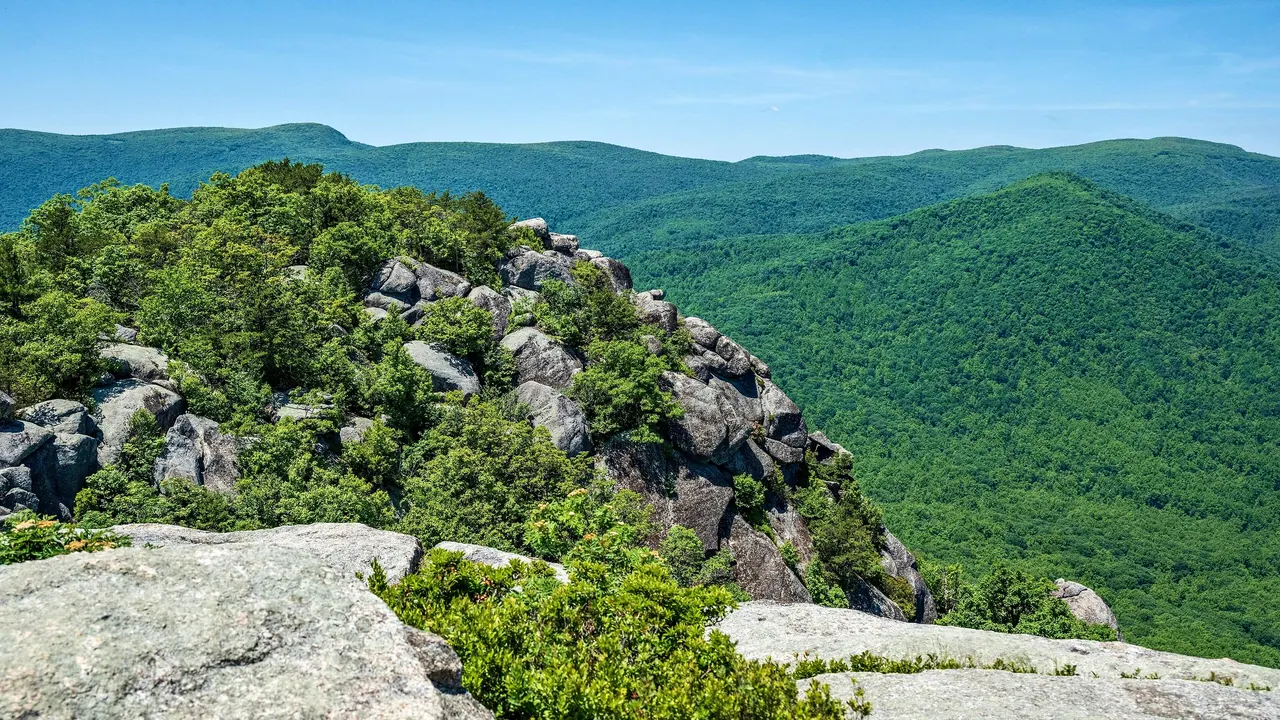
Photos: Great Smoky Mountains by Mark Stebnicki, Pexels License; Shenandoah by ShenandoahNPS, Public domain.
Great Smoky Mountains or Shenandoah?
Our verdict in twelve categories, each scored against the same fixed benchmark cities, and the climate month by month, so you can choose for your trip.
Choose Great Smoky Mountains for
- families
- shopping
- nature and the outdoors
Choose the Great Smoky Mountains for a family vacation or for the bigger wilderness. The forest is older and higher, and bears and elk are easy to see. The towns at the park gates are full of theme-park rides, country shows and cabins built for large groups. Expect a trip spent in the car, with traffic and crowds on the main strips.
Choose Shenandoah for
- getting around
- day trips
- culture and sights
The Shenandoah is better for adults who want gentler hiking mixed with history and good day trips. Its Civil War towns, Staunton's Shakespeare theatre, Monticello just over the ridge and the warm springs to the west make it a region to tour by car along an easy interstate. You get cooler summers and quieter evenings instead of the Smokies' attractions.
Scoreboard
Twelve categories on one fixed scale from 0 to 100. The shaded stretch is the gap between the two.
Your match
Pick a travel style or drag the sliders, and both match scores follow your weighting.
Too close to call, level with your weighting
Wins on families and shopping with your weighting.
Wins on getting around and day trips with your weighting.
What matters to you?
Category by category
What the scores mean for a trip.
Beaches & swimming
Neither has a coast, and neither works for a beach vacation. In the Smokies a summer swim means a tube ride down the Little River near Townsend or a cold pool at Deep Creek. Fontana and Douglas lakes are better for boats than for swimming, so many families end up in the cabin pool.
The Shenandoah's water is a broader, gentler river. The South Fork around Front Royal and Luray suits canoes and children wading off gravel bars, and there are a few swimming holes and reservoirs in the national forest for hot days.
Food & drink
Neither is a place to travel for food, and there is little between them. The Smokies feed hungry hikers with pancake houses, barbecue, mountain trout and cobbler, and moonshine tasting in Gatlinburg is the local ritual. The Parkway strips, though, are mostly chains.
The Shenandoah has the slight edge if you care where your food comes from. It has Mennonite markets around Harrisonburg, farm-led kitchens in Staunton's downtown and a long line of cideries, breweries and wineries, all at their best during the autumn apple harvest.
Culture & sights
The Shenandoah has more to see, and most of its history is in the towns rather than the woods. Civil War battlefields at New Market and Cedar Creek, Winchester's Old Town, Staunton's Victorian streets and Frontier Culture Museum, and the colleges of Lexington fill several days of modest but genuine sightseeing.
The Smokies' heritage lies mostly inside the park, in the cabins and churches of Cades Cove and the farm museum and mill at Oconaluftee. Cherokee, with its museum and the Oconaluftee Indian Village, is the one visit with real depth. Gatlinburg and Pigeon Forge offer attractions rather than history.
Nightlife
Both go quiet early, and neither is worth choosing for nights out. What there is differs. Gatlinburg's main street has crowds, moonshine bars and breweries into the evening, and the Cherokee casino stays open late. In the Shenandoah, the liveliest place is Harrisonburg's student taprooms on term-time weekends. In both, the usual evening ends on a cabin deck or a porch.
Nature & outdoors
The Smokies are the grander wilderness. The ridges climb past 2,000m at Kuwohi, and the old-growth cove forest and spruce-fir summits feel deeper and wilder. There is more wildlife to see too: elk at Cataloochee, bears in Cades Cove and the synchronous fireflies at Elkmont in early summer.
The Shenandoah is a narrower, gentler stretch of the Blue Ridge. It is best seen from Skyline Drive and on classic day hikes such as the Old Rag scramble and the falls of Whiteoak Canyon. Off the ridge it adds variety, with mountain biking on the Massanutten, trout streams and paddling on the river.
Day trips
The Shenandoah is much better placed for days out. Monticello and Charlottesville are under an hour from Staunton, and Harpers Ferry is as close to Winchester. The Antietam and Gettysburg battlefields are within reach, and Washington is a realistic outing from the northern end of the valley.
From the Smokies, the standout trip is Asheville, with its Art Deco streets and the Biltmore Estate, followed by Knoxville's market square. Beyond those, outings are mostly small towns such as Bryson City, with its railway through the gorge, or scenic drives.
Good for families
For children, the Smokies are far ahead. Dollywood and its water park, the aquarium, mountain coasters and go-karts along the Pigeon Forge Parkway, and big cabins with games rooms mean there is always something else to do. The park adds easy waterfall walks and bear-spotting in Cades Cove. The downside is traffic and summer crowds.
The Shenandoah suits families who are happy outdoors, with Luray Caverns, junior ranger walks, river tubing, orchards and the farm animals at the Frontier Culture Museum. Massanutten has an indoor water park, but there is no theme park or aquarium, and the drives between sights are long.
Getting around
You need a car in both, but the Shenandoah is easier to drive. Interstate 81 and Route 11 run straight down the valley between the towns, Staunton has a rail station, and the downtowns are easy to walk once you have parked. Only Skyline Drive is slow, and that is by design.
In the Smokies, almost everywhere is reached on winding mountain roads. Newfound Gap, the main crossing between the two sides, is slow and can close in winter. The Pigeon Forge Parkway jams in summer and October, and there is no public transport into the park.
Shopping & style
The Smokies offer more shopping, and the best of it is distinctive. In the crafts community on the loop road outside Gatlinburg, potters, broom-makers and quilters sell from their own studios. The Cherokee artists' cooperative sells baskets, carvings and beadwork by Cherokee makers. Outlet malls and endless fudge and souvenir shops along the Parkway make up the rest.
In the Shenandoah, shopping is mostly antiques, in the big antique malls of Strasburg and New Market. There are also small boutiques in Staunton and Winchester and preserves from Mennonite stands. Neither region has fashion shopping.
Affordability
Costs are much the same, ordinary American drive-to prices in both. The difference is where the money goes. In the Smokies, entry to the park is free but parking is not, paid attractions push up the bill (Dollywood most of all), and large groups sharing a cabin save the most. In the Shenandoah, the park and the hikes cost little, and the expense to watch is October weekends near the ridge.
Live music & performing arts
The Smokies put on more shows, all in the country tradition. Pigeon Forge has a row of theatres with dinner shows and Opry-style revues, and Dollywood has bluegrass and gospel all day. In Cherokee, Unto These Hills, an outdoor drama about Cherokee history, has been staged every summer since 1950. It is polished entertainment made for visitors.
The Shenandoah has less, but its highlight is unusual: Shakespeare by a resident company at Staunton's Blackfriars Playhouse, a recreation of his indoor London theatre. Add the summer Bach festival, term-time recitals and old-time jams, and the valley suits theatregoers better than fans of country shows.
Wellness & relaxation
The Shenandoah is better for a restful stay, mainly because of Bath County, an hour west of Staunton. There, the old wooden bathhouses at Warm Springs sit over naturally warm mineral pools beside a historic resort spa. Quiet inns in small towns and long porch evenings do the rest.
The Smokies have no bathing tradition and only a few hotel and resort spas. Their version of rest is a hot tub on a cabin deck in Townsend or Wears Valley, well away from the busy strips.
When should you go?
Pick your month. The climate figures are measured averages, not a forecast.
Great Smoky Mountains in July
Shenandoah in July
Daytime high, °C
Rainfall in the month, mm
Where the figures come from
Great Smoky Mountains's temperatures are measured 43 km from the centre, at McGhee Tyson Airport.
Great Smoky Mountains's station stands 151 m below the place it is measured for, so that place is likely a little cooler than the figures say.
Great Smoky Mountains has no rain gauge within 25 km of the centre, so its rainfall comes from a gridded climate dataset read at the destination rather than from a gauge further away.
Shenandoah has no weather station within reach, so its figures come from a gridded climate model rather than a measured record, and read a broad area rather than one spot.
Temperature and rainfall are climate normals, averaged over the years shown. Great Smoky Mountains: 1991-2020 (sunshine 1981-2010) normals, McGhee Tyson Airport (42.9 km from centre). Shenandoah: 1991-2020 normals, TerraClimate 4 km grid at the town, no weather station within 90 km.
The Smokies figures are measured in the low valleys where most visitors stay, and they run well above the Shenandoah's all year. June to August is hot, around 31°C at the peak. That suits tubing on the rivers but makes long climbs tiring. Rain falls steadily through the year, and only July stands out as clearly wetter than the rest. Sunshine is at its strongest from May to July. April, May, September and October are the comfortable months for hiking, and October is also the driest month of the year. Valley winters are mild, though snow can close the high roads.
The Shenandoah is noticeably cooler. Summer highs of about 25°C make June to August pleasant for walking and the only real season for a river swim. Winter is properly cold, with January highs near 3°C. Here there is no dry season either. Rain is lightest in midwinter and heaviest in September, at 136mm, which can dampen early autumn. For walks among the autumn colour, October is the safer bet in both regions.
Which traveller are you?
On a family trip with children, the Smokies are the clear choice. Dollywood, the Pigeon Forge attractions and big cabins with games rooms keep everyone busy. The park adds easy waterfall walks and bears in Cades Cove, which the Shenandoah's caverns and orchards cannot match.
For a culture and arts trip, choose the Shenandoah. It has battlefields, Staunton's Victorian streets and Blackfriars Playhouse, and the colleges of Lexington, with Monticello and Harpers Ferry within a day's reach. The Smokies' history is mostly cabins in the woods, plus Cherokee.
On a relaxing and wellness trip, the Shenandoah suits better. The historic mineral pools at Warm Springs are an hour from Staunton, the small-town inns are quiet and summers are cooler. The Smokies offer hot tubs on cabin decks and a few hotel spas.
Before you go
| Measure | Great Smoky Mountains | Shenandoah |
|---|---|---|
| Currency | US Dollar (USD) | US Dollar (USD) |
| Sockets | AB120 V, 60 Hz | AB120 V, 60 Hz |
| Driving side | Right | Right |
| Time zone | UTC-5, UTC-4 in summer | UTC-5, UTC-4 in summer |
| Emergency number | 911 | 911 |
| Main airport | McGhee Tyson Airport (TYS)34 non-stop destinations | Charlottesville Albemarle Airport (CHO)6 non-stop destinations |
| Public holidays this year | 13 days | 13 days |
Where else could you go?
Every comparison below shares a destination with this one, so you can follow Great Smoky Mountains or Shenandoah somewhere new.
- Outer Banksvs Shenandoah
- Poconosvs Shenandoah
- Hilton Headvs Great Smoky Mountains
- Catskillsvs Shenandoah
- The Hamptonsvs Shenandoah
- Outer Banksvs Great Smoky Mountains