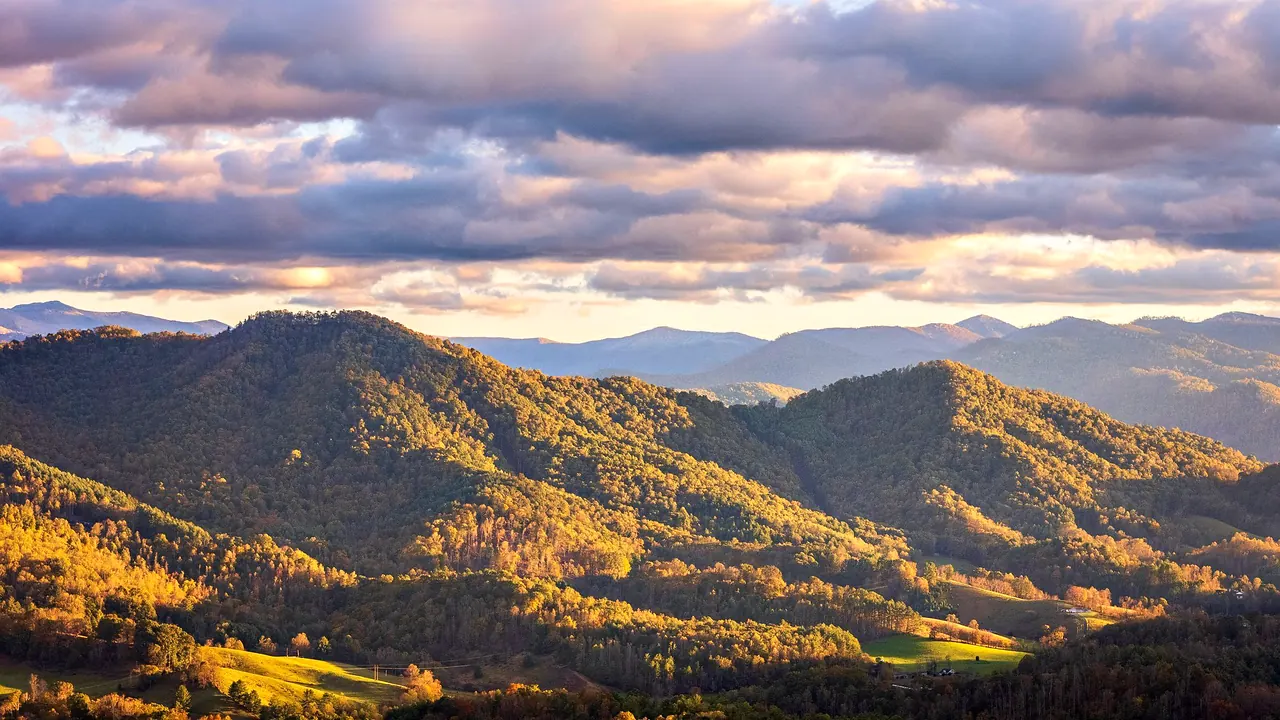
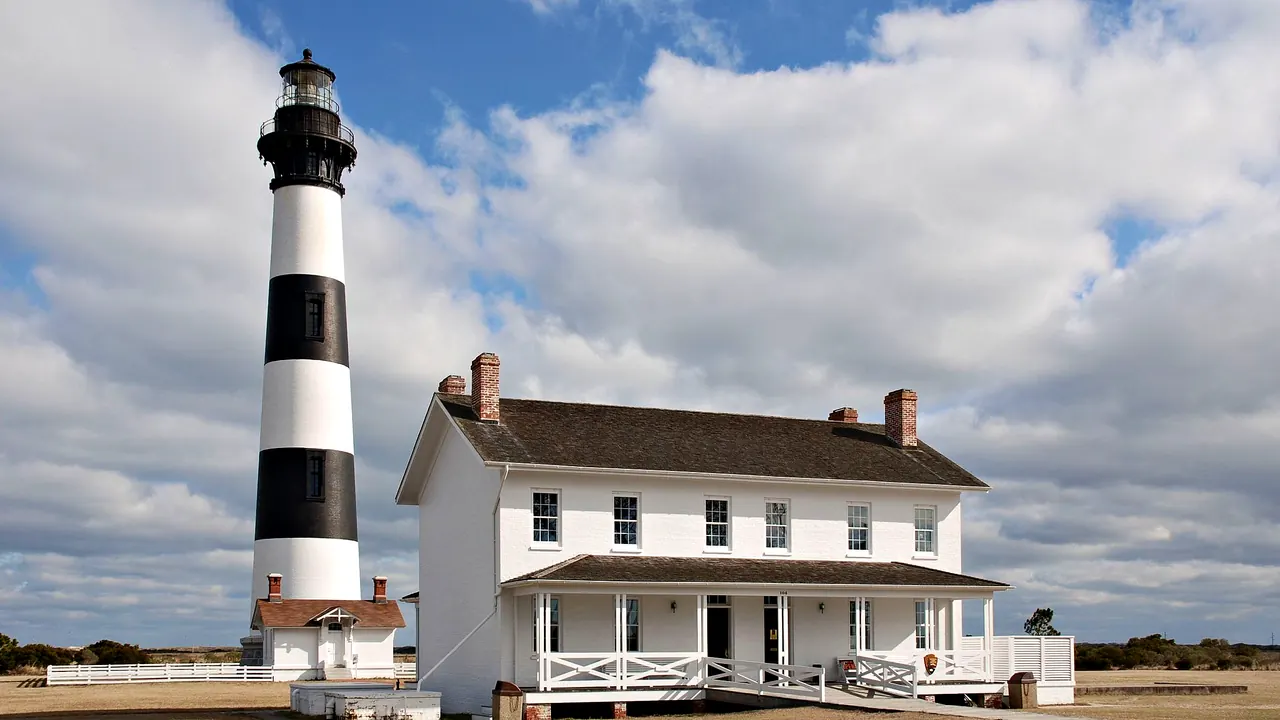
Photos: Great Smoky Mountains by Mark Stebnicki, Pexels License; Outer Banks by Jarek Tuszyński, CC BY-SA 3.0, cropped.
Great Smoky Mountains or Outer Banks?
Our verdict in twelve categories, each scored against the same fixed benchmark cities, and the climate month by month, so you can choose for your trip.
Choose Great Smoky Mountains for
- nature and the outdoors
- families
- shopping
The Great Smoky Mountains suit travellers who want forest, trails and wildlife, with a lively family entertainment strip close by. Hiking to waterfalls, watching for bears in Cades Cove, spending a day at Dollywood and ending the evening in a ridge-top cabin makes a fuller and usually cheaper week than the coast. The trade-offs are slow mountain roads and no sea at all.
Choose Outer Banks for
- beaches
- culture and sights
- getting around
The Outer Banks are for a beach week. Long Atlantic sand, a warm summer sea, seafood from the docks and empty stretches of national seashore set the pace, and the days have no fixed plan. The landmarks of first flight and the Lost Colony add a little more history than the mountains offer. You give up hills, big attractions and any sense of value in high summer.
Scoreboard
Twelve categories on one fixed scale from 0 to 100. The shaded stretch is the gap between the two.
Your match
Pick a travel style or drag the sliders, and both match scores follow your weighting.
Too close to call, level with your weighting
Wins on nature and the outdoors and families with your weighting.
Wins on beaches and culture and sights with your weighting.
What matters to you?
Category by category
What the scores mean for a trip.
Beaches & swimming
This is the starkest difference between the two. In the Smokies, swimming means tubing on the Little River or wading into cold mountain pools, and lakes like Fontana are more for boats than for bathing.
The Outer Banks are built around the beach. They offer open Atlantic sand from Corolla to Ocracoke and a sea warm enough for summer swimming. The surf and rip currents need respect, and families with toddlers can use the calm sound side.
Food & drink
Neither is a food destination, and the difference is mainly in the kind of food. The Smokies serve hearty mountain cooking: pancake houses, barbecue, biscuits, country ham and stream trout, with moonshine tastings in Gatlinburg. The strips are heavy with chains.
On the Outer Banks, the meals revolve around seafood: steamed shrimp, soft-shell crab and fried baskets with hushpuppies. You can also buy fish at the Wanchese and Hatteras docks to cook in a rental house, which gives the coast a slight edge for simple, fresh eating.
Culture & sights
The Outer Banks have more history worth planning a morning around. These include the Wright Brothers memorial at Kill Devil Hills, Fort Raleigh and the Lost Colony on Roanoke Island, and a string of lighthouses, among them the striped Cape Hatteras.
The Smokies' heritage is quieter. It is made up of the log cabins and churches of Cades Cove, the farm museum and mill at Oconaluftee and the Cherokee museum and living-history village, which is the region's strongest single visit.
Nightlife
Both are early-to-bed places, built around families and rental houses. Gatlinburg's main street stays busy with moonshine tasting rooms and a few breweries until before midnight, and the Cherokee casino runs late. The Outer Banks offer sunset drinks on sound-side decks and beach bars along the Nags Head bypass, and things go quiet once summer ends.
Nature & outdoors
The Smokies are the more impressive landscape. Old-growth forest covers ridges that climb past 2,000m at Kuwohi. Bears and elk are common, and spring wildflowers, the Elkmont fireflies and October colour change the scenery with each season.
The Outer Banks are flat but distinctive. They offer the dunes of Jockey's Ridge, wild mustangs north of Corolla, bird migrations at Pea Island and world-class flat-water kiteboarding on the sounds near Rodanthe and Avon. Walking there means beach strolls rather than climbs.
Day trips
The mountains have better outings within reach. Asheville and the Biltmore Estate are about an hour from Cherokee, and Knoxville lies a similar distance from Gatlinburg. The Bryson City railway and the Blue Ridge Parkway fill the gaps.
From the Outer Banks, the highlight is the ferry ride to the village of Ocracoke. Beyond that, the choice is colonial Edenton or a longer drive to Norfolk, which are pleasant but not worth a special trip.
Good for families
Both are classic American family vacations, but the Smokies offer more to do. Dollywood and its water park, go-karts, mountain coasters and a large aquarium all line the Parkway, and the national park adds junior ranger programmes and bear-spotting from the car.
The Outer Banks give children dunes, crab-catching, lighthouse climbs and wild-horse tours at an easier pace. There is no theme park, though, and the surf calls for close supervision.
Getting around
You need a car in both, but the coast is slightly easier. The central Outer Banks towns sit close together on two parallel roads, with bike paths between them. Changeover Saturdays jam the bridges, and Corolla to Hatteras takes a couple of hours.
The Smokies mean winding roads, a slow crossing at Newfound Gap that can close in winter, and a Parkway strip that clogs in summer and in leaf season.
Shopping & style
The Smokies have more worth buying. The craft community on the loop road outside Gatlinburg sells pottery, brooms and quilts straight from the studios, Cherokee's artists' cooperative sells baskets and carvings, and Pigeon Forge has large outlet malls.
Shopping on the Outer Banks means surf shops, beachwear and a few galleries in Duck, Manteo and Ocracoke. These are pleasant to browse, but they are not a reason to go.
Affordability
The Smokies are the cheaper trip. The national park charges no entrance fee, and cabins and motels in Pigeon Forge cost less than coastal resorts. Dollywood and other paid attractions are what push the bill up.
In summer, the Outer Banks are expensive, with oceanfront houses often rented only by the week. The beaches themselves are free, and costs drop sharply in spring and autumn, when the sea is cooler.
Live music & performing arts
The Smokies offer far more evening entertainment. Pigeon Forge has a row of country, gospel and dinner-show theatres, Dollywood has bluegrass on its stages all day, and Cherokee stages its summer drama, Unto These Hills.
The Outer Banks have one real tradition, the outdoor Lost Colony drama on Roanoke Island. Otherwise there are only bands on bar decks.
Wellness & relaxation
Neither has a spa culture, so in both places relaxation comes from the setting. In the Smokies, that means a hot tub on a wooded ridge in Townsend or Wears Valley, with upscale retreats in the foothills for more pampering. The Outer Banks offer porch evenings listening to the surf, and quiet off-season days on Hatteras Island and Ocracoke.
When should you go?
Pick your month. The climate figures are measured averages, not a forecast.
Great Smoky Mountains in July
Outer Banks in July
Daytime high, °C
Rainfall in the month, mm
Where the figures come from
Great Smoky Mountains's temperatures are measured 43 km from the centre, at McGhee Tyson Airport.
Great Smoky Mountains's station stands 151 m below the place it is measured for, so that place is likely a little cooler than the figures say.
Great Smoky Mountains has no rain gauge within 25 km of the centre, so its rainfall comes from a gridded climate dataset read at the destination rather than from a gauge further away.
Outer Banks has no rain gauge within 25 km of the centre, so its rainfall comes from a gridded climate dataset read at the destination rather than from a gauge further away.
Outer Banks's sunshine is measured 77 km from the centre, at Cape Hatteras.
Temperature and rainfall are climate normals, averaged over the years shown. Great Smoky Mountains: 1991-2020 (sunshine 1981-2010) normals, McGhee Tyson Airport (42.9 km from centre). Outer Banks: 2009-2025 (sunshine 1981-2010, rainfall 1991-2020) normals, Manteo / Sunny Side (7.7 km from centre).
Inland in the Smokies, spring warms quickly. April and May are pleasant for hiking, and June to August reach about 31°C in the valleys, with July the wettest month. October is the standout, with mild 22°C days, the driest weather of the year at 72mm, and the autumn colour. Winters are cool and grey, and snow can close the high roads.
The Outer Banks follow the sea. The water reaches 26°C in July and August, and swimming is comfortable from June to September. Late summer and early autumn bring the heaviest rain, peaking at 165mm in September, when storms are most likely. May and October are mild and sunny for walks on the beach, but by then the sea is too cool for most swimmers. On the coast, winter is slightly milder than in the mountains.
Which traveller are you?
For a beach and sun trip, the Outer Banks are the only real choice. They have over a hundred miles of Atlantic surf beach, lifeguarded stretches at Nags Head and quiet seashore near Buxton. The Smokies offer only cold river pools and lake ramps.
On an outdoors trip, the Smokies come out well ahead. Old-growth forest, over 1,000km of trails, Mount LeConte and the Appalachian Trail make for real hiking. The coast is flat, although kiteboarders and anglers on the sounds will find excellent conditions there.
On a family trip with children, the Smokies give more to fill the days. Dollywood, mountain coasters, the aquarium and easy waterfall walks cover every age and every kind of weather. The Outer Banks are gentler, but on a rainy day you soon run out of things to do.
Before you go
| Measure | Great Smoky Mountains | Outer Banks |
|---|---|---|
| Currency | US Dollar (USD) | US Dollar (USD) |
| Sockets | AB120 V, 60 Hz | AB120 V, 60 Hz |
| Driving side | Right | Right |
| Time zone | UTC-5, UTC-4 in summer | UTC-5, UTC-4 in summer |
| Emergency number | 911 | 911 |
| Main airport | McGhee Tyson Airport (TYS)34 non-stop destinations | Norfolk International Airport (ORF)44 non-stop destinations |
| Public holidays this year | 13 days | 14 days |
By the numbers
| Measure | Great Smoky Mountains | Outer Banks |
|---|---|---|
| Swim season, months above 21 °C | - | 4 months |
Where else could you go?
Every comparison below shares a destination with this one, so you can follow Great Smoky Mountains or Outer Banks somewhere new.
- Virginia Beachvs Outer Banks
- Shenandoahvs Outer Banks
- Myrtle Beachvs Outer Banks
- Hilton Headvs Great Smoky Mountains
- Shenandoahvs Great Smoky Mountains
- Poconosvs Outer Banks