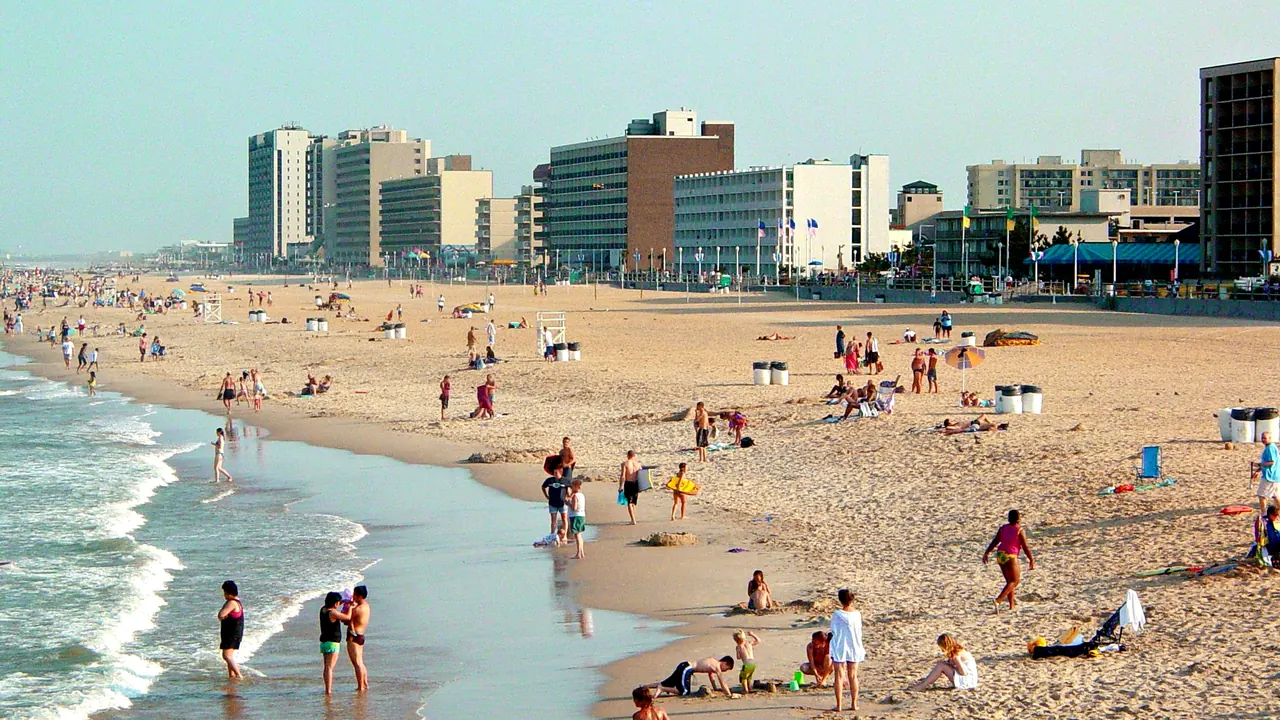
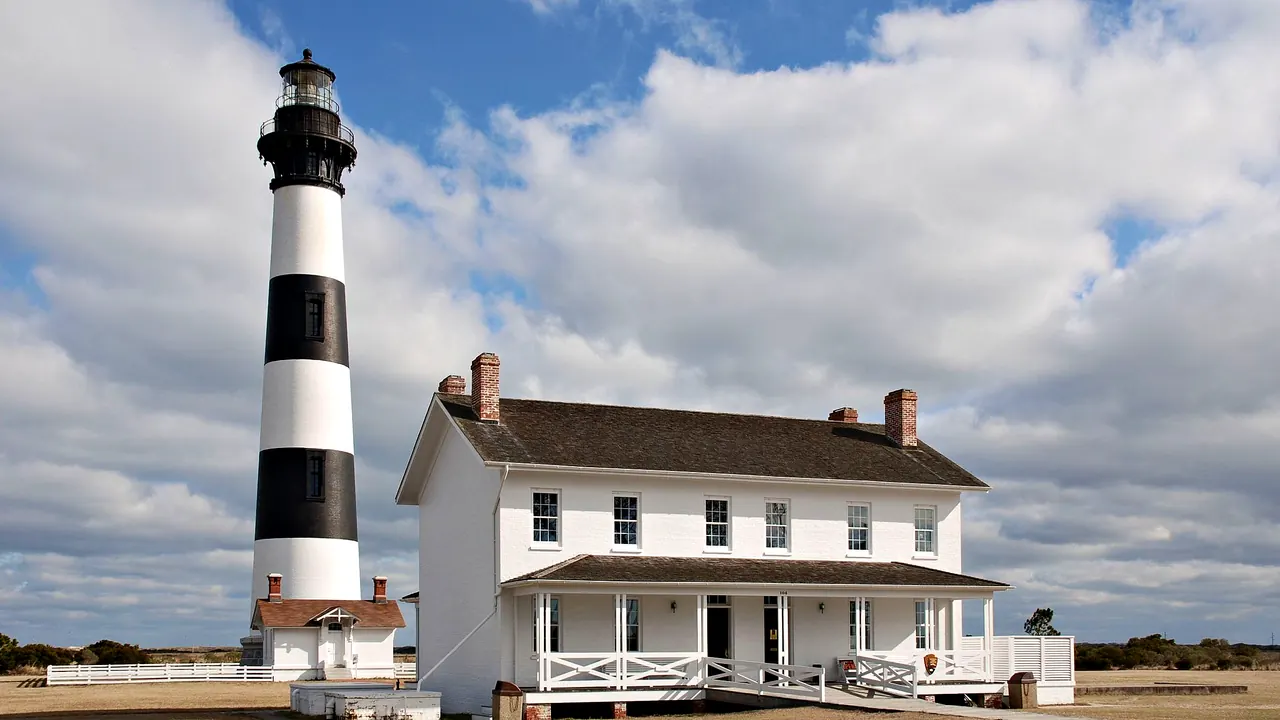
Photos: Virginia Beach by SchuminWeb, CC BY-SA 3.0, cropped; Outer Banks by Jarek Tuszyński, CC BY-SA 3.0, cropped.
Virginia Beach or Outer Banks?
Our verdict in twelve categories, each scored against the same fixed benchmark cities, and the climate month by month, so you can choose for your trip.
Choose Virginia Beach for
- day trips
- nightlife
- live music and the arts
Virginia Beach is the better pick when the beach is the base rather than the entire trip. It has more going on after dark, more to keep children busy and a much stronger list of outings, above all Colonial Williamsburg, Jamestown and Yorktown about an hour away, with Norfolk's restaurants and concerts close by. It is also the slightly easier place to keep costs down.
Choose Outer Banks for
- culture and sights
- getting around
- beaches
The Outer Banks suit travellers who want the beach as the whole point of the trip and are happy to drive to find it. A long chain of barrier islands gives a choice of beach-house towns, quiet northern villages and the empty dunes of Cape Hatteras, with the Wright Brothers memorial, the lighthouses and the kiteboarding sounds behind them. It works best for a week in a rented house with no plans for the evenings.
Scoreboard
Twelve categories on one fixed scale from 0 to 100. The shaded stretch is the gap between the two.
Your match
Pick a travel style or drag the sliders, and both match scores follow your weighting.
Wins on day trips and nightlife with your weighting.
Wins on culture and sights and getting around with your weighting.
What matters to you?
Category by category
What the scores mean for a trip.
Beaches & swimming
These are both long Atlantic surf beaches with summer water at about the same warmth, and the Outer Banks have a slight edge mainly through their sheer length and wildness. The islands offer the beach-house rows of Kill Devil Hills and Nags Head, the quieter sand at Duck and Corolla, and the undeveloped dunes of Cape Hatteras where you can walk for a long way alone. Calm water there means the sound side, not the ocean.
Virginia Beach puts its sand in front of a boardwalk and hotel towers, so the beach comes with food, bike rental and evening strolls on hand. Its gentler bay beaches around First Landing are the easier option for small children, and Sandbridge to the south gives a taste of the dune-and-rental-house style of the islands.
Food & drink
Neither is a food destination, and both come down to seafood eaten casually. On the Outer Banks that means steamed shrimp, fried baskets with hushpuppies and fish bought at the docks in Wanchese or Hatteras to cook in your rental house, with a few more ambitious kitchens in Duck and Nags Head.
Virginia Beach has a more defined local speciality in Lynnhaven oysters and Chesapeake blue crab, best eaten around the inlet rather than on the chain-heavy resort strip. Its real advantage is Norfolk, half an hour away, for evenings when you want more choice.
Culture & sights
The Outer Banks hold two landmark stories of American history: the first powered flight at Kill Devil Hills and the vanished Lost Colony on Roanoke Island. Add the three lighthouses, the shipwreck museum at Hatteras and the Whalehead lodge in Corolla, and there is a morning's sight in several places, though they are spread out along the islands.
Virginia Beach has less within its own limits. Cape Henry, where colonists landed in 1607, and the Adam Thoroughgood House are the main stops, and the King Neptune statue is more photo stop than sight. Its serious history lies outside the city, which belongs to its day trips.
Nightlife
Virginia Beach is the place for a night out. Atlantic Avenue and the boardwalk fill up in summer with beach bars, rooftop decks and sports bars, loud and easygoing, and Town Center offers cocktail bars for a calmer drink. Norfolk and Ghent are close by when you want more character.
On the Outer Banks evenings are mostly a sunset drink on a sound-side deck or a taproom in Kill Devil Hills or Nags Head, then the porch of the rental house. There are almost no clubs, and outside summer even less.
Nature & outdoors
Both are flat coastal landscapes of dune, marsh and maritime forest, and they are broadly level for outdoor time; the difference is what you do in it. The Outer Banks lean towards the water and the wind: world-class kiteboarding on the Hatteras Island sounds, hang-gliding at Jockey's Ridge, wild mustangs north of Corolla, offshore fishing and the bird refuge at Pea Island.
Virginia Beach is better for walking and cycling, with trails through cypress swamp at First Landing State Park and the empty shoreline of Back Bay and False Cape reached on foot or by bike. Kayaking out to see dolphins in summer is its signature outing.
Day trips
Virginia Beach wins clearly here. About an hour away, Colonial Williamsburg, Jamestown and Yorktown make one of the strongest history days in the country, and Norfolk's battleship, art museum and waterfront are nearer still. Kitty Hawk on the Outer Banks is itself within reach.
From the Outer Banks the best outing is the ferry to Ocracoke, a remote village worth the trip. Beyond it, colonial Edenton and Elizabeth City are pleasant but modest, and Virginia Beach and Norfolk sit at the far end of a long drive.
Good for families
Both are classic American family beach resorts, but Virginia Beach gives children more to do. Its aquarium, water park, mini-golf and lively boardwalk sit close together, and within an hour are a large amusement park and Colonial Williamsburg, where children join in with costumed tradespeople.
The Outer Banks offer a different kind of family week: a big shared house, crab-catching, Jockey's Ridge dunes, horse tours and lighthouse climbs, with the shallow sound side safe for toddlers. With no big attraction, a run of rainy days is harder to fill.
Getting around
You need a car at both, and neither has useful public transport. The Outer Banks are slightly easier once you are settled, because the towns from Kitty Hawk to Nags Head sit close together along multi-use cycle paths. Longer journeys are a different matter: Corolla to Hatteras takes a couple of hours, bridges clog on changeover Saturdays and Ocracoke needs a ferry.
At Virginia Beach the Oceanfront itself is walkable, with the boardwalk and a summer trolley, but everything beyond it, from Sandbridge to Town Center, lies across suburban sprawl with sparse buses.
Shopping & style
Nobody travels to either for shopping, but Virginia Beach has more of it: a large regional mall, the streets of Town Center and surf shops with deep local roots. It is mostly national chains, though.
The Outer Banks have less but more local character, with galleries and craft shops in Duck, Manteo and Ocracoke selling pottery, decoys and coastal paintings, and pleasant browsing along the Duck boardwalk and the Manteo waterfront.
Affordability
Neither is cheap in summer, but Virginia Beach is the easier one on the wallet. It has a wide spread of hotel rooms that can be booked by the night, and prices fall sharply off-season, though the car adds to the bill.
On the Outer Banks many rentals go only by the full week, which suits a large group sharing a house and cooking dock-fresh fish but makes a short or solo stay costly. The beaches, the national seashore and the Ocracoke ferry are free at both ends of the budget.
Live music & performing arts
Virginia Beach offers more to see: free concerts on the boardwalk stages, touring rock and country acts at the outdoor amphitheatre and a performing arts centre at Town Center. Norfolk's opera, symphony and spring arts festival are half an hour away.
The Outer Banks have one real tradition, The Lost Colony, staged on summer nights since 1937 on the spot where the settlers lived. Beyond that it is bands on bar decks, and little after summer.
Wellness & relaxation
Neither has a bathing tradition or a spa culture worth travelling for, so rest comes from the pace. On the Outer Banks that slowness runs deeper, in the quiet villages of Hatteras Island and Ocracoke and in unplanned beach-house days. Virginia Beach has more hotel spas but a louder, more crowded summer, so early mornings on the boardwalk and spring and autumn are its calmest times.
When should you go?
Pick your month. The climate figures are measured averages, not a forecast.
Virginia Beach in July
Outer Banks in July
Daytime high, °C
Rainfall in the month, mm
Where the figures come from
Outer Banks has no rain gauge within 25 km of the centre, so its rainfall comes from a gridded climate dataset read at the destination rather than from a gauge further away.
Outer Banks's sunshine is measured 77 km from the centre, at Cape Hatteras.
Temperature and rainfall are climate normals, averaged over the years shown. Virginia Beach: 1991-2020 (sunshine 1981-2010) normals, Virginia Beach / Gatewood Park (5.7 km from centre). Outer Banks: 2009-2025 (sunshine 1981-2010, rainfall 1991-2020) normals, Manteo / Sunny Side (7.7 km from centre).
The two share almost the same calendar. Both are cold in winter, with daytime highs around 10°C in January, and both turn warm enough for the beach from June, when the sea first gets comfortable, until September. July and August are the hottest months, near 30°C, and the sea peaks at about 26°C on the Outer Banks and a degree cooler at Virginia Beach. By late October the water is too cold for most swimmers at either.
What differs is the rain and the sun. On the Outer Banks late summer is noticeably wet, with September the rainiest month at about 165mm, but the islands also get more sunshine through the summer than Virginia Beach. May and October are the gentle walking months at both, mild and drier than high summer, and in September the Outer Banks keep a warm sea while the storms are more frequent.
Which traveller are you?
On a beach and sun trip, the Outer Banks have the edge. The sand runs from the beach-house rows of Nags Head to the empty dunes of Cape Hatteras, with plenty of room to walk alone, and the islands get more summer sunshine.
For a food and nightlife trip, Virginia Beach is the clear choice. Its Oceanfront bars, rooftop decks and Town Center lounges give evenings some life, Lynnhaven oysters are worth seeking out, and Norfolk's restaurants and bars are half an hour away.
On a family trip with children, Virginia Beach also comes out ahead. The aquarium, water park and calm bay beaches fill the days, and an amusement park and Colonial Williamsburg lie within an hour, so a rainy day is much easier to fill than on the islands.
Before you go
| Measure | Virginia Beach | Outer Banks |
|---|---|---|
| Currency | US Dollar (USD) | US Dollar (USD) |
| Sockets | AB120 V, 60 Hz | AB120 V, 60 Hz |
| Driving side | Right | Right |
| Time zone | UTC-5, UTC-4 in summer | UTC-5, UTC-4 in summer |
| Emergency number | 911 | 911 |
| Elevation | 7 m | - |
| Main airport | Norfolk International Airport (ORF)20 km from centre44 non-stop destinations | Norfolk International Airport (ORF)44 non-stop destinations |
| Public holidays this year | 13 days | 14 days |
By the numbers
| Measure | Virginia Beach | Outer Banks |
|---|---|---|
| Population | 459,470 | - |
| Museums within 10 km | 2 | - |
| UNESCO World Heritage sites within 50 km | 0 | - |
| Swim season, months above 21 °C | 4 months | 4 months |
Where else could you go?
Every comparison below shares a destination with this one, so you can follow Virginia Beach or Outer Banks somewhere new.
- Williamsburg, Virginiavs Virginia Beach
- Ocean City, Marylandvs Virginia Beach
- Bethany Beachvs Virginia Beach
- Rehoboth Beachvs Virginia Beach
- Washington DCvs Virginia Beach
- Cape Mayvs Virginia Beach