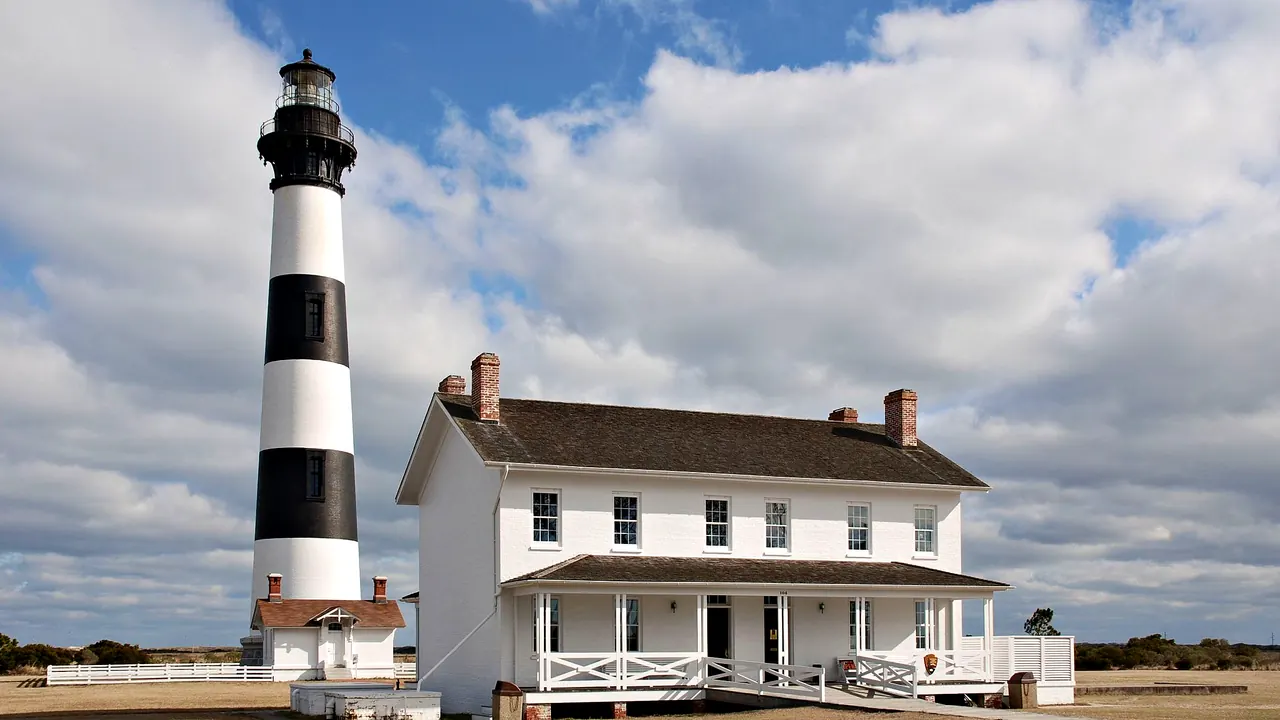
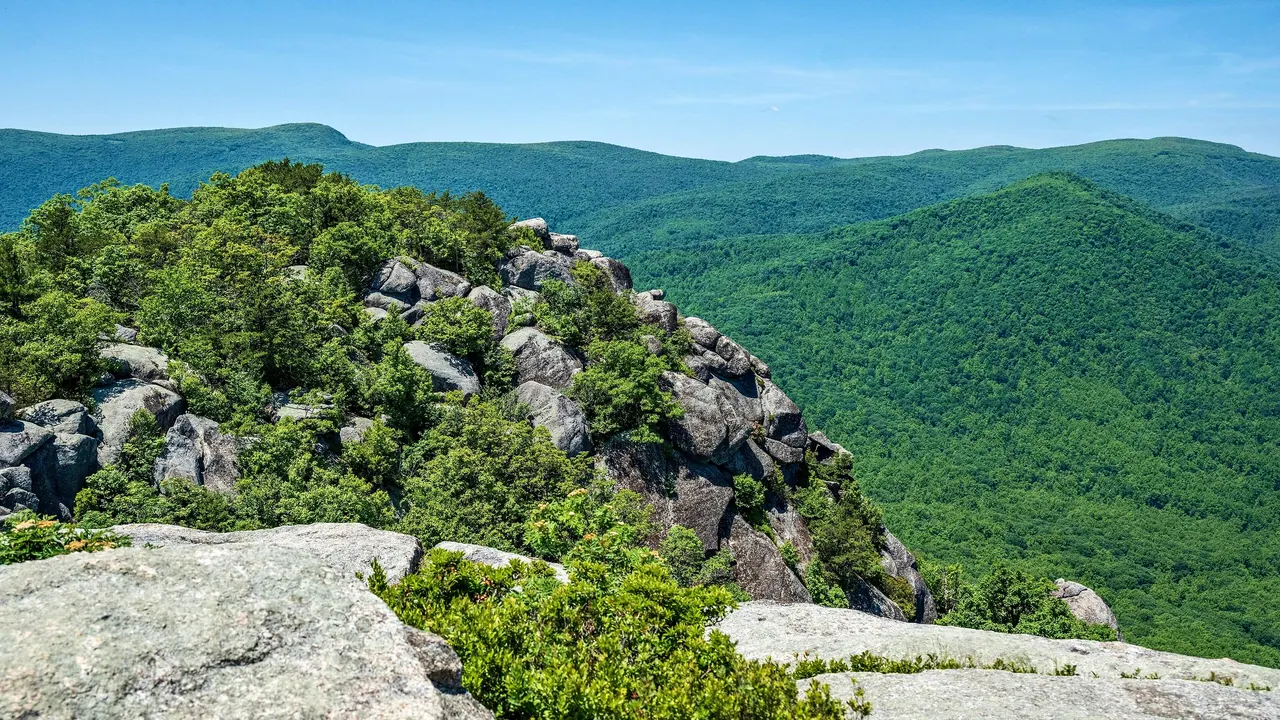
Photos: Outer Banks by Jarek Tuszyński, CC BY-SA 3.0, cropped; Shenandoah by ShenandoahNPS, Public domain.
Outer Banks or Shenandoah?
Our verdict in twelve categories, each scored against the same fixed benchmark cities, and the climate month by month, so you can choose for your trip.
Choose Outer Banks for
- beaches
- families
- nightlife
The Outer Banks are the choice when the trip is about the sea. Long Atlantic beaches, a rented house with the whole family under one roof, and days that run from surf to crab-catching to mini-golf are what this coast does best, and an inland valley cannot compete. In return you accept quiet evenings, expensive summer weeks and a car for nearly everything.
Choose Shenandoah for
- day trips
- nature and the outdoors
- prices
Shenandoah suits travellers who would rather walk than swim. The Blue Ridge, Skyline Drive and the Appalachian Trail give it far more to do outdoors, and Monticello, Harpers Ferry and even Washington are close enough for a day out, so a week here holds more variety. It is also easier on the budget. But there is no sea, and swimming means an afternoon on the river.
Scoreboard
Twelve categories on one fixed scale from 0 to 100. The shaded stretch is the gap between the two.
Your match
Pick a travel style or drag the sliders, and both match scores follow your weighting.
Too close to call, level with your weighting
Wins on beaches and families with your weighting.
Wins on day trips and nature and the outdoors with your weighting.
What matters to you?
Category by category
What the scores mean for a trip.
Beaches & swimming
This is the widest gap between the two. The Outer Banks are a beach destination first. Nags Head and Kill Devil Hills have lifeguarded sand, Duck and Corolla have quieter stretches, and Cape Hatteras National Seashore has wild shore with dunes behind it. The surf and rip currents do call for care.
Shenandoah has no coast at all. Its water is the South Fork of the Shenandoah, where people tube and wade off gravel bars near Luray and Front Royal, plus a few mountain swimming holes. That makes a cool summer afternoon, not a reason to go.
Food & drink
Neither is a food destination, and in both you do better eating simple local food than hunting for restaurants. On the Outer Banks that means seafood: steamed shrimp, soft-shell crab and fried baskets at dockside shacks, or fish from the Wanchese and Hatteras docks cooked in the rental kitchen.
Shenandoah eats from the farm and the orchard instead. There is country ham, biscuits and apple butter from the Mennonite markets near Harrisonburg, the better kitchens are in Staunton, and a long trail of breweries, cideries and wineries gives it something to drink that the coast cannot match. It eats best in autumn, when the cider is pressed.
Culture & sights
The two are evenly matched, each with a handful of good sights rather than a real cultural centre, but they tell different stories. The Outer Banks are about beginnings: the first powered flight at Kill Devil Hills, the vanished Roanoke colony at Fort Raleigh, and lighthouses such as Cape Hatteras, with the shipwreck museum in Hatteras village.
Shenandoah's past is the Civil War and the farming valley. It has battlefields at New Market and Cedar Creek, Winchester's Old Town, Staunton's Victorian streets and the Frontier Culture Museum, and the college grounds of Lexington. The valley towns are closer together, while the coast's sights are strung out along the islands.
Nightlife
Both are places for early nights, and neither should be chosen for going out. The Outer Banks have a little more life in summer, with beach bars, brewery taprooms along the bypass in Kill Devil Hills and Nags Head, and sound-side decks at sunset. In Shenandoah the nearest thing is Harrisonburg's student bars in term time. Otherwise the evening is a fire pit and a dark sky over the ridge.
Nature & outdoors
Shenandoah is the stronger choice for the outdoors, and its outdoors is a different kind. The national park along the Blue Ridge has real hiking on the Appalachian Trail, Old Rag's granite scramble and the Whiteoak Canyon waterfalls, with black bears, spring wildflowers and October colour. The Massanutten ridge adds mountain biking and trout streams.
The Outer Banks are flat, and their nature is the water and the birds. There is kiteboarding and windsurfing on the sounds near Rodanthe and Avon, surfing at Cape Hatteras, wild mustangs north of Corolla and migrating flocks at Pea Island. Walkers get beaches and short forest trails, not climbs.
Day trips
From the valley, far more is within reach. Monticello and Charlottesville are under an hour over the ridge from Staunton, and Harpers Ferry is close to Winchester. The Antietam and Gettysburg battlefields make a day out, and Washington is about an hour and a half from the northern end.
The Outer Banks have one outstanding outing, the free ferry to Ocracoke's sandy lanes and harbour. After that come quieter options such as colonial Edenton and Norfolk's naval museums. Because the islands are long and depend on bridges, most excursions mean a long drive.
Good for families
The Outer Banks are the easier family vacation. A big rented house, the shallow sound side for toddlers, Jockey's Ridge, the aquarium on Roanoke Island, wild-horse tours and lighthouse climbs fill a week with little planning. The rough surf needs watching, though, and there is little to do on rainy days.
Shenandoah suits families who like to be outdoors, with Luray Caverns, short waterfall trails, junior ranger badges, river tubing and the indoor water park at Massanutten. The longer drives between sights are harder on small children.
Getting around
Both need a car, but the valley is easier to drive. Interstate 81 and Route 11 link its towns directly, and only Skyline Drive is slow, with queues at the entrances on autumn weekends. Staunton has a rail station, though public transport does not reach the trailheads.
On the Outer Banks everything depends on a few roads and bridges. Corolla to Hatteras village takes a couple of hours, the Saturdays when rentals change over bring long jams, and reaching Ocracoke means a ferry. Within the central towns, though, the multi-use paths make cycling pleasant.
Shopping & style
Neither is worth a shopping trip, but they sell different things. The Outer Banks sell the beach: surf and kite shops, beachwear and souvenirs, a small outlet centre in Nags Head, and galleries of coastal art and decoys in Duck, Manteo and Ocracoke. Shenandoah sells antiques and farm goods, with large antique malls in Strasburg and New Market, and preserves and baked goods from Mennonite markets and roadside stands.
Affordability
The valley is the cheaper trip. Motels, campgrounds and cabins keep a stay moderately priced, park entry is inexpensive and the hikes are free. Prices rise mainly on October foliage weekends.
In summer the Outer Banks are a costly resort coast, where rentals often go only by the full week and restaurants charge resort prices. A big group sharing a house and cooking its own fish narrows the gap, and the beaches cost nothing. The cheaper weeks in spring and autumn come with a cooler sea.
Live music & performing arts
Shenandoah has more to see on stage. Staunton's Blackfriars Playhouse, a recreation of Shakespeare's indoor theatre with a resident company, is worth an evening on its own, and the summer Bach festival, term-time recitals and bluegrass jams add to it. The Outer Banks have one real tradition, The Lost Colony, an outdoor drama staged on Roanoke Island on summer nights. Beyond that there are bands on bar decks.
Wellness & relaxation
The valley is the better place to unwind. Cabins on the ridge and quiet inns set an easy pace, and the eighteenth-century bathhouses over the warm mineral pools at Warm Springs are about an hour west of Staunton, easy to add to a stay in the valley.
The Outer Banks have only a few day spas and yoga studios. Rest here means an unplanned week in a beach house, and it is quietest in the Hatteras Island villages and on Ocracoke in late spring and autumn.
When should you go?
Pick your month. The climate figures are measured averages, not a forecast.
Outer Banks in July
Shenandoah in July
Daytime high, °C
Rainfall in the month, mm
Where the figures come from
Outer Banks has no rain gauge within 25 km of the centre, so its rainfall comes from a gridded climate dataset read at the destination rather than from a gauge further away.
Outer Banks's sunshine is measured 77 km from the centre, at Cape Hatteras.
Shenandoah has no weather station within reach, so its figures come from a gridded climate model rather than a measured record, and read a broad area rather than one spot.
Temperature and rainfall are climate normals, averaged over the years shown. Outer Banks: 2009-2025 (sunshine 1981-2010, rainfall 1991-2020) normals, Manteo / Sunny Side (7.7 km from centre). Shenandoah: 1991-2020 normals, TerraClimate 4 km grid at the town, no weather station within 90 km.
On the Outer Banks, summer is the whole point. From June to September the sea is warm enough to swim, reaching about 26°C at its warmest, and July afternoons get up to 30°C, with the most sunshine in June and July. Late summer is the wettest time, with rain building to about 165mm in September. From November to April the sea is too cold for most swimmers, though late spring and October stay mild enough for walks on the beaches and dunes.
Shenandoah is several degrees cooler all year. July highs of about 25°C make summer comfortable for hiking at a time when the coast is hot, and May and October are the best months on the trails, October with the autumn colour as well. Winter is properly cold, with January highs near 3°C, and September is the wettest month in the valley too.
Which traveller are you?
For a beach and sun trip, the Outer Banks win outright. Long open Atlantic beaches, a sea warm enough to swim in from June to September and empty national seashore around Hatteras have no counterpart in the valley, where swimming means the river.
On an outdoors trip, Shenandoah is the stronger pick for most people. Skyline Drive, the Appalachian Trail, Old Rag and the waterfall canyons give days of hiking and bear-spotting. On the Outer Banks the outdoors is mostly water sports, especially flat-water kiteboarding on the sounds.
On a family trip with children, the Outer Banks have the edge. A shared beach house, the calm sound side for toddlers, the Jockey's Ridge dunes, the aquarium and the wild-horse tours make an easy week. Shenandoah's caverns and junior ranger walks are fun, but its sights are farther apart.
Before you go
| Measure | Outer Banks | Shenandoah |
|---|---|---|
| Currency | US Dollar (USD) | US Dollar (USD) |
| Sockets | AB120 V, 60 Hz | AB120 V, 60 Hz |
| Driving side | Right | Right |
| Time zone | UTC-5, UTC-4 in summer | UTC-5, UTC-4 in summer |
| Emergency number | 911 | 911 |
| Main airport | Norfolk International Airport (ORF)44 non-stop destinations | Charlottesville Albemarle Airport (CHO)6 non-stop destinations |
| Public holidays this year | 14 days | 13 days |
By the numbers
| Measure | Outer Banks | Shenandoah |
|---|---|---|
| Swim season, months above 21 °C | 4 months | - |
Where else could you go?
Every comparison below shares a destination with this one, so you can follow Outer Banks or Shenandoah somewhere new.
- Virginia Beachvs Outer Banks
- Myrtle Beachvs Outer Banks
- Poconosvs Shenandoah
- Catskillsvs Shenandoah
- Great Smoky Mountainsvs Shenandoah
- Poconosvs Outer Banks