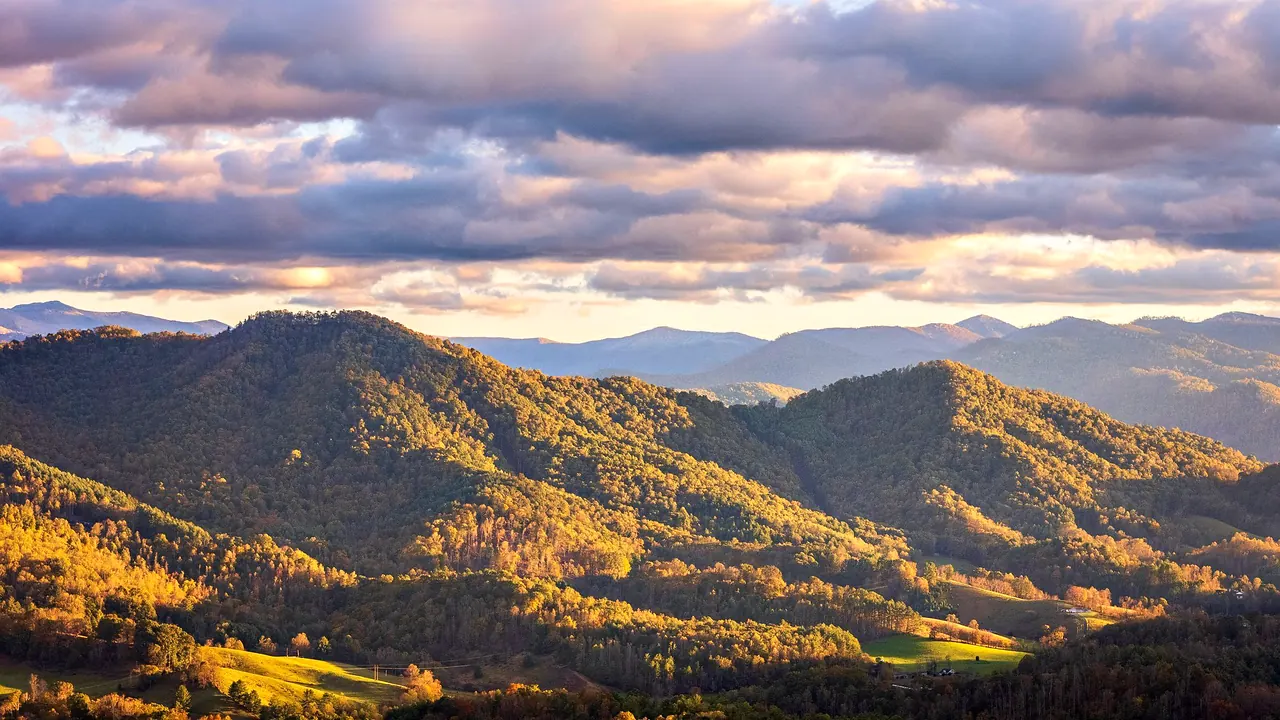
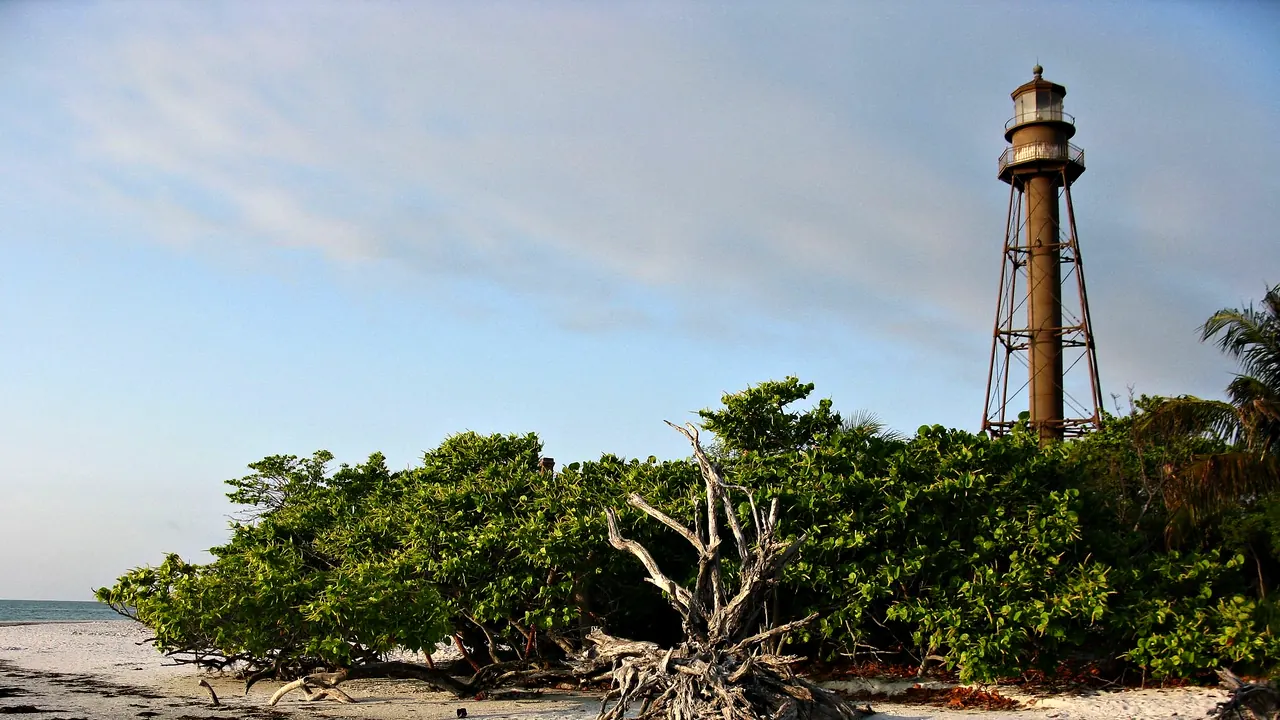
Photos: Great Smoky Mountains by Mark Stebnicki, Pexels License; Sanibel by Eeviann, CC BY-SA 3.0, cropped.
Great Smoky Mountains or Sanibel?
Our verdict in twelve categories, each scored against the same fixed benchmark cities, and the climate month by month, so you can choose for your trip.
Choose Great Smoky Mountains for
- nature and the outdoors
- prices
- live music and the arts
The Great Smoky Mountains suit travellers who want to be outdoors and on the move: waterfall trails, black bears in Cades Cove, the drive up to Kuwohi and October colour spreading down the ridges. They are also the better pick for families with children of different ages, since Dollywood and the Pigeon Forge attractions fill the days the park does not, and for groups on a budget who can share a cabin. Plan on driving everywhere.
Choose Sanibel for
- beaches
- getting around
- wellness
Sanibel is for a slow beach vacation by calm, shallow water. The days go on shelling at low tide, cycling out to the refuge to watch spoonbills, and the sunset at Blind Pass. The island is more restful than the mountains and easier to get around once you are there, but it costs a good deal more, and evenings and sightseeing run out quickly.
Scoreboard
Twelve categories on one fixed scale from 0 to 100. The shaded stretch is the gap between the two.
Your match
Pick a travel style or drag the sliders, and both match scores follow your weighting.
Wins on nature and the outdoors and prices with your weighting.
Wins on beaches and getting around with your weighting.
What matters to you?
Category by category
What the scores mean for a trip.
Beaches & swimming
The Smokies have no coast, so swimming there means tubing on the Little River near Townsend, cold swimming holes, or the pool at your cabin. Fontana and Douglas lakes are mainly for boating.
Beach life is the whole point of Sanibel. The Gulf shore is gently shelving sand with little surf, and people walk the tideline at Bowman's Beach and Lighthouse Beach looking for shells. From June to September the water is as warm as a bath.
Food & drink
Neither place is a destination for food, and the difference is in what fills the plate. In the Smokies that means heavy mountain cooking after a day of walking: pancake houses on the Parkway, barbecue, country ham, stream trout and cobbler, with moonshine tastings in Gatlinburg.
On Sanibel it means grouper sandwiches, shrimp and, in season, stone crab, eaten on porches along Periwinkle Way. For serious cooking you drive out in both cases, to Knoxville from the mountains or to Fort Myers and Naples from the island.
Culture & sights
Neither place is a sightseeing trip, and the real difference is the story each one tells. The Smokies' past is Appalachian and Cherokee, and most of it lies outdoors along the park roads. In Cades Cove you drive past the farmsteads and chapels a valley community left behind, and near Oconaluftee there is an old farm and a working mill. In the town of Cherokee, a museum and a living-history village give the fullest picture of the region's past. Seeing it all takes a day or two of driving, and it rewards anyone curious about how mountain people lived. The tourist strips of Gatlinburg and Pigeon Forge have little of it.
Sanibel's heritage is small and entirely about the island: a museum devoted to seashells, the nineteenth-century lighthouse at its tip and a cluster of early settlers' houses with a schoolhouse. Shell collectors will enjoy the museum, but most visitors cover everything in a morning between beach days.
Nightlife
The Smokies have a little more going on after dark, though evenings there are still mostly for families. Gatlinburg's main street stays busy into the evening, with a few bars and breweries and crowds moving between the attractions, but most of it is quiet before midnight. The casino resort in Cherokee is the one place that keeps going late, and for clubs you would drive to Knoxville.
Sanibel's evening is the sunset followed by dinner, perhaps with a guitarist in a Captiva restaurant bar on a winter night. For anything later you have to cross to Fort Myers Beach or downtown Fort Myers.
Nature & outdoors
The Smokies are one of the great forest landscapes in the world, and in scale the island cannot compete. Layered blue ridges rise past 2,000m, and the trails run from Laurel Falls up to Mount LeConte and along the Appalachian Trail. Each season changes the place, from spring wildflowers and the fireflies at Elkmont to the autumn colour.
Sanibel's nature is all on a small scale and close at hand. Roseate spoonbills and alligators gather at the Ding Darling refuge, and you can paddle the mangrove tunnels of Tarpon Bay with dolphins nearby. It is fine for birdwatchers and kayakers, but there are no hills or wild interior to walk through.
Day trips
The mountains have the slightly stronger outing in Asheville, with its Art Deco streets and the Biltmore Estate. The heritage railway from Bryson City through the Nantahala gorge and drives on the Blue Ridge Parkway add variety.
Sanibel's best days out are by boat, to Cabbage Key, the undeveloped sands of Cayo Costa or Boca Grande, which the mountains cannot match. On land there are the Edison and Ford Winter Estates in Fort Myers and the polished old town of Naples.
Good for families
The Smokies are set up for children in a way Sanibel is not. Dollywood and its water park, the mountain coasters, go-karts and aquarium in Pigeon Forge and Gatlinburg, and junior ranger programmes in the park keep teenagers as busy as toddlers, and cabins with games rooms suit large families. The cost is traffic and summer crowds.
Sanibel offers a calmer kind of family vacation: shallow, gentle water, shell hunting, flat bike paths and the touch tanks at the shell museum. Young children love it, but with no attractions built for entertainment, older children may run out of things to do after a few days.
Getting around
You need a car to reach both places, but once there Sanibel is far easier. The island is small and completely flat, and its shared paths make cycling the natural way to get between beaches, the refuge and the shops. The main hold-ups are on Periwinkle Way and the causeway in winter.
In the Smokies the car never stays parked for long. The park has no public transport, trailheads are reached on winding roads, Newfound Gap is slow and can close in winter, and the Parkway through Pigeon Forge jams in summer and in October.
Shopping & style
The Smokies offer more to buy and something with real local roots. The crafts community on the loop road outside Gatlinburg sells pottery, quilts, brooms and woodwork from its studios, and the cooperative in Cherokee sells baskets and carvings by Cherokee makers. The outlet malls along the Parkway cover everyday shopping.
Sanibel's plazas hold shell shops, resort-wear boutiques and galleries of coastal art. That is enough for a rainy hour, and anything more means a trip to the mainland.
Affordability
The Smokies are the cheaper trip. The park itself has no entrance fee, cabins and motels around Pigeon Forge and Sevierville cost less than coastal resorts, and groups sharing a cabin pay little each. Dollywood and other paid attractions are where the money goes.
Sanibel is expensive, above all from January to April. There are no budget hotels, eating out costs resort prices, and few new beds can be added. The beaches and bike paths are cheap to enjoy, though, and a rental with a kitchen or a base in Fort Myers keeps costs down.
Live music & performing arts
The Smokies have far more evening entertainment, all of it country, bluegrass and gospel. Pigeon Forge has a long row of theatres with variety and dinner shows, Dollywood has music on its stages all day, and Cherokee has staged the outdoor drama Unto These Hills every summer since 1950.
Sanibel offers chamber concerts, talks and community theatre during the winter season, and an acoustic set over dinner. For a touring Broadway show you drive to Fort Myers.
Wellness & relaxation
Sanibel is the more restful choice, because the whole island runs at a slow pace. There are no high-rises, the roads are quiet, and the day follows the tides. The larger resorts on Sanibel and Captiva have full spas, and there are a few yoga studios.
In the Smokies you have to look for calm: a cabin with a hot tub on a ridge in Wears Valley or Townsend, away from the busy strips. Spas are few, although upscale retreats in the Tennessee foothills offer more pampering.
When should you go?
Pick your month. The climate figures are measured averages, not a forecast.
Great Smoky Mountains in July
Sanibel in July
Daytime high, °C
Rainfall in the month, mm
Where the figures come from
Great Smoky Mountains's temperatures are measured 43 km from the centre, at McGhee Tyson Airport.
Great Smoky Mountains's station stands 151 m below the place it is measured for, so that place is likely a little cooler than the figures say.
Great Smoky Mountains has no rain gauge within 25 km of the centre, so its rainfall comes from a gridded climate dataset read at the destination rather than from a gauge further away.
Sanibel has no rain gauge within 25 km of the centre, so its rainfall comes from a gridded climate dataset read at the destination rather than from a gauge further away.
Temperature and rainfall are climate normals, averaged over the years shown. Great Smoky Mountains: 1991-2020 (sunshine 1981-2010) normals, McGhee Tyson Airport (42.9 km from centre). Sanibel: 1991-2020 normals, Fort Myers / Page Park (22.5 km from centre).
The two peak at opposite times of year. In the foothill towns where most visitors to the Smokies stay, spring and autumn are best for walking. April, May, September and October are warm and mild, and October is also the driest month, at 72mm. Midsummer brings highs of about 31°C, fine on shaded forest trails but sticky in the towns, and July is the wettest month. Winter days are cool and grey, with the fewest sunshine hours, and snow can close the high roads.
Sanibel is warm all year, with January highs around 24°C, which makes November to April the comfortable season: dry, sunny and good for cycling and birdwatching, though at about 20°C the sea is bracing rather than warm. From June to September the Gulf reaches 30°C and is best for swimming, but the heat is heavy and each of those months brings more than 200mm of rain, mostly in afternoon thunderstorms.
Which traveller are you?
On a beach and sun trip, Sanibel is the only real option. It has a long Gulf shore of soft sand, gentle shallow water and some of the best shelling in the country, while the Smokies have no sea and only cold river swimming holes.
For an outdoors trip, the Great Smoky Mountains are far ahead, with old-growth forest, more than 1,000km of trails, elk and bears. Sanibel's nature is flat and gentle by comparison: paddling through mangroves and watching birds from the refuge drive.
On a tight budget, the Smokies stretch money much further. The national park has no entrance fee, and cabins shared between several people keep costs down, whereas Sanibel has no budget hotels and charges resort prices for beds and meals.
Before you go
| Measure | Great Smoky Mountains | Sanibel |
|---|---|---|
| Currency | US Dollar (USD) | US Dollar (USD) |
| Sockets | AB120 V, 60 Hz | AB120 V, 60 Hz |
| Driving side | Right | Right |
| Time zone | UTC-5, UTC-4 in summer | UTC-5, UTC-4 in summer |
| Emergency number | 911 | 911 |
| Main airport | McGhee Tyson Airport (TYS)34 non-stop destinations | Southwest Florida International Airport (RSW)79 non-stop destinations |
| Public holidays this year | 13 days | 11 days |
By the numbers
| Measure | Great Smoky Mountains | Sanibel |
|---|---|---|
| Swim season, months above 21 °C | - | 10 months |
Where else could you go?
Every comparison below shares a destination with this one, so you can follow Great Smoky Mountains or Sanibel somewhere new.
- Marco Islandvs Sanibel
- Siesta Keyvs Sanibel
- Evergladesvs Sanibel
- Florida Keysvs Sanibel
- Marathonvs Sanibel
- Key Largovs Sanibel