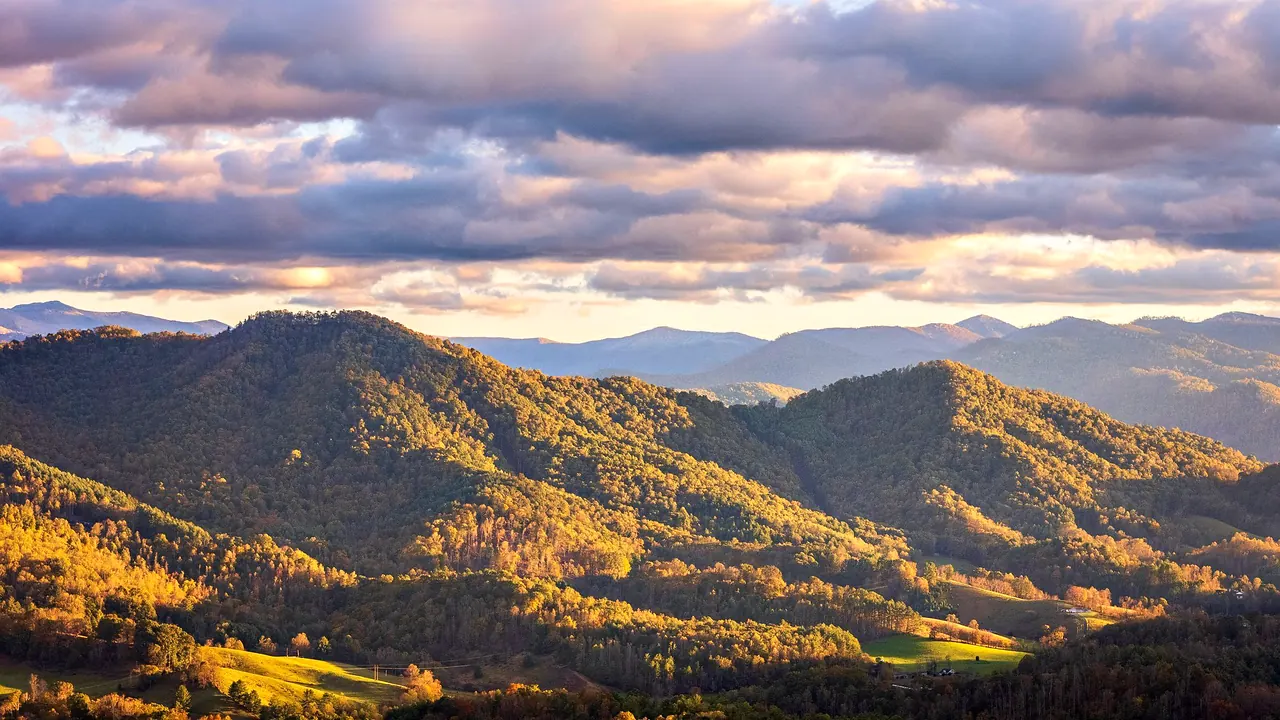
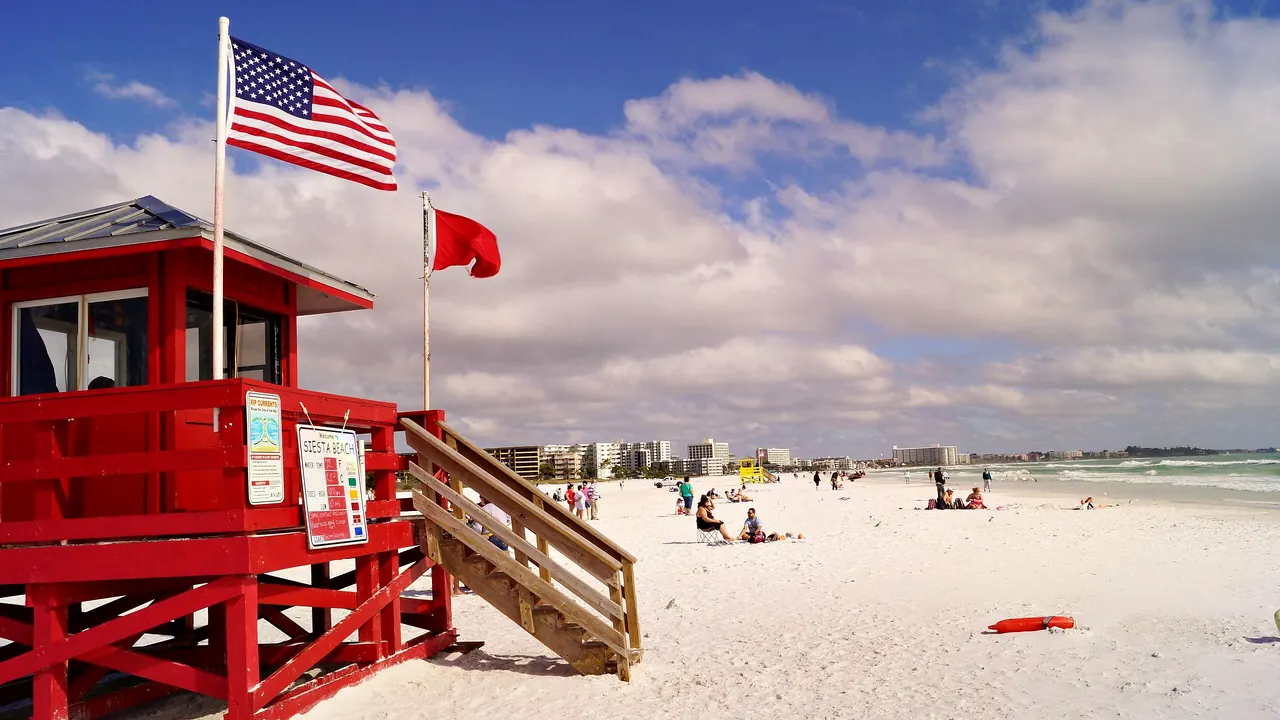
Photos: Great Smoky Mountains by Mark Stebnicki, Pexels License; Siesta Key by Mickey Luigi Logitmark, CC0.
Great Smoky Mountains or Siesta Key?
Our verdict in twelve categories, each scored against the same fixed benchmark cities, and the climate month by month, so you can choose for your trip.
Choose Great Smoky Mountains for
- nature and the outdoors
- prices
- families
The Great Smoky Mountains suit travellers who want forest and mountains: waterfall trails, long ridge walks, bears in Cades Cove and a cabin deck looking over layered blue ridges. It is also the stronger pick for a drive-to family trip built around Dollywood and the Pigeon Forge attractions, and it is easier on the budget. In return you need a car for almost everything, and evenings are quiet.
Choose Siesta Key for
- beaches
- getting around
- nightlife
Siesta Key is for people who come for sand and warm water. Its fine white beach and calm, shallow Gulf sea make slow days easy, and Sarasota across the bridge adds the Ringling, opera and theatre when you want more than the shore. It costs more in the winter season, and there is little to do away from the beach, the bay and the mangroves.
Scoreboard
Twelve categories on one fixed scale from 0 to 100. The shaded stretch is the gap between the two.
Your match
Pick a travel style or drag the sliders, and both match scores follow your weighting.
Wins on nature and the outdoors and prices with your weighting.
Wins on beaches and getting around with your weighting.
What matters to you?
Category by category
What the scores mean for a trip.
Beaches & swimming
There is no real contest here. In the Smokies, swimming means tubing the Little River near Townsend, wading in chilly swimming holes or using the cabin pool, and the reservoirs are for boating rather than lying on the sand.
Siesta Key is built around its beach: fine white quartz sand, a gentle slope into calm water, snorkelling at Point of Rocks and shell and shark-tooth hunting at Turtle Beach. The Gulf is warm enough for long swims from late spring to autumn.
Food & drink
The Smokies serve hearty Southern mountain cooking: pancake houses, barbecue, country ham, mountain trout and cobblers, with moonshine tastings in Gatlinburg. But the strips are dominated by chains, and better cooking means Knoxville or the small North Carolina towns.
Siesta Key does a little better, mainly because Sarasota is so close, with its downtown restaurants, St Armands Circle and a Saturday farmers' market twenty minutes away. On the island itself, expect grouper sandwiches and stone crab on open-air decks.
Culture & sights
The Smokies' heritage is pioneer and Cherokee: log cabins and churches around the Cades Cove loop, the Mountain Farm Museum at Oconaluftee, and the Cherokee history museum and living-history village in Cherokee. It is modest, and much of it is outdoors.
Siesta Key has no sights of its own, yet it comes out slightly ahead thanks to Sarasota. The Ringling's art museum, with its Rubens canvases, the Ca' d'Zan mansion and the circus museum fill a solid day indoors.
Nightlife
Neither region is a place for a night out, but Siesta Key has more going on. In the Smokies, Gatlinburg's main street offers moonshine rooms and a few breweries that wind down early, and only Cherokee's casino stays open late.
Siesta Village has a few blocks of open-air bars with cover bands and frozen cocktails, liveliest at spring break, and downtown Sarasota adds rooftop bars for a more grown-up evening.
Nature & outdoors
This is where the Smokies are in a different league. They have old-growth forest, ridges rising past 2,000m at Kuwohi, walks from short waterfall trails to the Appalachian Trail, black bears and elk, spring wildflowers and October colour.
Siesta Key's outdoors are flat and watery: dolphins off the beach, manatees in the cooler months, nesting turtles, kayaking through mangrove tunnels and alligators at Myakka River State Park. It is good for wildlife, but there are no hills, and summer heat pushes outdoor activity into the early morning.
Day trips
Both offer a fair spread of outings rather than anything outstanding. From the Smokies, the best day out is Asheville, with its Art Deco streets and the Biltmore Estate. Knoxville, the heritage railway from Bryson City and drives along the Blue Ridge Parkway add more.
From Siesta Key, the outings run along the coast instead: St Petersburg and its Dalí Museum, Ybor City in Tampa, the sponge docks of Tarpon Springs and island villages such as Anna Maria and Boca Grande. It is mountain towns and scenery on one side, Gulf cities and old Florida on the other.
Good for families
The Smokies are the bigger family playground. Dollywood and its water park, mountain coasters, go-karts, an aquarium and cabins with games rooms sit alongside junior ranger programmes and bear-spotting in the park. The cost is traffic and crowds in summer and October.
Siesta Key is simpler: a beach so shallow that toddlers can paddle far out, with lifeguards, a playground and Mote Marine on Lido Key nearby. Older children may run short of outings, since Busch Gardens and Orlando mean long drives.
Getting around
Both regions lean on the car, but the Smokies lean harder. The national park has no public transport, the Parkway through Pigeon Forge jams in season, and the road over Newfound Gap is slow and can close in winter. Only Gatlinburg's centre works on foot.
Siesta Key is about 13km long, with a walkable village and a free trolley along the main road, so a beach-only stay can manage without a car. Trips to the mainland are slower in winter, when the bridges back up.
Shopping & style
Neither is a shopping trip, and what they sell differs in kind. The Smokies' best buys are handmade: pottery, quilts and brooms from the craft studios on the loop road near Gatlinburg, and baskets and carvings from the Cherokee artists' cooperative, with outlet malls on the Parkway for bargains.
Siesta Village sticks to swimwear and shell trinkets, but St Armands Circle and Sarasota's Main Street add upscale boutiques, jewellers, galleries and bookshops for a more polished browse.
Affordability
The Smokies are the cheaper trip. The park charges no entrance fee, though parking needs a tag, and motels and shared cabins in Pigeon Forge and Sevierville keep costs down. The bill rises mainly with paid attractions such as Dollywood.
Siesta Key is expensive from about January to April, when beachfront condos fill for weeks at a time, and cheap local food is scarce. Summer costs less but brings heat and storms, and self-catering helps all year.
Live music & performing arts
The Smokies' stages belong to country, bluegrass and gospel: Pigeon Forge's dinner and variety theatres, music all day at Dollywood, and Unto These Hills, the summer outdoor drama in Cherokee. It is polished, but it is made for tourists.
Siesta Key has the wider range because Sarasota is close. It has opera in a restored 1920s opera house, the Asolo Repertory Theatre, ballet, a symphony orchestra and touring musicals at the Van Wezel, mostly from autumn to spring.
Wellness & relaxation
Neither has a bathing tradition or much spa culture. In the Smokies, rest means a ridge-top cabin with a hot tub, ideally away from the strips in Townsend or Wears Valley, plus a few resort spas.
Siesta Key slows you down more easily: the day settles into beach walks and sunsets, the south end around Crescent and Turtle beaches is quiet, and there are beach yoga classes and day spas on the island and in Sarasota.
When should you go?
Pick your month. The climate figures are measured averages, not a forecast.
Great Smoky Mountains in July
Siesta Key in July
Daytime high, °C
Rainfall in the month, mm
Where the figures come from
Great Smoky Mountains's temperatures are measured 43 km from the centre, at McGhee Tyson Airport.
Great Smoky Mountains's station stands 151 m below the place it is measured for, so that place is likely a little cooler than the figures say.
Great Smoky Mountains has no rain gauge within 25 km of the centre, so its rainfall comes from a gridded climate dataset read at the destination rather than from a gauge further away.
Siesta Key has no rain gauge within 25 km of the centre, so its rainfall comes from a gridded climate dataset read at the destination rather than from a gauge further away.
Siesta Key's sunshine is measured 78 km from the centre, at Tampa International Airport.
Temperature and rainfall are climate normals, averaged over the years shown. Great Smoky Mountains: 1991-2020 (sunshine 1981-2010) normals, McGhee Tyson Airport (42.9 km from centre). Siesta Key: 2006-2020 (sunshine 1991-2020, rainfall 1991-2020) normals, Sarasota / Ballentine Manor (14.3 km from centre).
Around the main resort towns of the Smokies, spring and autumn are the best seasons. April, May, September and October bring mild to warm days for the trails, and October is the driest month at 72mm, just as the leaves turn. Midsummer reaches about 31°C with frequent rain, and from December to February the days are cold and grey, sometimes with snow closing the high roads.
Siesta Key is at its best from March to May, when it is warm, sunny and fairly dry and the sea warms through spring. June to September are the wettest months, hot and humid with heavy afternoon storms, though the Gulf is at its warmest then, near 30°C. Winter stays mild, with days around 22°C, which suits beach walks better than long swims. That makes the two a natural pair: the mountains for autumn colour, the coast for winter sun and spring.
Which traveller are you?
For a beach and sun trip, choose Siesta Key, because the Smokies have no sea at all. Go in May or October, when the Gulf is warm and the stormy summer has not yet started or is over, and stay towards Crescent Beach for quieter sand.
On an outdoors trip, choose the Great Smoky Mountains. Well over 1,000km of trails, waterfall walks, the climb up Mount LeConte, and bears and elk in the valleys outclass Siesta Key's flat mangrove paddling, however good its dolphins and manatees are.
On a tight budget, the Smokies go further. Come in spring or November rather than summer or leaf season, stay in Sevierville rather than central Gatlinburg, and fill the days with trails and the Cades Cove loop instead of ticketed attractions.
Before you go
| Measure | Great Smoky Mountains | Siesta Key |
|---|---|---|
| Currency | US Dollar (USD) | US Dollar (USD) |
| Sockets | AB120 V, 60 Hz | AB120 V, 60 Hz |
| Driving side | Right | Right |
| Time zone | UTC-5, UTC-4 in summer | UTC-5, UTC-4 in summer |
| Emergency number | 911 | 911 |
| Main airport | McGhee Tyson Airport (TYS)34 non-stop destinations | Sarasota Bradenton International Airport (SRQ)70 non-stop destinations |
| Public holidays this year | 13 days | 11 days |
By the numbers
| Measure | Great Smoky Mountains | Siesta Key |
|---|---|---|
| Population | - | 5,454 |
| People per km² | - | 606 |
| Swim season, months above 21 °C | - | 8 months |
Where else could you go?
Every comparison below shares a destination with this one, so you can follow Great Smoky Mountains or Siesta Key somewhere new.
- Clearwatervs Siesta Key
- Sanibelvs Siesta Key
- Evergladesvs Siesta Key
- Florida Keysvs Siesta Key
- Marathonvs Siesta Key
- Key Largovs Siesta Key